Bai Qian · willowleaf swallowwort rhizome · Bai Qian
Cynanchum stauntonii (Decne.) Schltr. ex H. Lev. · Dried rhizome and root
Name and part used
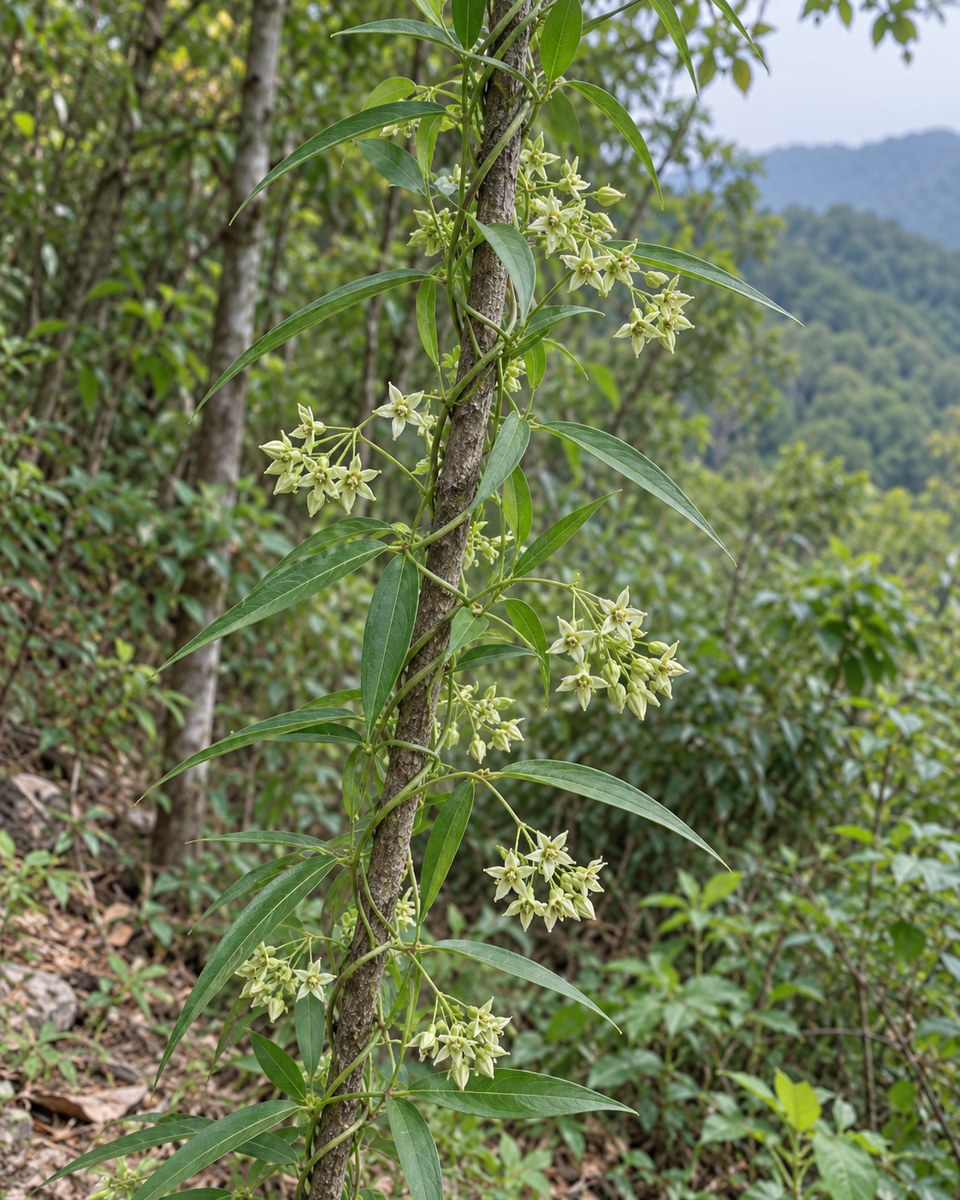
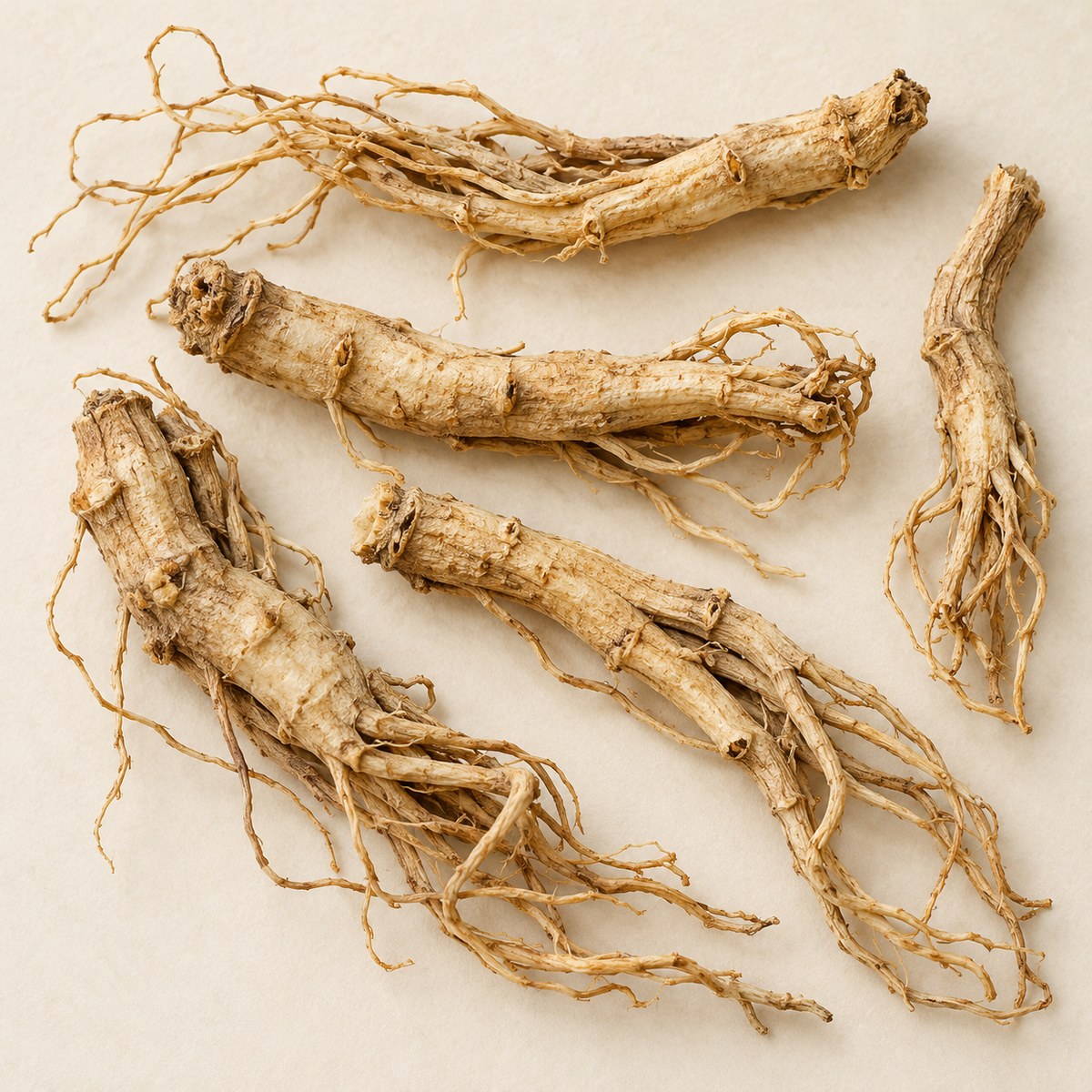
Bai Qian is the dried rhizome and root of Cynanchum stauntonii, a 30–60 cm perennial herb with narrow opposite leaves, small flower clusters, and a creeping rhizome. Dried material commonly has slender jointed rhizomes with long roots, pale yellow to brown and brittle. It is an Apocynaceae species and must not be confused with Bai Wei or similarly named drugs. AI imagery illustrates morphology but cannot authenticate a specimen.
Traditional context
HKBU describes it as pungent, bitter, and slightly warm, with traditional actions of directing qi downward, transforming phlegm, and relieving cough. These descriptions do not establish treatment for colds, bronchitis, asthma, or persistent cough in people.
Modern evidence
Modern literature on Cynanchum studies multiple species and constituents; findings from another species, an extract, or animals cannot be treated as clinical proof for Bai Qian in people. A formula record containing Bai Qian documents historical composition, not the formula’s safety or efficacy.
Safety
HKBU does not establish a safe self-use dose. Do not self-decoct, especially during pregnancy or breastfeeding, severe respiratory disease, chronic illness, or concurrent medication use. Breathlessness, blue lips, chest pain, high fever, or coughing blood needs medical care, not a home formula. Cynanchum contains many species and confusing names; misidentification, contamination, or self-escalation can cause harm.
Safety reference ↗Pairing in reference texts
Bai Qian appears with Zi Wan, Bai Bu, Jie Geng, Jing Jie, Gan Cao, and Chen Pi in HKBU’s Zhi Sou San record. The page shows source-recorded composition for historical study only; it is not a prescription, home-decoction ratio, or recommendation. Reviewed sources do not identify a specific toxic pair for Bai Qian.
Identification and study notes
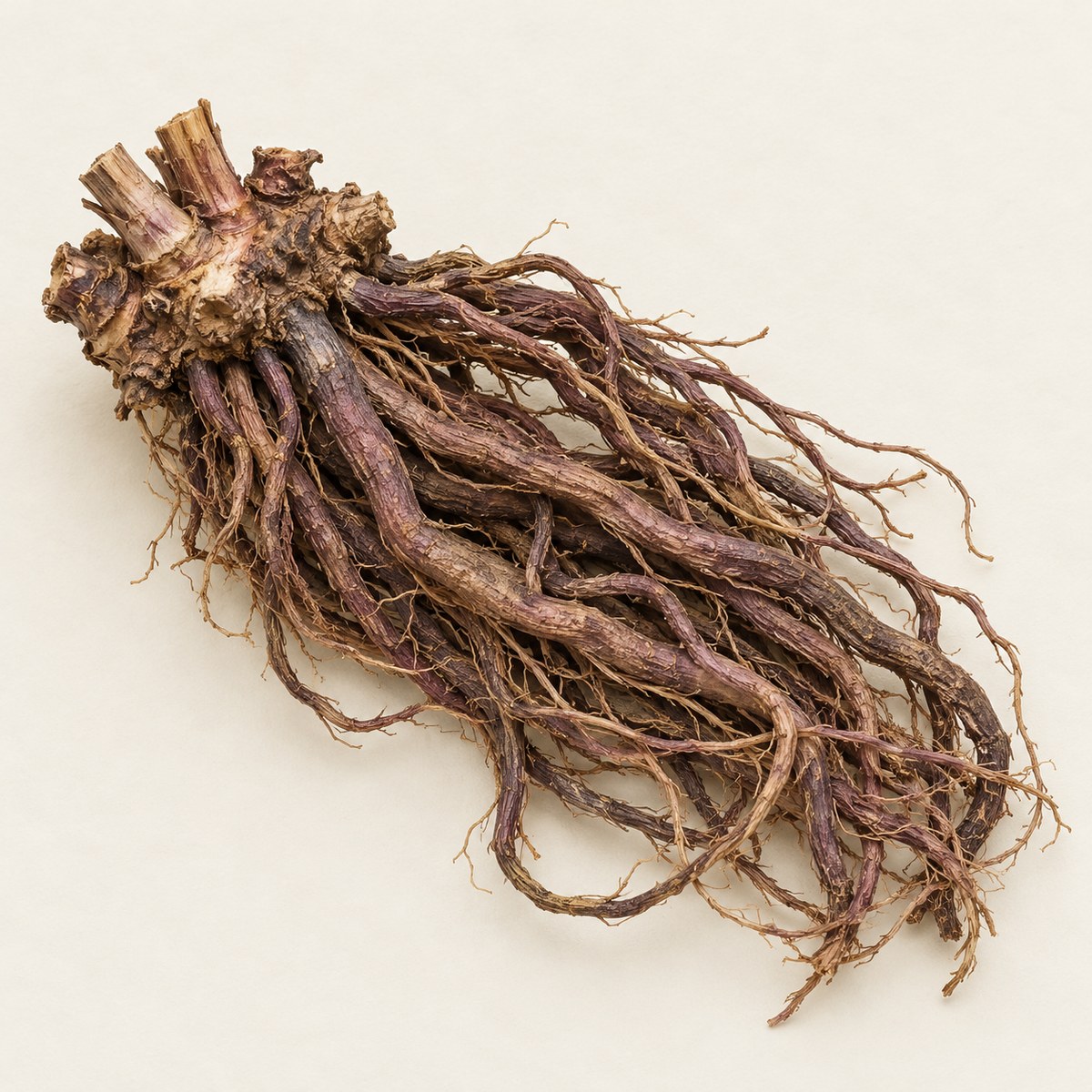
HKBU describes a 30–60 cm living plant with an upright, somewhat woody lower stem, creeping rhizome, and narrow opposite lanceolate leaves with slightly reflexed margins. Small axillary flower clusters develop into slender follicles with white-haired seeds. The illustration may use a simple support to make the leaves visible; morphology must be cross-checked and never authenticated by image alone. Dried material has slender tubular jointed rhizomes and many fine, curved brown or purplish-brown roots; the cross-section can be nearly round with a hollow center. It is brittle, with an off-white fracture and mildly sweet taste in HKBU’s description. Bai Qian is easily confused by name with Bai Wei; Cynanchum stauntonii on the label matters.
Growth and habitat
HKBU describes Cynanchum stauntonii as a 30–60 cm perennial with a woody lower stem, creeping rhizome, and narrow opposite lance-shaped leaves. Listed production regions include Henan, Liaoning, Hebei, Shanxi, Shandong, Shaanxi, Xinjiang, and northern China. It grows in temperate habitats; the reviewed record does not provide universal soil, irrigation, or yield specifications for home gardens.
Identification and study notes
HKBU describes a 30–60 cm living plant with an upright, somewhat woody lower stem, creeping rhizome, and narrow opposite lanceolate leaves with slightly reflexed margins. Small axillary flower clusters develop into slender follicles with white-haired seeds. The illustration may use a simple support to make the leaves visible; morphology must be cross-checked and never authenticated by image alone. Dried material has slender tubular jointed rhizomes and many fine, curved brown or purplish-brown roots; the cross-section can be nearly round with a hollow center. It is brittle, with an off-white fracture and mildly sweet taste in HKBU’s description. Bai Qian is easily confused by name with Bai Wei; Cynanchum stauntonii on the label matters.
Growing and care
- Use traceable stock labeled Cynanchum stauntonii; do not collect wild vines because many Cynanchum and related Apocynaceae species look similar.
- Plant in a bright site with loose, well-drained soil and a low support; because the record describes a creeping rhizome, leave room to observe the crown and manage spread.
- Water moderately to avoid both desiccation and waterlogging, hand-weed, and monitor aphids or fungi. Wear gloves, keep sap away from eyes and mouth, and do not use garden plants medicinally.
- Reviewed sources do not reliably specify fertilizer schedule, spacing, or root-harvest age. Keep seed-source labels and record planting season; size alone does not establish medicinal-grade quality.
How long until harvest? HKBU describes a perennial with a creeping rhizome but gives no sowing-to-harvest duration. This page therefore does not promise when it is “ready to use”; harvest timing for a medicinal lot must follow regional standards and professional authentication/testing.
Documented toxic incompatibility
Reviewed sources do not identify a specific toxic pair for Bai Qian. Zhi Sou San is a multi-herb formula containing Bai Qian, but co-occurrence does not prove that any recorded ratio is safe for an individual. Do not use source amounts as a prescription.
AI study illustrations; not for specimen identification.
FROM PLANT / SOURCE HABITAT TO DRIED MATERIAL · REFERENCE WORKFLOW
- Harvest root and rhizome under an authenticated cultivation protocol; HKBU confirms the dried root/rhizome part but does not give a universal harvest calendar.
- Shake off soil, segregate root and rhizome by lot, remove rotted or moldy parts and debris, and retain the scientific-name label. Do not mix with Bai Wei or another Cynanchum.
- Dry under qualified facility procedures and retain a reference sample; do not grind, decoct, or formulate it at home for cough.
- Qualified processors should control identity, moisture, foreign matter, and provenance; AI images only support morphology study.
These are post-harvest study notes, not directions to prepare a remedy for self-treatment. Processing reference ↗
Material source, dried appearance, and processing forms (HKBU)
HKBU identifies the drug as dried root and rhizome of Cynanchum stauntonii. Its description includes fine curved roots in clusters, around 1–10 cm long, brown to purplish brown with many rootlets; the tubular rhizome is around 4–15 cm long and 1.5–5 mm wide, pale yellow to yellow-brown, jointed, and longitudinally wrinkled. The brittle cross-section may be nearly round with a hollow center; superior material is described as having long rootlets, a white fracture, and a powdery quality. This is source material for study, not a home safety test.
Open original materia medica record ↗Habitat, season, and harvest in the HKBU botanical record
HKBU records Cynanchum stauntonii as a 30–60 cm perennial with creeping rhizome, opposite 3–8 cm lanceolate leaves, and axillary flower clusters; production regions span several northern Chinese provinces. The record does not give detailed commercial cultivation instructions or a growth duration to harvest. Bai Qian is the dried root/rhizome, which requires species-level authentication because of look-alikes.
Open botanical source ↗HKBU formula record containing this herb: 止嗽散 · Zhi Sou San
Traditional action in the source: Traditional formula classification in HKBU; not clinical proof for cough treatment.
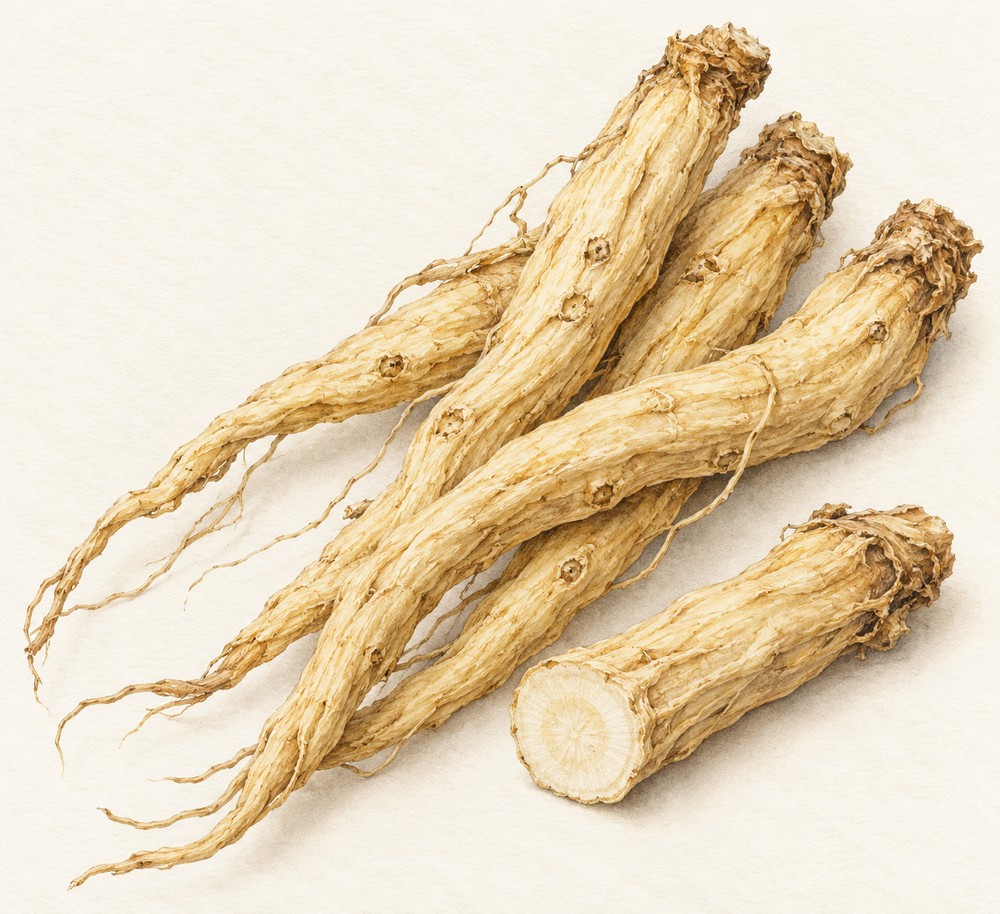
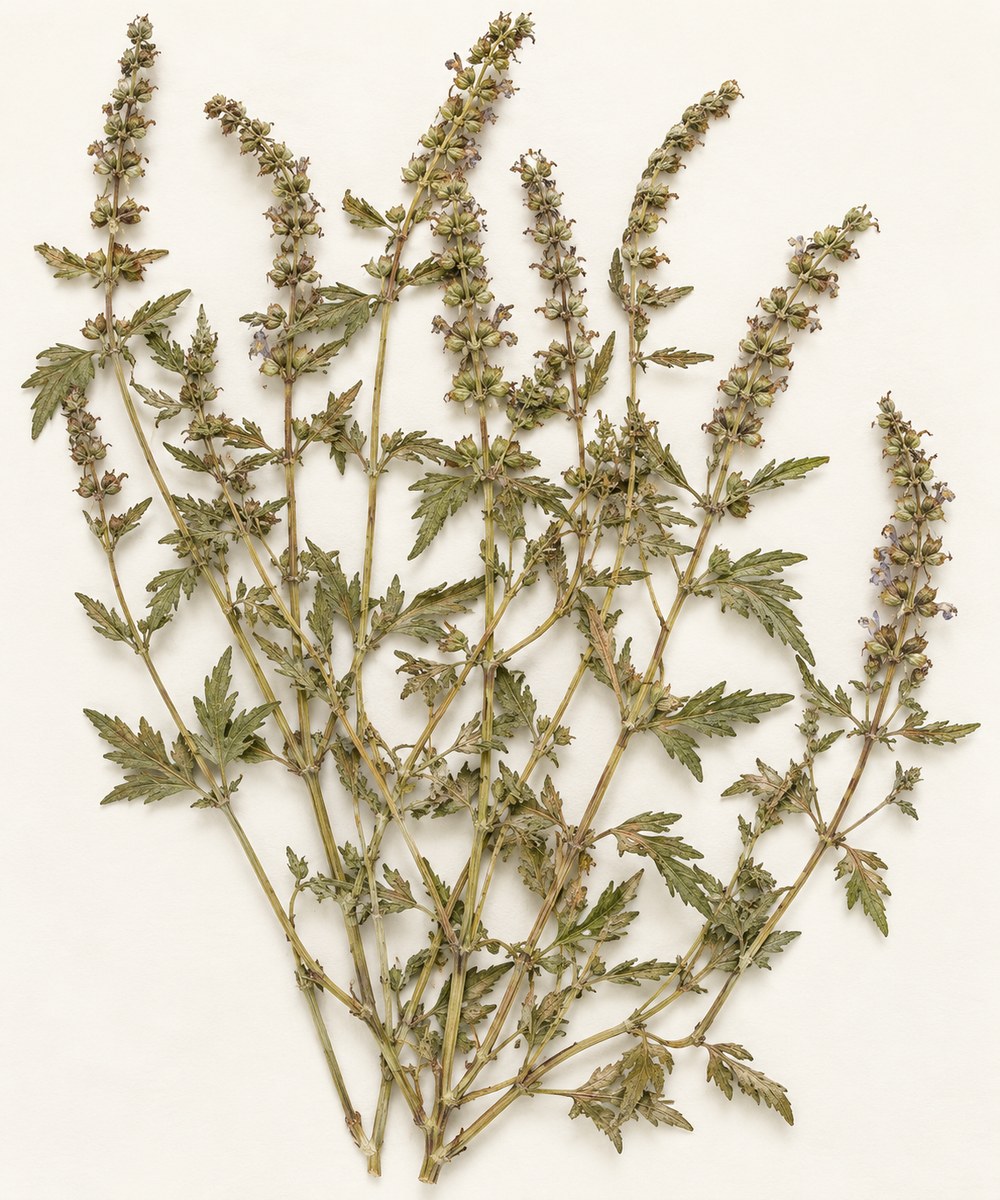
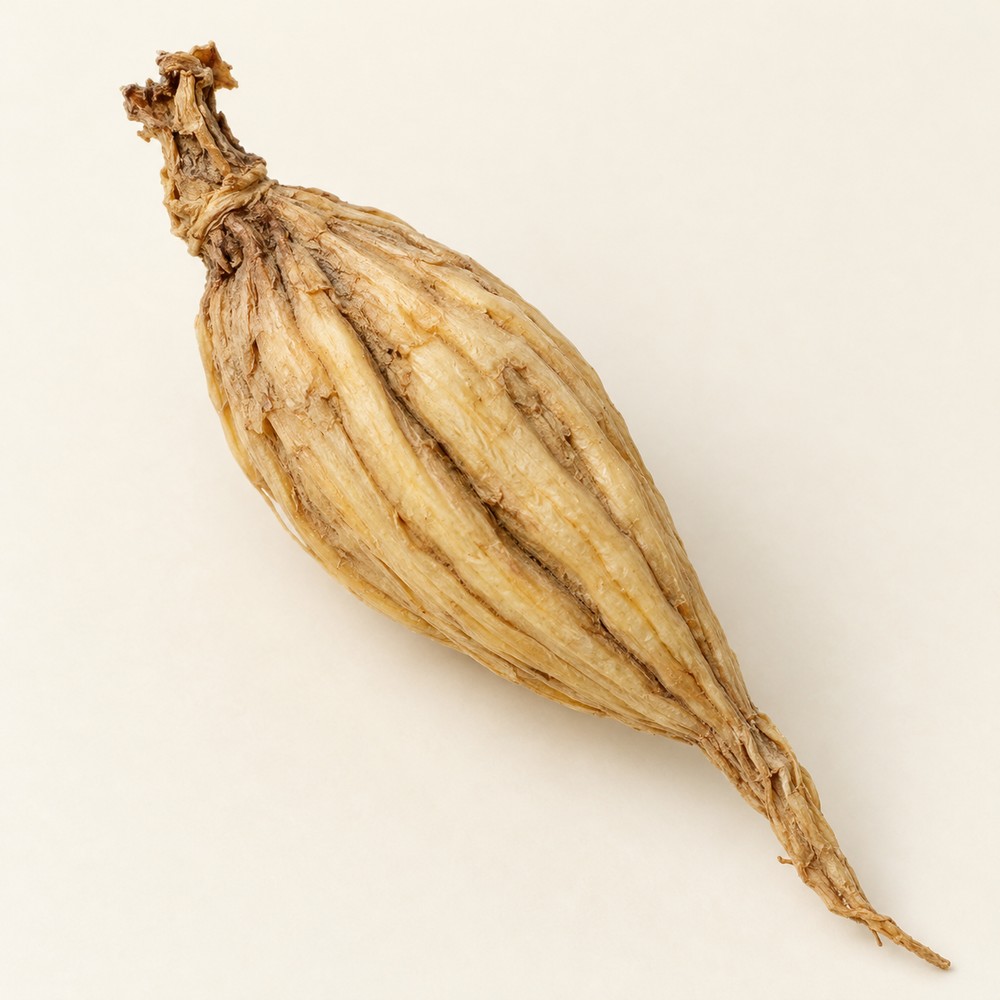
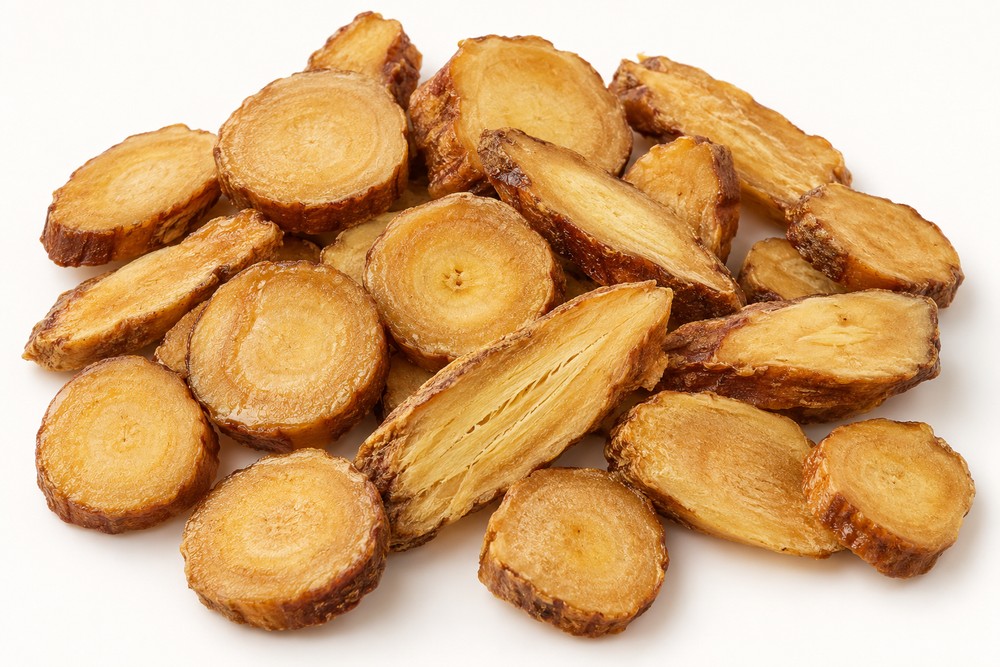
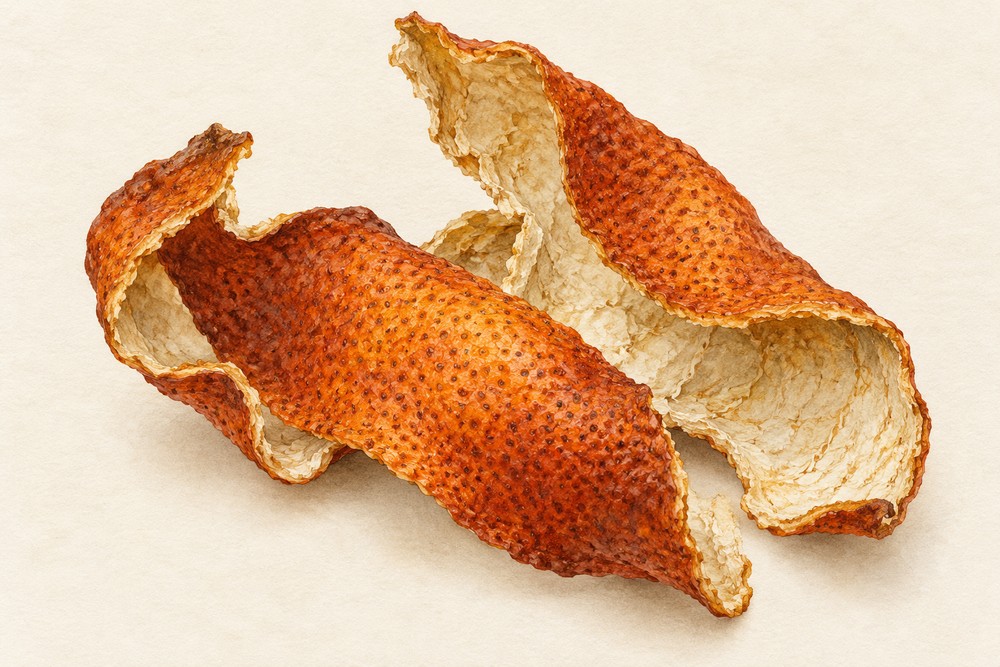
Ingredient images and source amounts are shown for comparison only; this is not a treatment recipe.
HKBU source-recorded composition
Platycodonis Radix (Jie Geng) 2 jin (1 kg), Schizonepetae Herba (Jing Jie) 2 jin (1 kg), Asteris Radix et Rhizoma (Zi Wan) 2 jin (1 kg), Stemonae Radix (Bai Bu) 2 jin (1 kg), Cynanchi Stauntonii Rhizoma et Radix (Bai Qian) 2 jin (1 kg), Glycyrrhizae Radix et Rhizoma (Gan Cao chao; dry-fried) 12 liang (375 g), Citri Reticulatae Pericarpium (Chen Pi) 1 jin (500 g).
Ingredients and amounts are transcribed from an HKBU historical record; not preparation directions, a dose, or an individual prescription. Ingredient images are for identification only.
Open complete HKBU formula record ↗