Pinellia tuber · Ban Xia
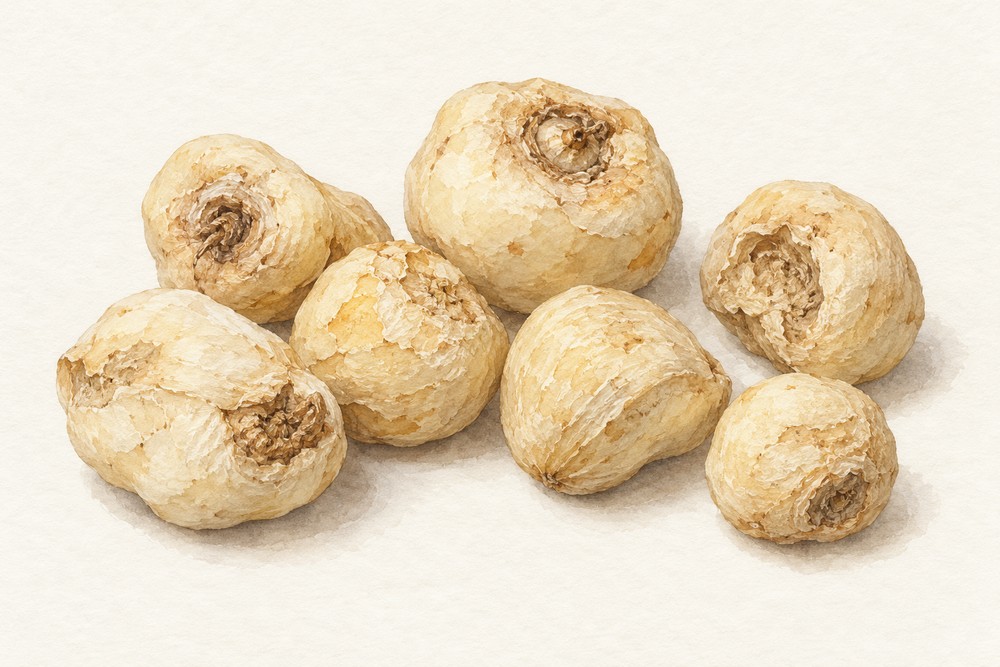
Pinellia ternata (Thunb.) Makino · Professionally processed tuber
Name and part used
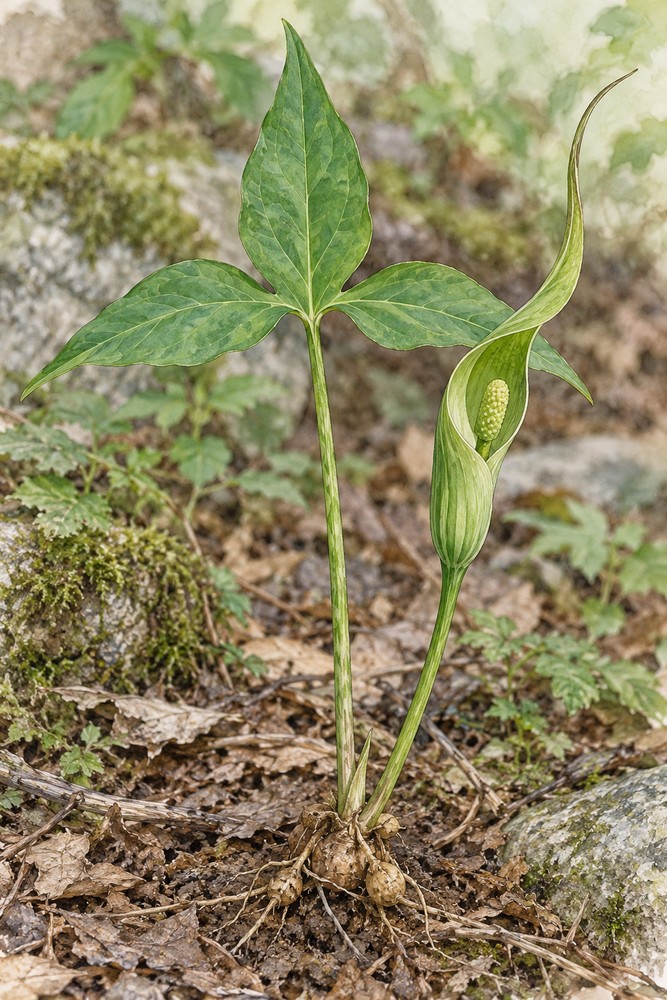
A small herb with arrow-shaped leaves and an arum-like inflorescence; the materia medica is a processed tuber.
Traditional context
The medicinal Ban Xia is recorded from the tuber of Pinellia ternata. HKBU describes the plant in fields, stream edges, moist slopes, and woodland; juvenile leaves can differ from mature foliage. This illustration cannot identify a specimen.
Modern evidence
It is used in traditional materia medica after standardized processing. Ingredient or preclinical findings should not be interpreted as proof of clinical treatment.
Safety
Raw Pinellia can severely irritate the mouth and throat. Never taste or prepare it at home. Use only quality-controlled processed material under qualified professional direction; extra caution is required during pregnancy or medication use.
Pairing in reference texts
Ban Xia occurs in classical formulas such as Xiao Chai Hu Tang and combinations with ginger or Chen Pi. Historical formulas are not do-it-yourself recipes; processing, dosing, and contraindications require professional expertise.
Growing, care, and harvest timing
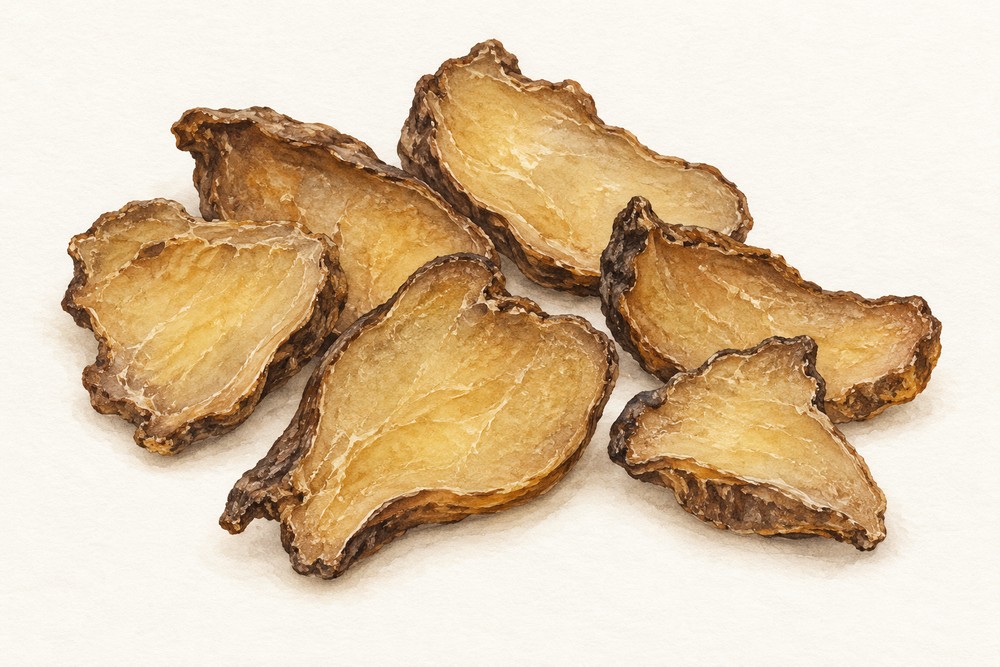
HKBU habitat record: Growing on fields, streams, wet slopes and in forests. Distributed in Sichuan, Hubei, Henan, Guizhou and Anhui. The medicinal materials are mainly produced in Sichuan, Hubei, Henan, Guizhou and Anhui Harvest and processing as recorded: Excavated in summer and autumn, cleaned, removed the skin and fibrous roots, and sun-dried. Mostly used for medicine after processed
Source-recorded harvest/processing: Excavated in summer and autumn, cleaned, removed the skin and fibrous roots, and sun-dried. Mostly used for medicine after processed
The reviewed source does not provide a complete species-specific sowing/growing routine, irrigation/fertilization schedule, or universal plant age. The page therefore does not infer care instructions or years to harvest; consult local cultivation guidance.
Open habitat and season source ↗FROM PLANT / SOURCE HABITAT TO DRIED MATERIAL · REFERENCE WORKFLOW
- HKBU records tuber harvest in summer and autumn; sourcing belongs to a licensed, controlled supply chain.
- A qualified facility authenticates the species, cleans it, and removes impurities under pharmacopoeial procedures; an image cannot safely distinguish substitutes.
- Detoxifying processing must follow a validated procedure in a qualified facility. It must not be attempted at home.
- Test identity, contaminants, and lot quality; release only compliant finished material with its processed form clearly documented.
These are post-harvest study notes, not directions to prepare a remedy for self-treatment. Processing reference ↗
Traditional contraindication pairs in the “18 incompatibilities” appendix
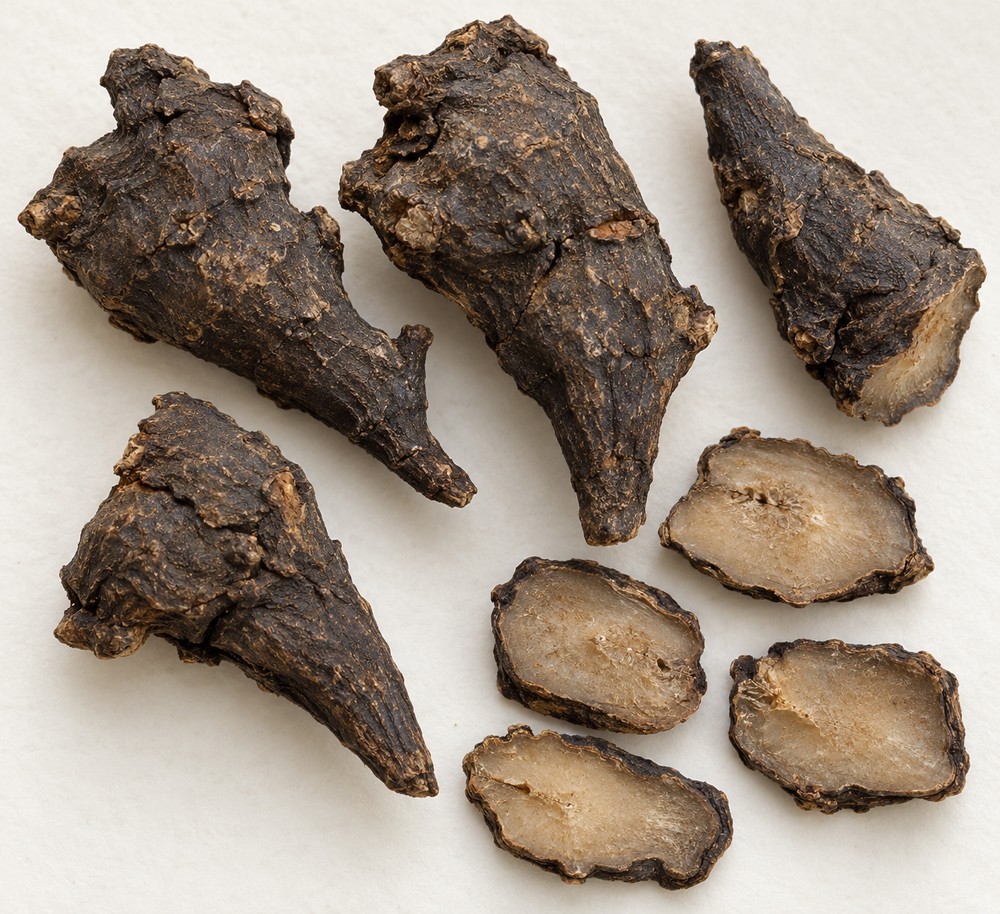
The Beijing Municipal Drug Administration appendix lists the pairs below as traditional incompatibilities. This does not establish that every exposure causes poisoning; the appendix provides no safe ratio. Do not combine them yourself, even if an old formula is cited elsewhere.
How to read formula amounts
The cited sources do not provide a formula with specific amounts for this profile; no ratio is invented. Absence from the incompatibility list does not establish safety.
Habitat, season, and harvest in the HKBU botanical record
HKBU botanical record (translated summary): Flowering and fruiting dates: Flowering: May to July. Fruiting: August to September Habitat and distribution: Growing on fields, streams, wet slopes and in forests. Distributed in Sichuan, Hubei, Henan, Guizhou and Anhui. The medicinal materials are mainly produced in Sichuan, Hubei, Henan, Guizhou and Anhui Harvest and processing as recorded: Excavated in summer and autumn, cleaned, removed the skin and fibrous roots, and sun-dried. Mostly used for medicine after processed
Open botanical source ↗