Bian Xu · knotgrass herb · Bian Xu
Polygonum aviculare L. · Dried flowering aerial parts
Name and part used
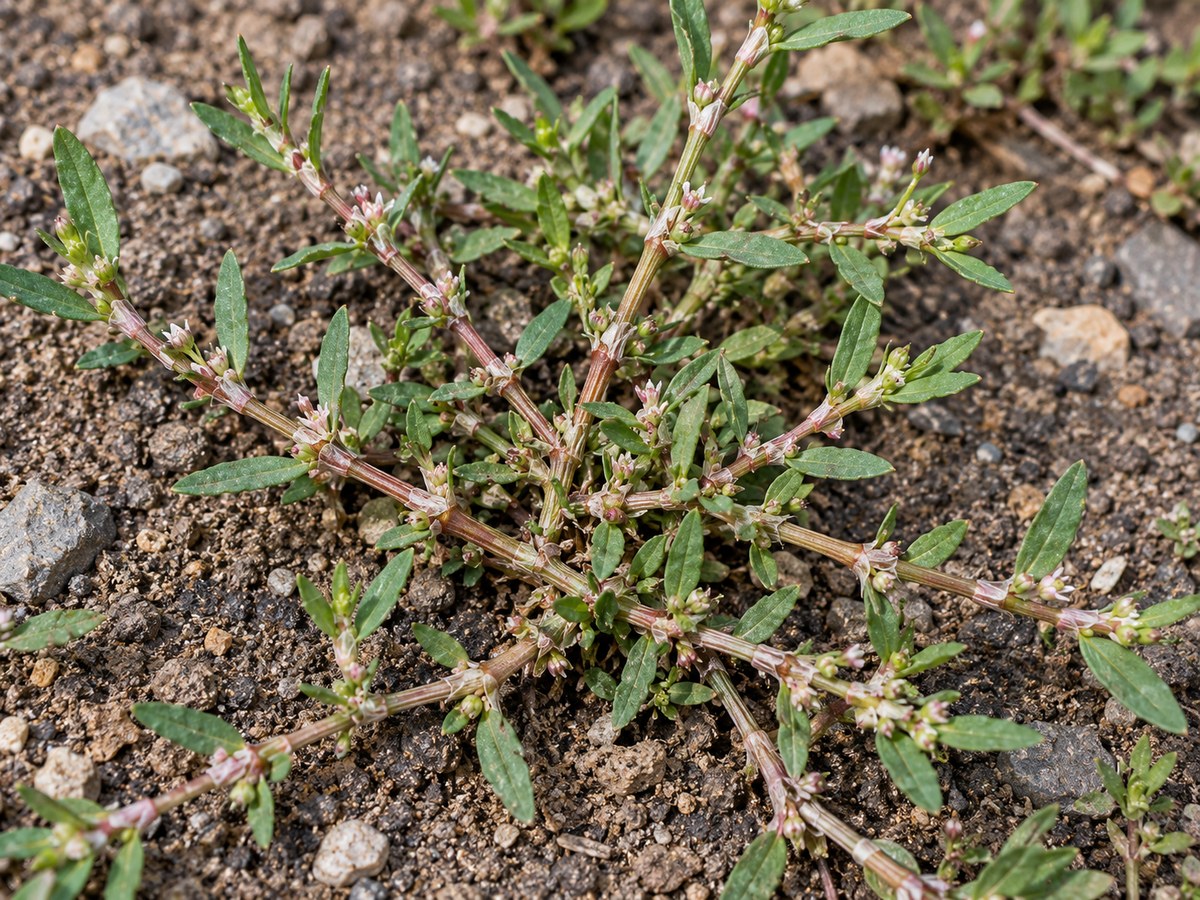
Bian Xu is the aerial part of Polygonum aviculare, a small prostrate or ascending herb with many grooved branches, narrow alternate leaves, and thin sheathing stipules at the nodes. Tiny flowers grow in leaf axils, often green-white or faintly pink. HKBU records plants 10–50 cm tall with a whitish bloom; it is a common weed easily confused with other Polygonum species. Material needs traceable identity and a clean harvest site.
Traditional context
HKBU records a bitter, slightly cold nature and traditional actions of promoting urination, relieving strangury, and reducing itching. EMA recognizes certain flowering aerial-part preparations for traditional use in minor urinary symptoms, colds, and minor mouth/throat inflammation; clinical trials are insufficient to establish efficacy.
Modern evidence
EMA concludes that dried/comminuted flowering aerial-part preparations may be used based on long-standing traditional use for minor symptoms, but clinical trials are insufficient; data for children under 12 are lacking. EMA guidance applies to licensed preparations and their labels, not directly to foraged plants or TCM combinations.
Safety
EMA limits its referenced preparations to adults and adolescents over 12; consult a clinician if cold or mouth/throat symptoms persist beyond one week, urinary symptoms beyond two weeks, or sooner if worsening. Pregnancy/breastfeeding, kidney disease, fluid restriction, or diuretic use warrants professional advice. Fever, blood in urine, flank/back pain, or retention needs prompt assessment.
Safety reference ↗Pairing in reference texts
Bian Xu and Qu Mai both appear in HKBU’s Ba Zheng San record; the source lists each at 1 jin (converted as 500 g) alongside six other ingredients. This is a historical batch ratio for study, not an oral dose. No specific toxic pair is confirmed; diuretic combinations may affect fluid balance and require professional review for people taking diuretics.
Identification and study notes
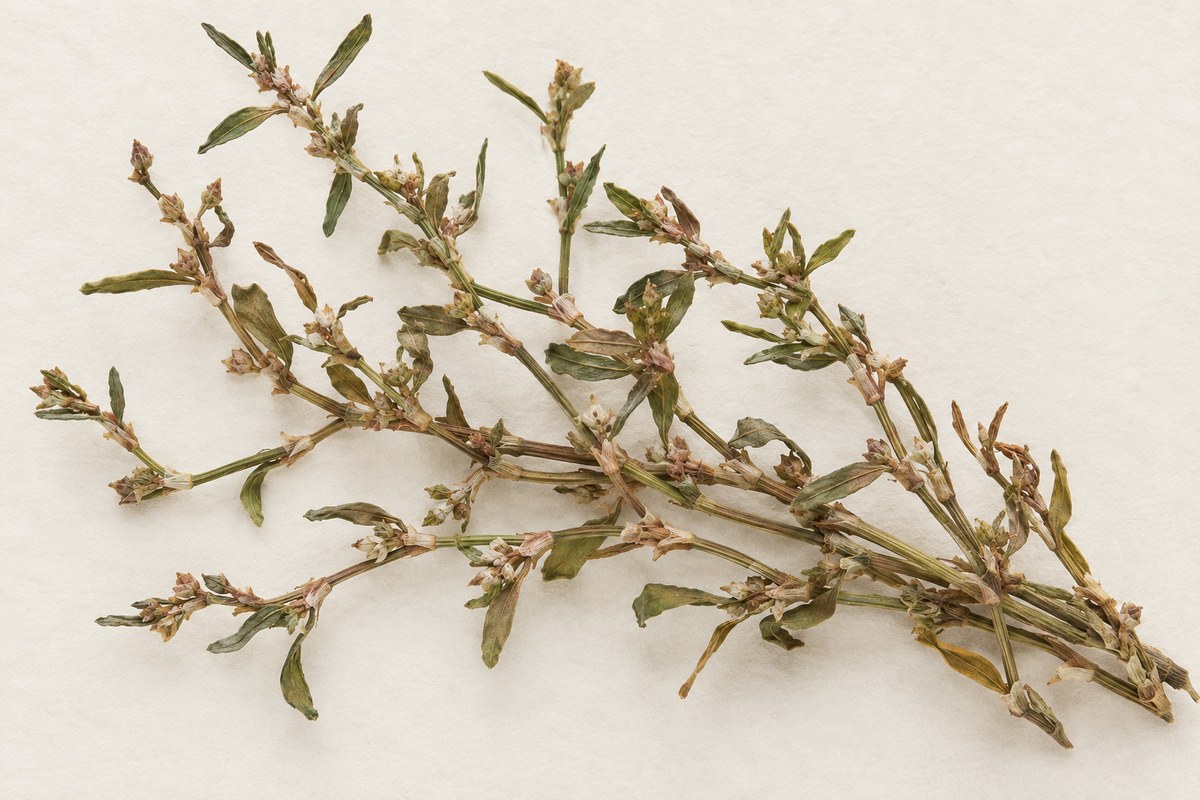
Bian Xu often forms a low mat, with prostrate or ascending stems branching from the base and showing longitudinal grooves. Leaves are alternate, small, narrow-lanceolate; each node has a papery sheath clasping the stem, often nearly translucent above. Tiny flowers occur singly or in clusters of 1–5 in leaf axils; pale green perianths with white margins may turn pink in fruit. The drug is dried flowering tops, not root. Dried material has fine stems, tiny leaves, and axillary flowers/perianths. It can be confused with other Polygonaceae; a hand lens helps inspect sheaths and axillary flowers. Do not authenticate from AI images alone.
Growth and habitat
Polygonum aviculare occurs on disturbed open ground, roadsides, lawns, fields, and compacted soils across temperate regions. Its prostrate stems tolerate dry to moderately moist sunny sites and compact soil. Do not grow or collect on pavements, parking areas, sprayed fields, or contaminated land.
Identification and study notes
Bian Xu often forms a low mat, with prostrate or ascending stems branching from the base and showing longitudinal grooves. Leaves are alternate, small, narrow-lanceolate; each node has a papery sheath clasping the stem, often nearly translucent above. Tiny flowers occur singly or in clusters of 1–5 in leaf axils; pale green perianths with white margins may turn pink in fruit. The drug is dried flowering tops, not root. Dried material has fine stems, tiny leaves, and axillary flowers/perianths. It can be confused with other Polygonaceae; a hand lens helps inspect sheaths and axillary flowers. Do not authenticate from AI images alone.
Growing and care
- Gieo hạt nông trong đất tơi, nắng; giữ ẩm nhẹ đến nảy mầm rồi tưới theo độ khô. Cây chịu đất nén nhưng luống thoát nước giúp giảm úng và thối.
- Sow shallowly in sunny loose soil; keep lightly moist to germination, then water according to dryness. The plant tolerates compact ground, but drainage reduces waterlogging and rot.
How long until harvest? Often an annual, it may flower in the same season, but HKBU/EMA give no fixed sowing-to-harvest days. Flowering is a recognition/harvest stage, not proof of cleanliness or suitability for ingestion.
Documented formula pairing: Ba Zheng San
HKBU records this as a classical damp-clearing formula for a traditional damp-heat urinary pattern. It pairs Bian Xu and Qu Mai with Che Qian Zi, Zhi Zi, and other ingredients; this is not advice to self-treat urinary infection or stones.
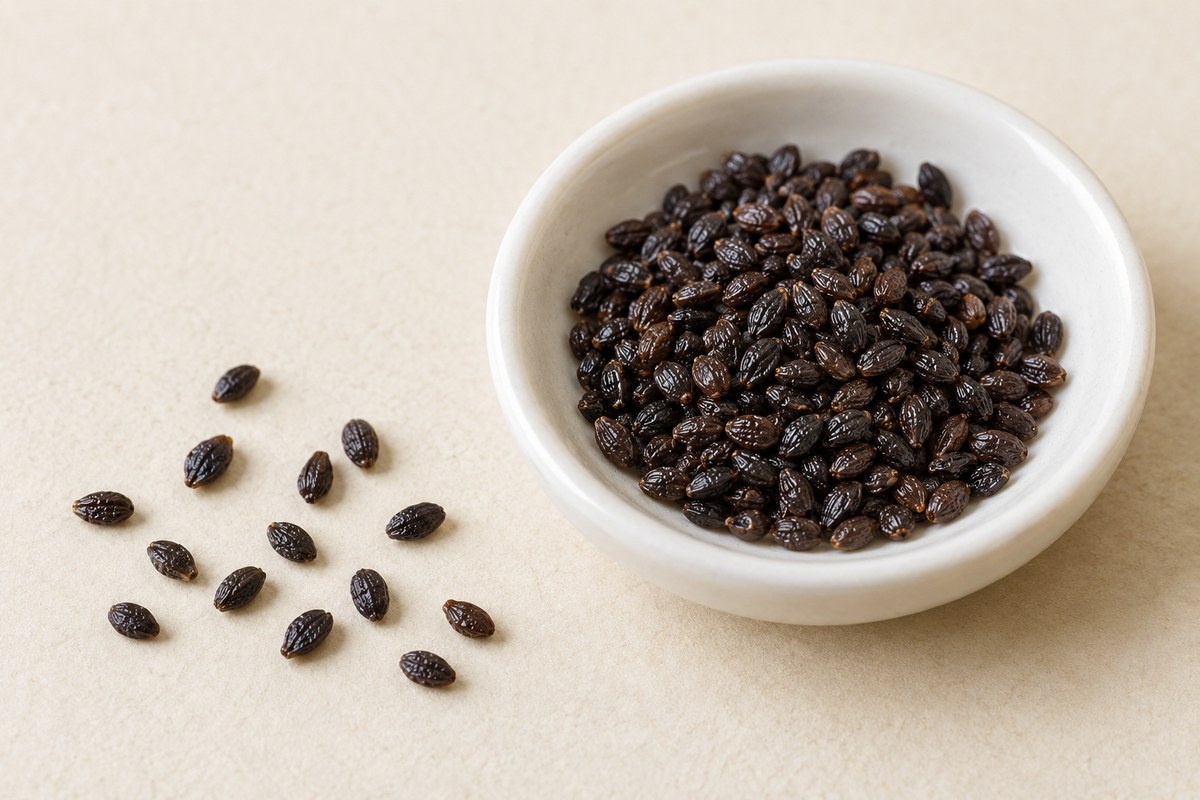
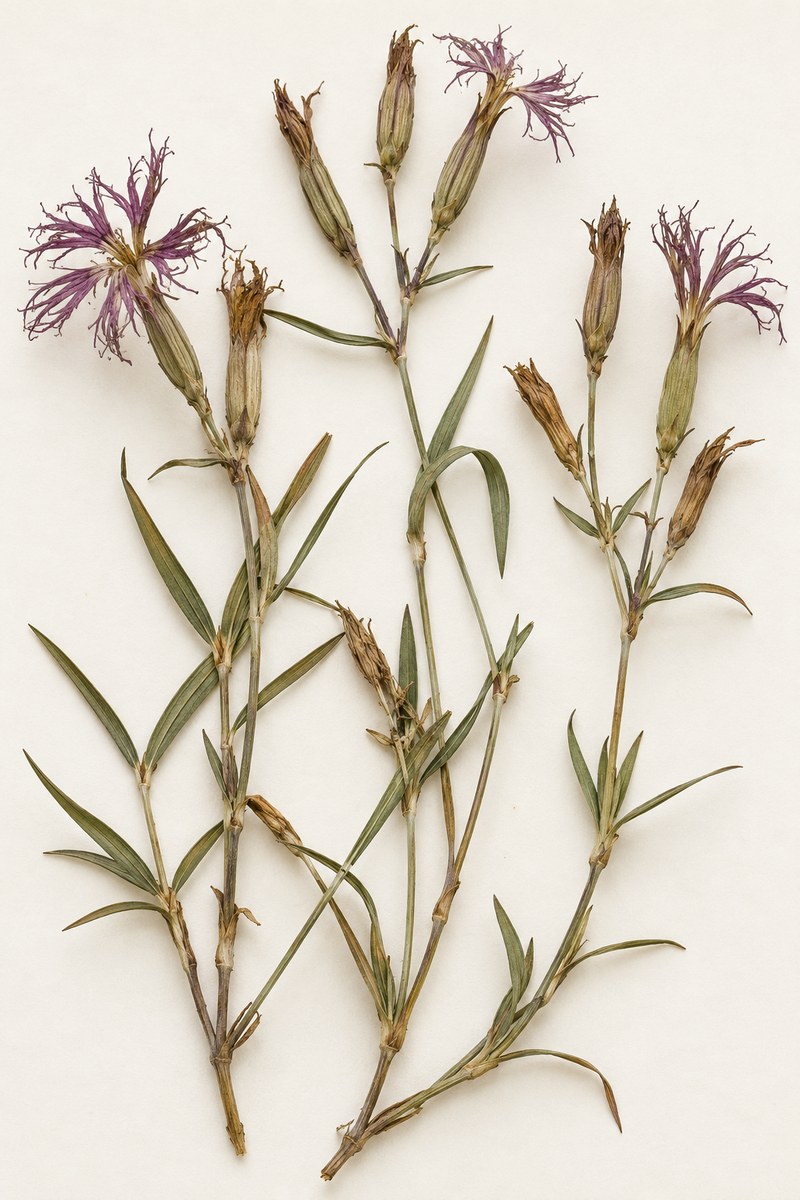
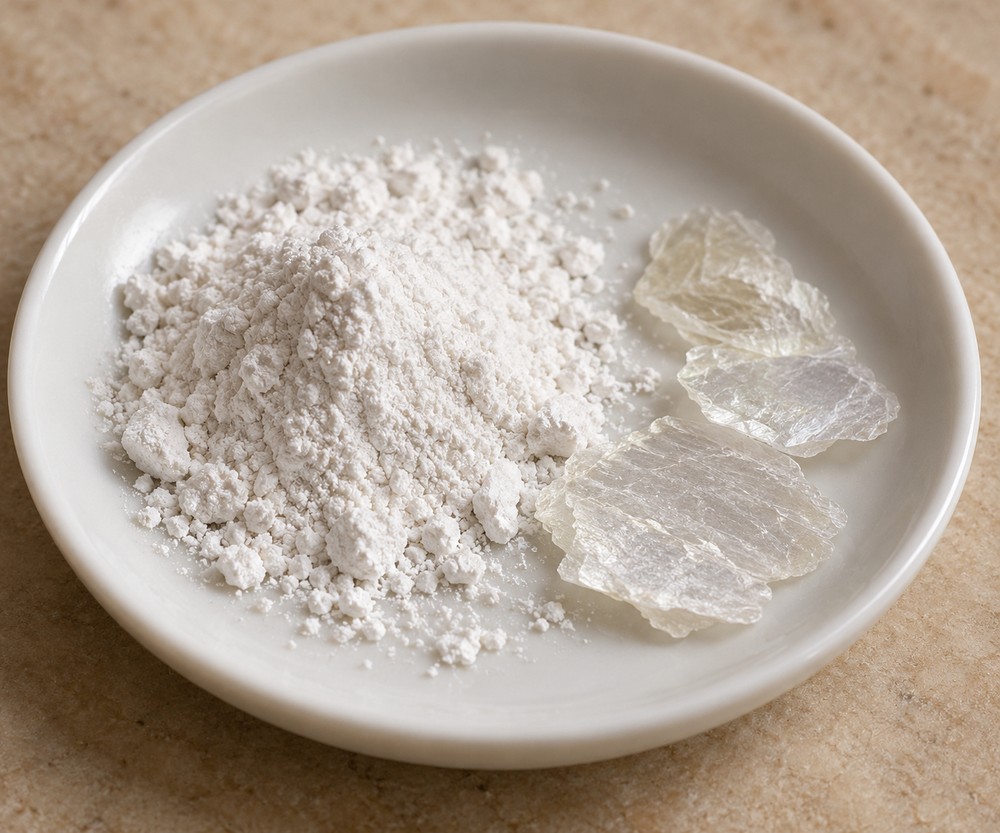
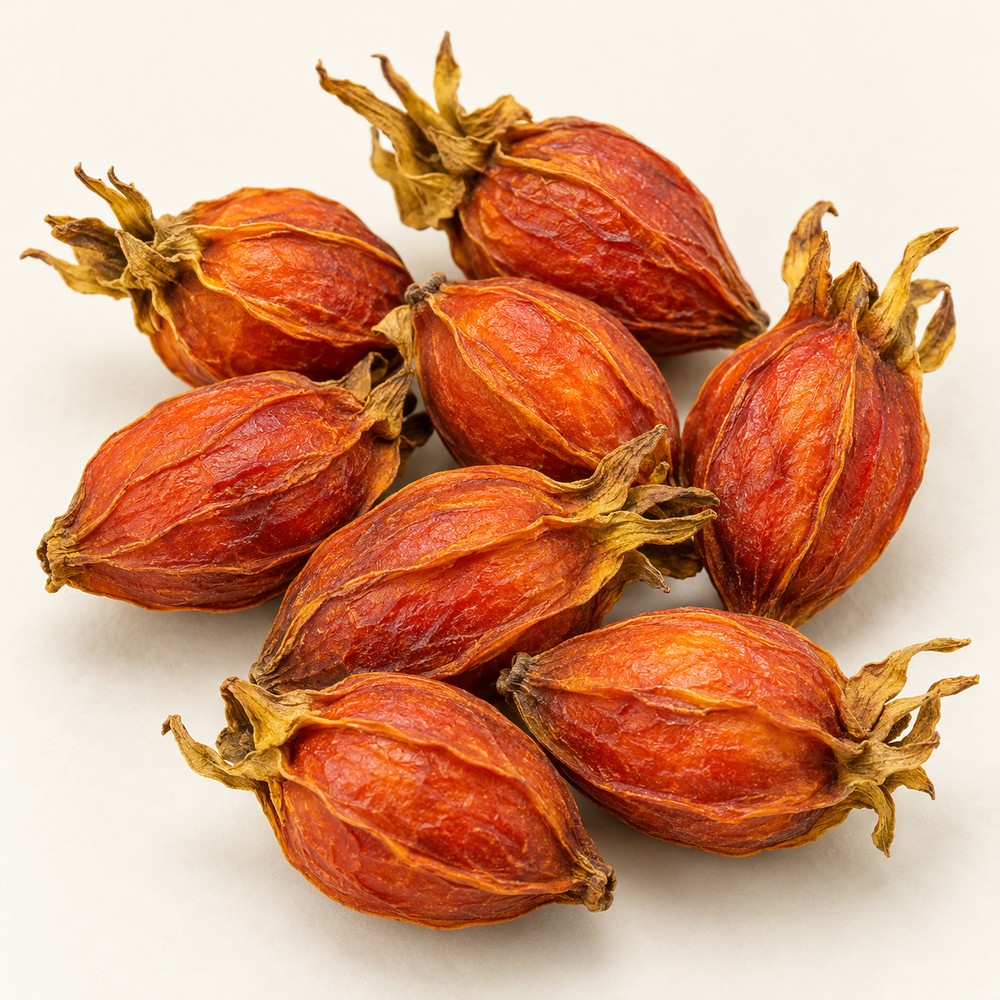
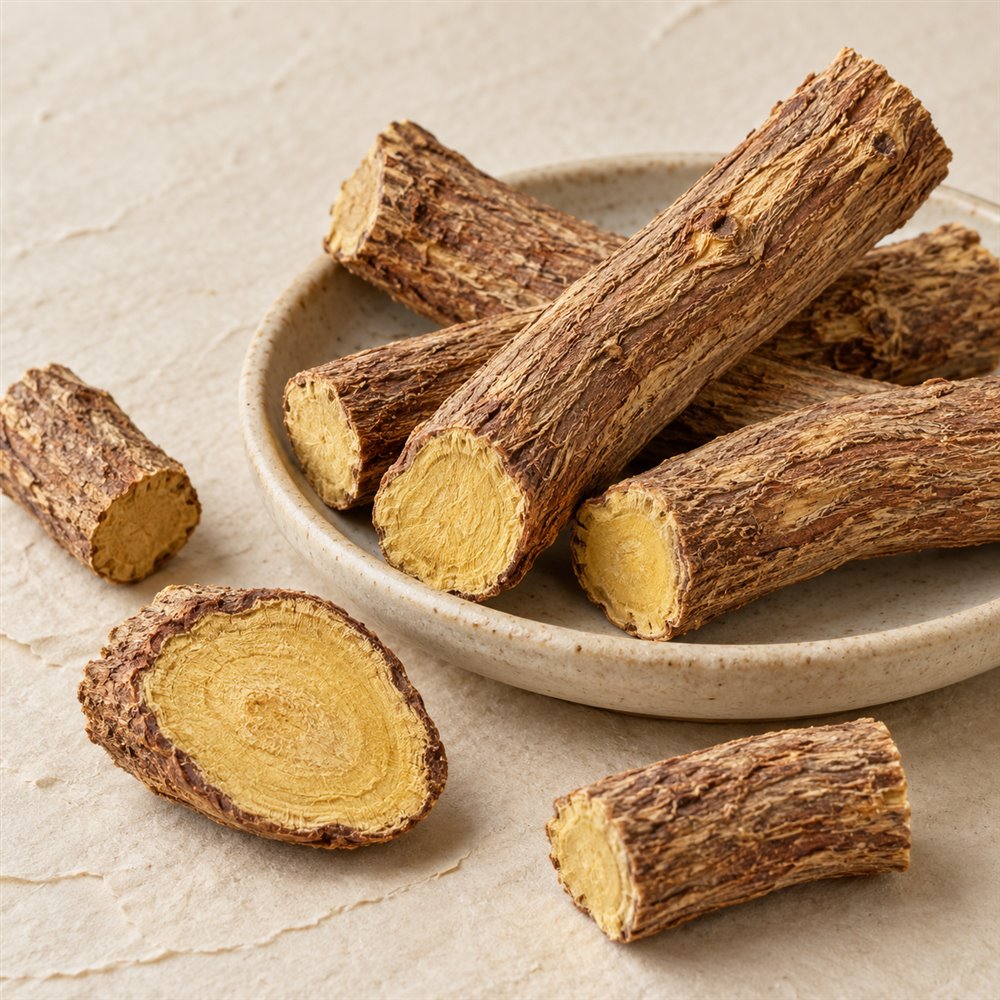
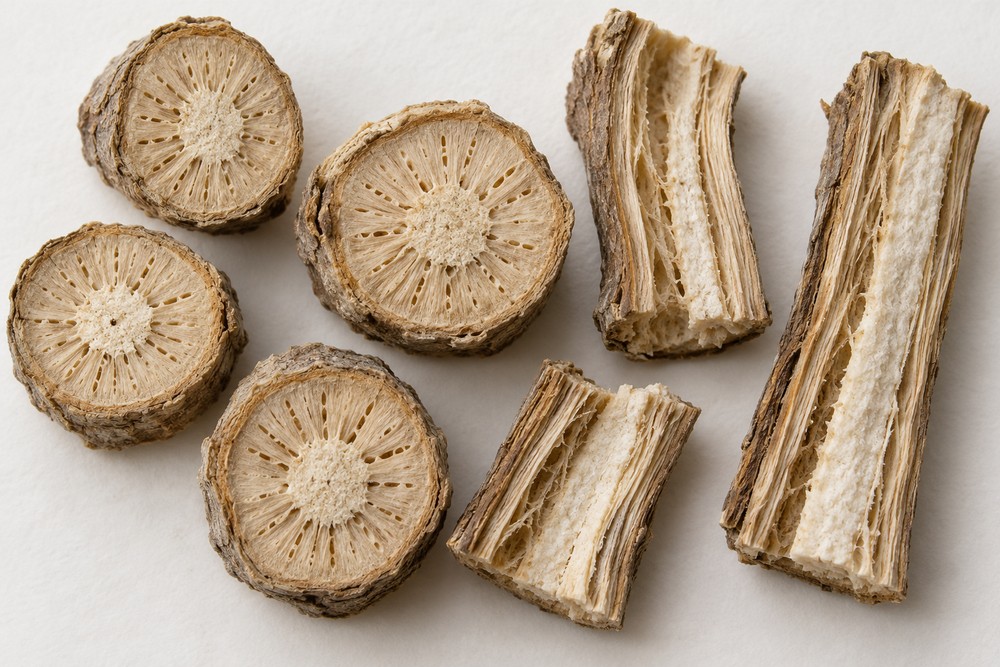
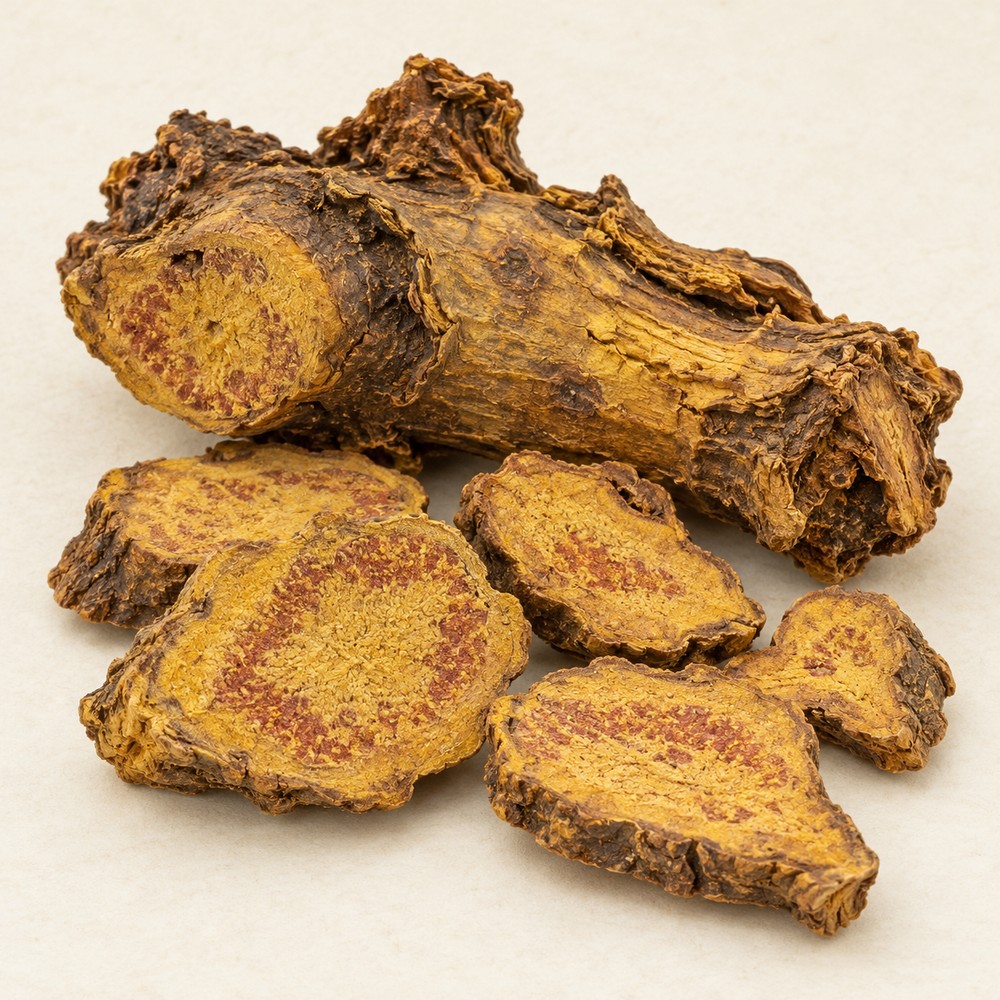
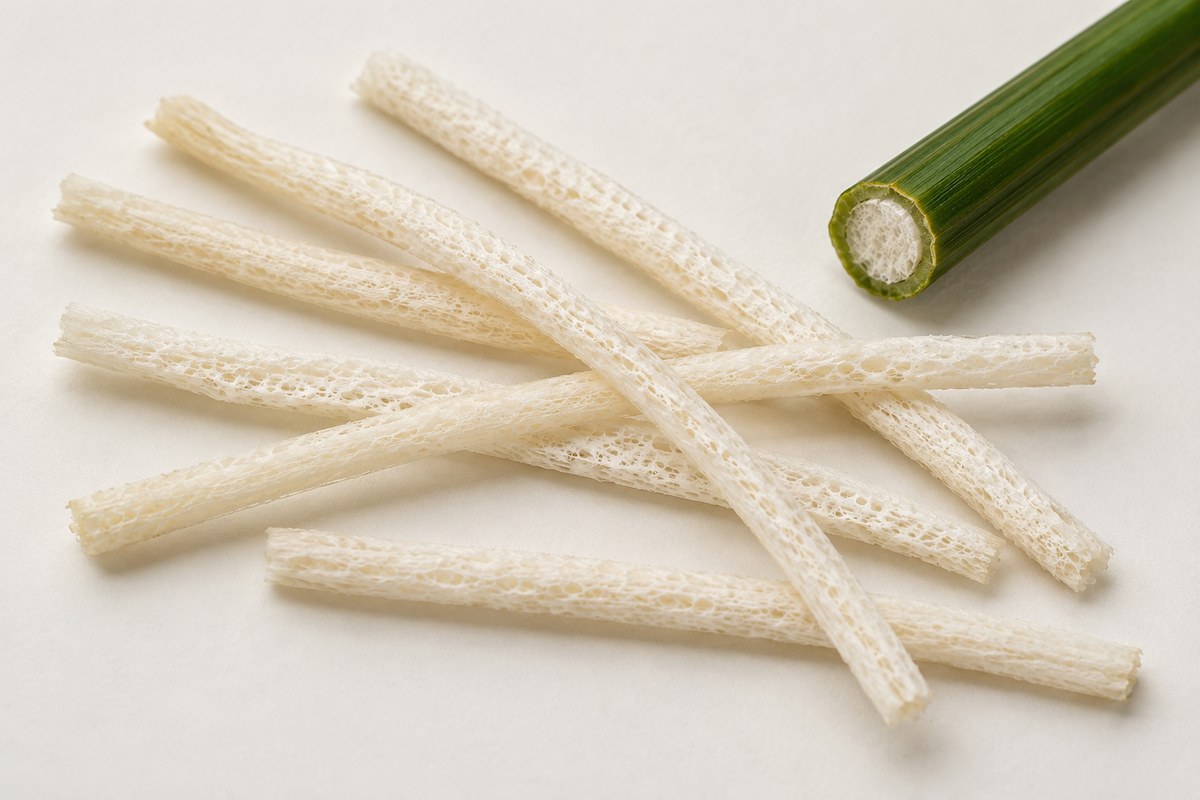
Source-recorded amounts: HKBU lists eight principal ingredients at 1 jin each (shown as 500 g in its converted record), with a Deng Xin decoction as the vehicle. This is a historical batch formula, not an individual dose.
Caution: Not a home decoction. Painful urination, fever, flank pain, blood in urine, retention, or pregnancy requires medical assessment. Talc is a mineral; quality, identity, and processing of all ingredients require professional controls.
Open formula record ↗Documented toxic incompatibility
EMA reported no side effects for the referenced preparations at the time of assessment; no specific TCM toxic pair was confirmed in reviewed sources. This does not extend to foraged plants, every extract, or arbitrary combinations.
AI study illustrations; not for specimen identification.
FROM PLANT / SOURCE HABITAT TO DRIED MATERIAL · REFERENCE WORKFLOW
- Harvest flowering aerial parts from a lot identified as Polygonum aviculare; EMA defines its reference drug as dried and comminuted flowering aerial parts.
- Shake off soil and remove debris, other weeds, yellow leaves, and pesticide-exposed material; keep wild and cultivated sources separate.
- Dry in a clean ventilated area, then cut/reduce particle size to facility standards; check moisture, mold, and foreign matter.
- Record species, site, and harvest date; do not make a home decoction without an appropriate product label. Blood in urine, fever, flank pain, or retention requires care.
These are post-harvest study notes, not directions to prepare a remedy for self-treatment. Processing reference ↗
Material source, dried appearance, and processing forms (HKBU)
HKBU identifies Bian Xu as Herba Polygoni Avicularis from Polygonum aviculare L., aerial parts. Its specimen record notes bitter, slightly cold properties and traditional urinary/itch-relief actions. EMA defines the reference preparation as dried and comminuted flowering aerial parts; clinical data are limited and apply to preparations, not foraged plants.
Open original materia medica record ↗Habitat, season, and harvest in the HKBU botanical record
HKBU records Polygonum aviculare at 10–50 cm, with branched prostrate stems, narrow alternate leaves, and tiny axillary flowers in open disturbed habitats. The flowering aerial parts are dried; no standard sowing-to-harvest calendar is supplied.
Open botanical source ↗