Cang Zhu (Atractylodes rhizome) · Cang Zhu
Atractylodes lancea (Thunb.) DC. · Dried rhizome
Name and part used
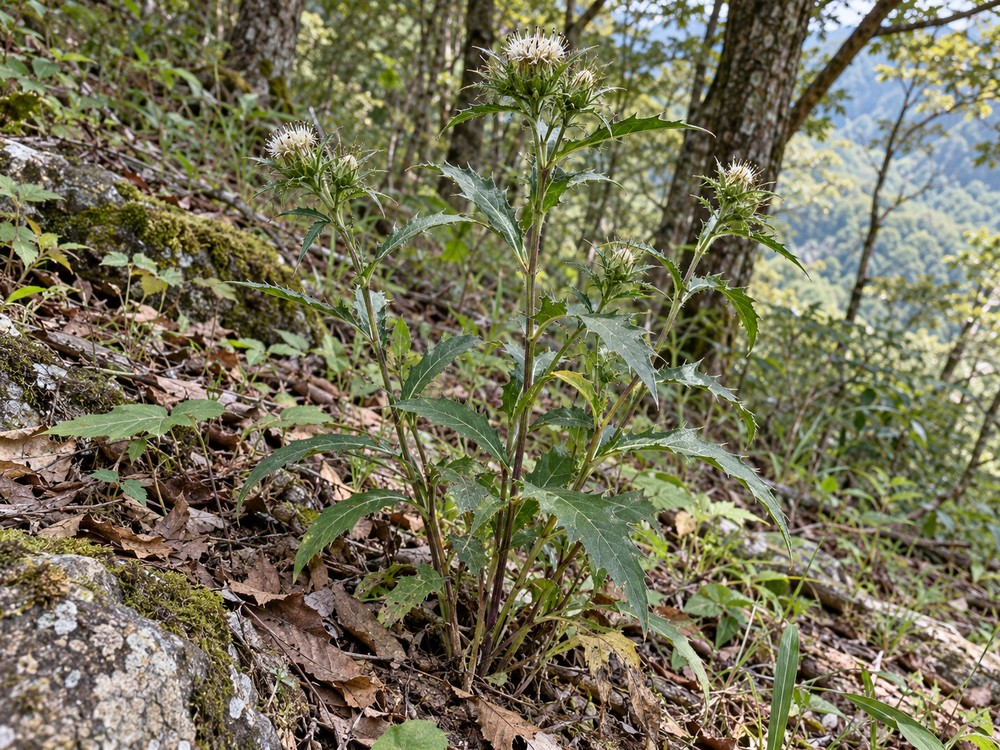
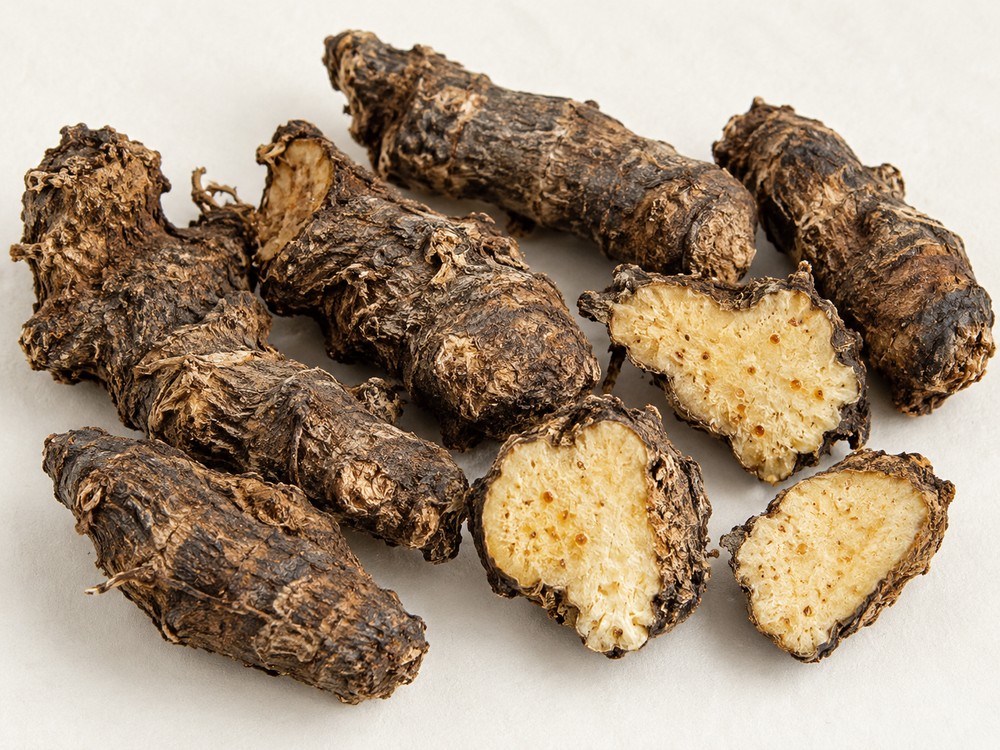
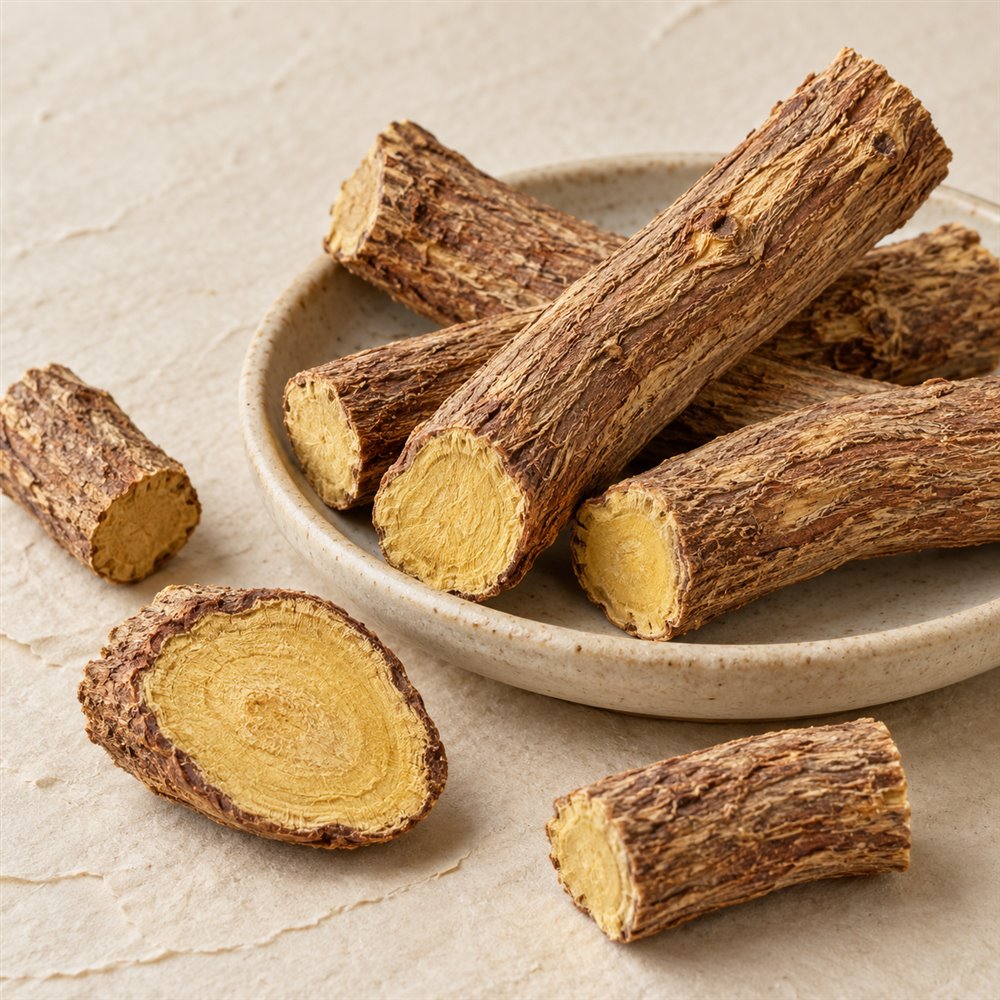
This entry uses Cang Zhu as Atractylodes lancea; some pharmacopoeias also accept A. chinensis, so species must be stated. It is a perennial Asteraceae herb with dark, aromatic rhizomes; leaf shape varies along the stem and margins have sharp teeth; small white composite flower heads appear in season. Dried rhizomes are curved and cylindrical, gray-brown to yellow-brown, with orange-brown oil dots in cross-section; white crystals may appear after storage. It is distinct from Bai Zhu, Atractylodes macrocephala.
Traditional context
Traditional theory describes Cang Zhu as acrid, bitter, and warm, used to transform dampness and support digestion in selected patterns. Hou Po, Chen Pi, and licorice appear with it in Ping Wei San, but the formula is not a universal treatment for bloating or diarrhea. Pattern theory does not replace diagnosis of gastrointestinal disease.
Modern evidence
The Chengdu University of Traditional Chinese Medicine herb database records dried rhizome from A. lancea/A. chinensis and traditional descriptions; phytochemical research on volatile oils does not establish clinical efficacy. Processing changes volatile constituents, and laboratory activity cannot be generalized to human treatment.
Safety
Aromatic oils and pungency may irritate digestion; prolonged or high-dose use should not be improvised. Seek professional advice during pregnancy/breastfeeding, dehydration, constipation, chronic illness, or medication use. Do not collect wild rhizomes: contamination, confusion with Bai Zhu, and residues are risks. No definite toxic pair was confirmed in the reviewed sources.
Pairing in reference texts
HKBU’s Ping Wei San record lists Cang Zhu 4 liang (120 g), ginger-processed Hou Po 3 liang (90 g), Chen Pi 2 liang (60 g), and honey-prepared licorice 1 liang (30 g), a relative mass ratio of 4:3:2:1. The source also describes powder with fresh ginger and jujube; this is historical documentation, not a modern dose. It is not suitable for every person with abdominal pain.
Growth and habitat
The plant grows on hillsides, scrub, and grasslands in temperate East Asia; materia medica sources record production in Jiangsu, Hubei, Henan, Anhui, and Zhejiang. It prefers cool conditions, tolerates cold and short dry spells, but dislikes waterlogging; drained soil and winter dormancy support rhizome development.
Growing, care, and harvest timing
The profile above includes sourced steps and a documented harvest window. Harvest timing is agronomic information, not a self-use instruction.
Growing and care
- Propagate from treated seed or divisions from authenticated mother plants; sanitize tools when dividing to limit disease.
- Use raised beds with mature humus and an airy soil mix; avoid heavy clay. Provide light to full sun in cool regions.
- Water after planting and later when the soil surface dries; prevent standing water around the crown.
- Add mature compost early in the season and hand-weed shallowly; deep hoeing can cut rhizomes.
- Monitor slugs, aphids, and fungal disease; remove infected leaves, improve airflow, and avoid evening overhead irrigation.
- Do not harvest young rhizomes. Dig in autumn as tops decline or follow the local crop standard; remove soil and dry promptly and evenly.
How long until harvest? A Tianjin University of Traditional Chinese Medicine botanical note records rhizome digging in early November or February–March; this is a Chinese regional calendar, not a fixed Vietnam schedule. It is perennial and needs multiple growth seasons; the reviewed sources do not establish one universal harvest age. Harvest when rhizomes meet local quality standards after adequate development.
Documented formula pairing: Ping Wei San
HKBU describes this as a classical dampness-transforming formula for differentiated spleen-stomach patterns. Persistent bloating, severe pain, bloody vomiting, or weight loss needs medical care, not self-treatment.
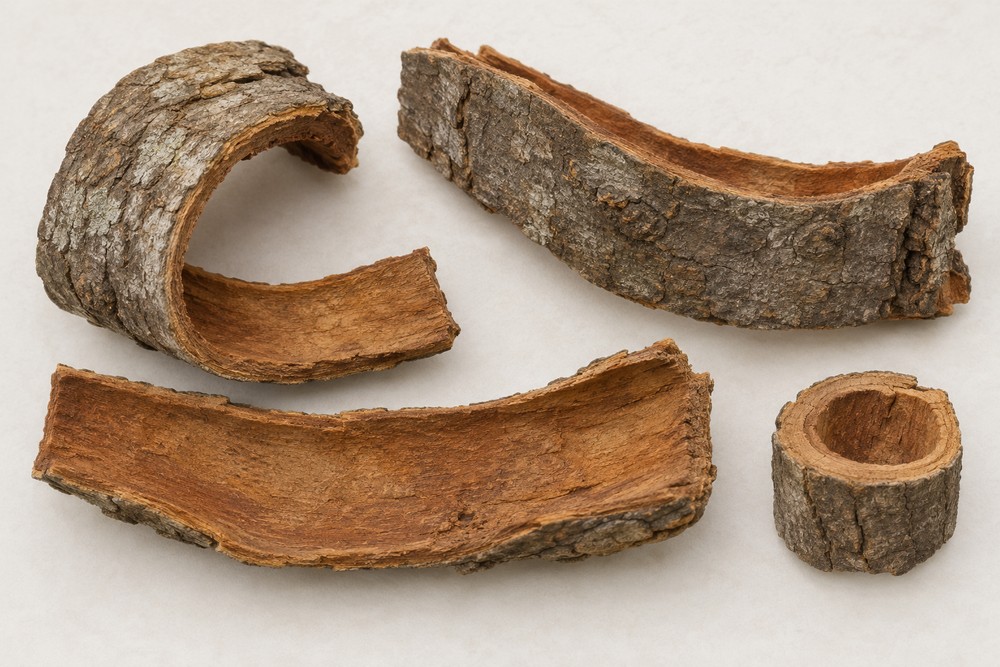
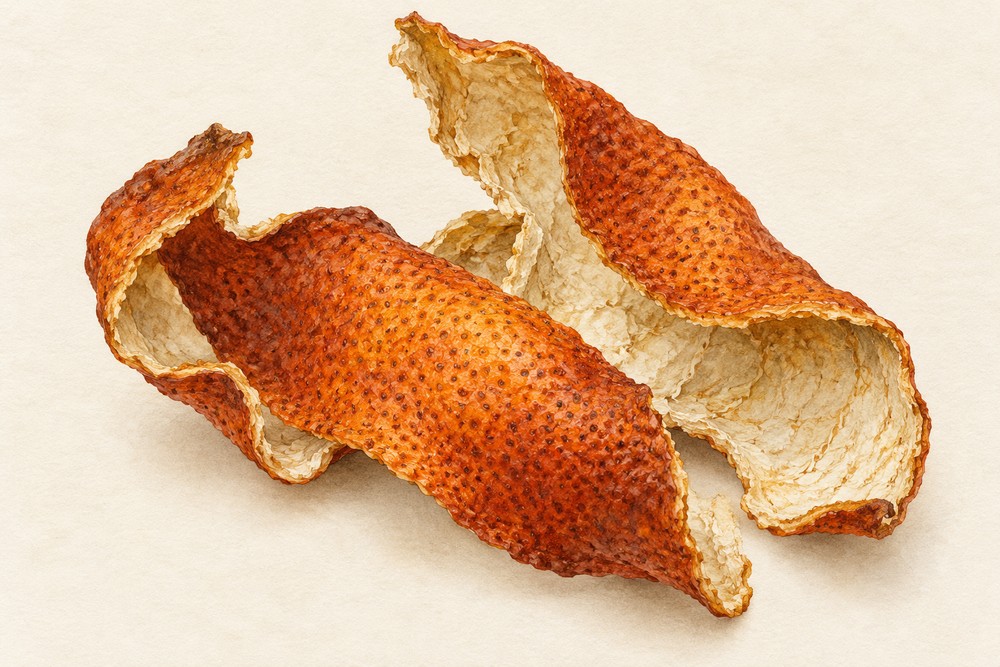
Source-recorded amounts: HKBU source amounts: 120:90:60:30 g, reduced to 4:3:2:1. These are source-recorded historical quantities, not an individualized dose; the source also describes fresh ginger and jujube.
Caution: Do not prepare this from the ratio; a qualified professional must assess the pattern, medicines, and material quality.
Open formula record ↗Documented toxic incompatibility
No reviewed source establishes a specific toxic Cang Zhu combination. Practical concerns are aromatic-oil irritation, wrong species, poor quality, and prolonged unsupervised use; absence of a pair warning is not proof of safety.
FROM PLANT / SOURCE HABITAT TO DRIED MATERIAL · REFERENCE WORKFLOW
- Use traceable seed or nursery stock of Atractylodes lancea; unknown stock risks confusion with A. macrocephala.
- Choose a cool climate and light, drained, slightly acidic to neutral soil; raised beds reduce rhizome rot. Plant in local spring or early rainy season.
- Water moderately to keep soil moist without waterlogging; use clean organic mulch and shallow hand-weeding to avoid rhizome injury.
- Apply moderate mature compost rather than excess nitrogen. Monitor leaf spots and root rot and remove diseased plants.
- Maintain airflow, remove broken stems, and rotate crops if soil disease returns. Do not collect wild plants.
- When plants meet local maturity standards, dig rhizomes in autumn or late winter/early spring; keep a voucher and lot record.
These are post-harvest study notes, not directions to prepare a remedy for self-treatment. Processing reference ↗
How to read formula amounts
Displayed amounts belong to the cited formula and source; they are not a general safe ratio, treatment dose, or home-decoction instruction. Do not transfer amounts to another formula or adjust them by body weight.