Sichuan fritillary bulb · Chuan Bei Mu
Fritillaria cirrhosa D. Don · Bulb
Name and part used
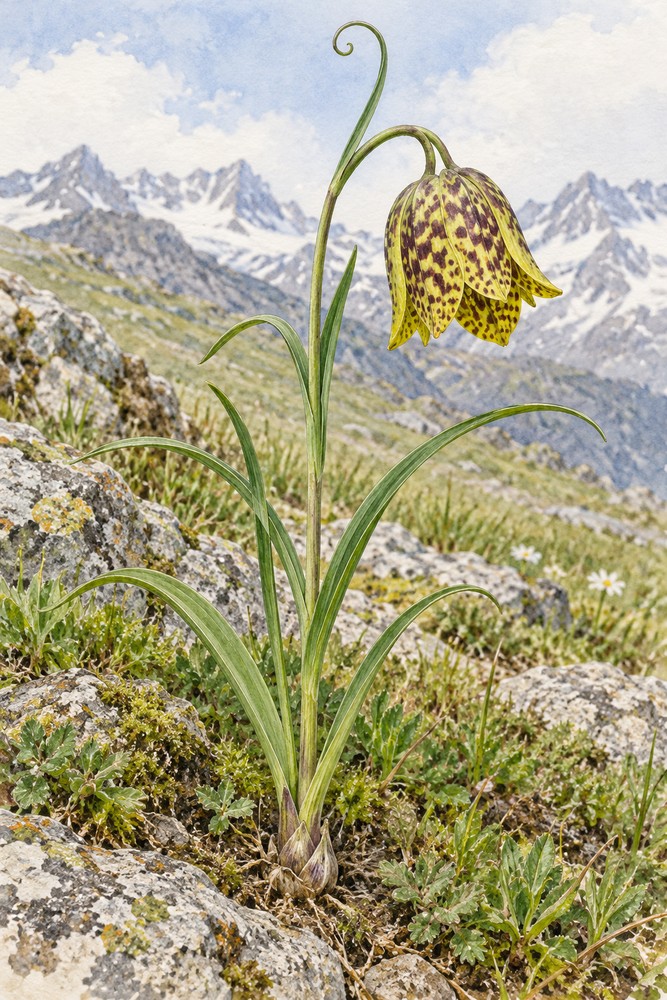
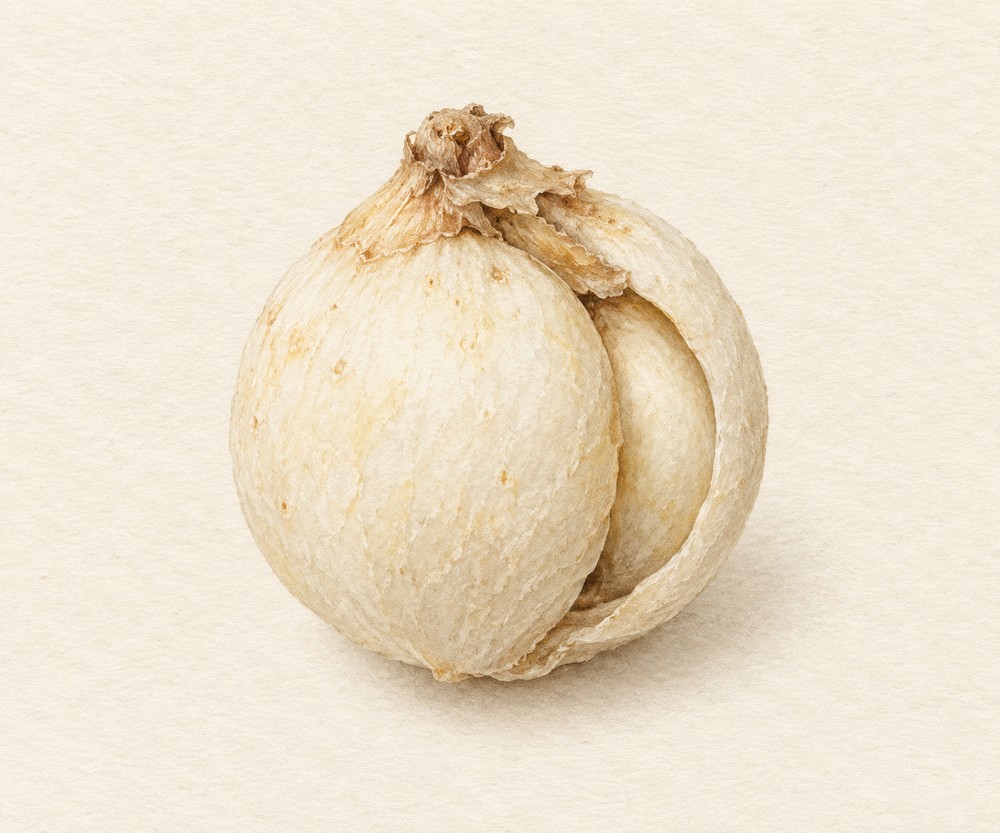
An alpine herb with narrow leaves, a nodding yellow-green checker-marked bell and curling tips; its bulb has two small scales.
Traditional context
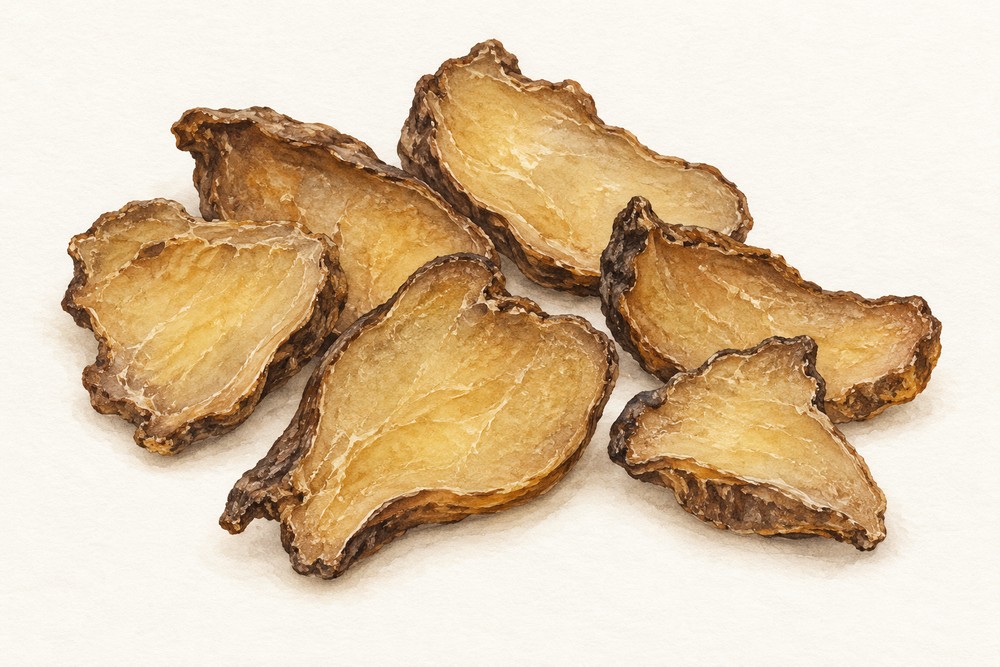
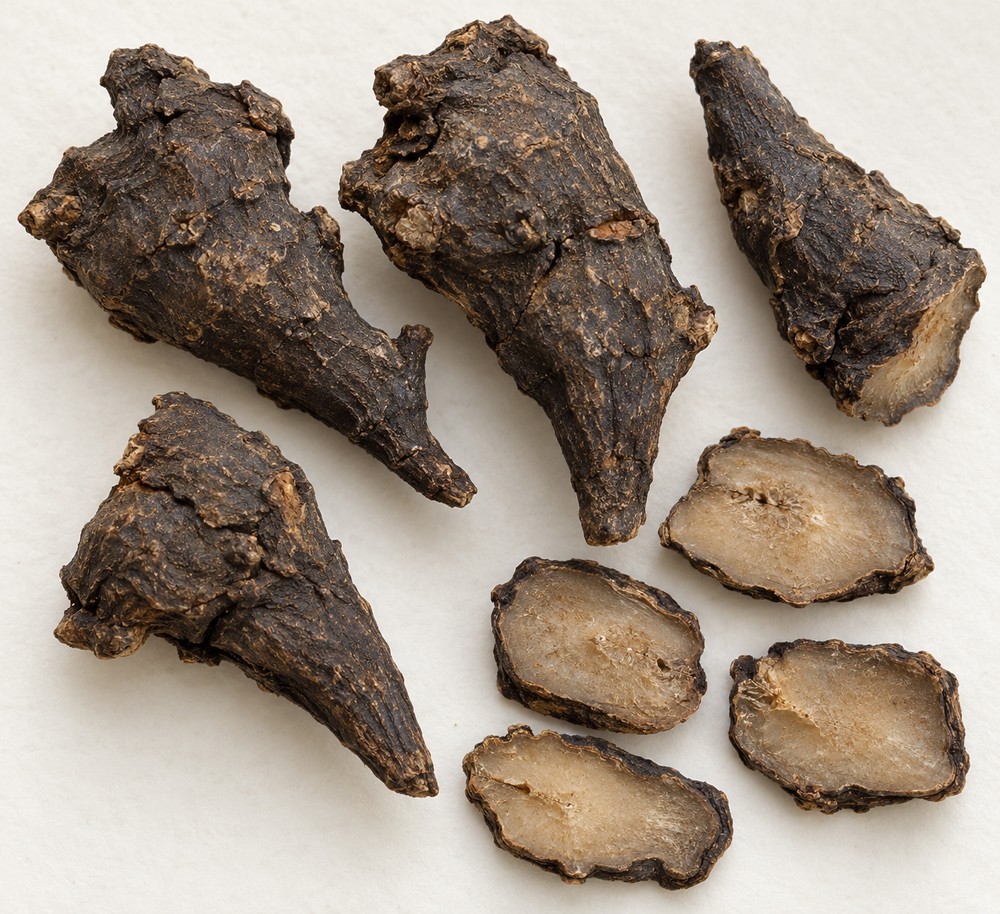
Chuan Bei Mu is the bulb of Fritillaria cirrhosa from high-altitude meadows, thickets, and fir forests. HKBU notes harvesting pressure and toxicity; other Fritillaria species may be substituted.
Modern evidence
Lung-moistening, phlegm-transforming, and cough-relieving are traditional descriptions. The herb is not a substitute for evaluating persistent cough, breathing difficulty, or blood in sputum.
Safety
HKBU notes toxicity and respiratory/smooth-muscle effects. Do not self-use, dose, or combine with other medicines; only standardized products should be considered under professional direction.
Pairing in reference texts
It appears in some historical formulas with Glehnia or Anemarrhena. This records formula history, not safety; do not combine casually with other Fritillaria or prescription drugs.
Growing, care, and harvest timing
HKBU habitat record: Growing in alp thickets, meadow or fir forests. Distributed in South Gansu, South Qinghai, Sichuan, Yunnan and Tibet. The medicinal materials are mainly produced in Tibet, Sichuan, Yunnan and etc Harvest and processing as recorded: Excavated both in the third growing season after sowing, and the next year of bulb propagation. Excavated on sunny days in June-July when stem leaves wither, cleared earth, avoid injury, not to elutriate, spread fresh Beimu timely on bamboo mat, sundried, better sun-dried until semi-dried in one day, and can be fully sun-dried the next day
Source-recorded harvest/processing: Excavated both in the third growing season after sowing, and the next year of bulb propagation. Excavated on sunny days in June-July when stem leaves wither, cleared earth, avoid injury, not to elutriate, spread fresh Beimu timely on bamboo mat, sundried, better sun-dried until semi-dried in one day, and can be fully sun-dried the next day
The reviewed source does not provide a complete species-specific sowing/growing routine, irrigation/fertilization schedule, or universal plant age. The page therefore does not infer care instructions or years to harvest; consult local cultivation guidance.
Open habitat and season source ↗FROM PLANT / SOURCE HABITAT TO DRIED MATERIAL · REFERENCE WORKFLOW
- HKBU records bulb harvest in June–July after tops wither, from mature cultivated stock; sourcing must follow conservation rules.
- Remove adhering soil without soaking or bruising bulbs under professional procedures; verify Fritillaria cirrhosa.
- Dry promptly on clean racks; facilities control time, temperature, and moisture to preserve form and quality.
- Grade and test identity/contaminants; record cultivated origin. Do not use unidentified bulbs because toxic substitutes may be confused.
These are post-harvest study notes, not directions to prepare a remedy for self-treatment. Processing reference ↗
Traditional contraindication pairs in the “18 incompatibilities” appendix
The Beijing Municipal Drug Administration appendix lists the pairs below as traditional incompatibilities. This does not establish that every exposure causes poisoning; the appendix provides no safe ratio. Do not combine them yourself, even if an old formula is cited elsewhere.
How to read formula amounts
The cited sources do not provide a formula with specific amounts for this profile; no ratio is invented. Absence from the incompatibility list does not establish safety.
Habitat, season, and harvest in the HKBU botanical record
HKBU botanical record (translated summary): Flowering and fruiting dates: Flowering: May to July, fruiting:August to October Habitat and distribution: Growing in alp thickets, meadow or fir forests. Distributed in South Gansu, South Qinghai, Sichuan, Yunnan and Tibet. The medicinal materials are mainly produced in Tibet, Sichuan, Yunnan and etc Harvest and processing as recorded: Excavated both in the third growing season after sowing, and the next year of bulb propagation. Excavated on sunny days in June-July when stem leaves wither, cleared earth, avoid injury, not to elutriate, spread fresh Beimu timely on bamboo mat, sundried, better sun-dried until semi-dried in one day, and can be fully sun-dried the next day
Open botanical source ↗