Szechuan lovage rhizome · Chuan Xiong
Ligusticum chuanxiong Hort. · Rhizome
Name and part used
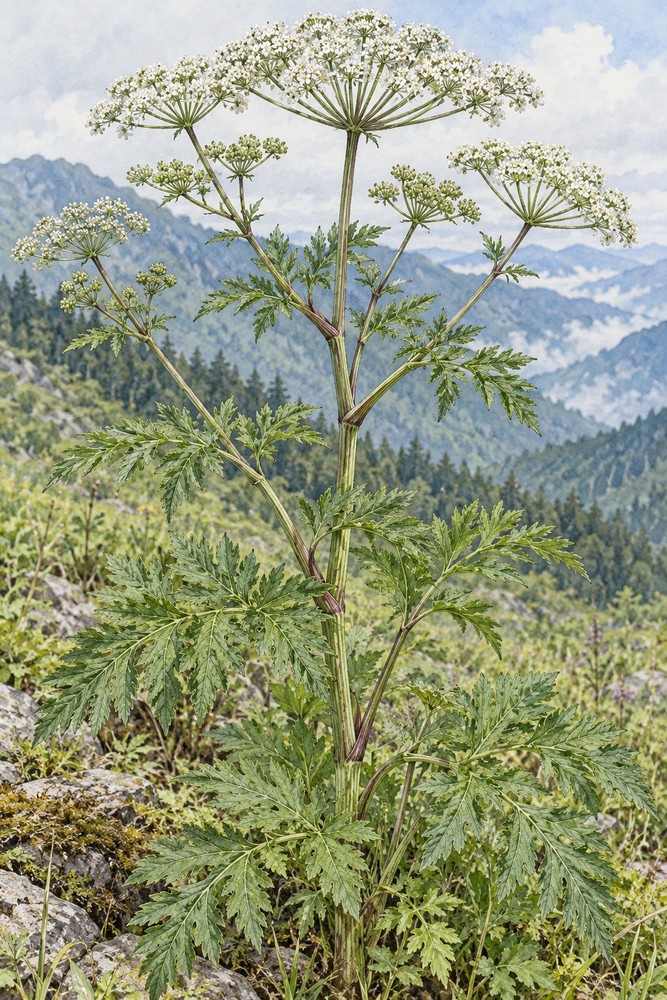
An Apiaceae herb with finely divided leaves, white umbels, and a compact, knotty rhizome.
Traditional context
HKBU records Chuan Xiong as dried Ligusticum chuanxiong rhizome. Similar common names do not confirm the species; Apiaceae contains look-alike plants.
Modern evidence
Research on compounds or extracts does not establish treatment effects for every product or formula.
Safety
It may affect clotting; people taking warfarin or antiplatelet medicines, preparing for surgery, or under treatment should seek professional advice.
Pairing in reference texts
It is recorded with white peony and Dang Gui in some classical formulas. A textual pairing is not a clinical interaction assessment.
Growing, care, and harvest timing
HKBU habitat record: Mostly cultivated. Distributed in Sichuan, Guizhou, Yunnan and etc. The medicinal materials are mainly produced in Guanxian and Chongqing of Sichuan Harvest and processing as recorded: Excavated rhizome from late May to early June on the second year of planting; removed stem leaves and fibril, washed, sun-dried or baked to dry, and then strike out fibril
Source-recorded harvest/processing: Excavated rhizome from late May to early June on the second year of planting; removed stem leaves and fibril, washed, sun-dried or baked to dry, and then strike out fibril
The reviewed source does not provide a complete species-specific sowing/growing routine, irrigation/fertilization schedule, or universal plant age. The page therefore does not infer care instructions or years to harvest; consult local cultivation guidance.
Open habitat and season source ↗FROM PLANT / SOURCE HABITAT TO DRIED MATERIAL · REFERENCE WORKFLOW
- Harvest cultivated rhizomes when due in the production region and verify Ligusticum chuanxiong.
- Remove soil, stems, and fine roots; preserve intact rhizome pieces and clean under a documented procedure.
- Dry under control and slice to the materia medica specification; record processing because it defines the finished form.
- Lot and label source and processing date; store clean and dry away from moisture and loss of aroma.
These are post-harvest study notes, not directions to prepare a remedy for self-treatment. Processing reference ↗
How to read formula amounts
Displayed amounts belong to the cited formula and source; they are not a general safe ratio, treatment dose, or home-decoction instruction. Do not transfer amounts to another formula or adjust them by body weight.
Material source, dried appearance, and processing forms (HKBU)
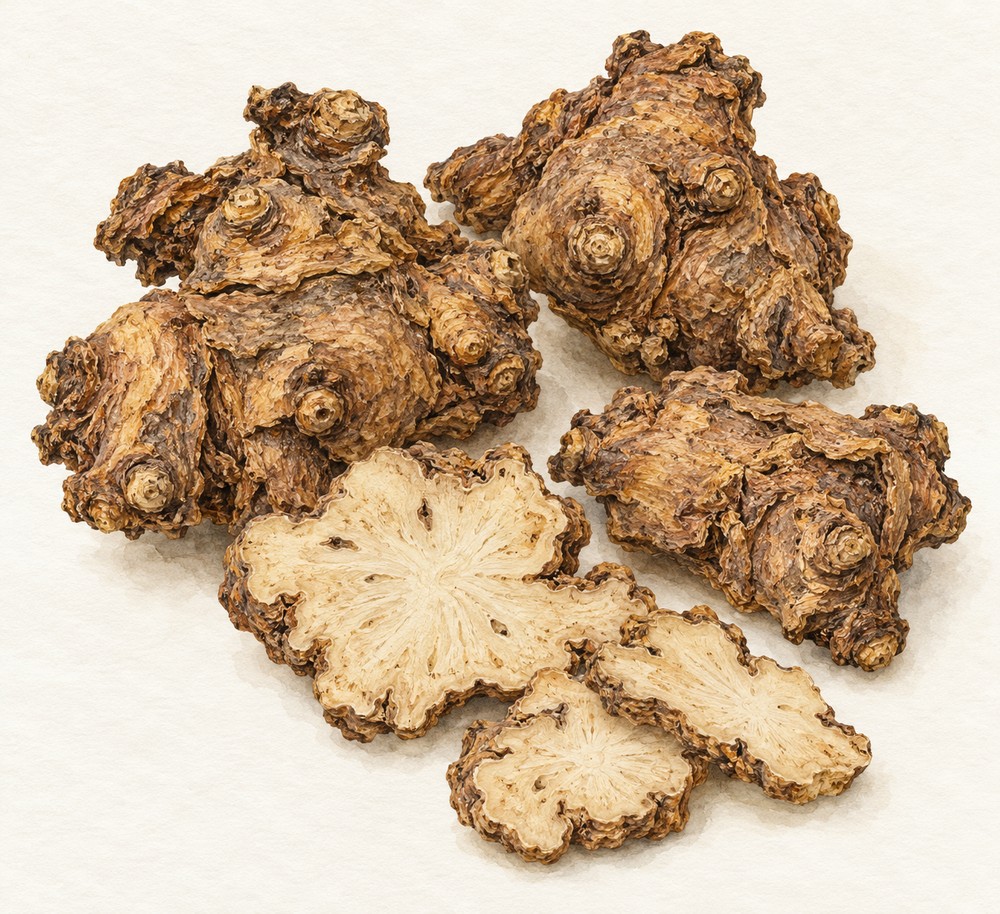
Medicinal material source: The dried rhizomes of Ligusticum chuanxiong Hort.(Apiaceae) Dried appearance and identification features: Irregular knotty fist-shaped pieces, 2~7cm diameter. Externally yellowish-brown, rough and wrinkled, with numerous parallel raised ring nodes; depressed semi-circular stem scars at the apex, many remnants of roots on the ring nodes and bottom. Firm texture, difficult to break; fractured surface is yellowish-white or grayish-yellow, scattered yellowish-brown oil cavities, the cambium forms an undulating ring. Potent aromatic odor; bitter, Acrid taste, mildly numbs the tongue, with a slightly sweet aftertaste. Decoction pieces have uneven edges, irregular butterfly-like thin slices Quality markers recorded by HKBU: Superior medicinal material is large, full, firm, oily, potent aromatic with yellowish-white fractured surface Processing forms recorded by HKBU: Jiu chuang xiong: Spray the chuan xiong slices with yellow rice wine, cover a little while, fry till slightly burnt, take out and cools (every 100 jin of chuan xiong slices with 12 jin and 8 liang of yellow rice wine)
Open original materia medica record ↗Habitat, season, and harvest in the HKBU botanical record
HKBU botanical record (translated summary): Flowering and fruiting dates: Flowering: July to September. Fruiting: September to October Habitat and distribution: Mostly cultivated. Distributed in Sichuan, Guizhou, Yunnan and etc. The medicinal materials are mainly produced in Guanxian and Chongqing of Sichuan Harvest and processing as recorded: Excavated rhizome from late May to early June on the second year of planting; removed stem leaves and fibril, washed, sun-dried or baked to dry, and then strike out fibril
Open botanical source ↗HKBU formula record containing this herb: Jiu Wei Qiang Huo Tang / Nine Ingredients Notopterygium Decoction
Traditional action in the source: Induces sweating, expels dampness, and clears internal heat
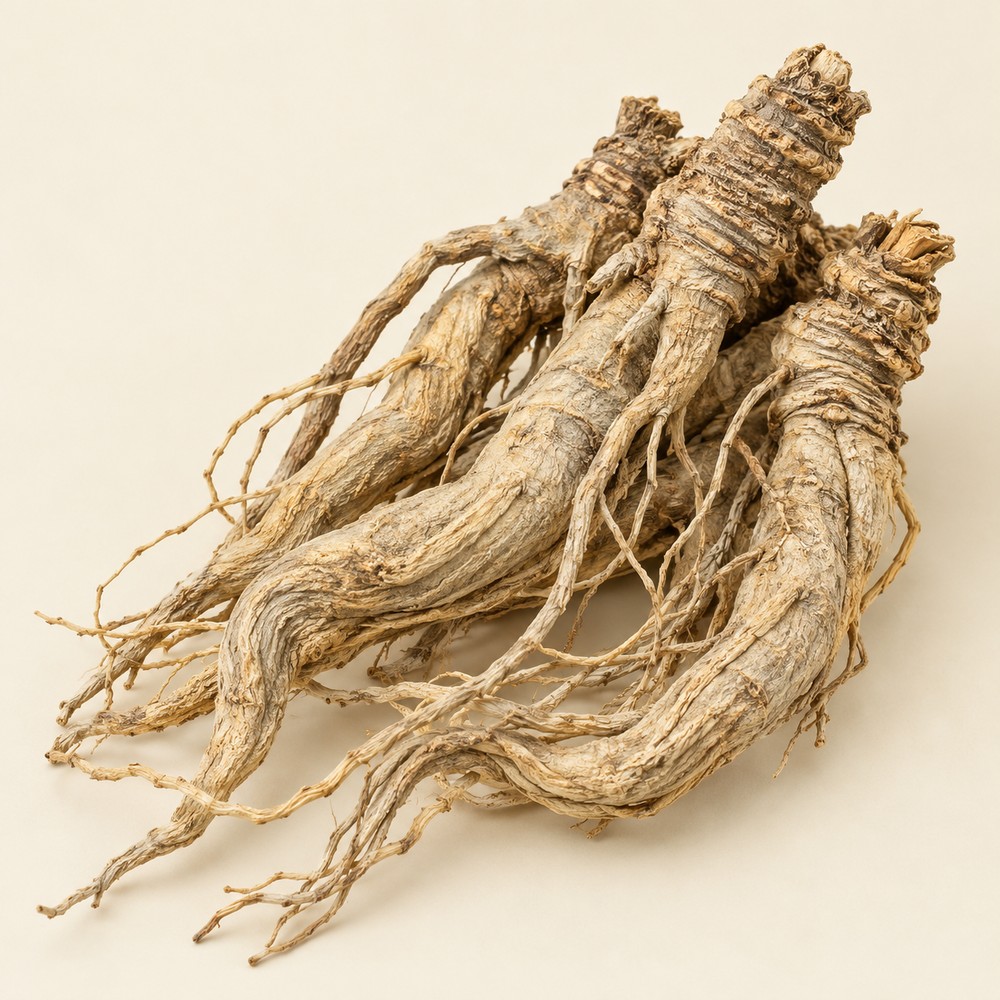
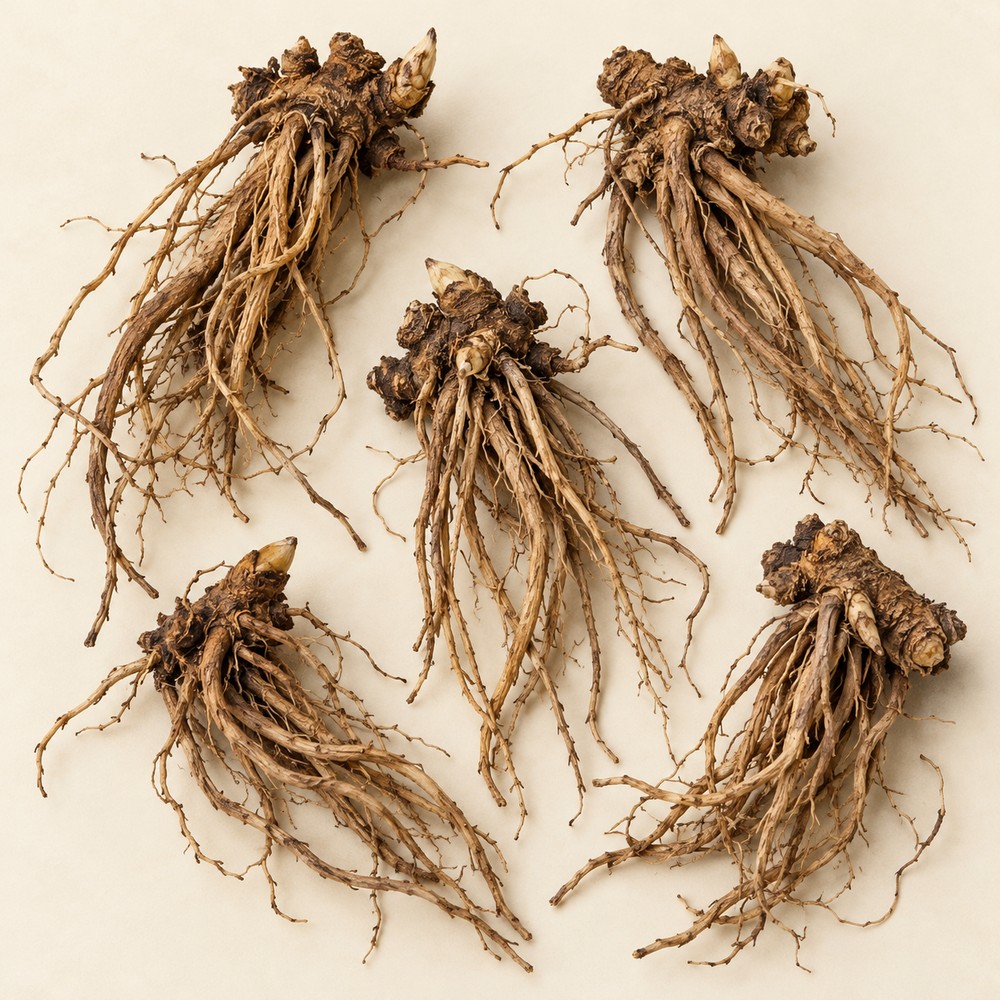
Ingredient images and source amounts are shown for comparison only; this is not a treatment recipe.
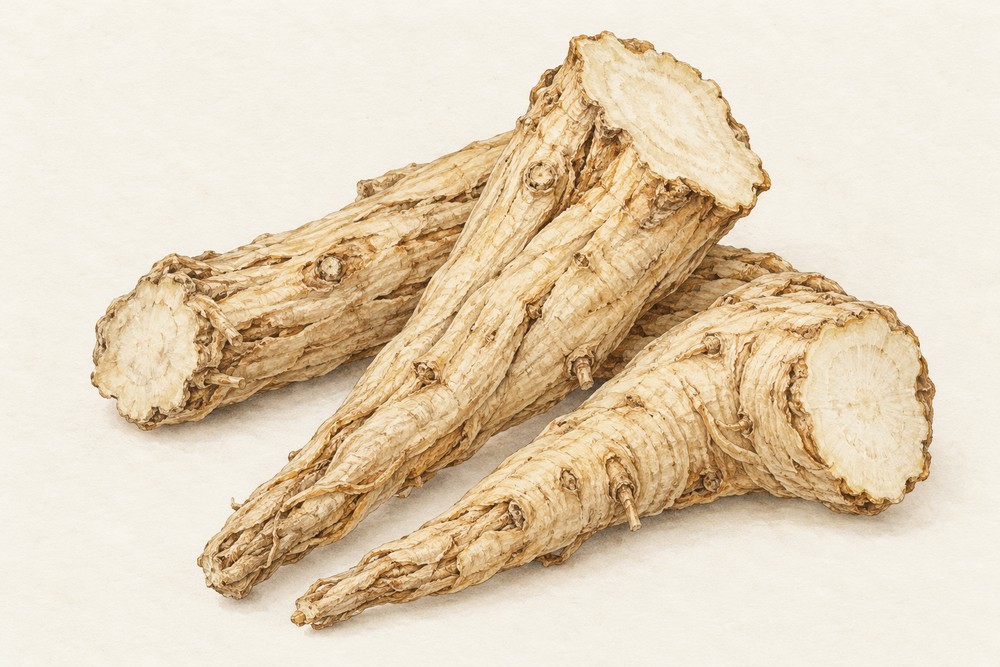
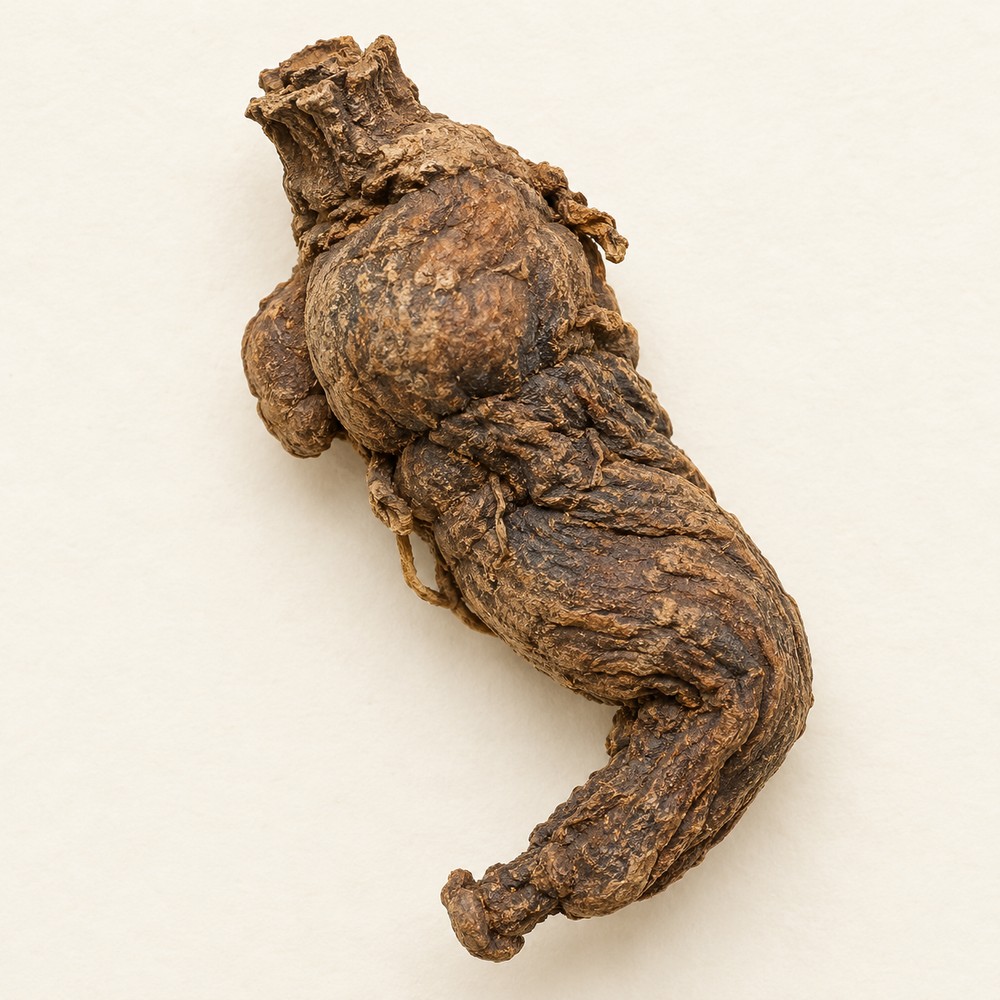
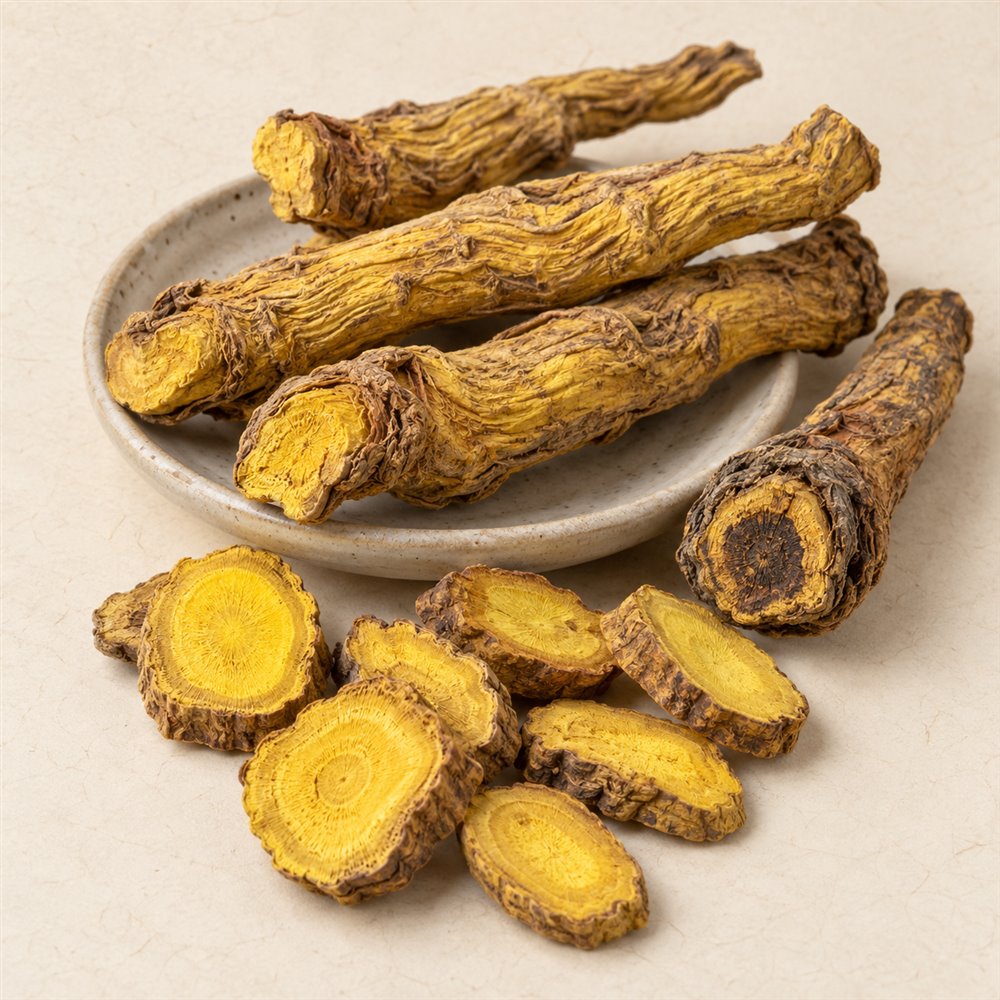
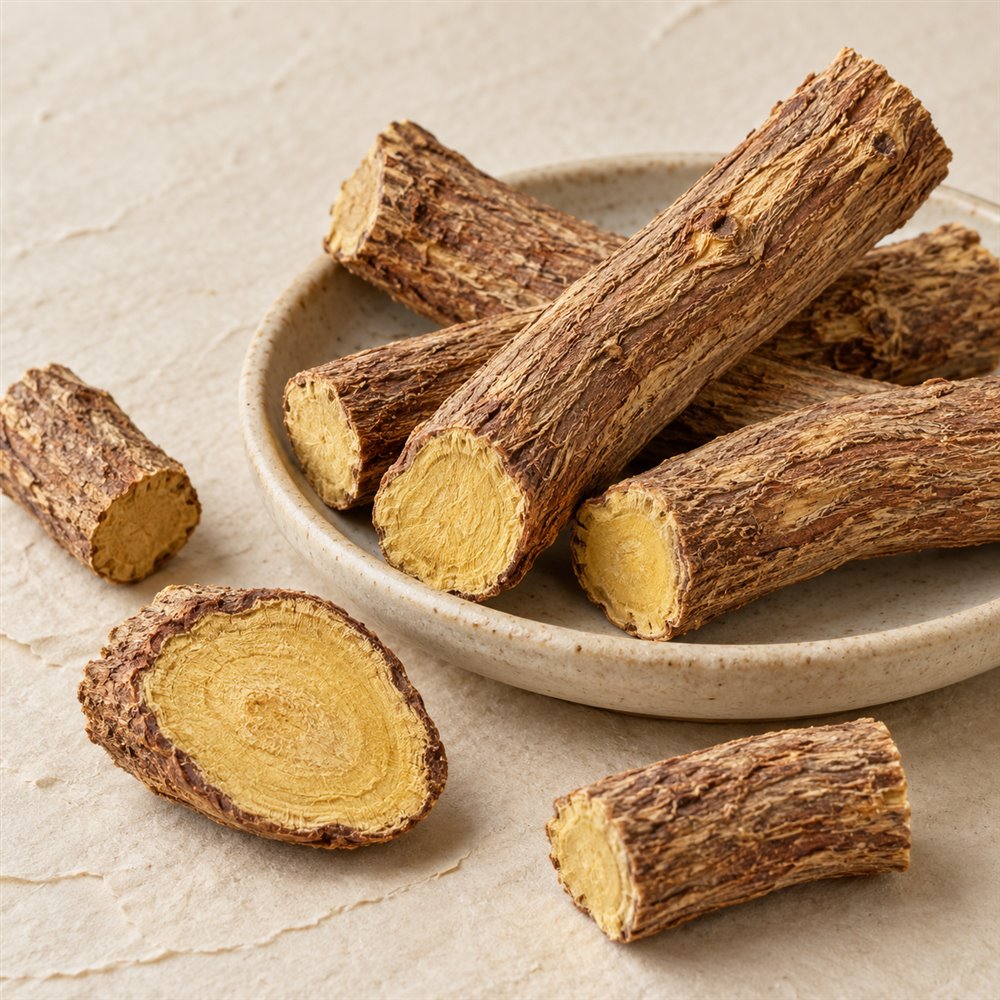
HKBU source-recorded composition
Notopterygii Rhizoma et Radix (Qiang Huo) 1.5 liang (9g), Saposhnikoviae Radix (Fang Feng) 1.5 liang (9g), Atractylodis Rhizoma (Cang Zhu) 1.5 liang (9g), Asari Radix et Rhizoma (Xi Xin) 5 fen (3g), Chuanxiong Rhizoma (Chuan Xiong) 1 liang (6g), Angelicae Dahuricae Radix (Bai Zhi) 1 liang (3g), Rehmanniae Radix (Sheng Di Huang) 1 liang (6g), Scutellariae Radix (Huang Qin) 1 liang (6g), Glycyrrhizae Radix et Rhizoma (Gan Cao) 1 liang (6g)
The ingredients and amounts below are one HKBU-recorded version; texts, historical units, processing, and modern products can differ. This is comparative reference data, not a home-preparation recipe or personal dose.
Open complete HKBU formula record ↗