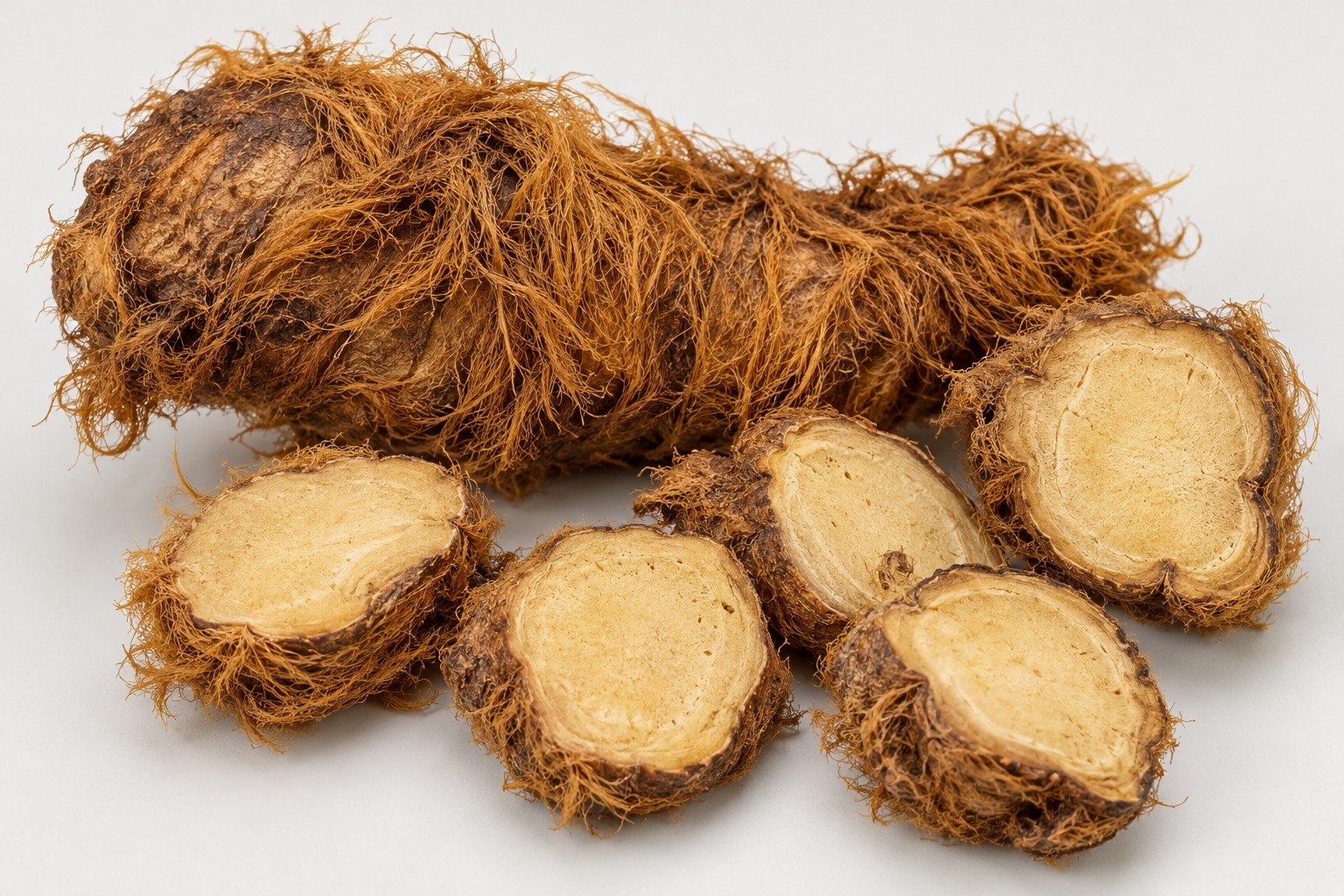
Cibotium barometz (L.) J.Sm. · Dried rhizome (Cibotii Rhizoma / Gou Ji); golden rhizome hairs are a distinct material and should not be conflated
Materia medica properties in reference
Materia medica form discussed in this paragraph
Properties as recorded in the source: Traditional properties and functions recorded in the source: bitter, sweet, warm; Liver and Kidney channels; dispel wind-dampness, supplement Liver and Kidney, strengthen the lower back and knees.
An older CITES PC14 assessment records dried rhizomes in medicinal trade and raises concern about wild collection. It also notes gaps in population data; this is historical context, not proof of current trends or the legality of an individual lot.
PROSEA records two groups without amounts or ratios; see individual ingredient images below.
Pairing group one · Gou Ji and three ingredients
Materia medica form discussed in this paragraph
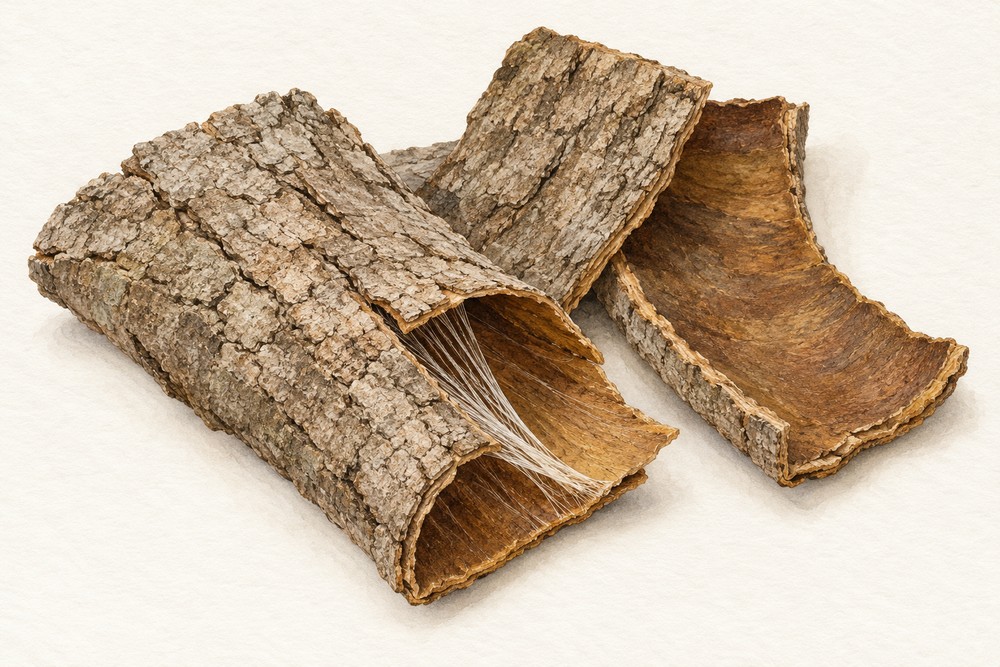
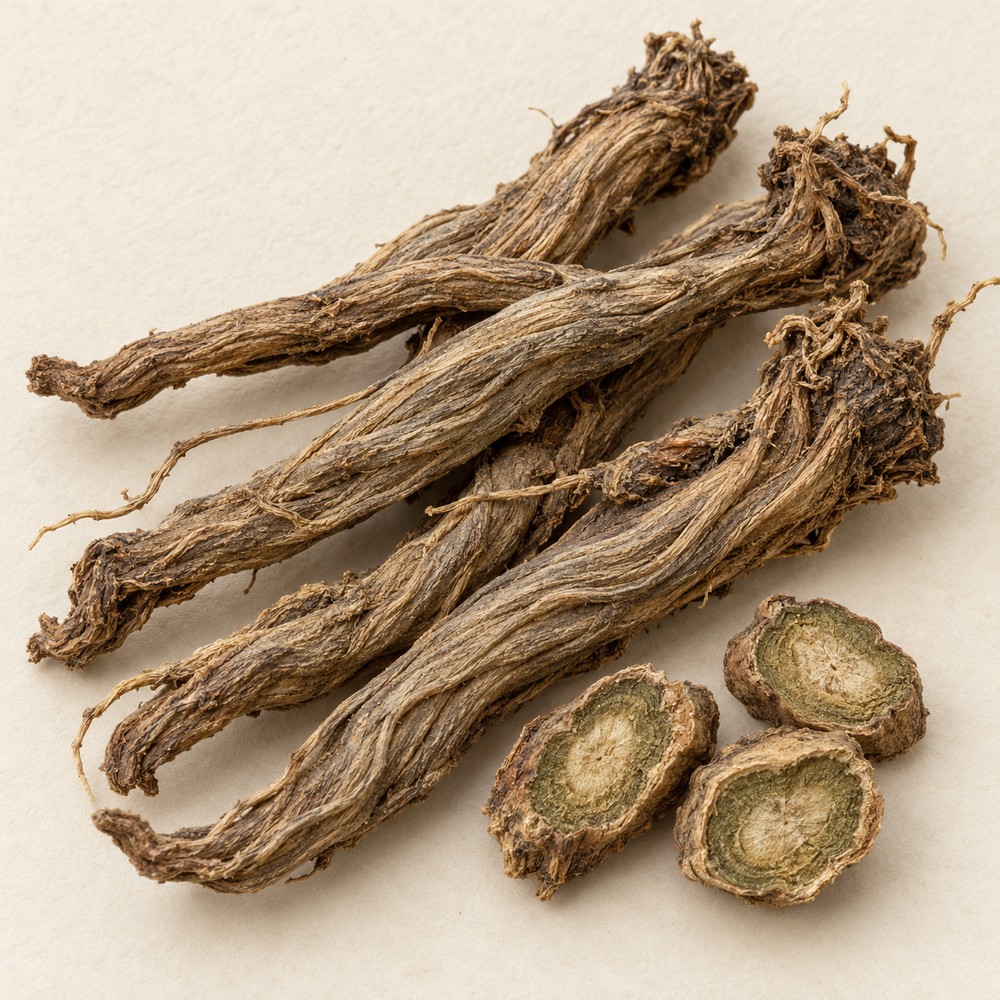
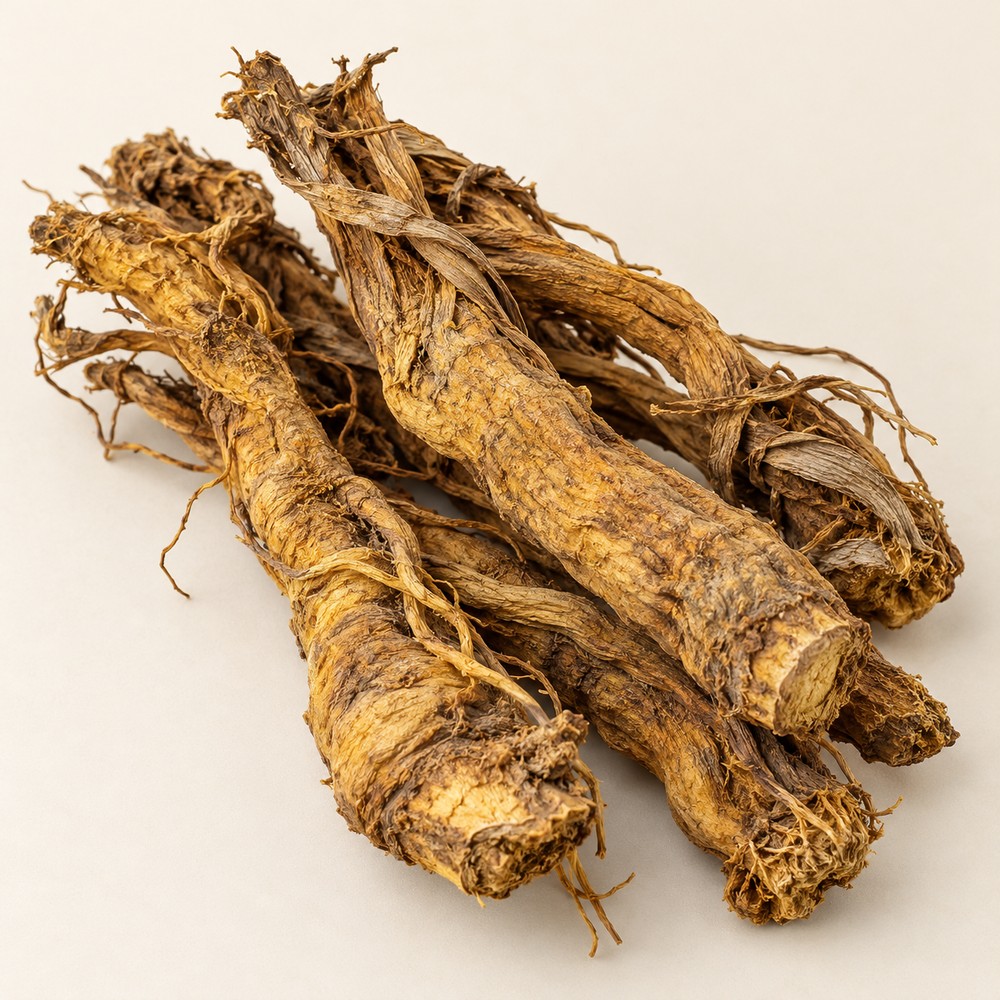
PROSEA names Gou Ji with Eucommia bark, Dipsacus sp. root, and Achyranthes root in a Liver/Kidney-deficiency context. Dipsacus is identified only to genus; no amounts or ratios are given. Separate images below support study, not treatment.
Eucommia barkNamed; amount not statedTeasel rootNamed; amount not statedAchyranthes rootNamed; amount not stated
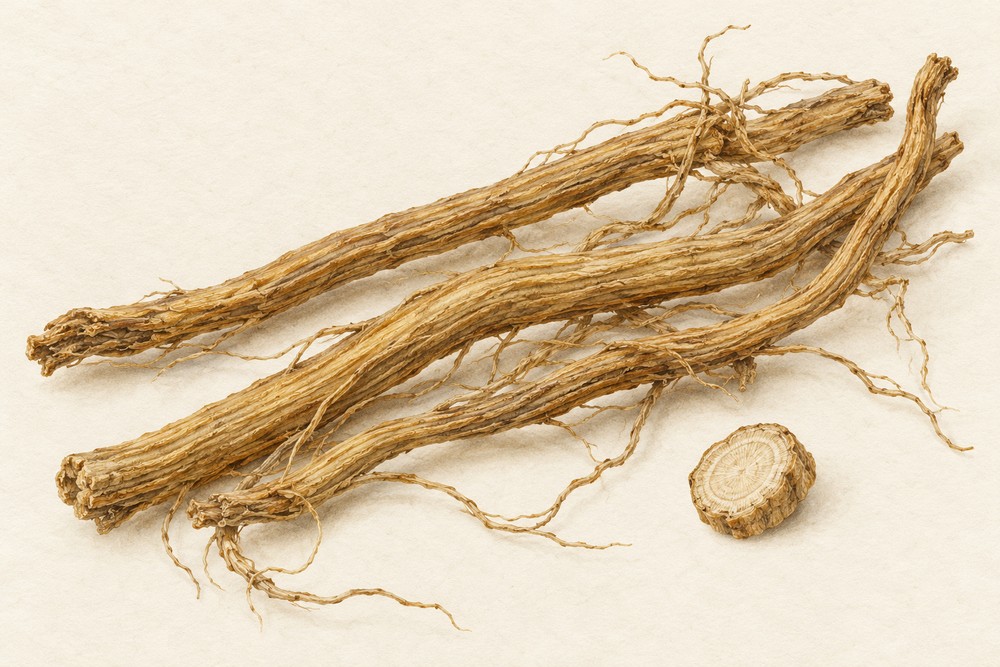
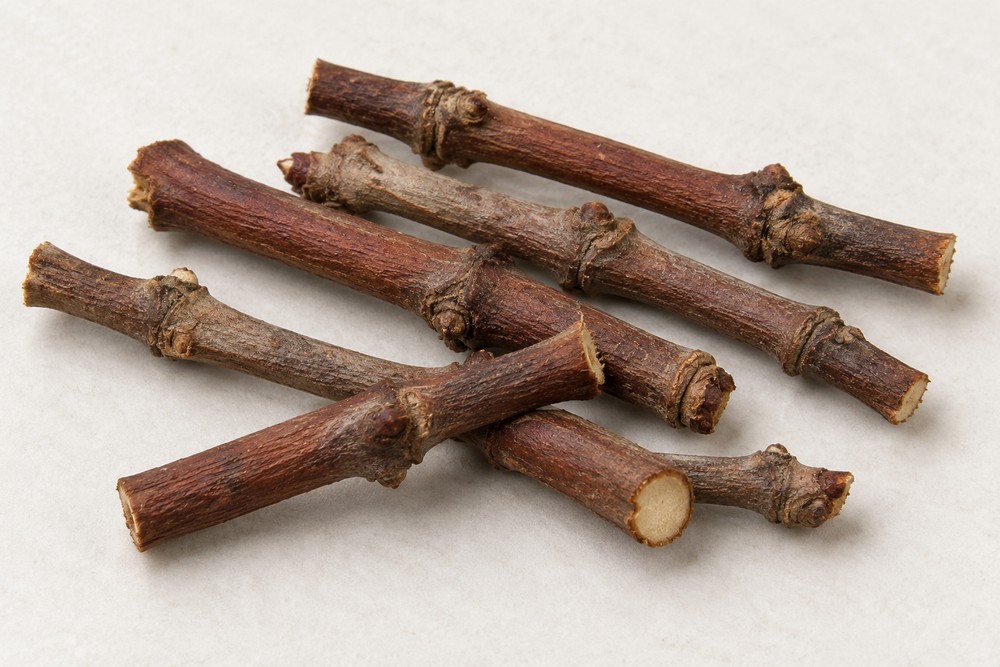
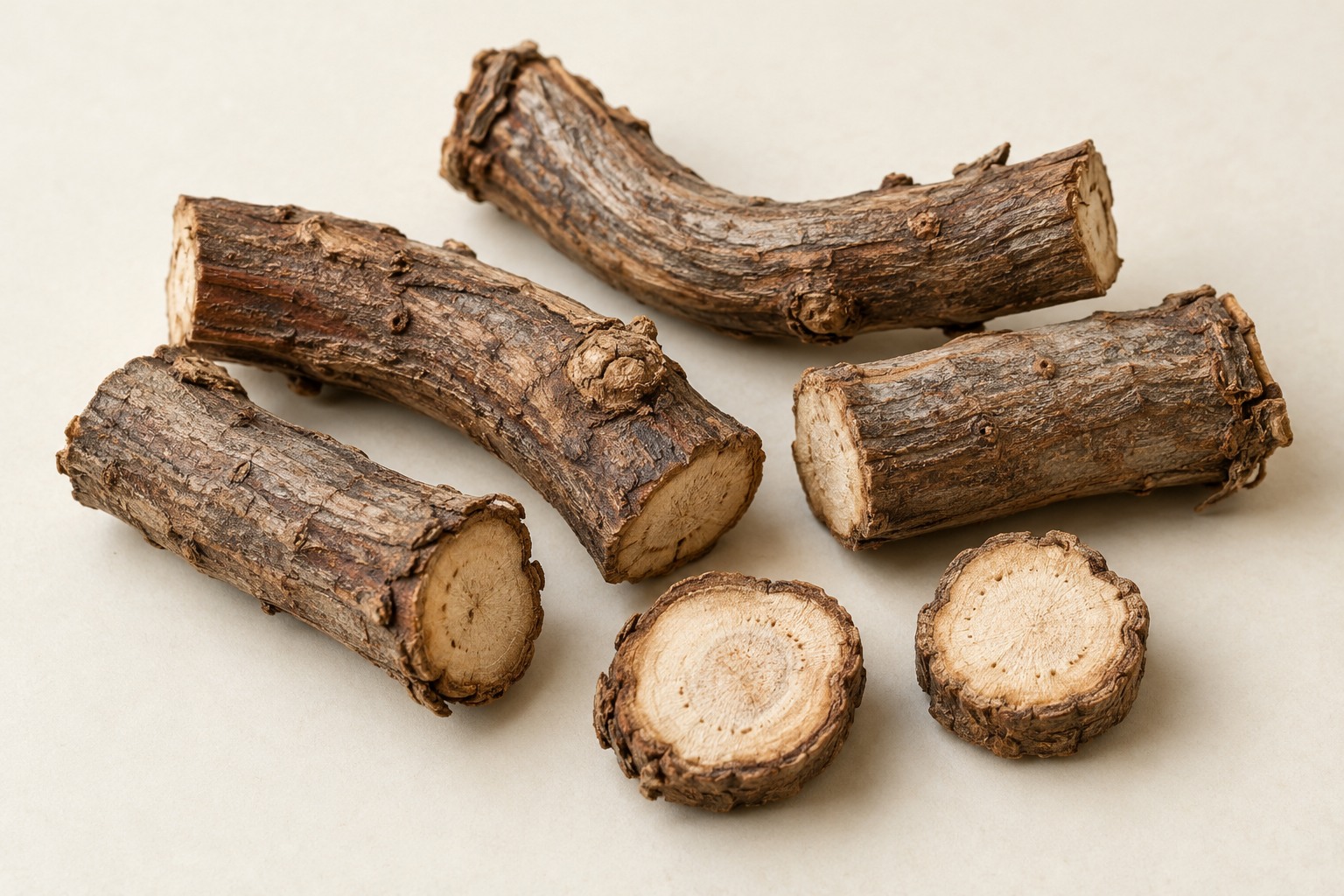
PROSEA describes Gou Ji with cinnamon twig, Gentiana root, and Kadsura japonica stem in a wind-dampness context. No amounts are supplied. The Kadsura image is an AI study illustration of dried stem; pictures show separate ingredients, not a self-treatment guide.
Cinnamon twigNamed; amount not statedLargeleaf gentian rootNamed; amount not statedKadsura japonica · dried stemNamed; amount not stated
The 2026.1 CITES Trade Database contains 12 comparative-tabulation rows for Cibotium barometz during 2016, 2017, 2018, 2019, 2020, 2021, 2024. The query selected reported purpose T (Commercial) and trade term MED (medicine); appendices appearing in these rows: II. Reported importer codes include ID, US; exporter codes include CN, HK, XX. These are comparative-tabulation rows, not shipment counts or summed volume. This record does not establish clinical efficacy, the legality of an individual transaction, or safety of use.
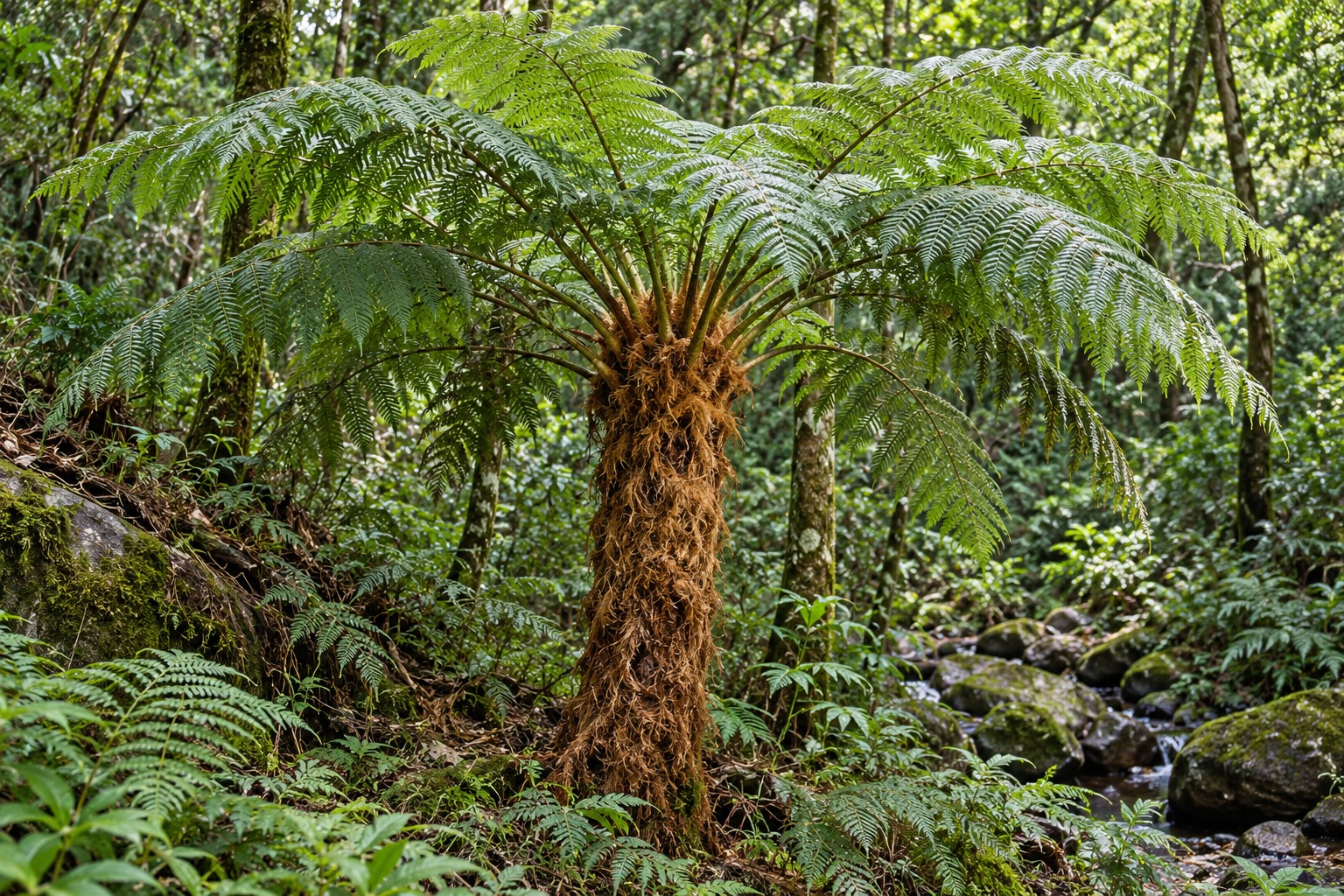
Cibotium barometz (L.) J.Sm. is an Asian tree fern, called 狗脊 (Gou Ji) in Chinese materia medica. The medicinal material is its dried rhizome, not separately collected golden hairs. Taxonomic treatments place it in Cibotiaceae or Dicksoniaceae, but the species name remains explicit. It has a large frond crown above a trunk covered in golden-brown hairs. Do not merge related species based on trade names. Site images are AI study illustrations, not verified vouchers.
Traditional context
Materia medica form discussed in this paragraph
The University of Toyama database, citing the 2025 Chinese Pharmacopoeia, identifies C. barometz rhizome as Cibotii Rhizoma: bitter-sweet, warm, entering the Liver/Kidney channels, with traditional actions to dispel wind-dampness and strengthen the lower back and knees. This is traditional classification, not diagnosis or proof of treatment. Do not transfer it to golden hairs, related species, or unidentified products.
Modern evidence
Materia medica form discussed in this paragraph
Floras support identification, materia medica sources record traditional properties, PROSEA describes pairings, and CITES lists reported trade. These are different evidence types. A trade record or traditional use does not demonstrate clinical benefit. This profile does not claim Gou Ji treats back pain, arthritis, or prostate disease; chemical or preclinical tests cannot replace human studies of the exact product and dose.
Safety
Materia medica form discussed in this paragraph
CITES lists the species in Appendix II; check current permits and laws in exporting and importing countries. Digging wild rhizomes can kill plants; avoid casual collection. PROSEA notes that dry hairs can irritate skin and lungs, so avoid dust. The sources reviewed establish no Gou Ji-specific toxic pair; that does not prove every combination safe or interaction-free. People with health conditions, taking medicines, pregnant, or breastfeeding should consult a health professional. No personal dose is provided.
Look for a large crown of finely divided fronds, stout stipes, and shiny golden-brown hairs at the stipe bases and trunk apex. The thick rhizome often creeps near the ground. Frond undersides are pale or glaucous, with shallowly toothed segments. The medicinal material is the dried rhizome; separately collected hairs are a different commodity. Other tree ferns are hairy, and Gou Ji can be used broadly. AI images support study only; real lots need traceability and expert identification.
Growth and habitat
Illustrated plant and growing setting
C. barometz occurs on hill slopes, stream banks, and lower mountain forest in humid tropical regions. PROSEA records about 500–800 m in evergreen forest and 1,000–1,600 m in lower montane forest; RBGE and the Hong Kong Herbarium also describe shaded, moist ravines. PROSEA reports a preference for well-drained, non-calcareous soil. Elevations describe records, not absolute limits or universal planting instructions.
Illustrated plant and growing settingDùng giá thể giàu mùn, thoát nước tốt, ưu tiên đất không vôi theo ghi nhận PROSEA. Trồng ở nơi râm mát hoặc có nắng lọc, ẩm không khí cao và thông thoáng.
Illustrated plant and growing settingUse a humus-rich, well-drained, preferably non-calcareous substrate as recorded by PROSEA. Grow in shade or filtered light with humid, ventilated conditions.
Illustrated plant and growing setting
How long until harvest? There is no universal harvest age. A 2026 spore study reports roughly 5–30 years to harvest-size rhizomes depending on cultivation and size criteria. Treat this as a study-specific range; a harvested lot still needs lawful provenance and material-quality checks.
From plant to dried material · source-recorded workflow
Plant before harvestRecord planting-stock or lot provenance and confirm Cibotium barometz. Check current rules for collection, transport, and trade before harvesting.
Plant before harvestPROSEA records medicinal rhizome harvest in autumn. This is a source-specific harvest note, not encouragement to dig wild plants.
Plant before harvestClean adhering soil and remove fibrous roots as the source describes; distinguish Gou Ji rhizome from separately collected golden hairs and from other tree ferns.
Dried materia medica after processingPROSEA describes one historical handling method: soak in wine for one day, steam, slice, and sun-dry. The source does not specify wine type/concentration or temperature; do not turn missing parameters into a home recipe.
Plant before harvestDry, package, and label the species, part, growing/harvest site, processing date, and trade documents; control foreign matter, mold, moisture, and quality under applicable standards. These notes support traceability, not home medicine preparation.
Illustration of the processing step described
This record supports study and processing traceability; it is not a home preparation or self-use guide.