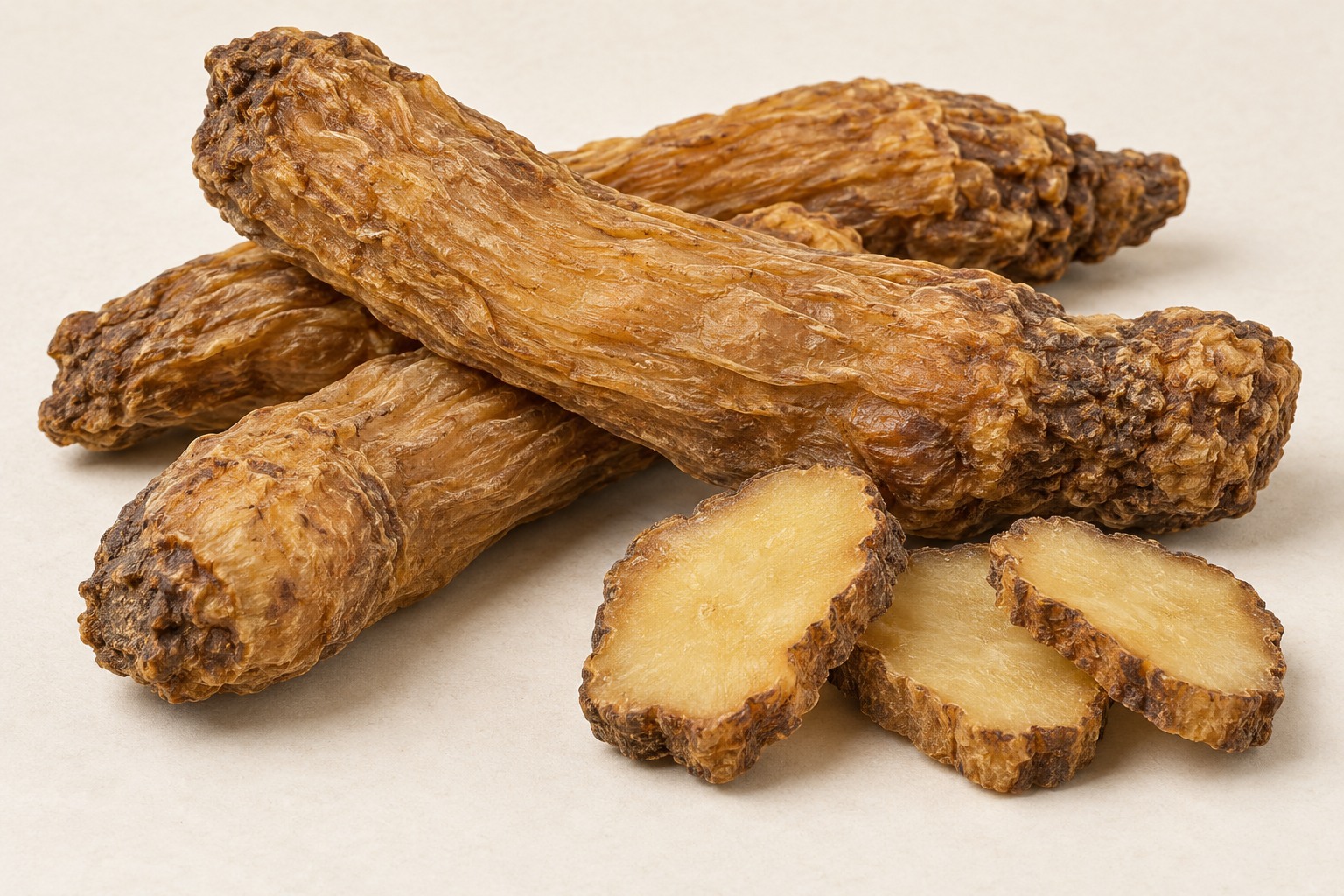
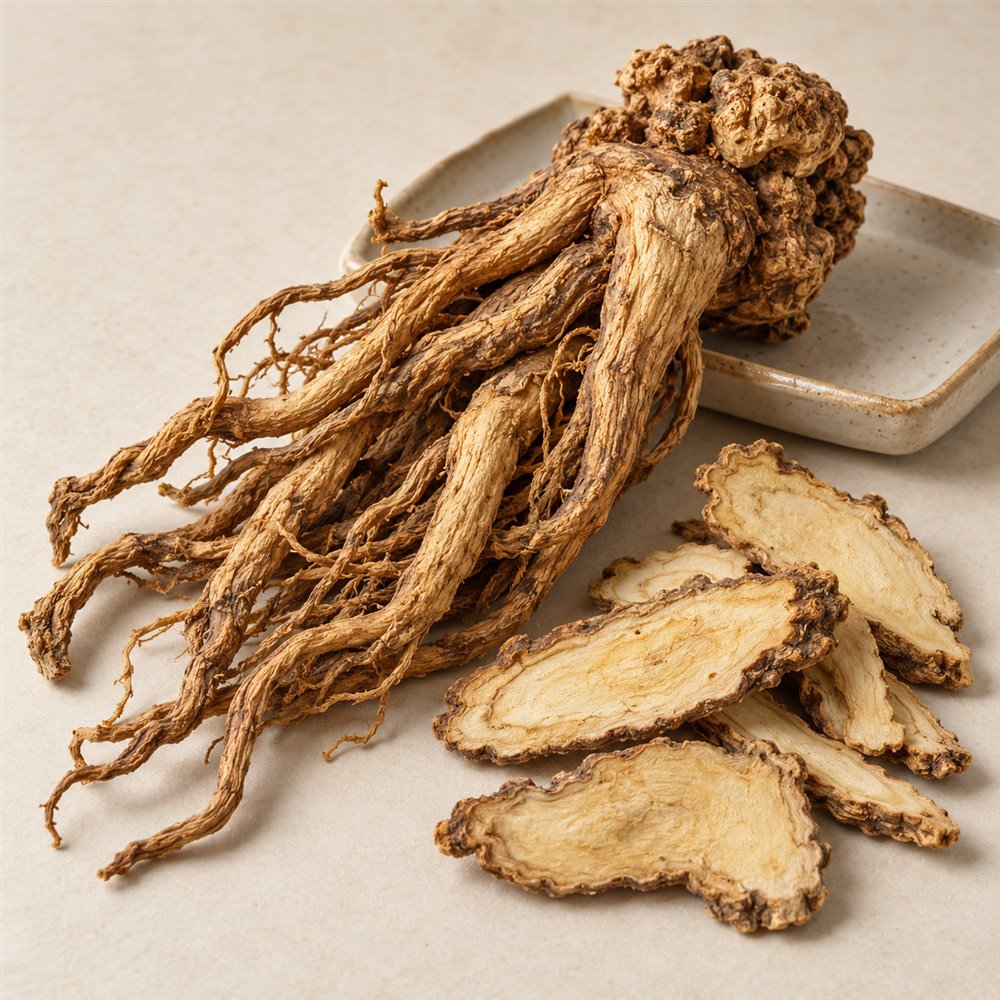
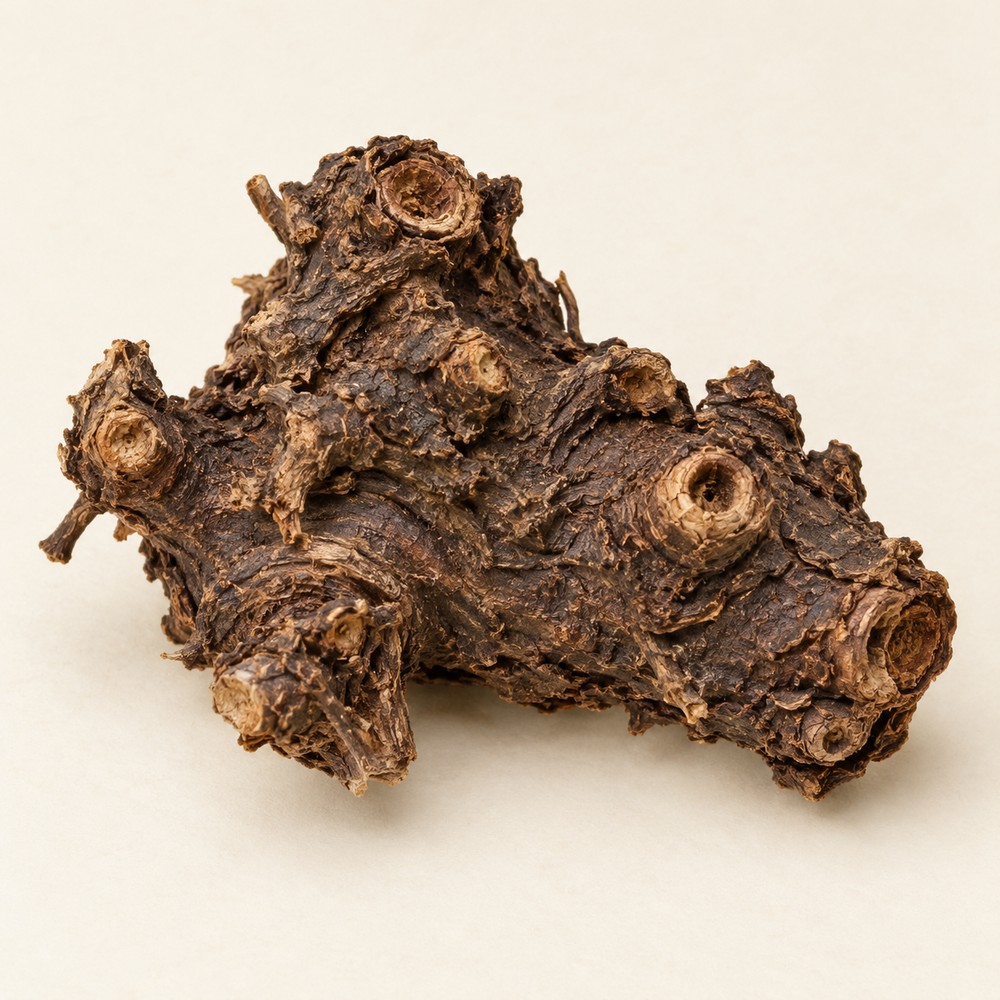
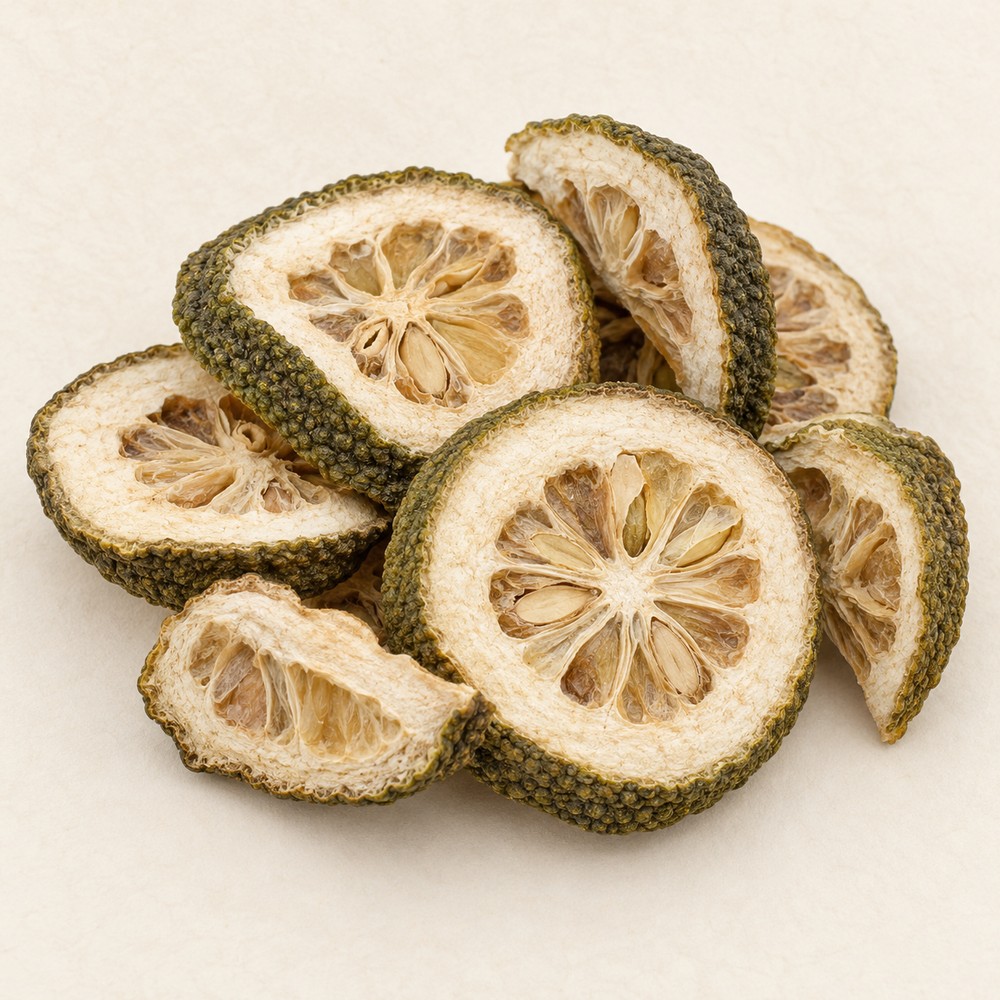
Cistanche deserticola Ma · Dried fleshy stem, with scales and flowering spikes removed under the cultivated-material standard
Materia medica properties in reference
Materia medica form discussed in this paragraph
Properties as recorded in the source: HKBU records Rou Cong Rong as sweet and salty, warm in nature, with traditional functions of supplementing kidney yang and essence/blood and moistening the bowel. These are materia medica properties attached to the drug entry; verify species, plant part, and processing when comparing trade products.
The records below preserve source-specific formula ingredients and amounts. They are documentary references, not proof of clinical benefit or a general safe ratio.
HKBU formula record containing this herb: Ji Chuan Jian / Fluid-Replenishing Decoction
The 2026.1 CITES Trade Database contains 59 comparative-tabulation rows for Cistanche deserticola during 2016, 2017, 2018, 2019, 2020, 2021, 2022, 2023, 2024. The query selected reported purpose T (Commercial) and trade term MED (medicine); appendices appearing in these rows: II. Reported importer codes include AU, CA, GB, ID, JP, KR, MY, NZ; exporter codes include CA, CN, HK, ID, KH, MY, TW, US. These are comparative-tabulation rows, not shipment counts or summed volume. This record does not establish clinical efficacy, the legality of an individual transaction, or safety of use.
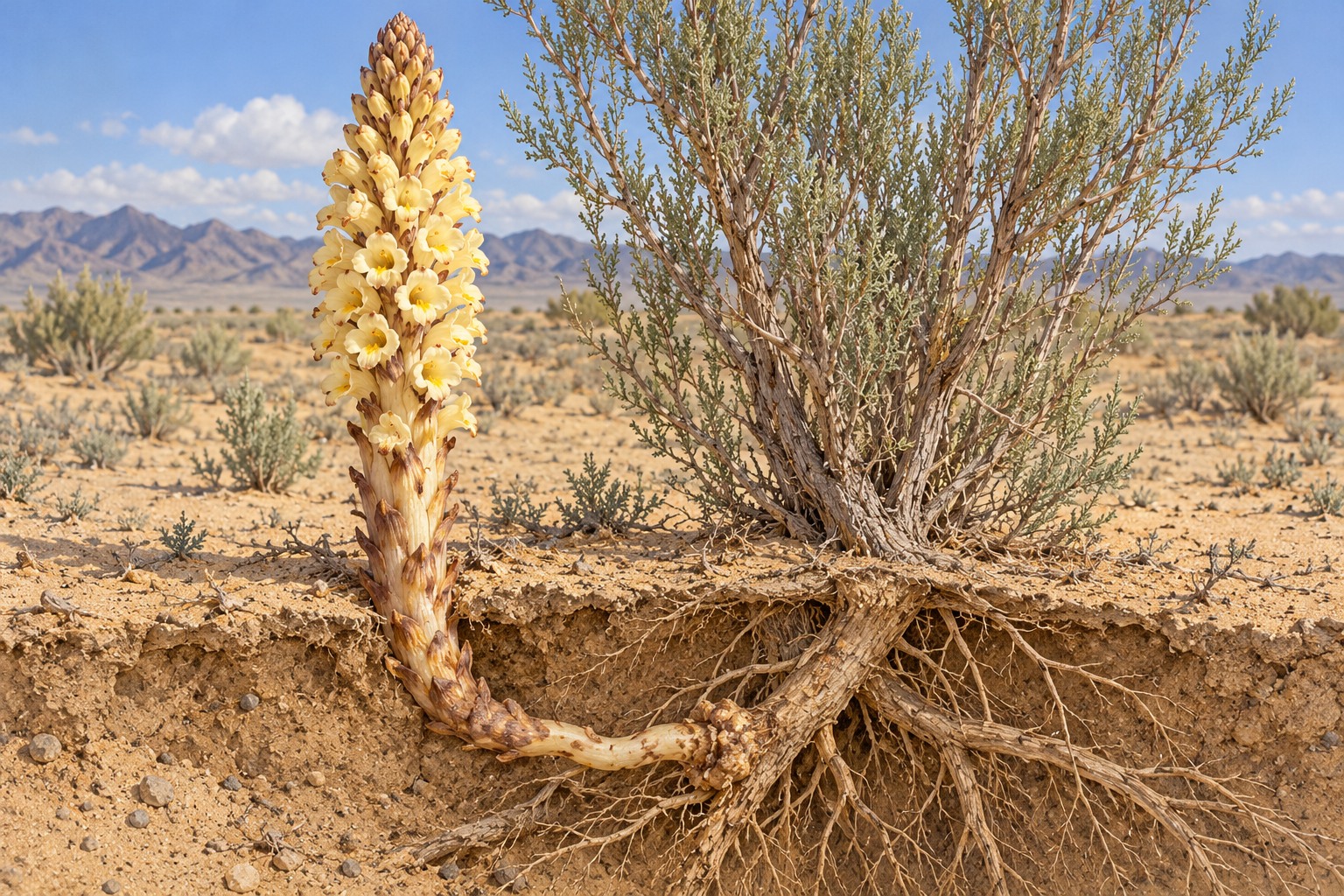
This profile uses Cistanche deserticola Ma in the Orobanchaceae, an accepted name in Kew POWO. It is a perennial holoparasite: it has no green leaves for independent photosynthesis, spends most of its life below ground, and obtains water and nutrients through a host plant’s roots. The medicinal material is the stout fleshy stem, whose flowering spike emerges above ground. Do not confuse it with Cistanche tubulosa, C. salsa, or related species that may also be sold as “cistanche.” Flora of China describes stems about 0.4–1.6 m tall, small scale-like leaves, and pale yellow-white to pale purple tubular flowers; flowering is around May–June and fruiting June–August. Bracts, flowers, host, distribution, and scientific name should be considered together. The AI illustrations support study; they cannot replace a voucher specimen or identity testing.
Traditional context
Materia medica form discussed in this paragraph
The HKBU materia medica record identifies Rou Cong Rong as Cistanche deserticola Y.C. Ma and the dried stem; it records a sweet and salty taste and warm nature. Its traditional functions in that record are to supplement kidney yang and essence/blood and to moisten the bowel. ISO 25115:2026 likewise describes the cultivated Rou Cong Rong stem in traditional Chinese medicine as warming kidney yang, reinforcing essence and blood, and relaxing the bowel. These are traditional-source descriptions, not diagnoses or proof that the plant treats kidney disease, infertility, or constipation in every person. The materia medica name may cover more than one Cistanche species, so read the standard, provenance, and identity of each material.
Modern evidence
Materia medica form discussed in this paragraph
Chemical studies and reviews describe phenylethanoid glycosides such as echinacoside and acteoside, among other constituents; some are quality markers in the Chinese Pharmacopoeia. Many findings involving antioxidant, neurological, immune, or laxative effects come from chemical assays, cells, animals, or specifically standardized extracts. They cannot be transferred directly to a dried stem or commercial supplement in people. ISO 25115 sets quality requirements for cultivated stems in international trade, including macroscopic identity, moisture, ash, thin-layer chromatography, marker compounds, heavy metals, and pesticide residues; a quality standard does not itself prove therapeutic efficacy. This profile does not claim that Cistanche cures disease, boosts sexual function, or prevents aging.
This profile does not give a personal dose. The amount shown for Ji Chuan Jian below is one historical formula record in HKBU’s database, not a dose for readers. ISO specifies quality checks for cultivated material; CITES and value-chain research also describe species mixing, adulteration, and harvest pressure. Do not ingest unidentified stems, material without residue controls, or stock showing mold. The medical sources reviewed do not establish one specific toxic interaction with a modern medicine across all products; that absence does not prove there are no interactions. People who are pregnant or breastfeeding, have a medical condition, take medicines, or have diarrhea should consult a clinician or pharmacist before use. Do not dig wild plants; stem harvest can damage soil and host shrubs.
Pairing in reference texts
Materia medica form discussed in this paragraph
One source-recorded combination is Ji Chuan Jian (HKBU formula F00023), which contains Rou Cong Rong with Chinese angelica, Achyranthes, Alisma, Cimicifuga, and immature bitter orange. HKBU records Rou Cong Rong 2–3 qian (6–9 g), Angelica 3–5 qian (9–15 g), Achyranthes 2 qian (6 g), Alisma 1.5 qian (4.5 g), Cimicifuga 5–7 fen or 1 qian (1.5–3 g), and immature bitter orange 1 qian (3 g). The source’s traditional rationale is to warm the kidney, supplement essence, and moisten the bowel; this is not clinical proof. These amounts belong to that recorded version and are not a general safe ratio for self-combination. HKBU and the medical sources reviewed did not identify a specific herb that makes Cistanche poisonous; absence of a report does not establish that every combination is safe.
Identification and study notes
Dried-drug features for identification study
A useful visual cue is the stout pale yellow to golden-brown stem with almost no green foliage and a long spike densely covered in tubular flowers. Below ground, the parasite attaches to host roots through a haustorium; it is most visible above ground during its growth and flowering season. Record the host, parasite stem, and floral structure separately; do not excavate roots outside an authorized plot. C. deserticola can be confused with C. salsa and C. tubulosa; an image, trade name, or dried color cannot distinguish them reliably. The AI image illustrates the parasitic relationship and general form, not the exact proportions of a voucher specimen.
Growth and habitat
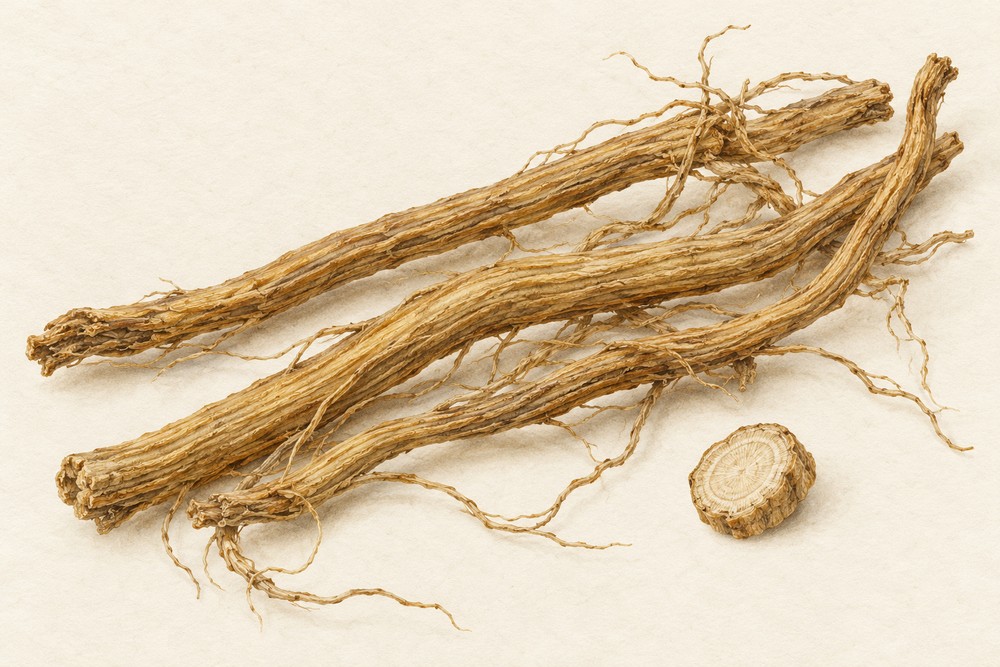
Illustrated plant and growing setting
Kew POWO gives a native range from Mongolia to northern China, including Inner Mongolia and Xinjiang. The species grows in dry to semi-arid temperate habitats, often on sandy/desert ground with a saxaul host, Haloxylon ammodendron. It should not be presented as an independent potted crop: without a suitable host and root contact, seed will not yield a mature medicinal stem. Cultivation studies identify H. ammodendron as the principal host in the Alxa desert system; other Cistanche species can parasitize different hosts and should not be conflated.
Living plant / habitatA documented field model comes from Alxa, Inner Mongolia: an arid desert climate, sandy/desert soil, and Haloxylon ammodendron as host. Do not transfer the method directly to a hot, wet climate such as Vietnam; local forestry trials and conservation rules matter.
Illustrated plant and growing settingBegin with healthy, lawfully sourced H. ammodendron and preserve enough root space. The WOCAT record describes induced parasitism, not ordinary row sowing of an independent crop.
Living plant / habitatIn the Alxa model, select healthy fine roots, place C. deserticola seed near them, and backfill. The field protocol records inoculation in April–May, about 50–60 cm from the host trunk and around 50 cm deep; these parameters belong to one site-specific project, not a global standard.
Living plant / habitatWOCAT records a hole about 60 × 30 × 50 cm, around 1 kg of mature organic manure and 10–15 kg of water, with 5–10 seeds placed near fine roots. Treat this as a 2007 Alxa technical record; soil, water, seed source, and local law can change outcomes.
Illustrated plant and growing settingMonitor the host, local moisture, grazing damage, and signs of waterlogging or rot. Excavation can remove vegetation and increase erosion; backfilling and harvest management are essential parts of sustainable cultivation.
Illustrated plant and growing settingThe WOCAT project reports that harvest may begin about three years after inoculation in the Alxa model. This is a site-specific cultivation timeline and does not guarantee pharmacopoeial quality elsewhere.
From plant to dried material · source-recorded workflow
Plant before harvestHarvest from a documented cultivated lot and record C. deserticola identity, host, inoculation date/site, and provenance. CITES lists the species in Appendix II; check rules by product form, exporting/importing country, and transaction date.
Dried materia medica after processingExcavate carefully to limit damage to host roots and soil. In its described model, WOCAT recommends non-metal tools and retaining the parasitic plate to reposition beside the root before backfilling; do not dig wild plants indiscriminately.
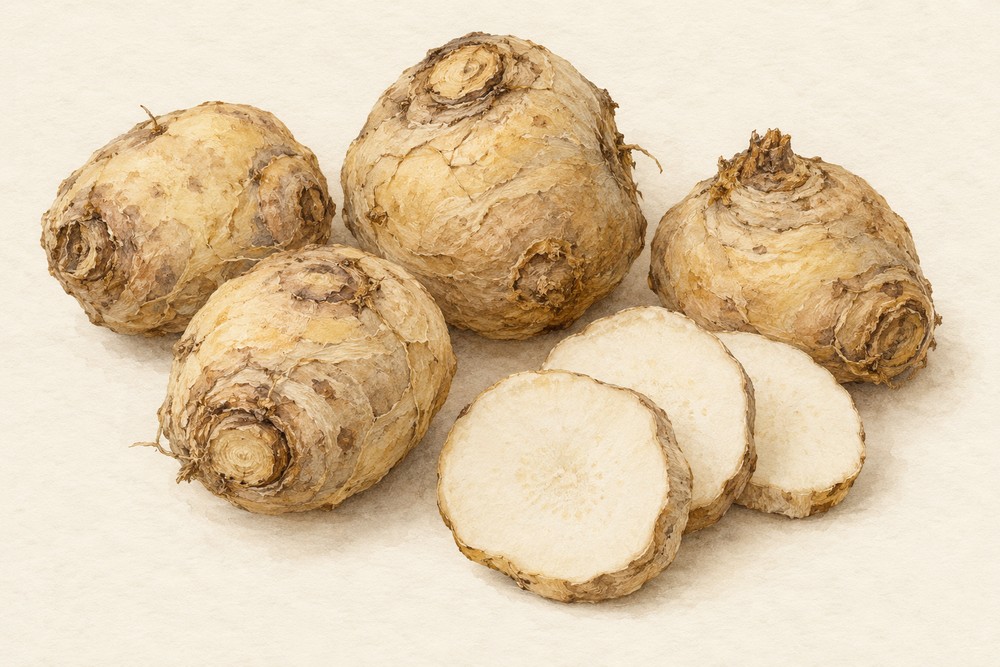
Illustrated post-harvest workflowRemove soil, scale leaves, and flowering spikes as defined for cultivated material in ISO 25115. Separate the correct species from C. salsa, C. tubulosa, or mixed material.
Dried materia medica after processingDry the stems or slice under a facility-controlled standard. ISO lists checks including moisture, ash, thin-layer chromatography identity, marker compounds, heavy metals, and pesticide residues.
Plant before harvestRecord lot code, growing site, harvest date, processing form, test results, and cultivation certificate. This is a reference post-harvest chain, not a home medicine-preparation recipe.
Illustration of the processing step described
This record supports study and processing traceability; it is not a home preparation or self-use guide.