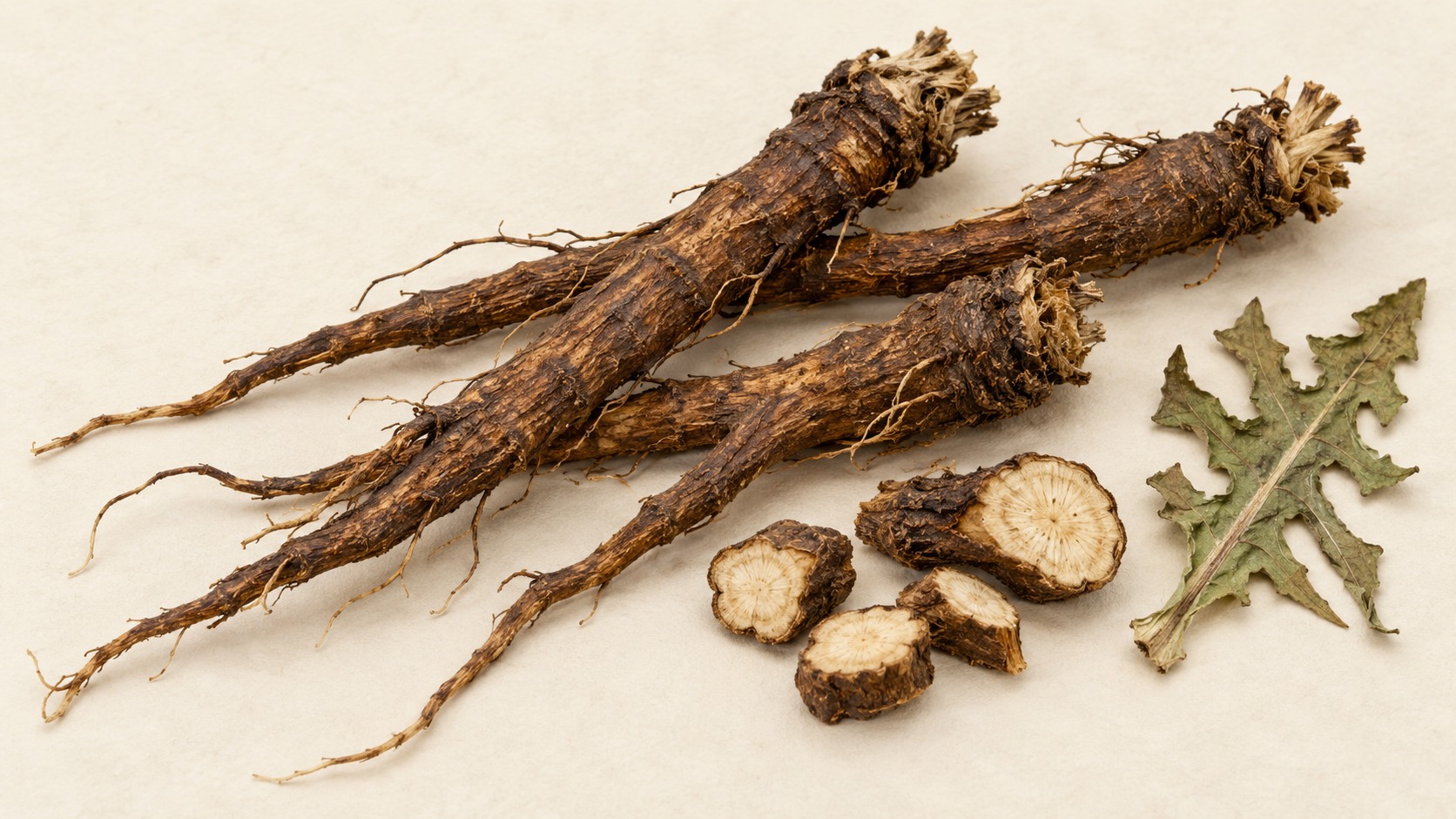
Common cuckooorchis · Shan Ci Gu pseudobulb · Shan Ci Gu
Cremastra appendiculata (D. Don) Makino · The dried pseudobulb is the part HKBU links to Shan Ci Gu from Cremastra appendiculata. Pharmacopoeial material under the same drug name may also include Pleione species; do not treat every Shan Ci Gu lot as this species.
Materia medica properties in reference
General morphology and habitat; not a verified locality
Properties as recorded in the source: HKBU’s Shan Ci Gu pseudobulb record: sweet, slightly acrid, cool, and slightly toxic; traditional functions are recorded as clearing heat/toxins, transforming phlegm, dissipating accumulations, and reducing swelling. Do not transfer these properties to leaves or Pleione species.
Based on HKBU morphology notes; not an authenticated specimen
A sourced commercial-product formula example appears below. It documents a product label, not efficacy or a general-use ratio.
Documented formula pairing: Health Canada product licence 80145569 · Immune Health Formula
Based on HKBU morphology notes; not an authenticated specimen
Ingredient documentation for one licensed blended product; this profile does not claim an effect for Shan Ci Gu alone.
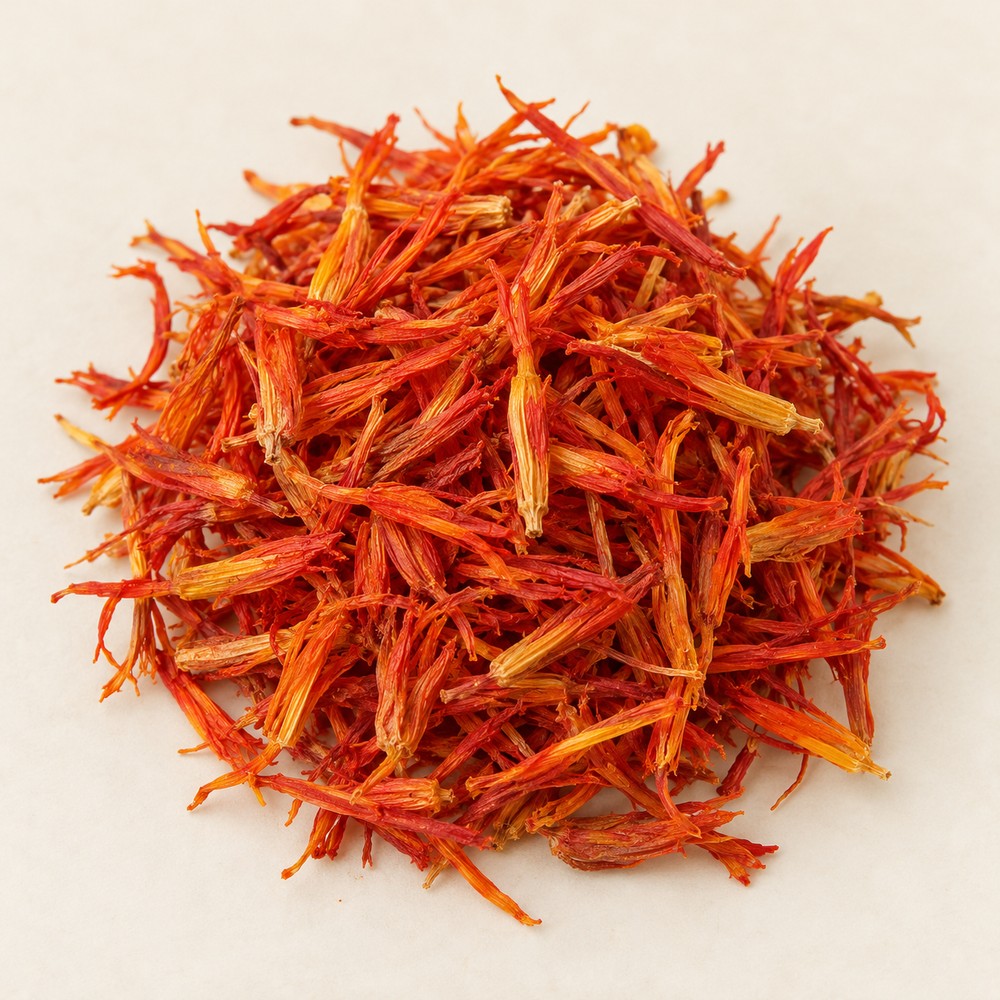
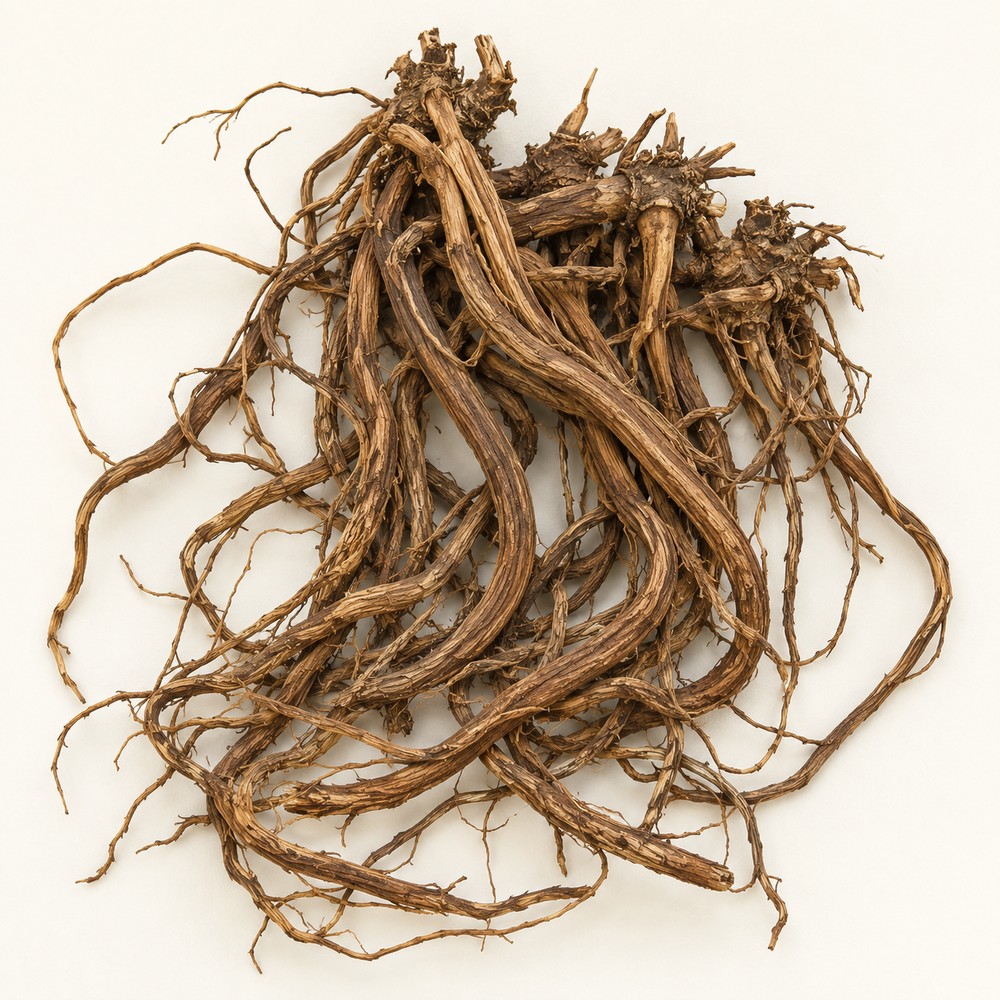
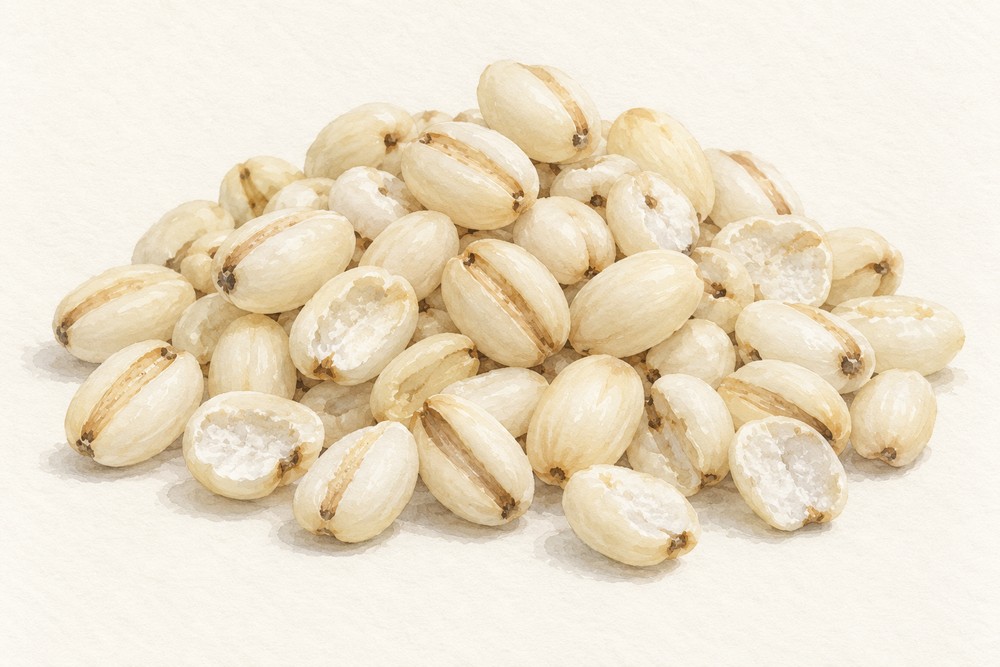
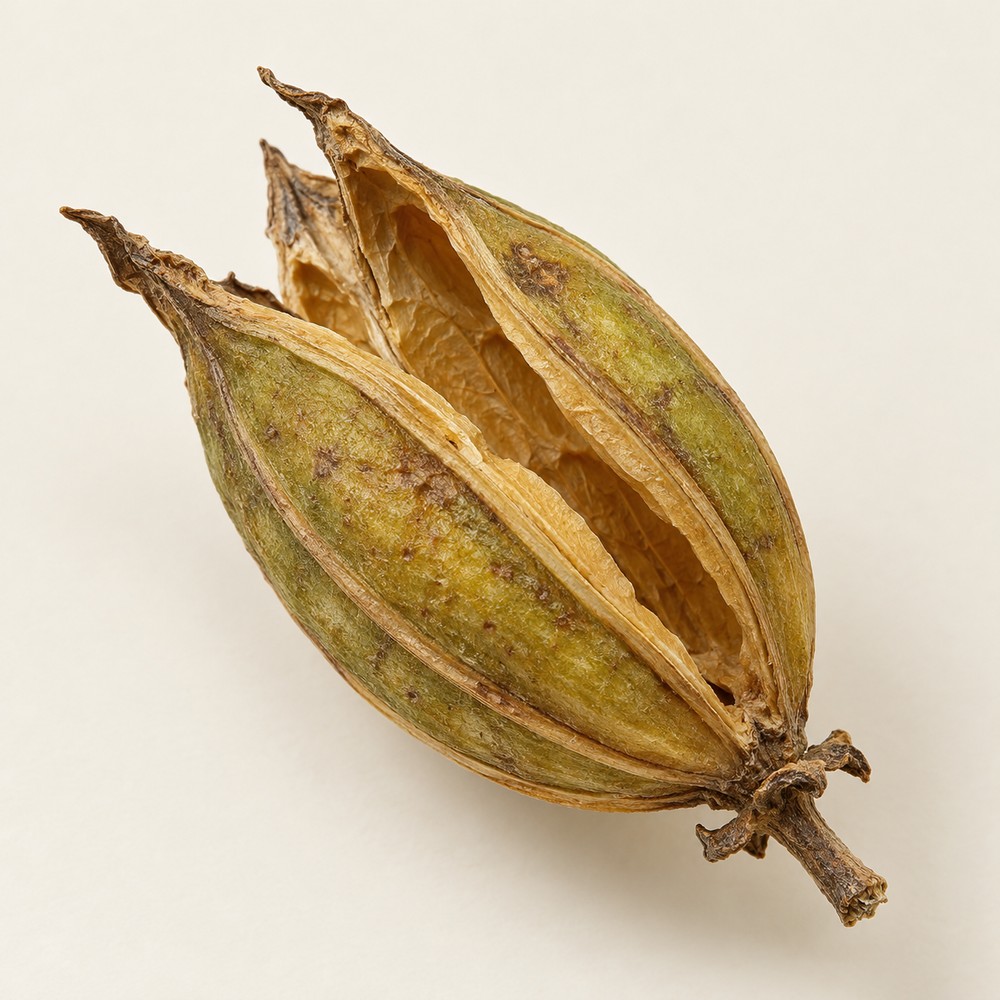
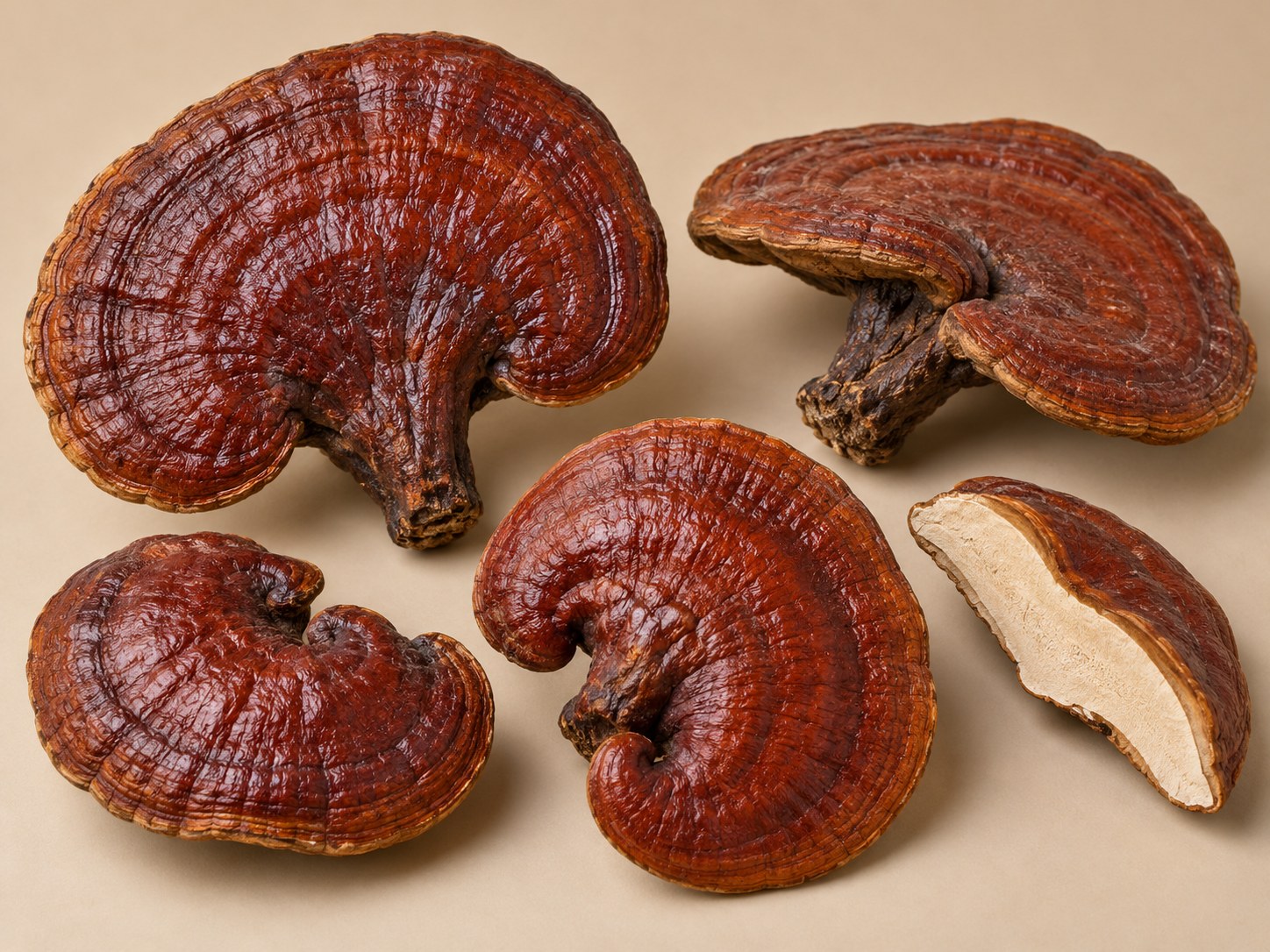
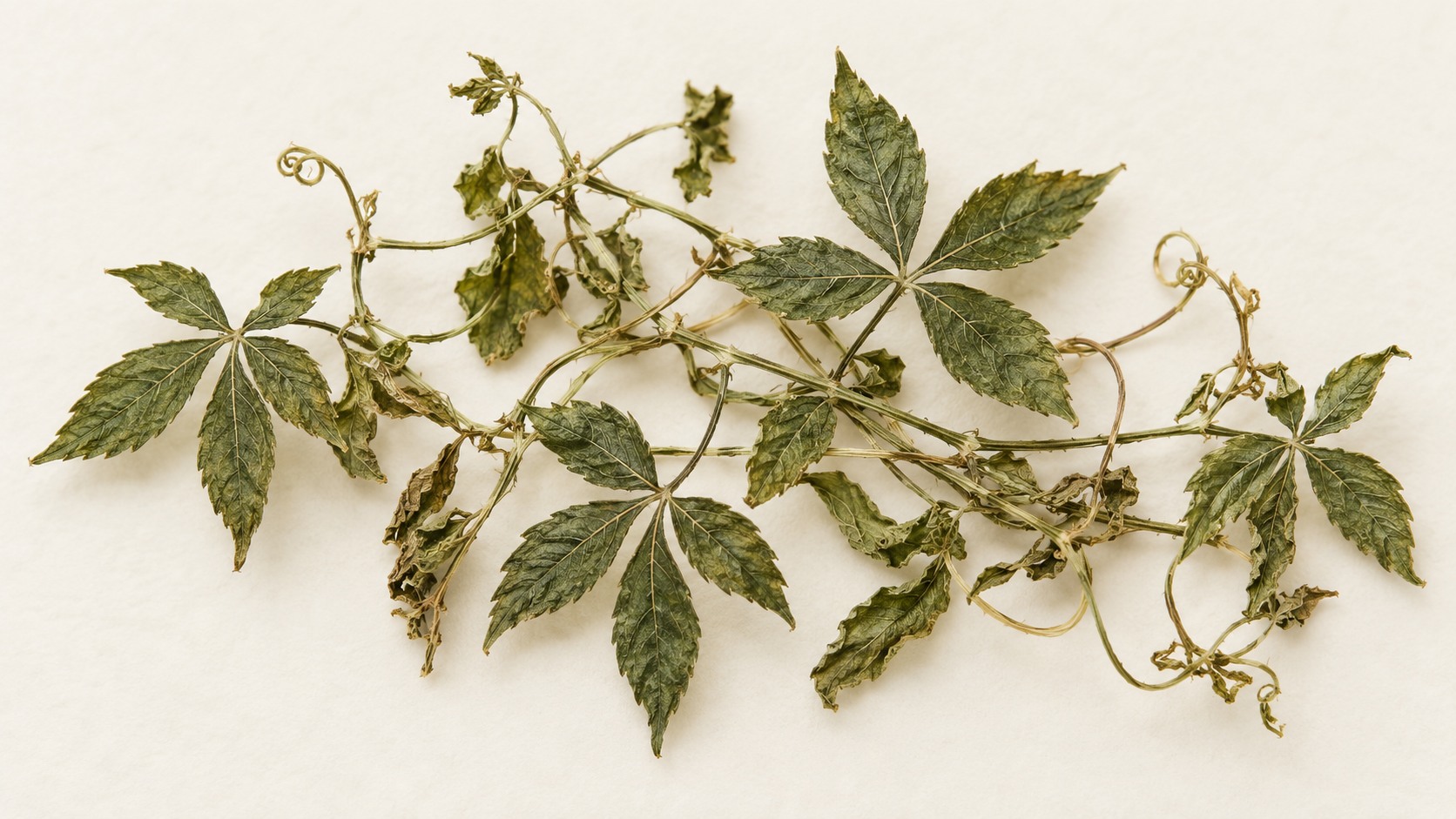
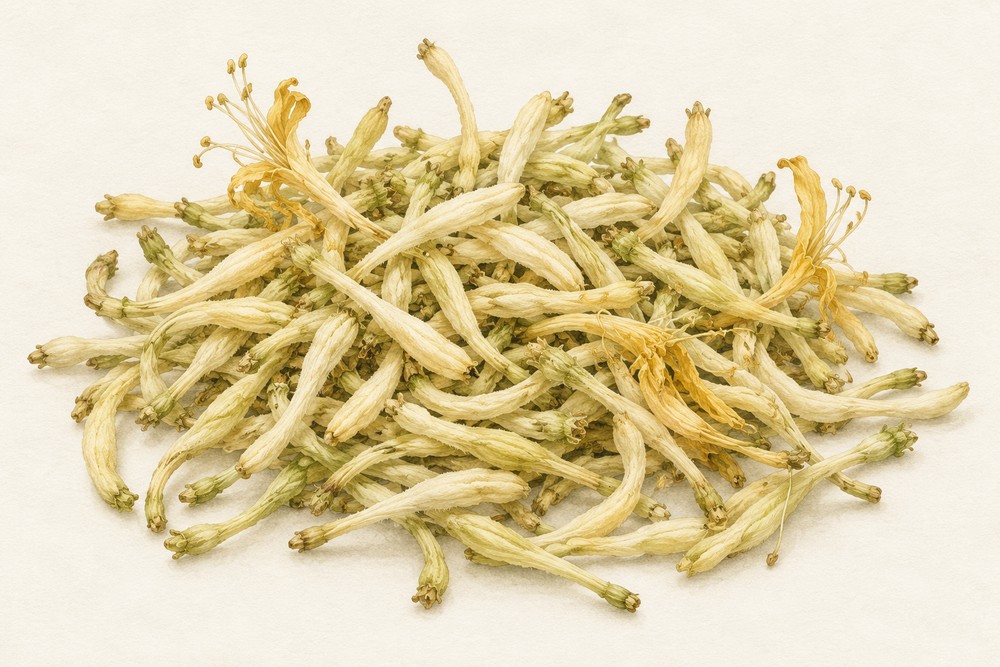
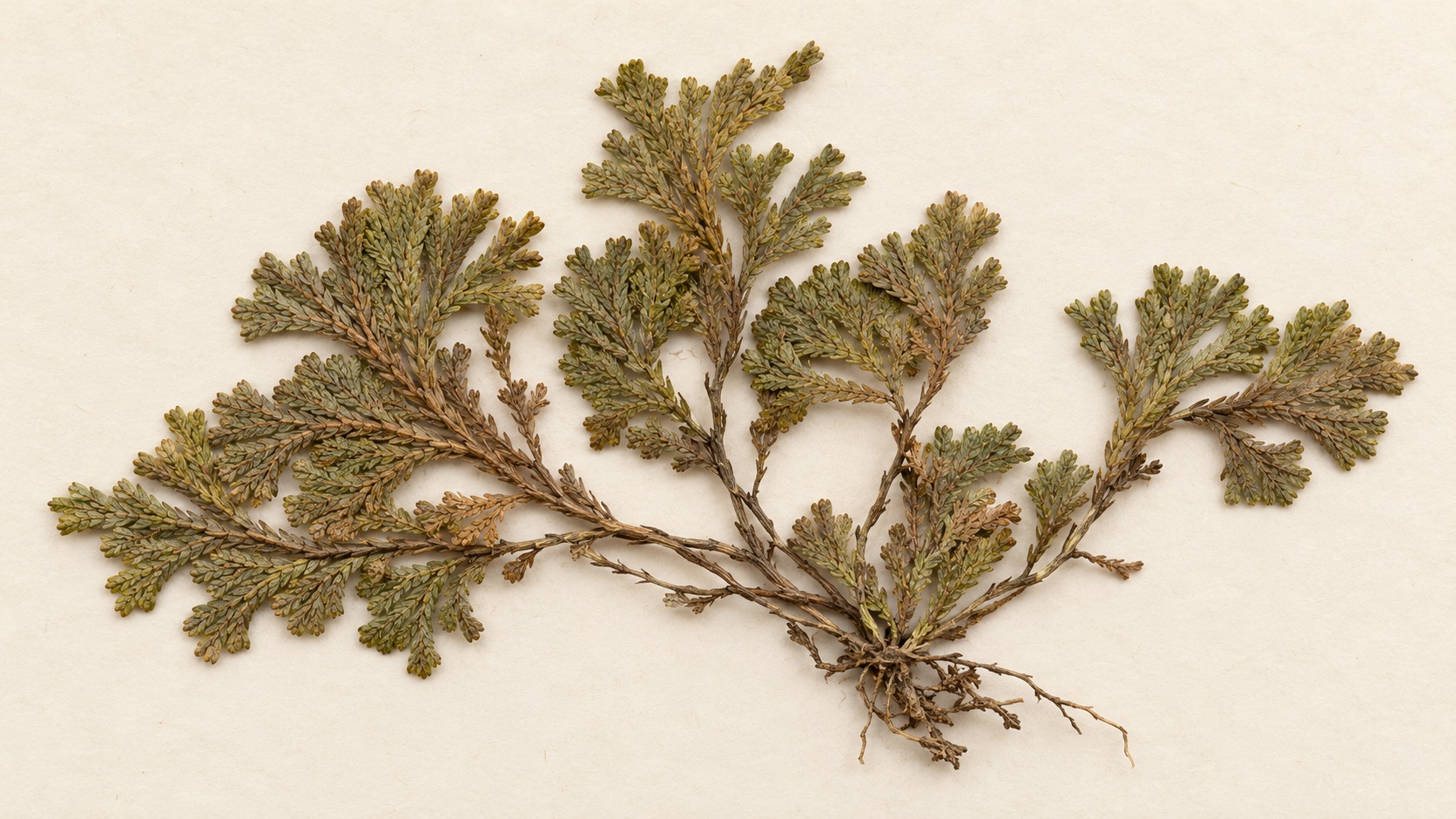
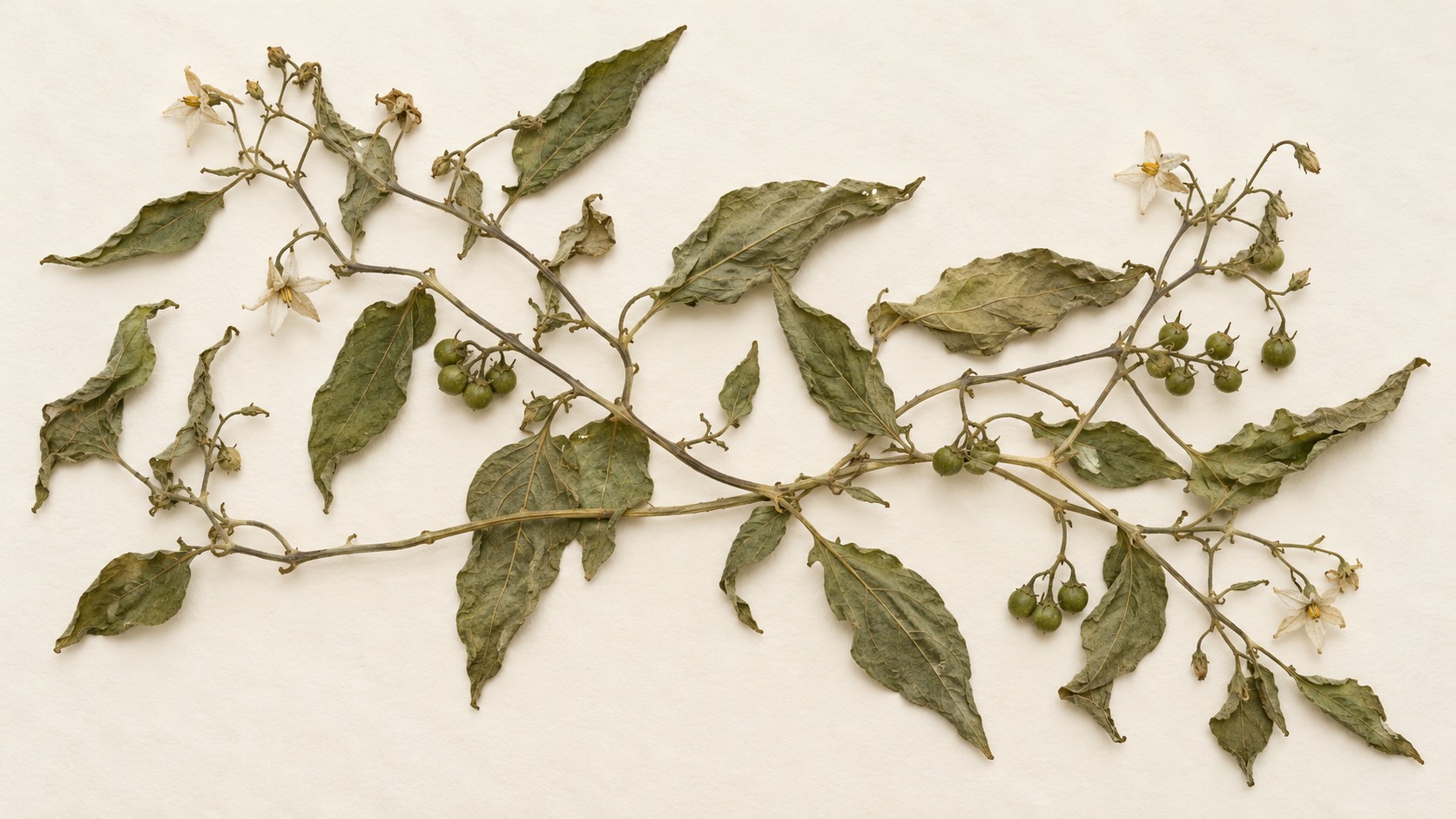
Safflower · Carthamus tinctorius2.0 g 5:1 extract · DHE 10 gChinese clematis · Clematis chinensis1.8 g 5:1 extract · DHE 9 gCoix seed · Coix lacryma-jobi var. ma-yuen2.0 g 5:1 extract · DHE 10 gShan Ci Gu · Cremastra appendiculata1.2 g 5:1 extract · DHE 6 gForsythia fruit · Forsythia suspensa1.2 g 5:1 extract · DHE 6 gReishi · Ganoderma lucidum2.0 g 5:1 extract · DHE 10 gJiaogulan · Gynostemma pentaphyllum2.0 g 5:1 extract · DHE 10 gJapanese honeysuckle · Lonicera japonica3.0 g 5:1 extract · DHE 15 gPinellia tuber · Pinellia ternata1.8 g 5:1 extract · DHE 9 gSelaginella · Selaginella pulvinata2.0 g 5:1 extract · DHE 10 gSolanum herb · Solanum lyratum2.0 g 5:1 extract · DHE 10 gCommon dandelion · Taraxacum officinale4.0 g 5:1 extract · DHE 20 g
Based on HKBU morphology notes; not an authenticated specimen
Source-recorded amounts: The label states a 5:1 extract for each ingredient and reports its DHE. These figures belong to this exact product, not a raw-herb ratio or universal formula.
Based on HKBU morphology notes; not an authenticated specimen
Caution: Do not use label ingredients or amounts as a self-mixing guide. A product licence does not prove each pairing is beneficial; consult the official label and a qualified professional.
Based on HKBU morphology notes; not an authenticated specimen
The 2026.1 CITES Trade Database contains 1 comparative-tabulation rows for Cremastra appendiculata during 2022. The query selected reported purpose T (Commercial) and trade term MED (medicine); appendices appearing in these rows: II. Reported importer codes include ID; exporter codes include CN. These are comparative-tabulation rows, not shipment counts or summed volume. This record does not establish clinical efficacy, the legality of an individual transaction, or safety of use.
For morphology study; not a substitute for an authenticated voucher
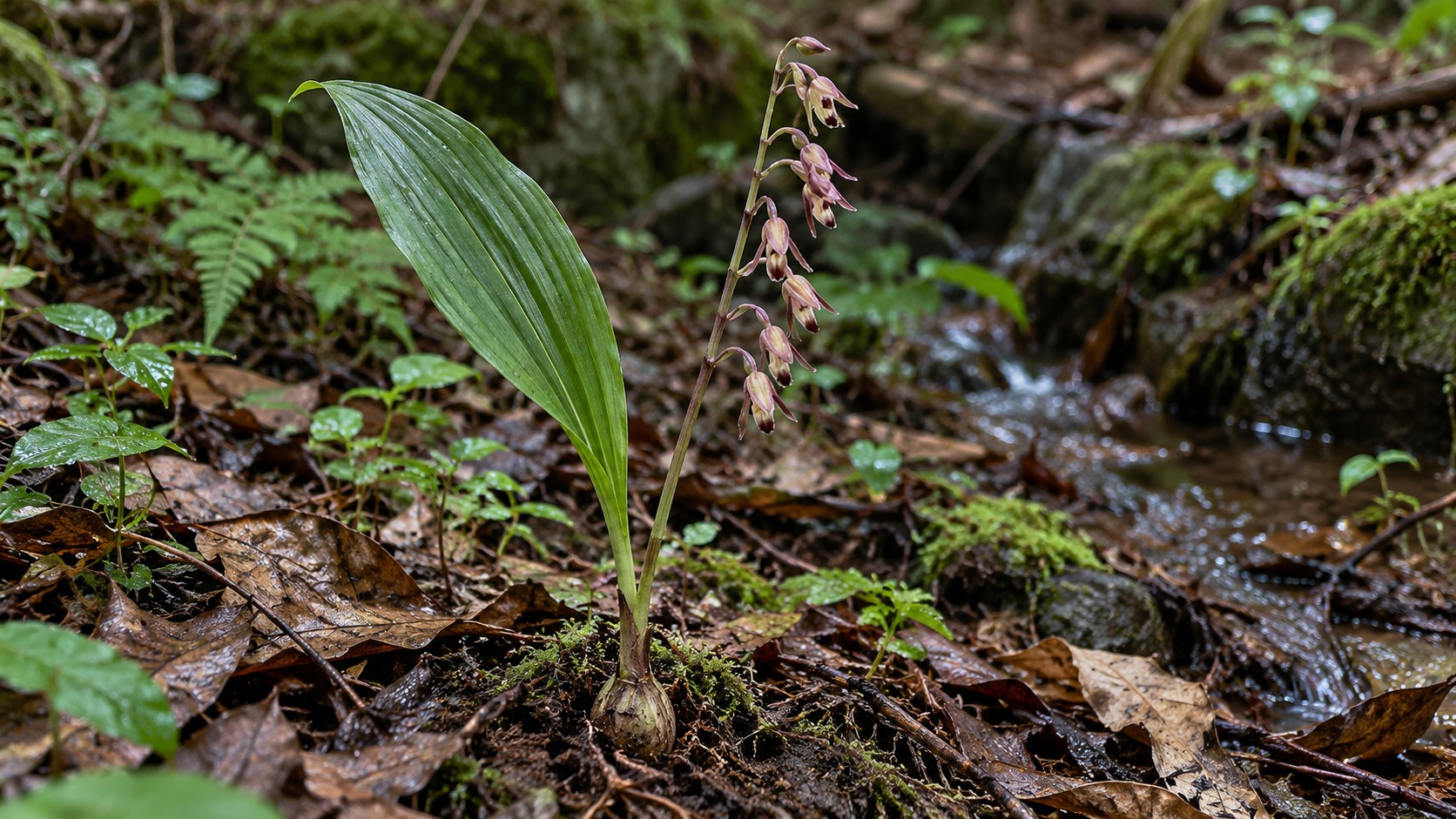
Cremastra appendiculata (D. Don) Makino is accepted by Kew’s Plants of the World Online and belongs to Orchidaceae. It is a terrestrial orchid with pseudobulbs near the ground, not an epiphyte. A plant usually carries one petiolate leaf with a narrow elliptic-to-lance-shaped blade, parallel veins, and conspicuous lengthwise folds. The separate flower stalk rises from the pseudobulb and bears a loose raceme; flowers are small, somewhat drooping, usually pale purple-brown, and do not open broadly like many ornamental orchids. HKBU records flowering around May–June and fruiting around September–December. This seasonal note reflects a regional botanical account and is not a promise that cultivated plants elsewhere flower on the same dates. Kew gives a native range from Nepal to Sakhalin and temperate East Asia, including China, Japan, Korea, Vietnam, Laos, Myanmar, Thailand, Taiwan, and the eastern Himalaya. Kew describes it as a pseudobulbous geophyte of primarily subtropical biomes.
For morphology study; not a substitute for an authenticated voucher
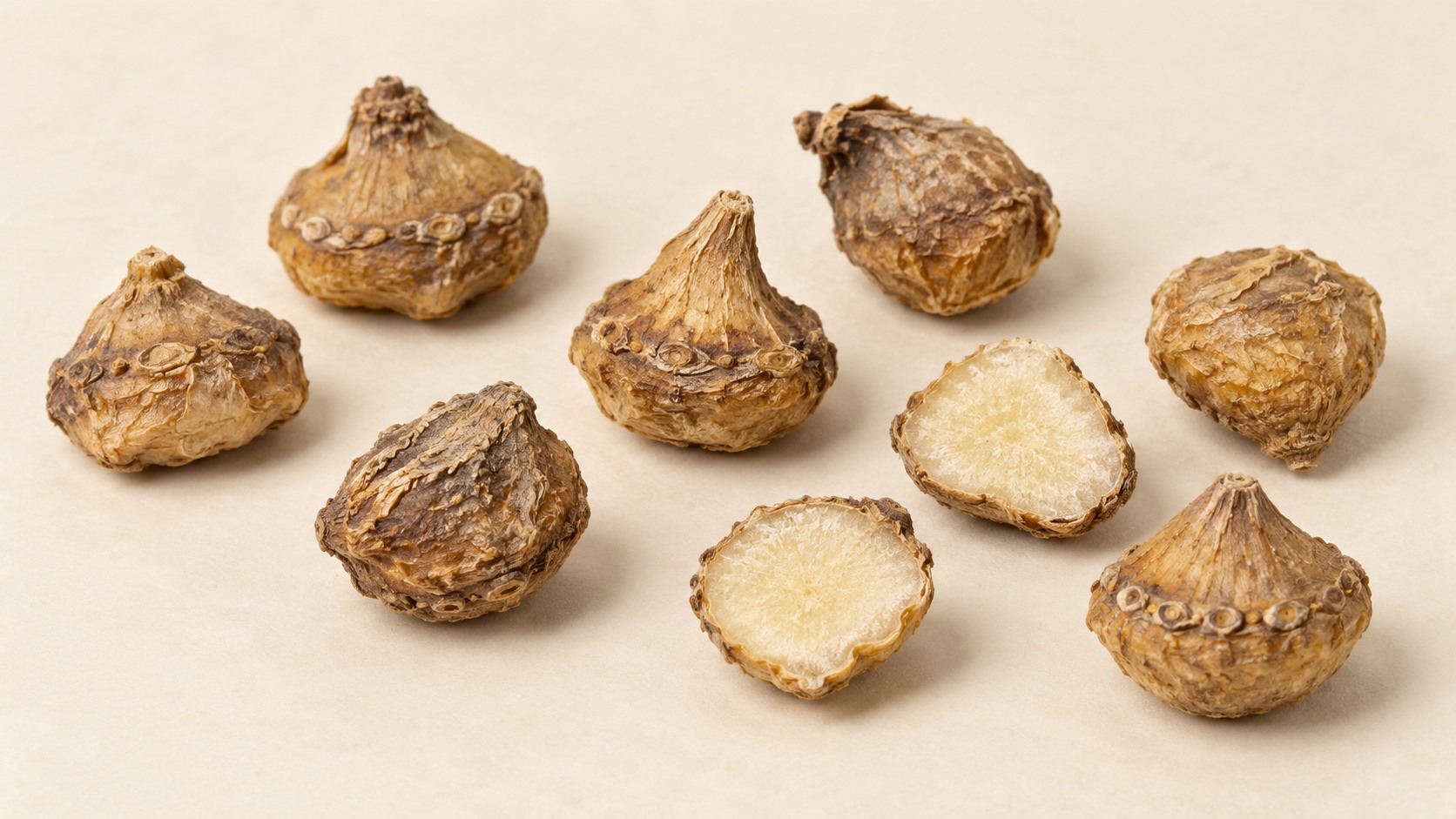
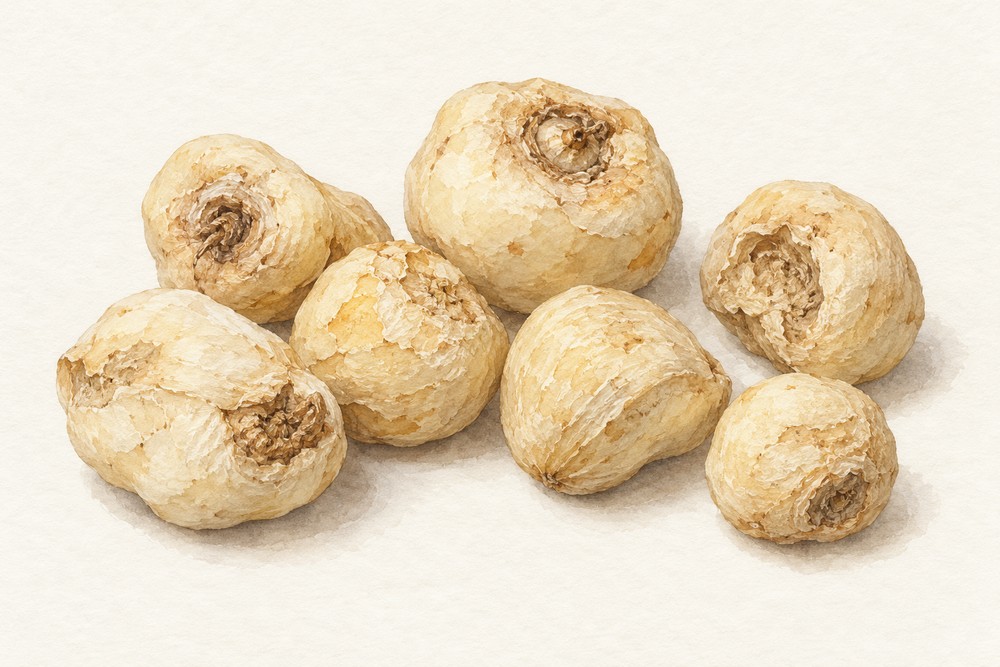
The materia-medica name Shan Ci Gu is broader than a single species name. HKBU links the dried pseudobulb of C. appendiculata to one source of the drug; Chinese pharmacopoeial material can also include pseudobulbs of Pleione bulbocodioides and P. yunnanensis, with market names varying by species. A small dried specimen is flattened-spherical or conical, yellowish to brown, with root scars at the base and a pointed tip; it is hard, with a pale yellow-white, powdery cross-section. HKBU describes a few slightly raised middle rings as a “jade belt.” These cues help study morphology but cannot authenticate species or a commercial lot without a voucher and provenance records.
For morphology study; not a substitute for an authenticated voucher
The species is included because the project’s CITES 2026.1 dataset contains one reported commercial row for Cremastra appendiculata in the medicine-term filter, in 2022, with China reported as exporter and Indonesia as importer, source code A, Appendix II. This is one comparative-tabulation row, not all trade, a measure of market volume, or evidence of therapeutic effect. CITES controls international trade in specimens within the scope of its Appendices; a wild plant is not a source for personal digging. Code A is used for artificially propagated specimens, but one report does not independently verify the permits of an individual transaction.
For morphology study; not a substitute for an authenticated voucher
Images are AI study illustrations: the living image shows a folded single leaf, flower stalk, and moist woodland floor; the dried image shows small pseudobulbs with a pale cut surface. They are not vouchers or depictions of an inspected commercial lot. The profile separates traditional records, research, product labels, and conservation. Traditional materia-medica sources classify the drug as slightly toxic; neither a picture, a Shan Ci Gu label, nor a trade record makes it suitable for self-harvest, decoction, or ingestion.
Traditional context
Based on HKBU morphology notes; not an authenticated specimen
HKBU records the dried C. appendiculata pseudobulb as one source of Shan Ci Gu. That record describes the pseudobulb as sweet, slightly acrid, cool, and “slightly toxic”; traditional functions are rendered as clearing heat and toxins, transforming phlegm, dissipating accumulations, or reducing swelling. These are terms within traditional medicine, not biological mechanisms or treatment conclusions. HKBU lists historical indications such as painful throat swelling, nodules, abscesses, sores, and inflammatory swellings; older disease labels cannot be mapped directly onto modern diagnoses. This text is not a treatment for tumours, cancer, infection, snakebite, or emergencies.
Based on HKBU morphology notes; not an authenticated specimen
Shan Ci Gu may also refer to material from other Pleione species. HKBU distinguishes local market names and notes multiple source plants. If a product does not provide the Latin name, plant part, and cultivation provenance, it cannot be assumed to be C. appendiculata. A 2026 Malaysian government single-herb formulary includes Shan Ci Gu and gives a range within that jurisdiction’s materia-medica framework; that range belongs to that source and is not personal advice, does not apply to concentrated extracts, and does not make a slightly toxic species harmless. This profile records the source without prescribing a dose.
Based on HKBU morphology notes; not an authenticated specimen
The HKBU record for this herb does not give a multi-herb formula with individual amounts. A separate example below comes from the ingredient declaration for a Canadian-licensed blended product. That is a product record describing extracts, not a classical prescription or proof that every pair in the blend treats a condition.
Modern evidence
General morphology and habitat; not a verified locality
Evidence should be read in layers. Kew supports the accepted name, distribution, and growth habit; HKBU supports plant description, habitat, pseudobulb materia medica, and a recorded processing method. A 2021 scientific review summarizes botany, phytochemistry, and preclinical research on C. appendiculata. Chemical studies or cell/animal models can inform research questions, but do not prove that raw plant material treats a human disease.
Based on HKBU morphology notes; not an authenticated specimen
Recent symbiotic-fungus studies show that this orchid’s seeds depend on microorganisms for germination; a 2025 study tested symbiotic propagation conditions and reported low germination/emergence rates in that experimental setup. This is nursery/laboratory research, not a simple pot-growing recipe. A review of colchicine or other alkaloids likewise does not prove that pseudobulb can be taken on its own for gout or cancer. A modern medicine, standardized dose, purity, and clinical supervision are categorically different from plant powder.
Based on HKBU morphology notes; not an authenticated specimen
The CITES row means a reporting country used the trade term “medicine”; the database does not assess clinical efficacy. The Canadian product licence gives the ingredient declaration of one specific product; market authorization does not establish that an individual ingredient works or is safe for every person. This page does not turn CITES data, fungal experiments, phytochemistry, or a product label into treatment advice.
Safety
Based on HKBU morphology notes; not an authenticated specimen
HKBU classifies the Shan Ci Gu pseudobulb as “slightly toxic.” Avoid confusing it with edible bulbs; do not use wild-collected material, taste a pseudobulb, or prepare a home decoction. Neither living-plant nor dried-part images safely authenticate a specimen. The same Shan Ci Gu name can include substitute Pleione species, and local trade names may refer to other materials. An unlabeled lot may carry risks from misidentification, residues, mould, or incorrect processing.
Based on HKBU morphology notes; not an authenticated specimen
A Canadian product record in Health Canada’s database lists 12 herbal extracts, including C. appendiculata; each ingredient has a stated 5:1 extract ratio and a product-specific quantity. Any cautions or claims for that product apply to the entire licensed formula and its exact licence; they cannot be attributed to the pseudobulb alone. People taking medicines, living with chronic conditions, pregnant or nursing, or preparing for surgery should consult a qualified practitioner and read the authorized product label. Do not add it to prescription medicines or other products on your own.
Based on HKBU morphology notes; not an authenticated specimen
No specific herb pair proven to create a new toxic effect with exact C. appendiculata was verified. That gap is not reassurance: a source already describes the materia medica as slightly toxic, and product interactions have not been assessed for every individual. Stop and contact a health professional if an unexpected reaction follows a product. For suspected ingestion of an unidentified plant or severe symptoms, contact emergency or poison services promptly.
Based on HKBU morphology notes; not an authenticated specimen
The HKBU record reviewed here does not provide a sufficiently sourced classical formula with individual amounts that can be tied specifically to the C. appendiculata pseudobulb. However, Health Canada product licence 80145569 lists C. appendiculata in a blended product called “Immune Health Formula.” Its ingredient declaration gives 1.2 g of a 5:1 extract, corresponding to a dried-herb equivalent (DHE) of 6 g; the other 11 ingredients and label quantities appear beside separate ingredient images below. DHE is the label’s “dried herb equivalent,” not a quantity for a reader to weigh and prepare.
Based on HKBU morphology notes; not an authenticated specimen
This is a traceable example of a licensed commercial formula, not proof of a specific benefit, not grounds to isolate one pair and infer an effect, and not a general Shan Ci Gu recipe. A 5:1 extract in this product is not interchangeable gram-for-gram with dried herb in a water decoction. Do not convert these figures into a home formula, alter the ratio, or use the images to identify ingredients. No source reviewed here confirms a specific “toxic when combined” pair for C. appendiculata; the main warnings are the source-reported slight toxicity of the drug itself and the lack of person-specific interaction data.
Identification and study notes
For morphology study; not a substitute for an authenticated voucher
Useful living-plant study cues include one narrow leaf with parallel folds, a distinct petiole, and a separate flower stalk bearing a somewhat drooping raceme. Botanical training should include flowering season; a non-flowering plant can be difficult to distinguish from other terrestrial orchids. The pseudobulb is often hidden in humus rather than exposed like an onion. HKBU’s dried specimen is small, hard, with a concave root-scarred base, pointed tip, yellow-brown surface, and a longitudinal groove on one side; the cut face is pale. A slightly raised middle ring is figuratively called a “jade belt.”
For morphology study; not a substitute for an authenticated voucher
The Shan Ci Gu name alone does not identify a source species. Some standards include Pleione bulbocodioides or P. yunnanensis, and local records mention other substitutions. Check the original standard and a voucher when comparing. AI images can alter petal counts, flower shape, or pseudobulb grooves; they are illustrations only and cannot replace a specialist, specimen, magnifier, or provenance record.
Growth and habitat
General morphology and habitat; not a verified locality
Illustrated habitat; this CITES orchid requires legal cultivated stock
HKBU records the species in humid forest places or beside damp ditches; its account covers multiple Chinese provinces. The plant grows in humus-rich ground under canopy, with a folded leaf and small pseudobulbs; the AI habitat image only illustrates a moist woodland, not a verified soil or locality. Kew gives a broader native range from Nepal to Sakhalin and temperate East Asia. The sources describe different geographic and taxonomic scopes, so medicinal production areas such as Sichuan or Guizhou should not be mistaken for the whole native range.
This terrestrial orchid depends on a seasonal growth and rest cycle; the American Orchid Society mentions sandy loam for the genus Cremastra, while orchid studies show that C. appendiculata seed germination depends on symbiotic fungi. That is not enough evidence to prescribe an optimal irrigation calendar, pH, temperature, fertilizer, or lighting schedule for every region. In hot, humid Vietnam, actual cultivation should be trialled at a conservation nursery with legal stock and terrestrial-orchid expertise; do not dig wild plants for a pot.
Illustrated habitat; this CITES orchid requires legal cultivated stock
General morphology and habitat; not a verified localityStart only with nursery-propagated plants carrying a scientific name and provenance records. C. appendiculata is a CITES Appendix-II orchid; do not dig wild pseudobulbs or buy undocumented plants.
General morphology and habitat; not a verified localityChoose bright shade under canopy with moist humus that drains; this is a garden inference from HKBU habitat, not a tested optimum. Avoid harsh midday sun and prolonged waterlogging.
Illustrated habitat; this CITES orchid requires legal cultivated stockFor a cultivation trial, use a clean, airy, organic-rich medium resembling woodland soil. The American Orchid Society lists sandy loam for the genus Cremastra; it does not provide a validated species-specific mix for C. appendiculata.
General morphology and habitat; not a verified localityKeep moisture steady while leaves are active, while monitoring drainage and airflow; reviewed sources do not give a universal daily watering schedule or amount. Adjusting water during dormancy requires an experienced grower monitoring the plant.
Illustrated habitat; this CITES orchid requires legal cultivated stockDo not expect ordinary garden-style seed sowing: a 2025 study used Coprinellus radians to support germination and reported low emergence. Propagation requires controlled fungal work; do not culture wild fungi at home or treat a lab result as a complete protocol.
Illustrated habitat; this CITES orchid requires legal cultivated stockSources do not establish a pseudobulb age for medicinal harvest. Do not cut leaves or dig pseudobulbs for ingestion; cultivation here is for conservation and observation, not home drug production.
General morphology and habitat; not a verified locality
How long until harvest? No verified plant age or number of years to medicinal harvest was found for C. appendiculata. HKBU records only a pseudobulb harvest season and processing description. Do not use plant size as a harvest age or collect it for self-ingestion.
Illustrated habitat; this CITES orchid requires legal cultivated stock
From plant to dried material · source-recorded workflow
General morphology and habitat; not a verified localityTrace the lot to cultivated C. appendiculata with a scientific label and CITES/provenance documents; do not wild-harvest or mix Pleione species merely because they share a Shan Ci Gu name.
General morphology and habitat; not a verified localityHKBU records pseudobulb digging in summer and autumn; this is a materia-medica harvest note, not an invitation for readers to dig plants.
Morphology reference, not a home preparation guideHKBU describes removing aerial leaves and fibrous roots, washing, steaming, partially drying, then sun-drying. This is a source-recorded workflow; heat and final moisture must be controlled in a compliant facility because the drug is classified as slightly toxic.
General morphology and habitat; not a verified localityGrade species identity, size, cut-surface color, and integrity; document harvest date, cultivation site, processing, lot, and test results. Do not use AI art as a grading or identification standard.
Morphology reference, not a home preparation guide
This record supports study and processing traceability; it is not a home preparation or self-use guide.