Jujube · Da Zao
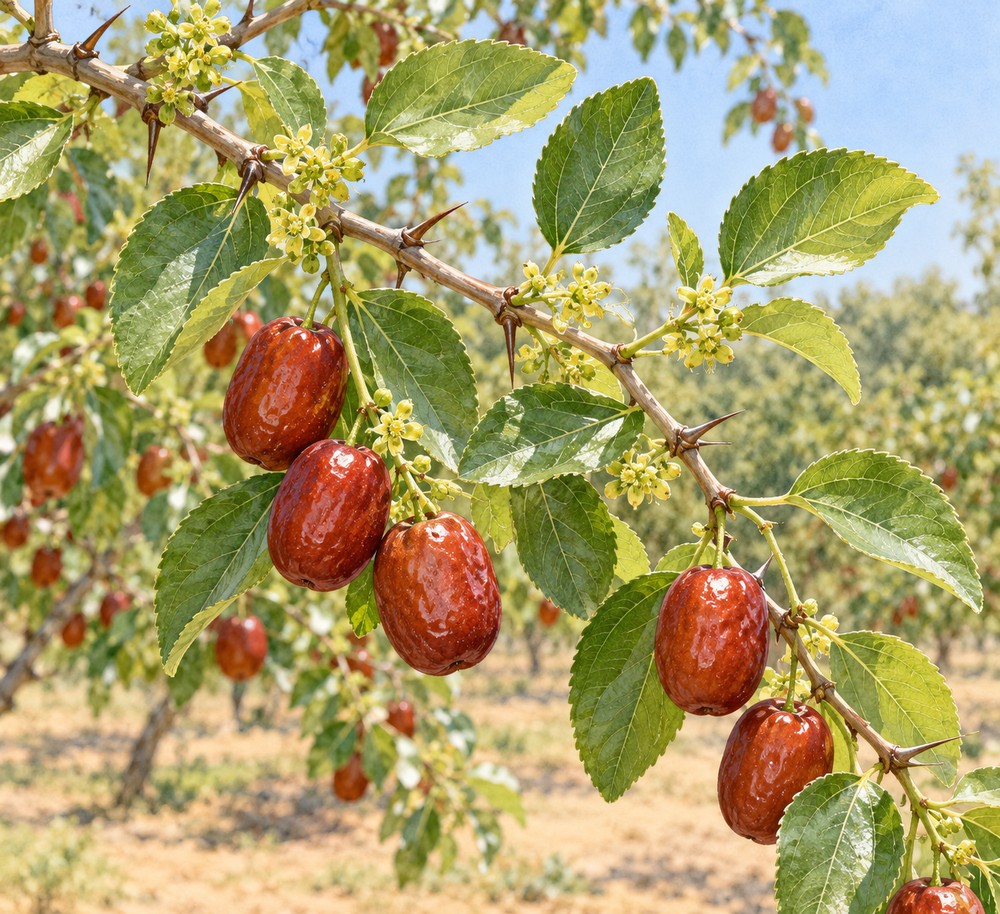
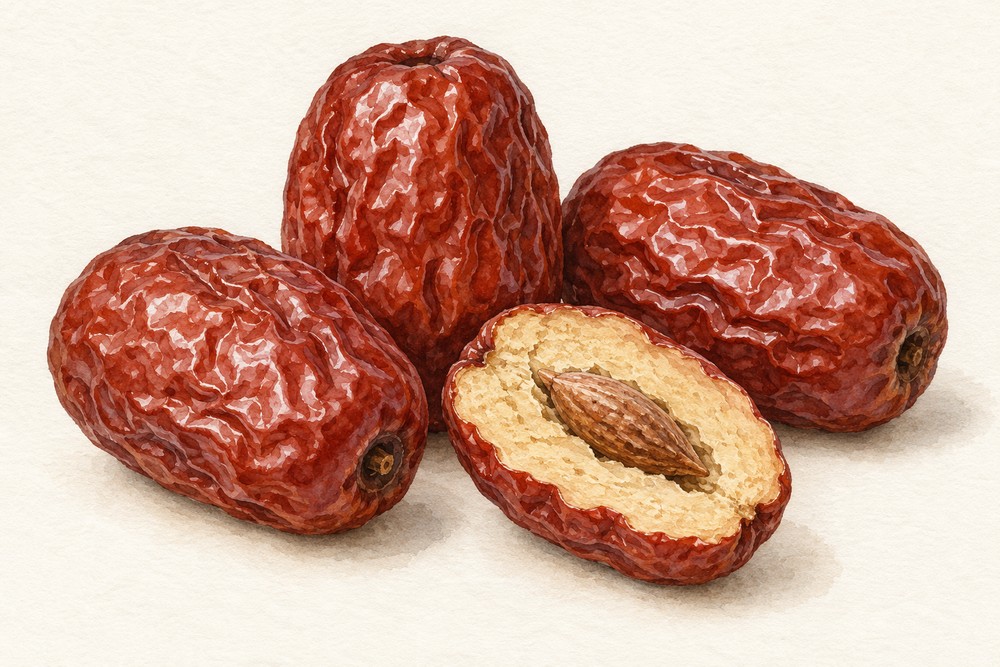
Ziziphus jujuba Mill. · Mature fruit
Name and part used
A shrub or small tree, often thorny, with oval leaves and red-brown mature fruits.
Traditional context
Da Zao is mature fruit of Ziziphus jujuba. It is not Suan Zao Ren, the seed of a different variety (Z. jujuba var. spinosa). Thorns and leaves should be checked against authenticated references.
Modern evidence
The fruit is eaten as food in many regions. Traditional tonic descriptions do not demonstrate that it treats insomnia, anemia, or chronic disease.
Safety
Dried fruits contain substantial natural sugars; people monitoring blood glucose or diet should account for them. Avoid moldy, sugar-coated, or allergen-contaminated products.
Pairing in reference texts
Da Zao appears in many historical formulas with licorice and other herbs, and is also a food. Formula context does not prescribe an individual serving.
Growing, care, and harvest timing
HKBU habitat record: Growing in mountainous areas, hills or plains at altitude below 1,700m. Can be cultivated. Distributed in all parts of China. The medicinal materials are mainly produced in Henan, Shandong and etc Harvest and processing as recorded: Harvested mature fruits in autumn. Removed impurity and sun-dried
Source-recorded harvest/processing: Harvested mature fruits in autumn. Removed impurity and sun-dried
The reviewed source does not provide a complete species-specific sowing/growing routine, irrigation/fertilization schedule, or universal plant age. The page therefore does not infer care instructions or years to harvest; consult local cultivation guidance.
Open habitat and season source ↗FROM PLANT / SOURCE HABITAT TO DRIED MATERIAL · REFERENCE WORKFLOW
- Harvest mature fruits in autumn; verify Ziziphus jujuba lots and reject rotten or pest-damaged fruit.
- Clean and drain fruits, arranging them with airflow; do not mix them with Suan Zao Ren seeds.
- Sun-dry or use controlled equipment to facility standards until the skin is wrinkled and moisture specifications are met.
- Grade, record origin and harvest date, and pack against moisture; inspect for insects and mold.
These are post-harvest study notes, not directions to prepare a remedy for self-treatment. Processing reference ↗
How to read formula amounts
The cited sources do not provide a formula with specific amounts for this profile; no ratio is invented. Absence from the incompatibility list does not establish safety.
Habitat, season, and harvest in the HKBU botanical record
HKBU botanical record (translated summary): Flowering and fruiting dates: Flowering: May to July, fruiting: August to November Habitat and distribution: Growing in mountainous areas, hills or plains at altitude below 1,700m. Can be cultivated. Distributed in all parts of China. The medicinal materials are mainly produced in Henan, Shandong and etc Harvest and processing as recorded: Harvested mature fruits in autumn. Removed impurity and sun-dried
Open botanical source ↗