Di Gu Pi · Di Gu Pi
Lycium chinense Mill. · Dried root bark
Name and part used
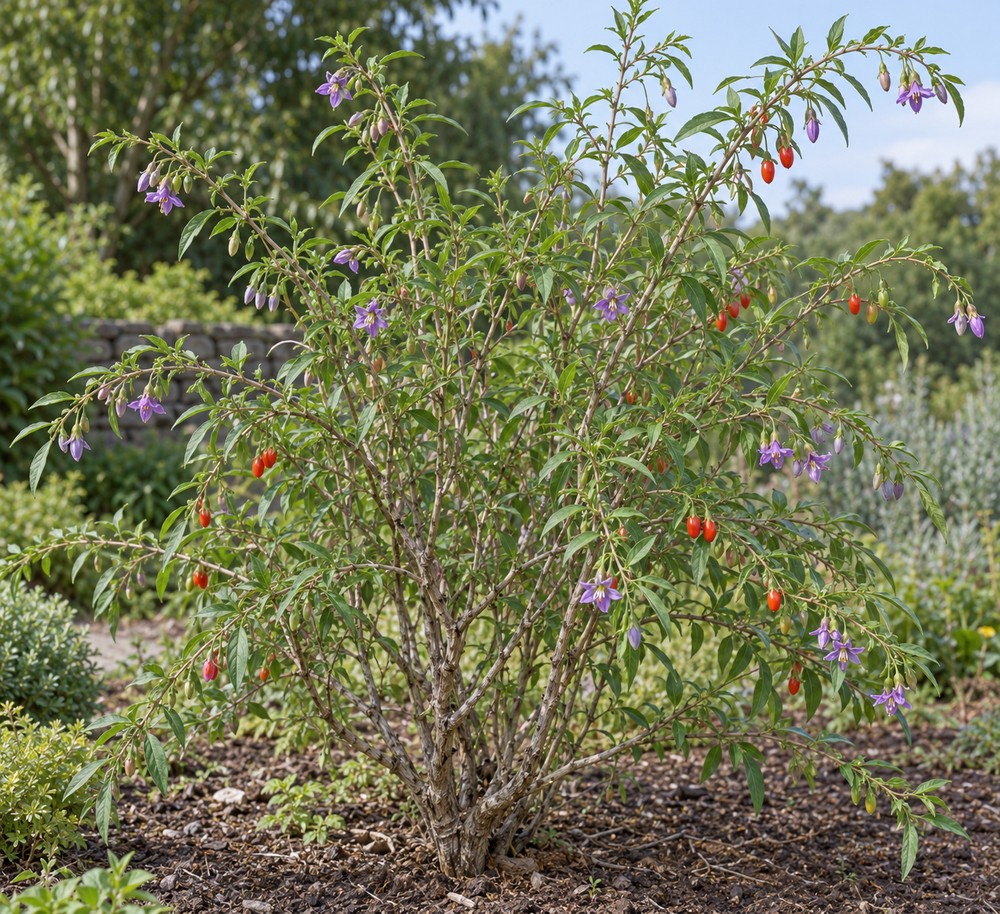
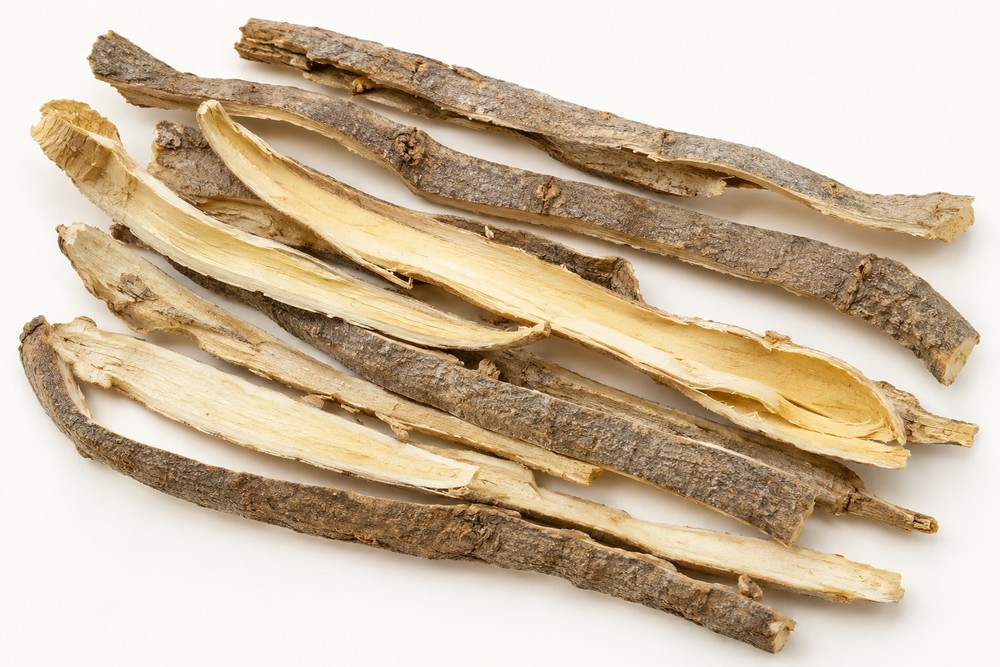
Di Gu Pi is root bark of Lycium chinense, not goji fruit, leaf, or stem bark. The Solanaceae shrub has slender sometimes spiny branches, narrow leaves, pale-purple star-shaped flowers, and red berries; the image illustrates L. chinense. The dried materia medica consists of thin pale yellow-white to light tan root-bark strips, distinct from whole roots, stem bark, and fruit. Stripping living roots can damage or kill a plant.
Traditional context
Traditional sources describe sweet-bland, cold properties for pattern-based deficiency-heat and blood-cooling. This does not prove treatment of persistent fever, tuberculosis, hemoptysis, or nosebleeds; these need medical evaluation.
Modern evidence
HKBU identifies Lycium chinense; the historical Qing Gu San includes Di Gu Pi but is not a clinical trial. Evidence on goji fruit cannot be transferred to root bark or across Lycium species.
Safety
Main concerns are plant-part/product confusion, contamination, allergy, and self-treating fever or bleeding. Pregnancy, kidney disease, children, or medicines require professional review; do not strip garden roots for decoction.
Pairing in reference texts
In Qing Gu San, HKBU records Di Gu Pi 3 g with Zhi Mu 3 g, Qing Hao 3 g, Qin Jiao 3 g, Hu Huang Lian 3 g, vinegar-fried Bie Jia 3 g, Yin Chai Hu 5 g, and Gan Cao 2 g. The gallery highlights Di Gu Pi:Zhi Mu = 1:1 within a multi-herb historical formula; not a standalone treatment ratio or fever advice.
Growth and habitat
Lycium chinense is a temperate East Asian shrub found around field margins and sunny, drained ground; Kew records its temperate East Asian native range. Grow in full sun and drained soil; root-bark removal can severely injure or kill the plant.
Growing, care, and harvest timing
The profile above includes sourced steps and a documented harvest window. Harvest timing is agronomic information, not a self-use instruction.
Identification and study notes
Địa cốt bì dễ nhầm khi trao đổi vì cùng chi Lycium với quả kỷ tử. Dược liệu ở đây là vỏ rễ Lycium chinense, còn quả kỷ tử là quả của loài Lycium; phơi khô không biến chúng thành cùng vị thuốc. Cây bụi có lá hẹp, hoa tím hình sao, quả đỏ và đôi khi có gai; những dấu hiệu đó không đủ nhận dạng túi vỏ rễ đã thái. Nguồn mô tả dải vỏ mỏng sáng màu, nhưng chất lượng hóa học và tạp nhiễm cần kiểm nghiệm riêng. Thu vỏ rễ có thể làm cây chết hoặc tổn thương nặng, nên không đào cây nhà làm bài thực hành. Thanh cốt tán là ví dụ nhiều vị trong trang; quan hệ Địa cốt bì:Tri mẫu 1:1 nằm trong toàn bài, không phải liều hạ sốt độc lập. Nghiên cứu quả kỷ tử không áp dụng cho vỏ rễ. Trước khi so sánh, ghi loài, bộ phận, nhà cung cấp, chế biến và ngữ cảnh công thức. Khi học Địa cốt bì, hãy lập ba cột cạnh mẫu: “vỏ rễ”, “vỏ thân”, “quả”. Trang này chỉ nói cột đầu; ba dạng không thay thế nhau. Thu hoạch và định danh gắn liền vì bóc vỏ làm mất ngữ cảnh cây và có thể làm bụi chết; lô thương mại truy xuất là nguồn học tốt hơn cây tự đào. Ví dụ Thanh cốt tán giữ tỷ lệ lịch sử trong bài tám vị. Điều này không chứng minh Địa cốt bì đơn trị sốt hay tỷ lệ an toàn cho người đọc. Nghiên cứu quả Lycium/kỷ tử nói về bộ phận khác, đôi khi cả loài khác. Tách riêng các nguồn. Mẫu học gắn nhãn tốt cần ghi loài, rễ nguồn, sấy và kiểm nghiệm tạp chất.
Growing and care
- Grow labeled Lycium chinense in sun and deep drained soil.
- Water steadily while young, reduce after establishment, and avoid prolonged waterlogging.
- Prune dead branches with clean tools, monitor pests, and retain species labels.
- Do not dig roots or strip living bark for medicine; use tested traceable material.
- Root-bark harvest stresses the plant; sources give no universal safe household harvest age.
How long until harvest? Kew records L. chinense as a shrub native to temperate East Asia; HKBU identifies root bark as the used part. Sources give no safe harvest age, and root-bark harvest may kill the plant.
Documented formula pairing: Qing Gu San
HKBU records traditional actions for a specific deficiency-heat pattern; not self-treatment for persistent fever or tuberculosis.
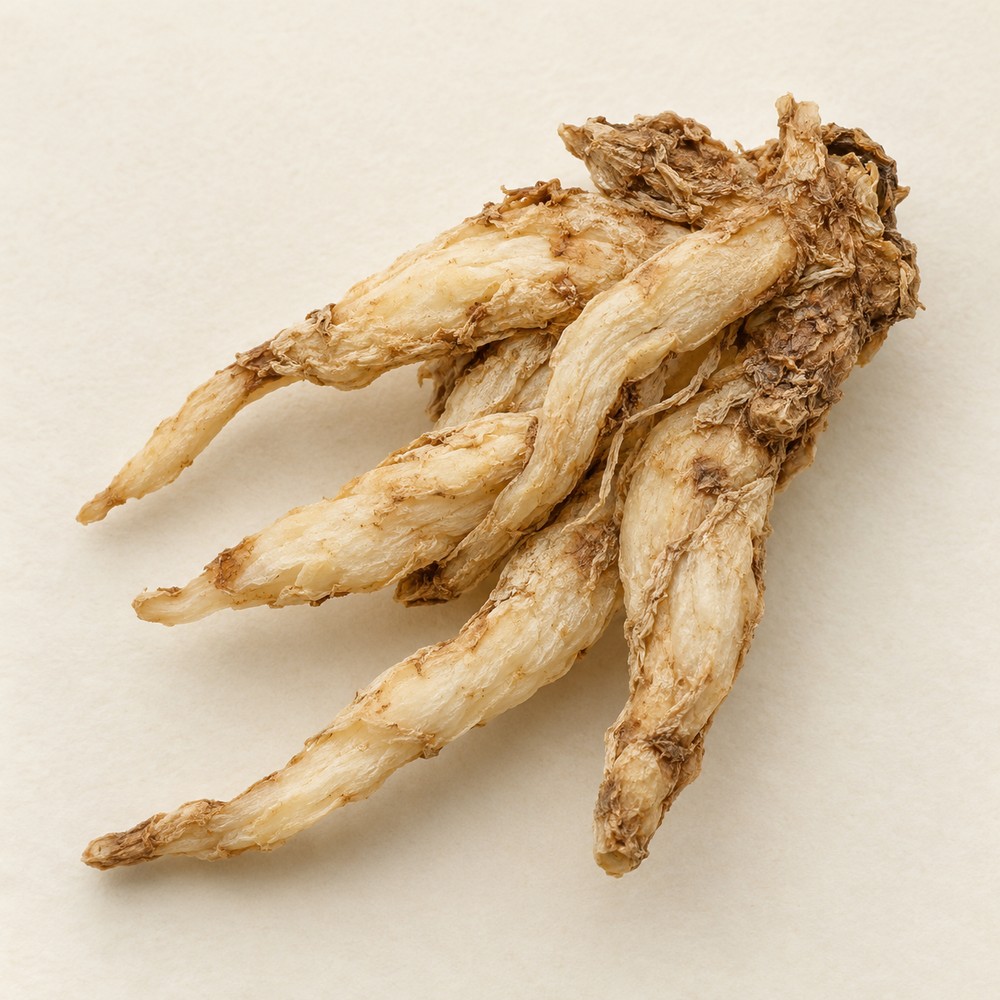
Source-recorded amounts: Di Gu Pi:Zhi Mu = 3:3 g (1:1) within an eight-ingredient formula; remaining ingredients and amounts are listed by HKBU.
Caution: This is a pair within a historical formula, not self-combination or fever treatment. Persistent fever needs medical assessment.
Open formula record ↗Documented toxic incompatibility
Reviewed sources do not confirm a specific toxic pair; this gap does not prove universal safety. Species, plant part, processing, medicines, and conditions still require review.
FROM PLANT / SOURCE HABITAT TO DRIED MATERIAL · REFERENCE WORKFLOW
- Root bark is not a sustainable harvest from a living shrub: medicinal lots require controlled excavation, cleaning, bark separation, drying, and testing by qualified processors. Do not dig up garden plants or prepare it at home; prefer traceable batches.
- The supplier must identify Lycium chinense root bark specifically, not goji fruit or stem bark.
- Clean, grade, and inspect the lot for foreign matter and mold under its standard; root-bark separation belongs to a controlled processor.
- Keep plant-source and lot traceability; never dig up garden shrubs to strip bark at home.
These are post-harvest study notes, not directions to prepare a remedy for self-treatment. Processing reference ↗
How to read formula amounts
Displayed amounts belong to the cited formula and source; they are not a general safe ratio, treatment dose, or home-decoction instruction. Do not transfer amounts to another formula or adjust them by body weight.