Clove · Ding Xiang
Syzygium aromaticum (L.) Merr. & L.M.Perry · Dried unopened flower buds
Name and part used
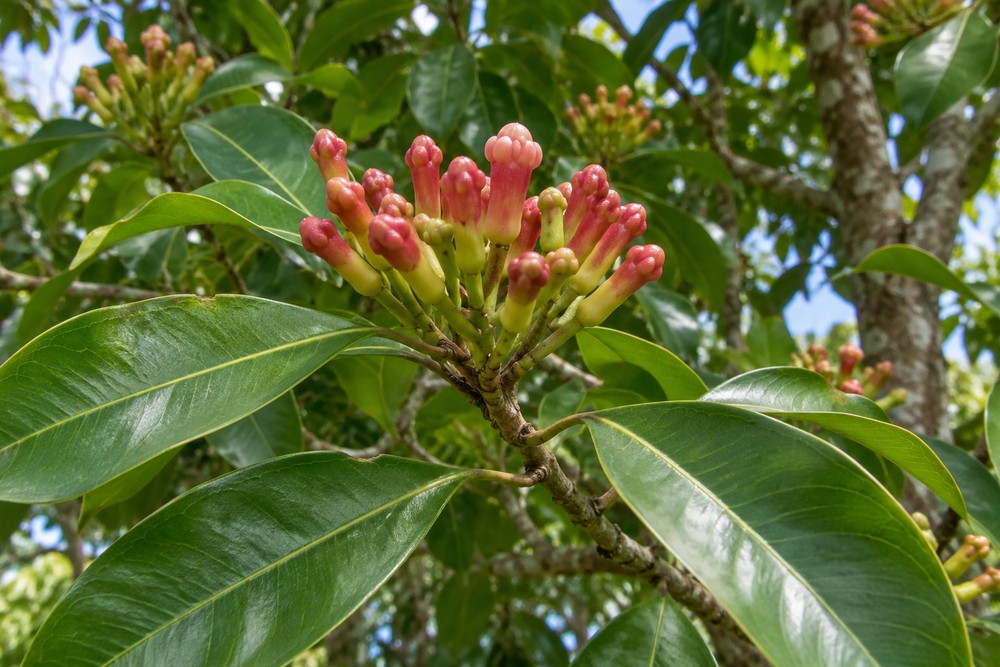
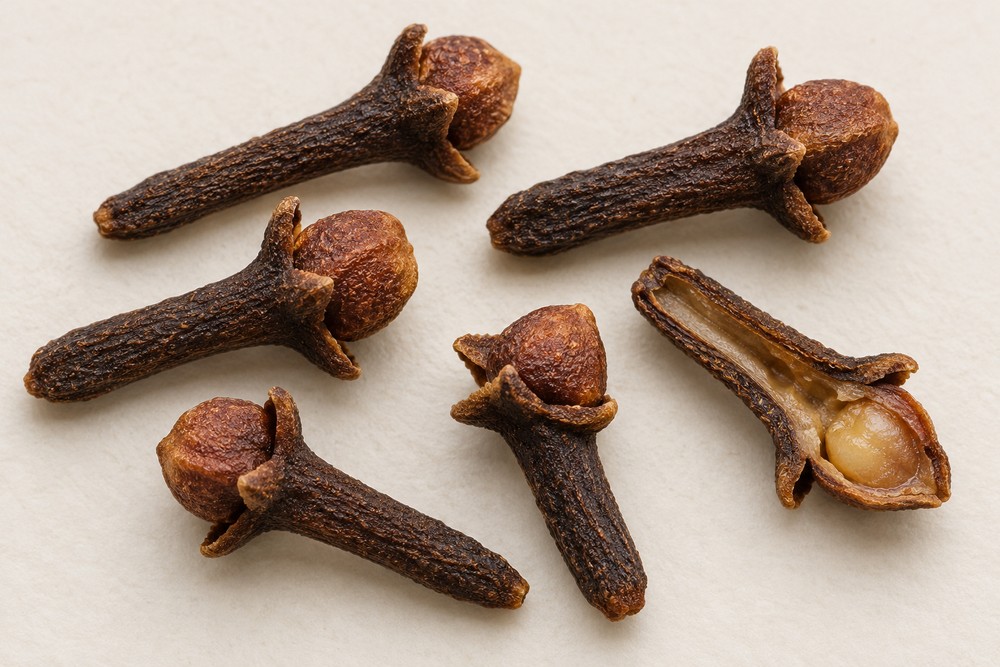
An evergreen tree has opposite glossy aromatic leaves. Bud clusters turn from green to pink-red before opening; the dried brown-red bud is nail-shaped with a four-lobed calyx and rounded crown.
Traditional context
Warming the middle, directing counterflow downward, and warming the kidney are traditional classifications. They do not prove cloves treat vomiting, hiccups, toothache, or kidney disease; concentrated oil has separate risks.
Modern evidence
HKBU identifies the drug as unopened dried buds of Syzygium aromaticum, distinct from stalks, leaves, or fruit. Bud size, aroma, and oiliness are traditional quality cues; AI art cannot test eugenol or contaminants.
Safety
Clove and clove oil may irritate; large ingestions can be toxic. Eugenol can affect clotting and may interact with anticoagulants; swallowed clove oil can injure a child’s liver. Do not ingest neat oil or self-dose medicinally.
Pairing in reference texts
HKBU’s Ding Xiang Shi Di Tang lists clove 6 g, persimmon calyx 9 g, ginseng 3 g, and fresh ginger 6 g (2:3:1:2). Its action is described in traditional theory; source amounts are not a treatment recommendation.
Growth and habitat
Clove is a humid-tropical crop. World Agroforestry reports first bearing varies by region, about 4–10 years after planting (often 4–6 in Zanzibar and 6–8 in Indonesia); climate and soil determine local timing.
Growing, care, and harvest timing
The profile above includes sourced steps and a documented harvest window. Harvest timing is agronomic information, not a self-use instruction.
Growing and care
- Sow fresh seed promptly in moist but drained medium and give seedlings light shade.
- Plant in warm humid sites protected from waterlogging and strong wind; mulch and irrigate during establishment.
- Prune dead branches and inspect for stem borers; avoid unqualified pesticide use on a medicinal crop.
- Harvest clustered buds when pink-red but still unopened; grade by lot and dry cleanly to prevent mold.
How long until harvest? World Agroforestry reports first flowering in roughly 4–10 years depending on region, with some areas at 4–6 and others 6–8 years. Only unopened buds are used; harvest timing affects color and quality.
Documented formula pairing: Ding Xiang Shi Di Tang
The text describes a traditional combination for counterflow and warming the middle in a cold-deficiency hiccup pattern; it does not treat causes of persistent hiccups.
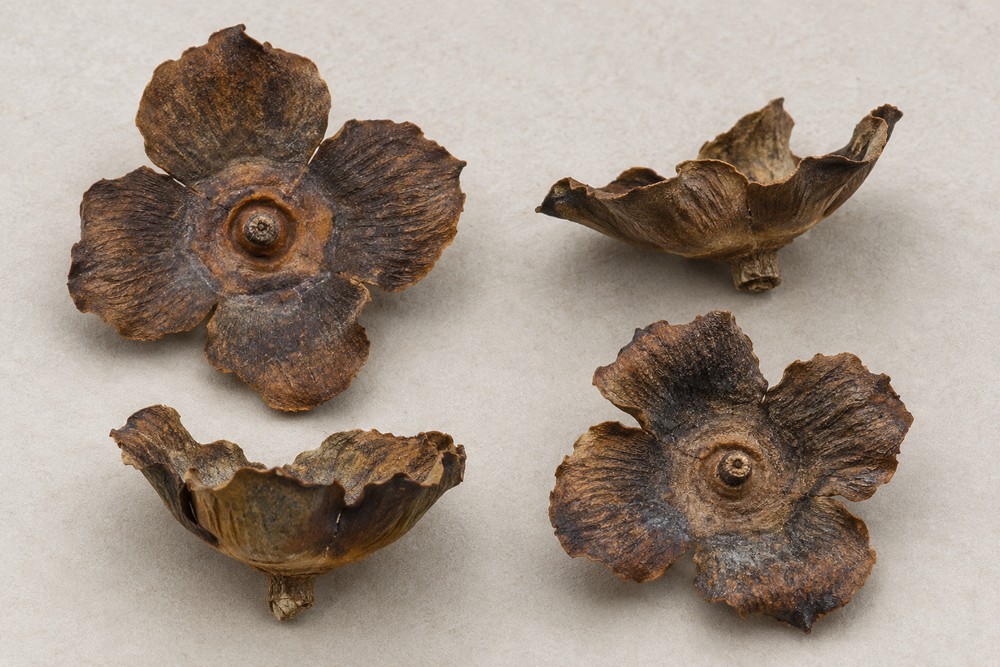
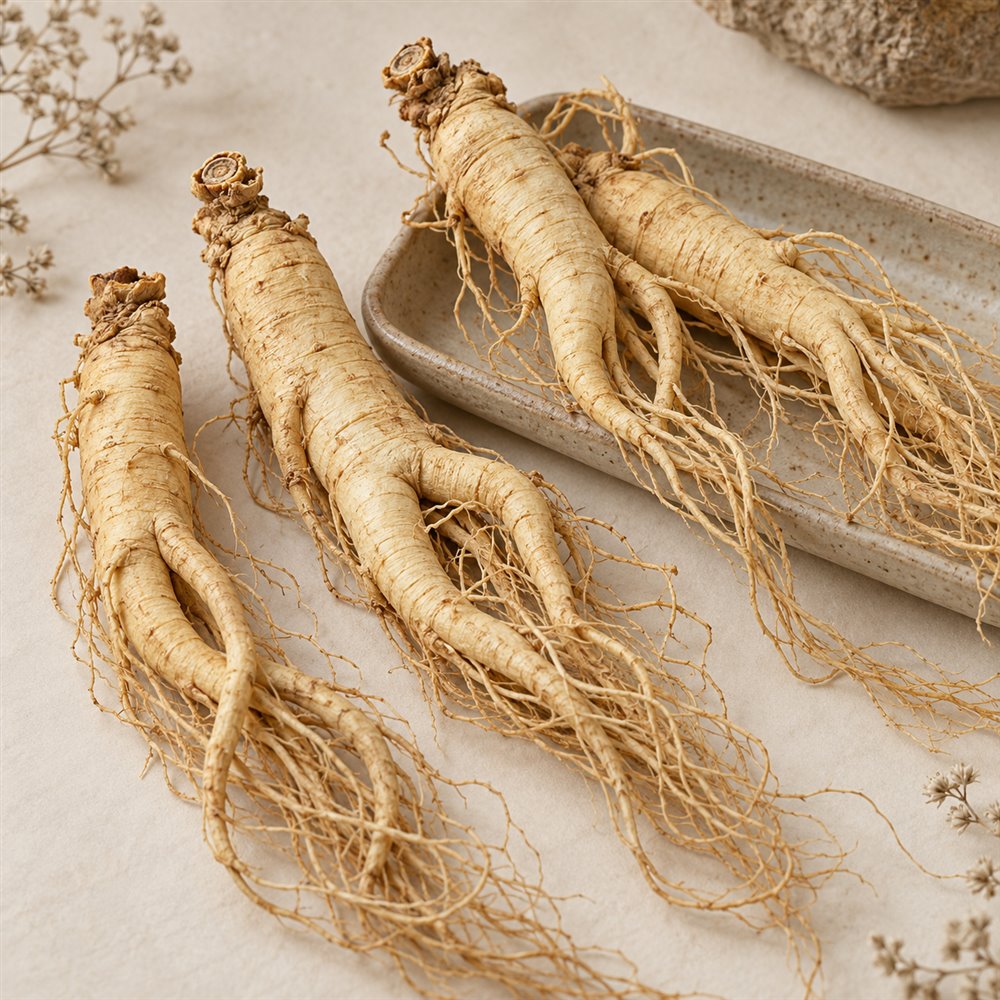
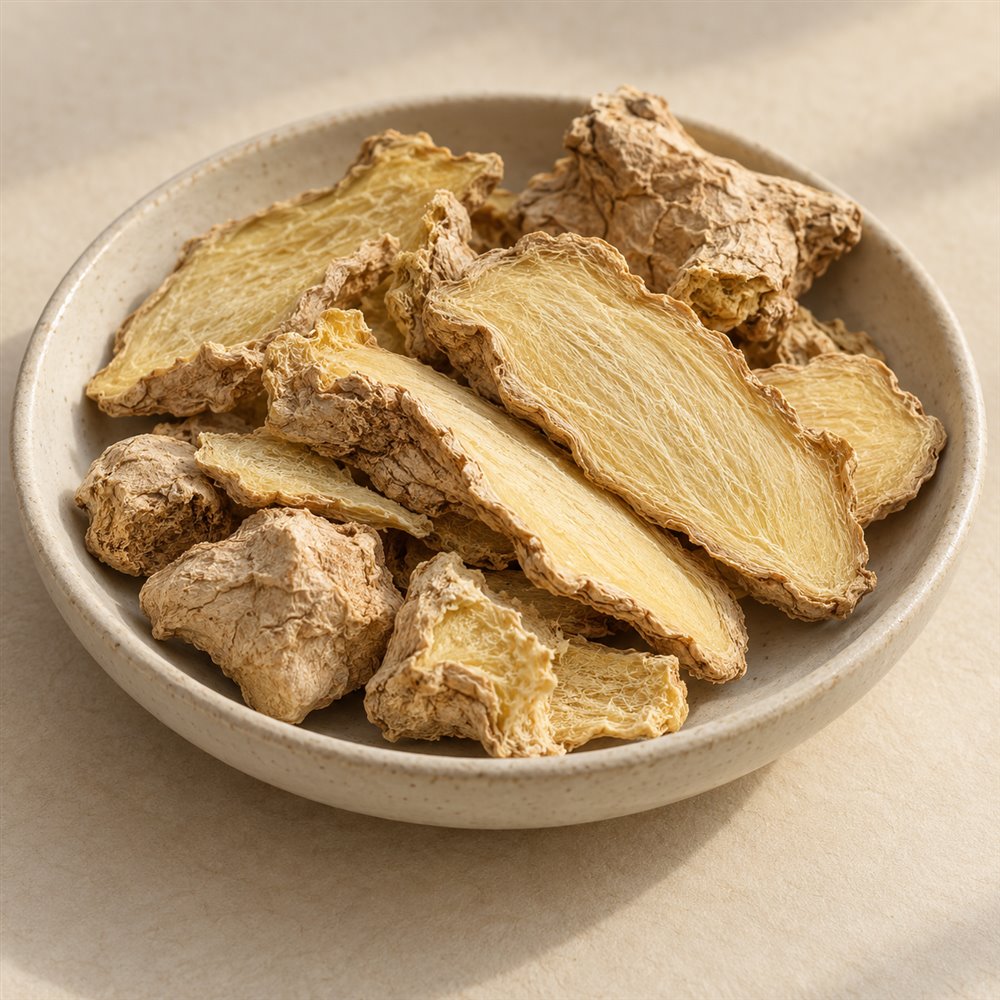
Source-recorded amounts: HKBU source ratio: 6:9:3:6 g = 2:3:1:2. These are amounts in one formula record, not a personal dose.
Caution: Clove may affect clotting and ginseng has reported medicine interactions. Persistent vomiting, dehydration, chest pain, or breathing difficulty requires medical assessment.
Open formula record ↗Documented toxic incompatibility
No reliable checked source labels the clove–persimmon calyx–ginseng–ginger formula as poisonous. That does not establish safety in pregnancy, children, or people taking medicines.
FROM PLANT / SOURCE HABITAT TO DRIED MATERIAL · REFERENCE WORKFLOW
- Grow only in warm humid tropical climates, protected from cold wind and frost; the tree needs deep organic well-drained soil and some shade while young.
- Propagate from fresh authenticated seed; clove seed loses viability quickly, so sow promptly and keep seedlings lightly shaded and evenly moist.
- Transplant when established with room for a mature canopy; irrigate through dry periods, mulch, and use mature organic matter according to soil needs.
- Monitor stem borers, root rot, and wind damage; do not expect buds within months—commercial trees take years to flower.
These are post-harvest study notes, not directions to prepare a remedy for self-treatment. Processing reference ↗
How to read formula amounts
Displayed amounts belong to the cited formula and source; they are not a general safe ratio, treatment dose, or home-decoction instruction. Do not transfer amounts to another formula or adjust them by body weight.
Habitat, season, and harvest in the HKBU botanical record
HKBU botanical record (translated summary): Flowering and fruiting dates: Flowering: March to May Habitat and distribution: Growing in both temperate and frigid zones. Distributed in Malay Archipelago and Africa. The medicinal materials are mainly produced in Tanzania, Malaysia, Indonesia and etc; also cultivated in Guangdong, Guangxi and etc Harvest and processing as recorded: Dingxiang: usually harvested from Sept to March of the next year when buds turn green to coceine. Mudingxiang: harvested when fruits get mature, and sun-dried
Open botanical source ↗HKBU formula record containing this herb: Zi Xue Dan / Purple Snow Elixir
Traditional action in the source: Clears heat and opens the orifices, extinguishes wind and arrests convulsion
Ingredient images and source amounts are shown for comparison only; this is not a treatment recipe.
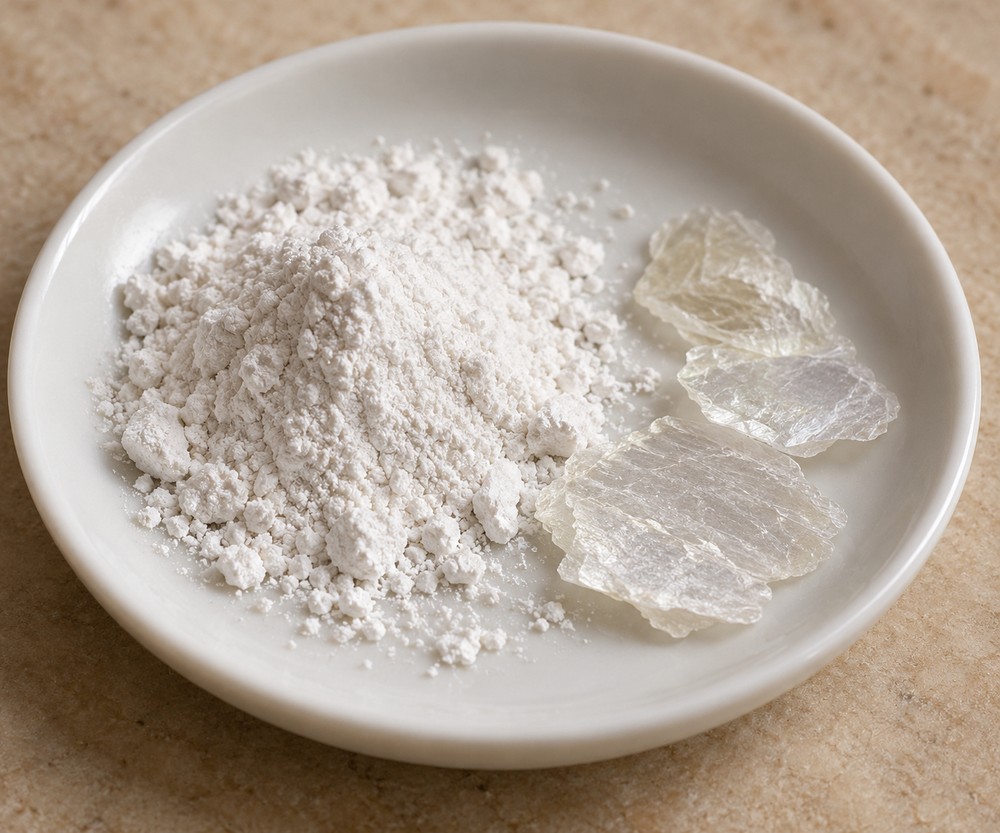
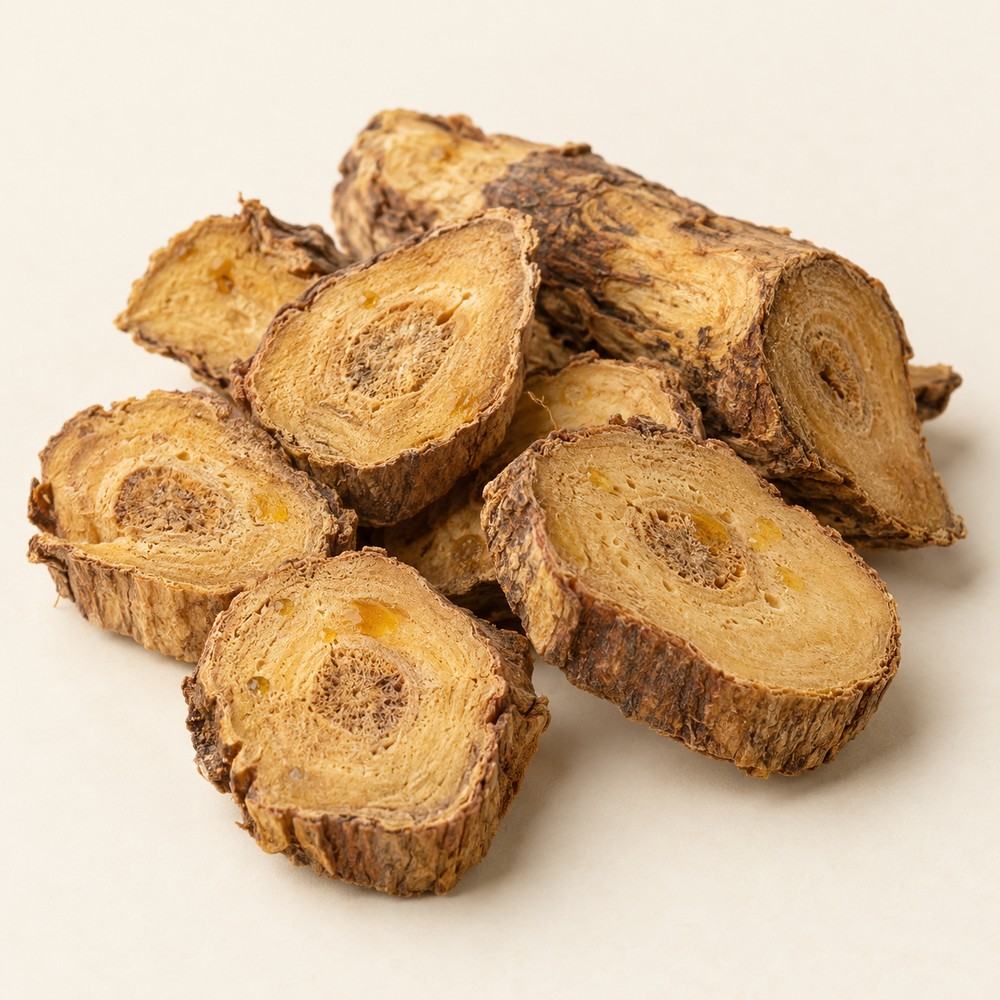
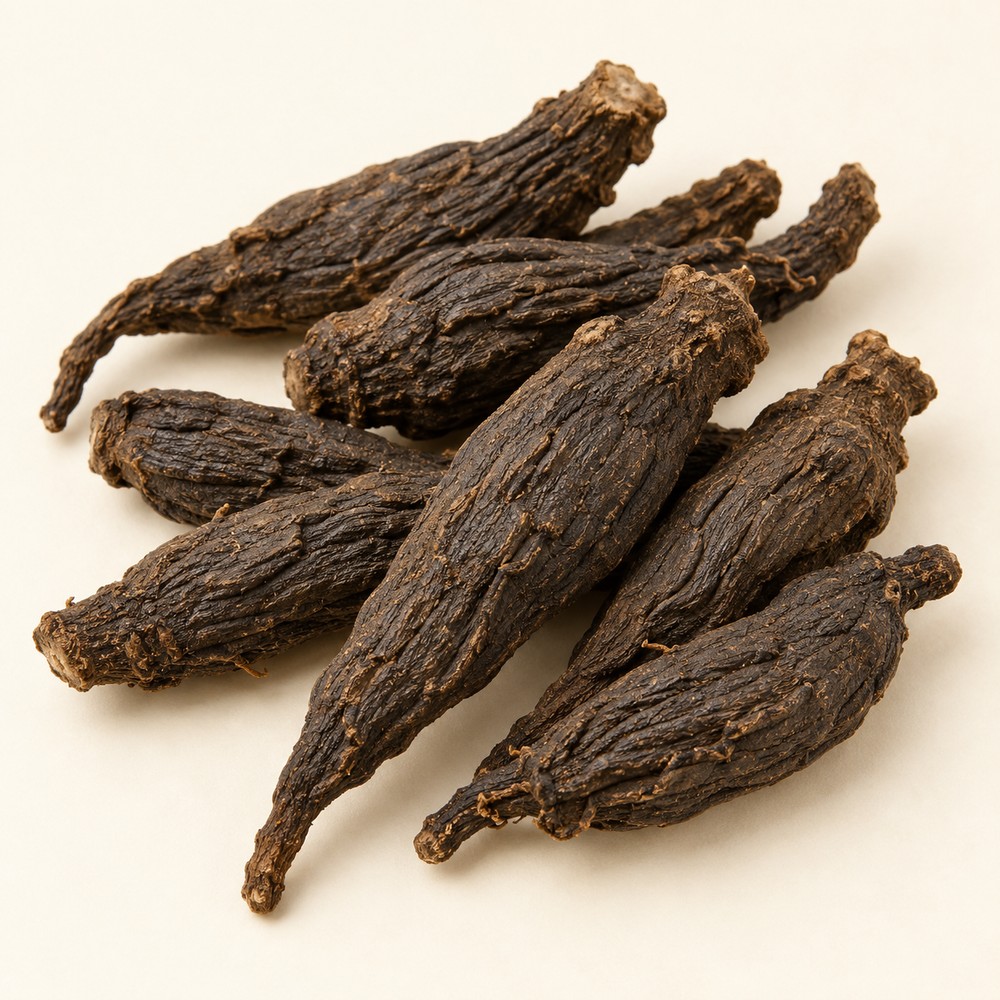
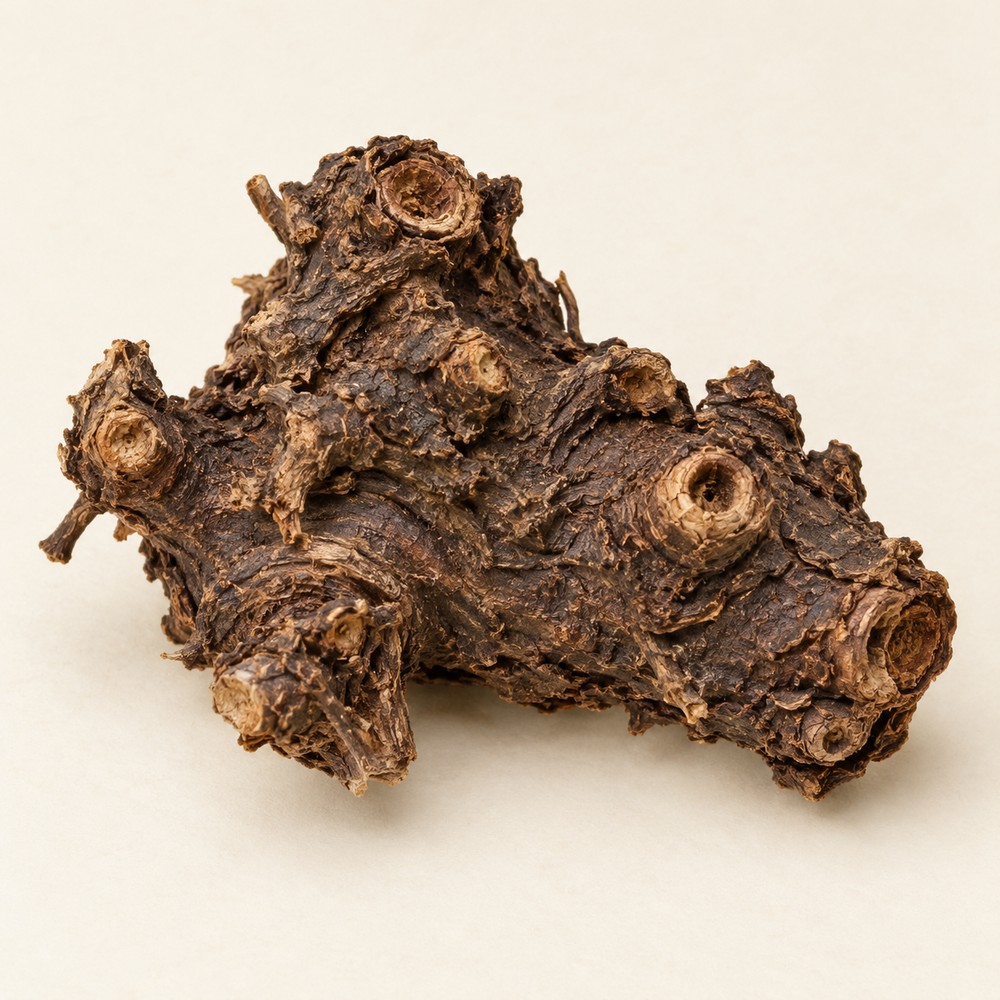
HKBU source-recorded composition
Gypsum Fibrosum (Shi Gao) 3 jin (1.5kg), Glauberitum (Han Shui Shi) 3 jin (1.5kg), Talcum (Hua Shi) 3 jin (1.5kg), Magnetitum (Ci Shi) 3 jin (1.5kg), Bubali Cornu (Shui Niu Jiao) 3.3 liang (100g), Saigae Tataricae Cornu (Ling Yang Jiao) 5 liang (150g), Aquilariae Lignum Resinatum (Chen Xiang) 5 liang (150g), Aucklandiae Radix (Mu Xiang) 5 liang (150g), Scrophulariae Radix (Xuan Shen) 1 jin (500g), Cimicifugae Rhizoma (Sheng Ma) 1 jin (500g), Glycyrrhizae Radix et Rhizoma Praeparata cum Melle (Zhi Gan Cao) 8 liang (240g), Caryophylli Flos (Ding Xiang) Caryophylli Flos (Note: Shui niu jiao is used in place of xi jiao. Gold is no longer used.)
The ingredients and amounts below are one HKBU-recorded version; texts, historical units, processing, and modern products can differ. This is comparative reference data, not a home-preparation recipe or personal dose.
Open complete HKBU formula record ↗