Di Yu · great burnet root · Di Yu
Sanguisorba officinalis L. · Dried root
Name and part used
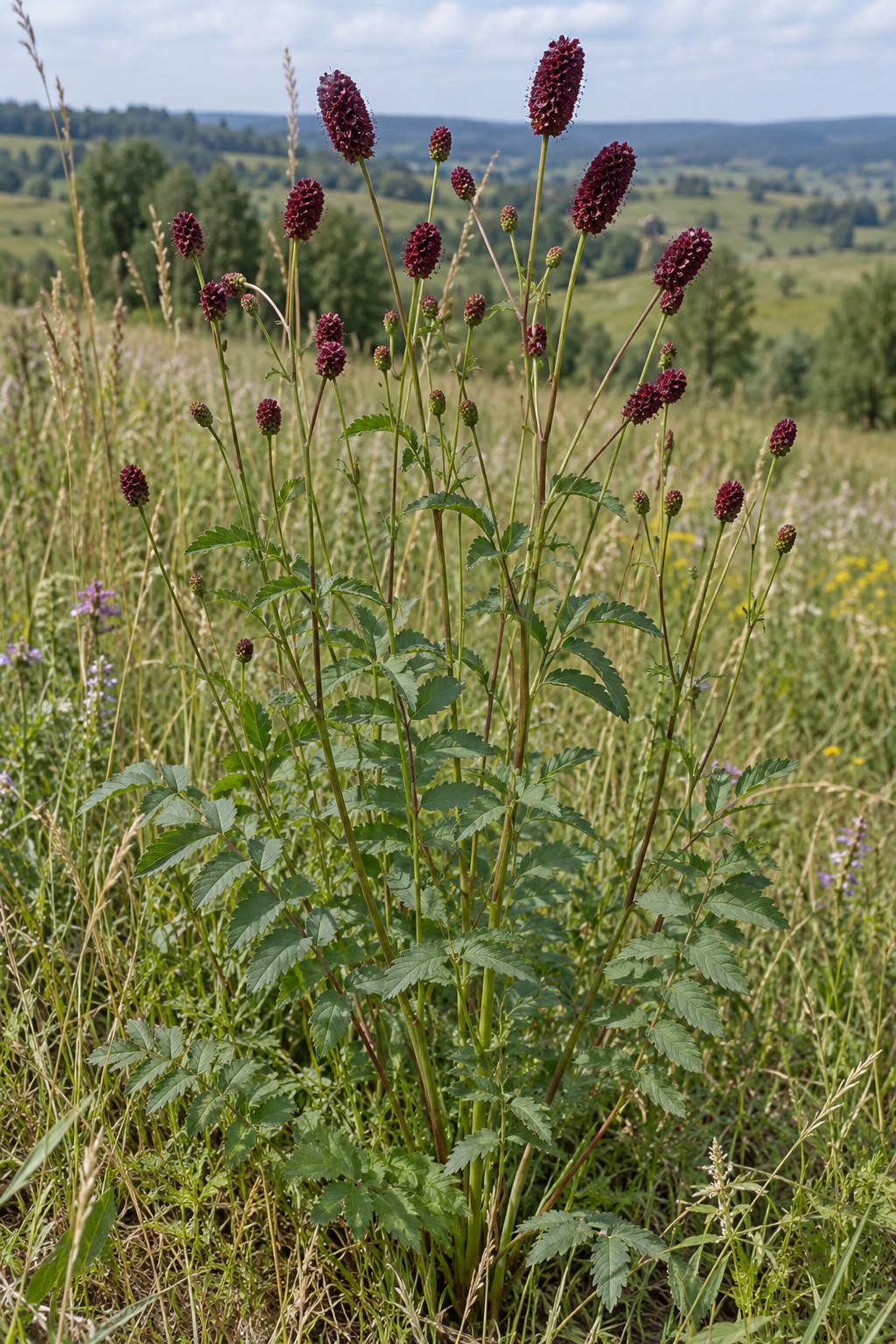
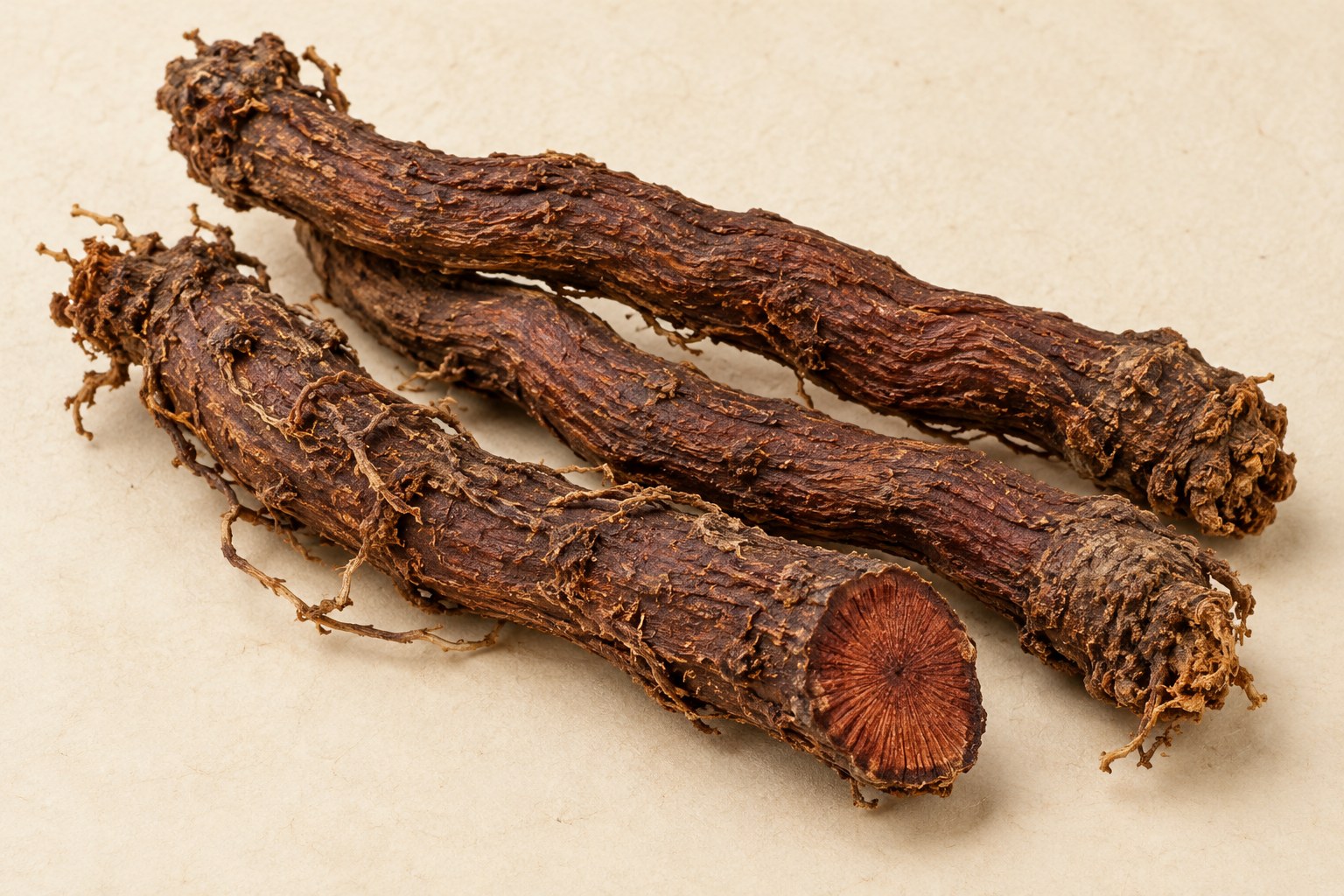
Di Yu is the dried root of Sanguisorba officinalis L., a perennial Rosaceae herb; the flower is not the materia medica. Plants may reach about 1–2 m, with ridged upright stems and alternate pinnate leaves bearing 5–19 oblong leaflets with toothed margins. Tiny flowers form dense short cylindrical or oval spikes, often dark reddish-purple; there are no true petals, and the colored sepals are the visible parts. The taproot is stout and may branch, with brown skin and reddish-brown radial structure when cut. HKBU records hillsides, wasteland, thickets, and grassland across a range of elevations; roots are collected before spring sprouting or after autumn dieback, side roots removed, washed, and dried, or sliced fresh then dried. Distinguish S. officinalis from var. longifolia and similar folk names; AI art is only an illustration.
Traditional context
HKBU records Di Yu root as bitter, sour, astringent, and slightly cool, with traditional cooling-blood, hemostatic, and wound-astringing concepts. Materia-medica records mention historical use for some bleeding and skin/burn conditions; they do not prove that self-use treats hemorrhage, hemorrhoids, burns, or infection. Deep burns, heavy bleeding, fever, or rapidly spreading lesions need standard care.
Modern evidence
HKBU’s botanical profile compiles material, constituent, and traditional-use descriptions; it is not a clinical trial. Tannins and preclinical studies do not prove that dried root stops human bleeding or treats burns at home. Species, plant age, part, and processing (for example, a carbonized form is a separate preparation) must be distinguished. Findings for one extract cannot be transferred to fresh root or dried slices.
Safety
Do not self-use Di Yu for active bleeding, black stools, hematuria, or postpartum bleeding; the cause requires medical assessment. Do not apply root powder to deep burns, infected wounds, or heavy bleeding. Roots may be confused with other Sanguisorba species; a purchased material should state Latin name, root part, origin, and quality control. People taking anticoagulants/antiplatelets, pregnant/breastfeeding people, children, and people with chronic illness should consult a professional before any product. Discard moldy, soft, or unusually scented roots.
Safety reference ↗Pairing in reference texts
The cited profile mentions historical formulas but does not establish a partner ratio with safe, proven efficacy for self-use. A carbonized Di Yu processing ratio belongs to professional processing, not a combination formula or home kitchen. This page does not invent a partner image. No specific toxic incompatibility was verified in the cited record; do not infer that combining it with blood-thinning medicines or other herbs is safe.
Identification and study notes
The living plant is much taller than the root drug: alternate pinnate leaves carry several toothed leaflet pairs, while small dark-red cylindrical spikes occur at the tips. The materia-medica root is long, cylindrical, slightly twisted, and dark brown with longitudinal wrinkles; a cut surface may show yellow-brown to reddish-brown radial wood. The dried illustration shows whole roots and a cross-section, without flowers or leaves because the drug part is root. Do not confuse it with the plant’s flower spike or Sanguisorba longifolia. Soft roots, moldy odor, or missing Latin label indicate a lot to reject, not something made safe by washing. For root study, photograph both the intact outside and a fresh cross-section because the radial interior color is a useful observation. Compare the label with botanical vouchers and the HKBU species entry. A processed charcoal form is a separate professional preparation and should never be inferred from ordinary dark root color. Di Yu root has a dark-brown, longitudinally ridged exterior and radial wood on a cut surface; the living plant has pinnate leaves and dark-red cylindrical spikes. Root inspection distinguishes the drug part from the flower spike but cannot confirm species by itself. Other Sanguisorba species can resemble it; compare authenticated plant material and Latin labels. Root harvesting kills the plant, so cultivation provenance and sustainable sourcing belong in the study record.
Growth and habitat
HKBU places Sanguisorba officinalis on hillsides, wasteland, thickets, and grassland from lowlands to mountain elevations; it is widely distributed and cultivated. It favors bright sites and cool, draining, organic soil; roots need space, so use a deep bed or large container. Avoid waterlogged or contaminated ground. An observation planting should be labeled S. officinalis because the longifolia variety differs in leaf shape and leaflet proportions.
Identification and study notes
The living plant is much taller than the root drug: alternate pinnate leaves carry several toothed leaflet pairs, while small dark-red cylindrical spikes occur at the tips. The materia-medica root is long, cylindrical, slightly twisted, and dark brown with longitudinal wrinkles; a cut surface may show yellow-brown to reddish-brown radial wood. The dried illustration shows whole roots and a cross-section, without flowers or leaves because the drug part is root. Do not confuse it with the plant’s flower spike or Sanguisorba longifolia. Soft roots, moldy odor, or missing Latin label indicate a lot to reject, not something made safe by washing. For root study, photograph both the intact outside and a fresh cross-section because the radial interior color is a useful observation. Compare the label with botanical vouchers and the HKBU species entry. A processed charcoal form is a separate professional preparation and should never be inferred from ordinary dark root color. Di Yu root has a dark-brown, longitudinally ridged exterior and radial wood on a cut surface; the living plant has pinnate leaves and dark-red cylindrical spikes. Root inspection distinguishes the drug part from the flower spike but cannot confirm species by itself. Other Sanguisorba species can resemble it; compare authenticated plant material and Latin labels. Root harvesting kills the plant, so cultivation provenance and sustainable sourcing belong in the study record.
Growing and care
- Obtain seed/stock labeled Sanguisorba officinalis; use a deep bed with clean loose draining soil in a sunny site. Do not dig wild roots for replanting or use.
- Keep moist while seedlings establish, then water moderately without waterlogging; hand-weed and apply a light mulch. HKBU does not specify pH or seed treatment.
- Allow room for root development; remove diseased leaves and monitor slugs/snails. Record pinnate leaves, ridged stems, and dark-red spikes; prevent children from mistaking roots for food.
- The source harvests roots before spring sprouting or after autumn dieback; it does not specify an exact number of years for home cultivation. Do not harvest a study plant as medicine.
How long until harvest? The profile gives root-harvest seasons but no home-growing age. As a perennial, the plant needs time to form a taproot; record planting year, flowering, and dieback. A materia-medica harvest window does not mean a home-grown root meets standards or is safe to use.
Habitat, season, and harvest in the HKBU botanical record
HKBU describes Sanguisorba officinalis as 1–2 m tall, with pinnate leaves and dense dark-red flower spikes, occurring on hillsides, wasteland, thickets, and grassland. The drug is the root; harvest before spring sprouting or after autumn dieback, remove fine roots, wash, dry whole, or slice fresh then dry. The source describes separate professional processed forms and is not a home-processing guide.
Open botanical source ↗FROM PLANT / SOURCE HABITAT TO DRIED MATERIAL · REFERENCE WORKFLOW
- HKBU records digging roots before spring sprouting or after autumn dieback; collect only under authenticated cultivation, not from unidentified wild plants.
- Remove fine roots and wash off soil; the source allows drying the whole root or slicing fresh then drying. Separate damaged, insect-eaten, and moldy roots.
- Dry on a clean ventilated tray; professional drying follows a controlled lot standard. Do not improvise carbonization at home.
- Label Sanguisorba officinalis, root part, harvest season/date, whole or sliced form, source, and processing. Store sealed and dry away from light; do not use damp or moldy samples.
These are post-harvest study notes, not directions to prepare a remedy for self-treatment. Processing reference ↗