Lesser galangal · Gao Liang Jiang
Alpinia officinarum Hance · Dried rhizome and roots
Name and part used
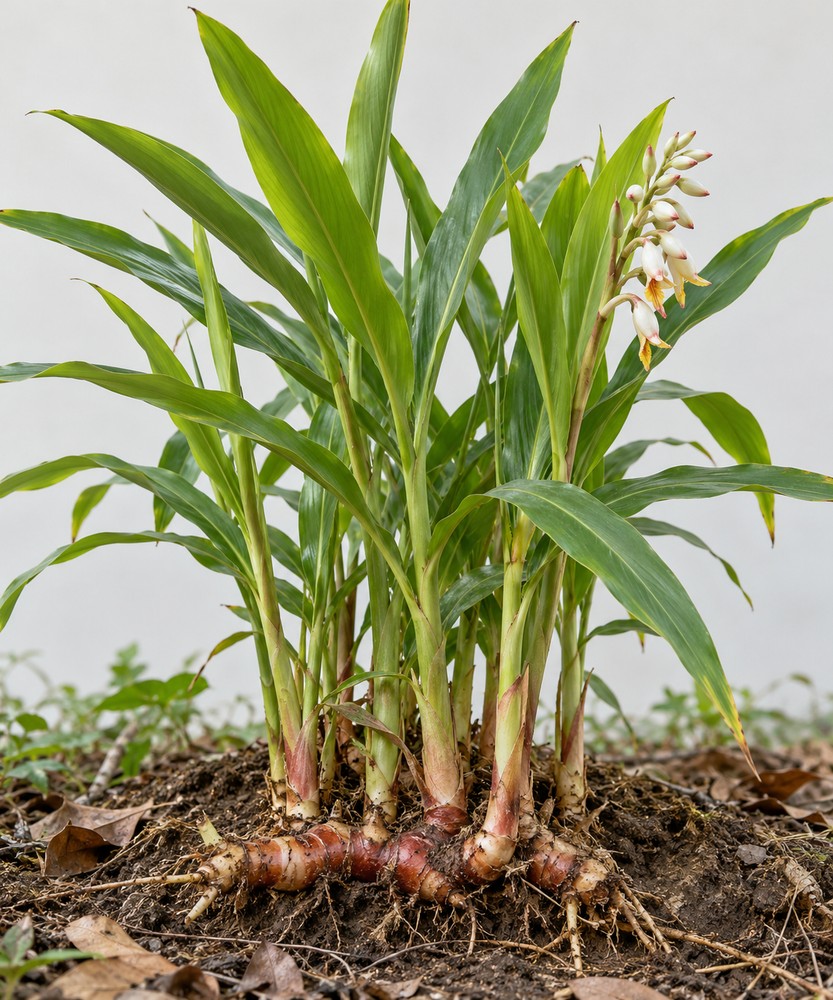
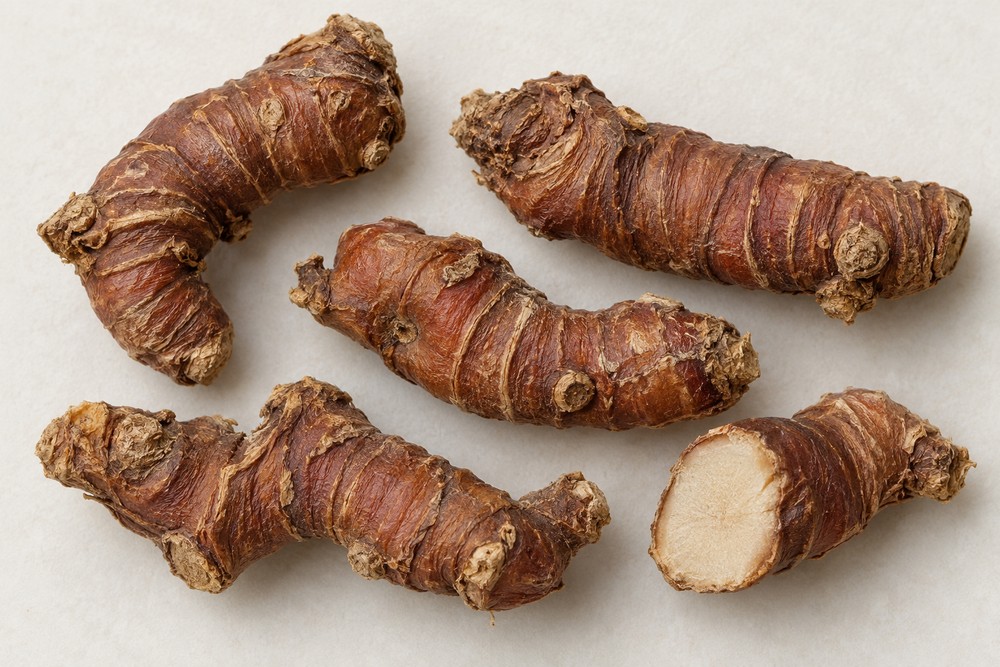
An upright clump rises from rhizomes, with long narrow leaves and white flowers marked red. The dried cylindrical rhizome is reddish brown, ringed, aromatic, and pungent.
Traditional context
Warming the stomach, dispersing cold, aiding digestion, and relieving pain are traditional descriptions, not proof of treatment for ulcers, reflux, or abdominal pain.
Modern evidence
HKBU records the dried rhizome and roots of Alpinia officinarum. Its database is a morphology reference; this AI image cannot authenticate a specimen or replace testing.
Safety
Aromatic oils and pungent constituents may irritate the mouth or stomach. Use caution with digestive disease, ginger-family allergy, pregnancy, breastfeeding, or medicines; clinical interaction data are limited.
Pairing in reference texts
A sourced example is Liang Fu Wan: Gao Liang Jiang and Xiang Fu in equal recorded weights. HKBU describes its traditional intent as moving qi, dispersing cold, and relieving pain. This is a historical formula ratio, not a self-treatment dose.
Growth and habitat
HKBU confirms a ginger-family plant with horizontal rhizomes; the cultivation references checked here do not establish one universal care calendar or harvest age, so no fixed number of months/years is claimed.
Growing, care, and harvest timing
The profile above includes sourced steps and a documented harvest window. Harvest timing is agronomic information, not a self-use instruction.
Growing and care
- Use authenticated planting stock; plant at the start of the rainy season or where irrigation is reliable.
- Maintain moist but drained soil and mulch; remove diseased plants and keep beds traceable.
- Do not harvest young rhizomes by a fixed calendar; wait for mature growth and follow local season and materia medica standards.
- Wash, grade, and dry on clean trays; record species, location, harvest date, moisture condition, and lot.
How long until harvest? No reliable universal harvest age was verified in the checked sources; this profile does not invent a ‘ready in X months’ claim. Harvest should follow an authenticated regional monograph or controlled producer.
Documented formula pairing: Liang Fu Wan
Traditional formula theory: move qi, disperse cold, and relieve pain in a specific pattern; this does not mean treatment for all stomach pain.
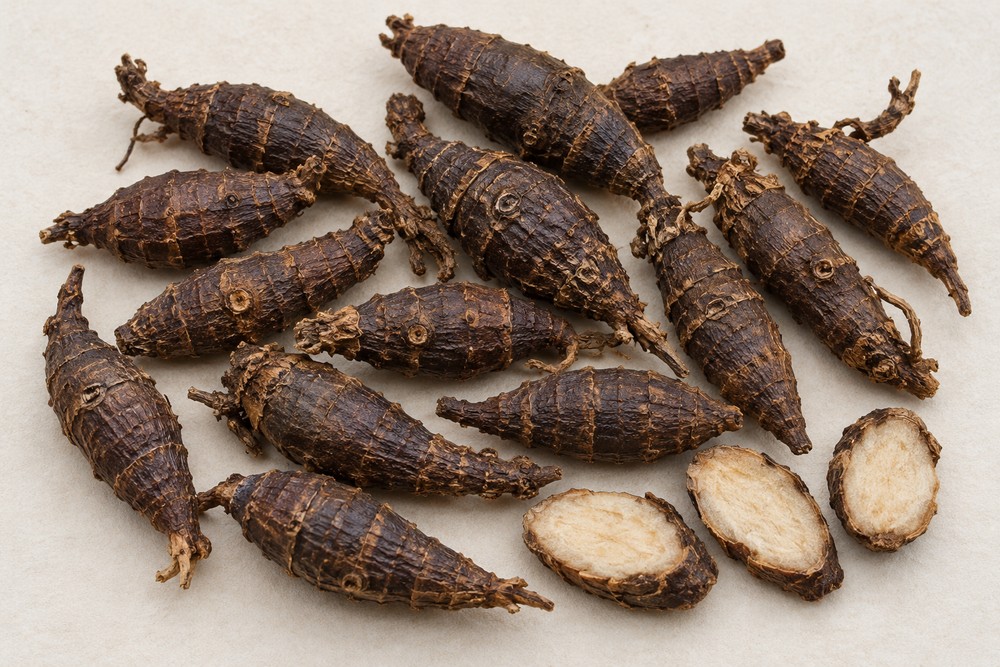
Source-recorded amounts: HKBU records 9 g : 9 g (1:1) in an additional-formula entry; historical versions and units may differ.
Caution: For documentary study only. The source does not establish safety for an individual; acute/severe pain, bloody vomiting, weight loss, or persistent pain needs medical assessment.
Open formula record ↗Documented toxic incompatibility
No reliable professional source checked here labels Gao Liang Jiang plus Xiang Fu as poisonous. Absence of a located warning does not prove every combination safe; do not self-prescribe.
FROM PLANT / SOURCE HABITAT TO DRIED MATERIAL · REFERENCE WORKFLOW
- Authenticate Alpinia officinarum from a traceable nursery; do not identify it from the broad common name ‘galangal’ alone.
- Grow warm and humid in loose, organic-rich, well-drained soil; protect from harsh sun and keep moist without waterlogging.
- Propagate from healthy rhizome divisions with viable buds; plant shallowly in a roomy bed or container and mulch lightly.
- Water regularly while establishing, hand-weed, top-dress with mature compost, and monitor rhizome rot and slugs.
These are post-harvest study notes, not directions to prepare a remedy for self-treatment. Processing reference ↗
How to read formula amounts
Displayed amounts belong to the cited formula and source; they are not a general safe ratio, treatment dose, or home-decoction instruction. Do not transfer amounts to another formula or adjust them by body weight.
Habitat, season, and harvest in the HKBU botanical record
HKBU botanical record (translated summary): Flowering and fruiting dates: Flowering: April to September, fruiting: May to November Habitat and distribution: Growing in thickets of barren slopes or in thin forests. Distributed in Guangdong, Hainan and South Guangxi. The medicinal materials are produced in Guangdong, Hainan, and Guangxi; also cultivated in Taiwan and Yunnan Harvest and processing as recorded: Excavated rhizome of 4-6 years old in later summer and early autumn, removed the aboveground stem and fibrils, well washed, cut into section and sun-dried
Open botanical source ↗HKBU formula record containing this herb: Tian Tai Wu Yao San / Tian Tai Combined Spicebush Root Powder
Traditional action in the source: Moves qi, soothes the liver, disperses cold, and relieves pain
Ingredient images and source amounts are shown for comparison only; this is not a treatment recipe.
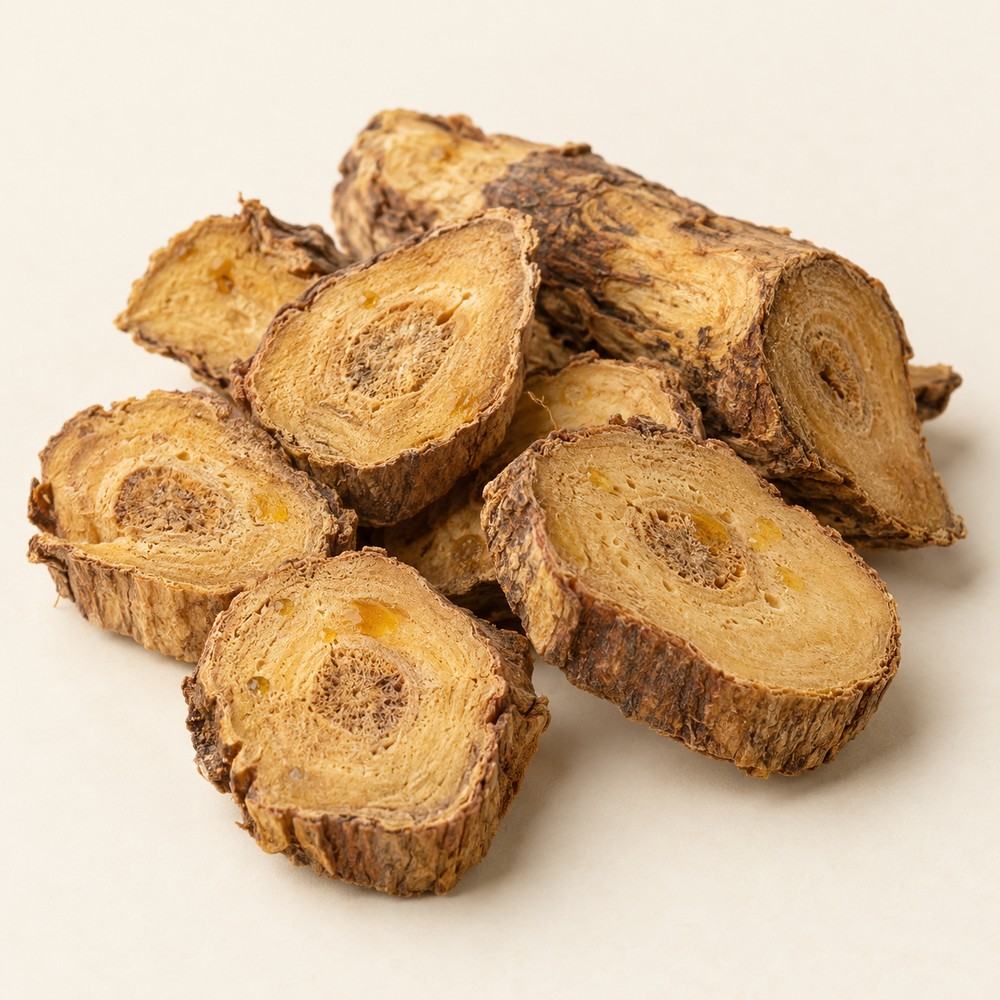
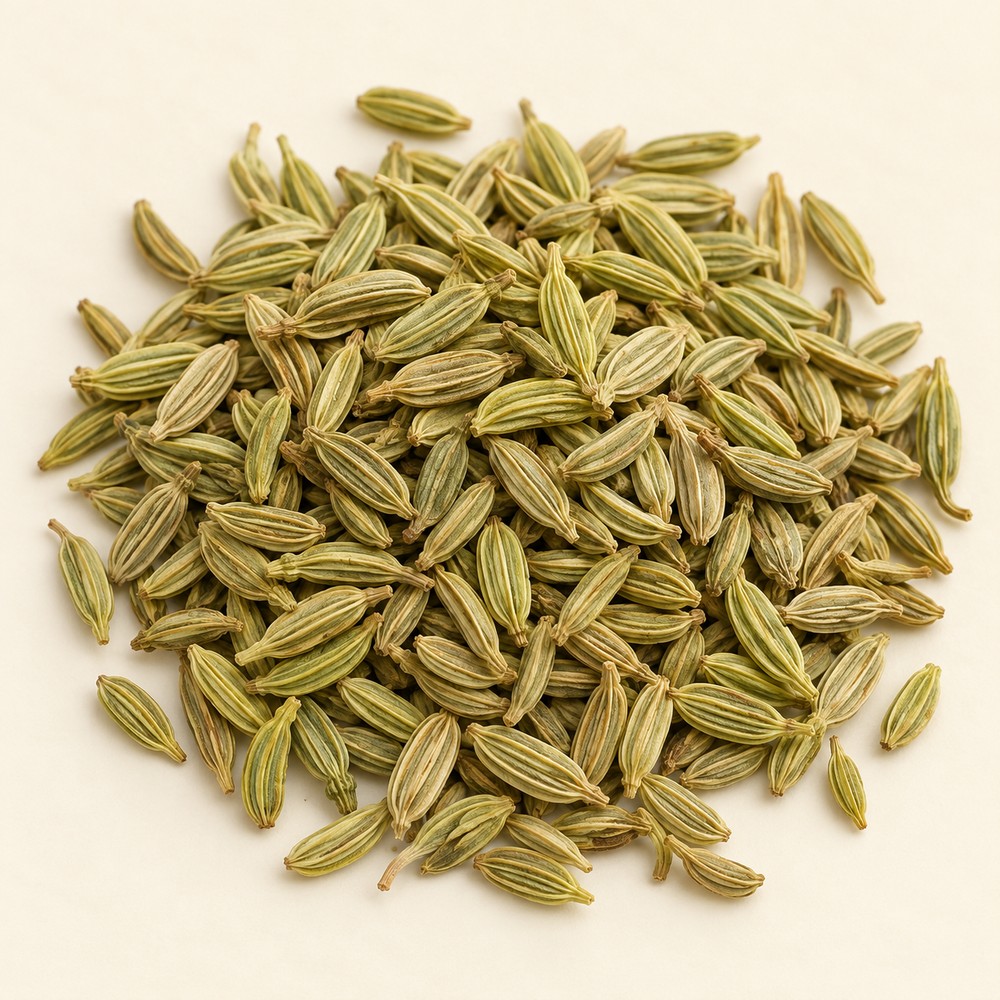
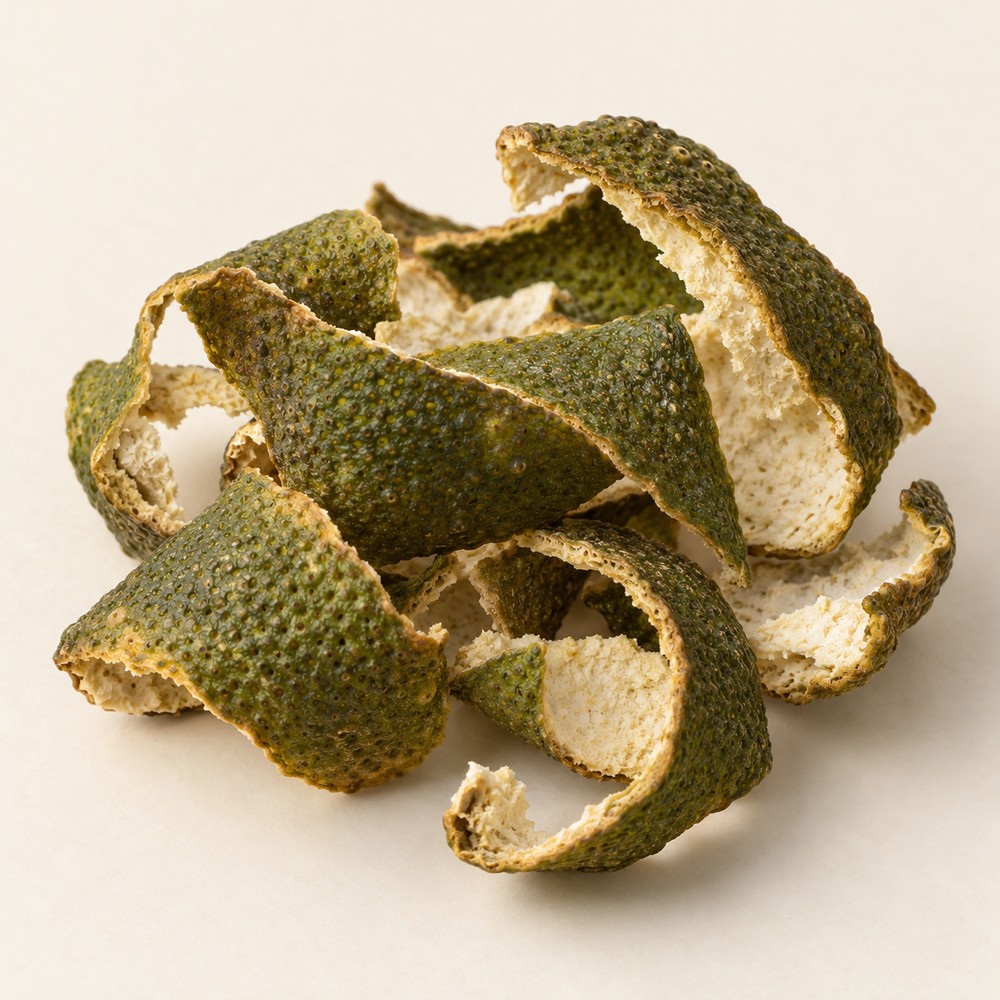
HKBU source-recorded composition
Linderae Radix (Wu Yao) 0.5 liang (15g), Aucklandiae Radix (Mu Xiang) 0.5 liang (15g), Foeniculi Fructus (Xiao Hui Xiang) 0.5 liang (15g), Citri Reticulatae Pericarpium Viride (Qing Pi) 0.5 liang (15g), Alpiniae Officinarum Rhizoma (Gao Liang Jiang) 0.5 liang (15g), Arecae Semen (Bing Lang) 2 pieces (9g), Toosendan Fructus (Chuan Lian Zi) 10 pieces (12g), Crotonis Fructus (Ba Dou) 70 pieces (12g)
The ingredients and amounts below are one HKBU-recorded version; texts, historical units, processing, and modern products can differ. This is comparative reference data, not a home-preparation recipe or personal dose.
Open complete HKBU formula record ↗