Gua Lou (Trichosanthes fruit) · Gua Lou
Trichosanthes kirilowii Maxim. · Dried mature fruit
Name and part used
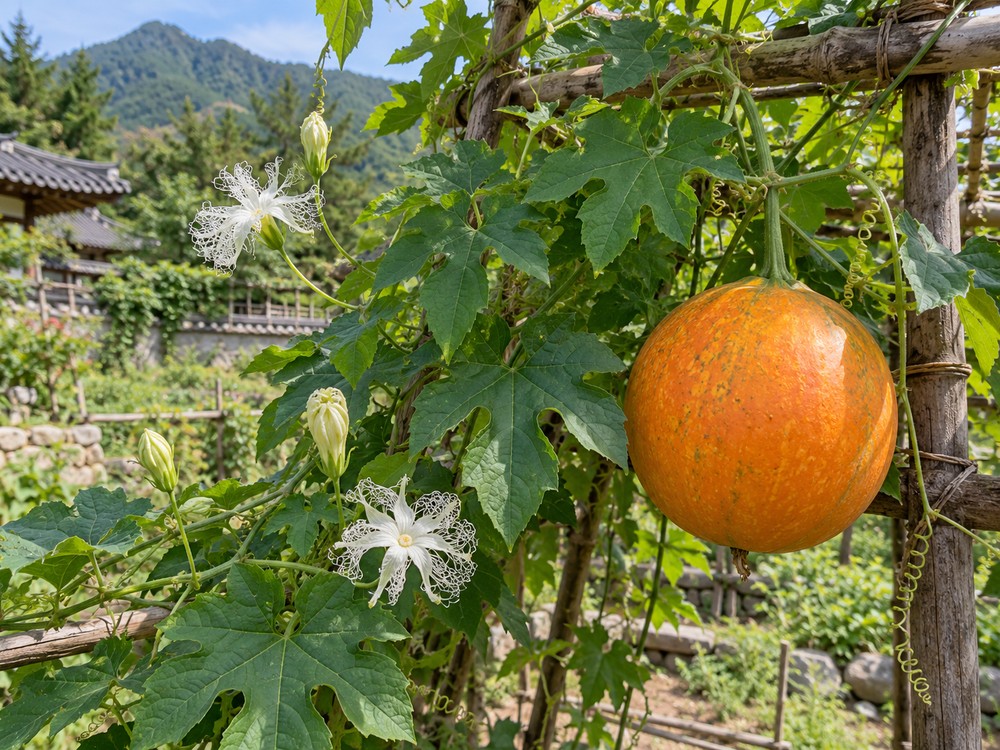
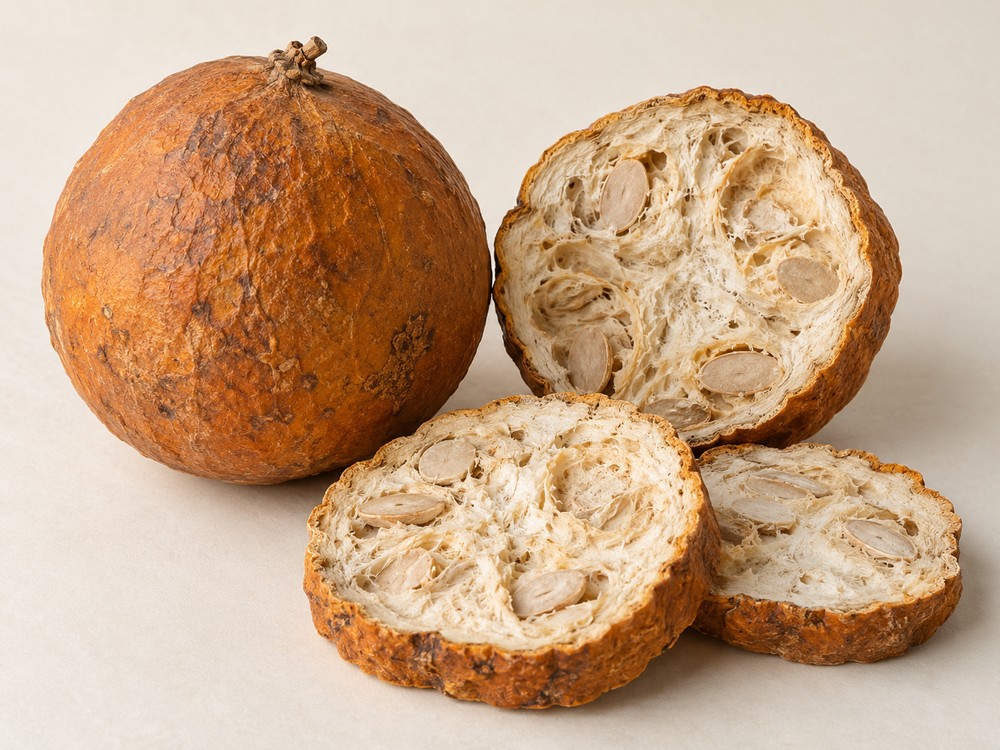
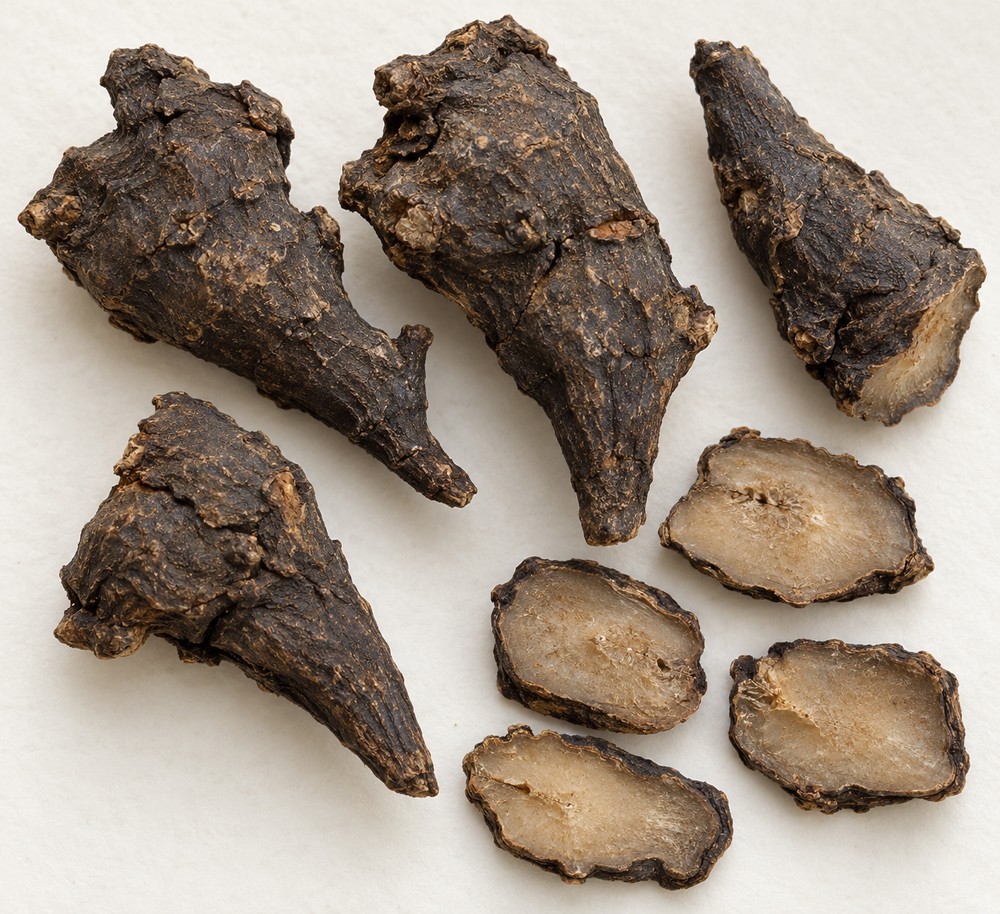
Gua Lou is the fruit of the cucurbit vine Trichosanthes kirilowii. It has tendrils, broad lobed leaves, and white flowers with finely fringed petals; mature fruit turns yellow-orange to orange-red and contains flattened seeds. Dried material may be whole, split, or sliced, with wrinkled orange-brown rind and a spongy seed-filled interior. Do not confuse the fruit with Tian Hua Fen root or Gua Lou Ren seed kernels; these are distinct materials.
Traditional context
Traditional theory describes Gua Lou fruit in phlegm-transforming, chest-relieving, and moistening frameworks; intended use depends on part, processing, and pattern. Popular sources may use “Gua Lou” for fruit, seed kernels, or root, so the actual material must be specified. Traditional descriptions do not prove that the fruit treats cough, chest pain, constipation, or infection.
Modern evidence
HKBU’s plant database identifies the species and morphology, while its formula database records the fruit with Xie Bai in historical prescriptions. Chemical and preclinical data do not establish clinical benefit from dried fruit. Research on root, seed, or extracts cannot automatically be applied to whole fruit.
Safety
Avoid self-use during pregnancy or breastfeeding, with cucurbit allergy, gastrointestinal disease, or concurrent medicines; ask a clinician or pharmacist about interactions. Be wary of products that do not specify fruit, root, seed, and species. Never identify or ingest wild fruit based on AI art.
Pairing in reference texts
One classical Gua Lou-Xie Bai-white-wine record lists Gua Lou 1 fruit (HKBU conversion 12 g), Xie Bai half sheng (12 g), and seven sheng of white wine in historical units. A different record, Zhi Shi Xie Bai Gui Zhi Tang, lists Zhi Shi 12 g, Hou Po 12 g, Xie Bai 9 g, Gui Zhi 6 g, and Gua Lou 12 g. Do not merge these formulas or treat historical conversions as modern instructions. No specific toxic Gua Lou pair was confirmed in the sources reviewed.
Growth and habitat
The species occurs in East Asia in woodland margins and scrub where vines can climb. It needs sun or partial sun and moist, humus-rich but drained soil. In gardens, allow root space and provide a trellis; above-ground vines may die back in cold winters while perennial roots can regrow in warmth.
Growing, care, and harvest timing
The profile above includes sourced steps and a documented harvest window. Harvest timing is agronomic information, not a self-use instruction.
Growing and care
- Buy seed or seedlings from a source that verifies identity; commercial fruit seed may be hybrid or another species.
- Scarify/soak seed only as nursery guidance directs, sow in drained pots, and transplant after true leaves appear without disturbing the root ball.
- Plant far enough from the trellis, keep the crown at soil level, water in deeply, then maintain moderate moisture.
- Train vines loosely, remove diseased stems, and use moderate mature compost; excess nitrogen can favor leaves over flowers and fruit.
- Watch for male and female flowers and fruit set; where pollinators are scarce, transfer pollen with a clean brush at the right time.
- Harvest after rind color changes and the stem hardens; dry in a clean airy place without piling wet fruit.
How long until harvest? HKBU confirms mature fruit in formulas but gives no fixed planting-to-harvest age. Vines may need more than one season to establish and fruit depending on cultivar, climate, pollination, and trellis; harvest at biological maturity rather than inferring age from a formula record.
Documented formula pairing: Gua Lou Xie Bai Bai Jiu Tang
HKBU records this historical formula in chest-bi pattern theory; it does not treat acute chest pain. White wine is a source-recorded ingredient, not a recommendation to drink alcohol.
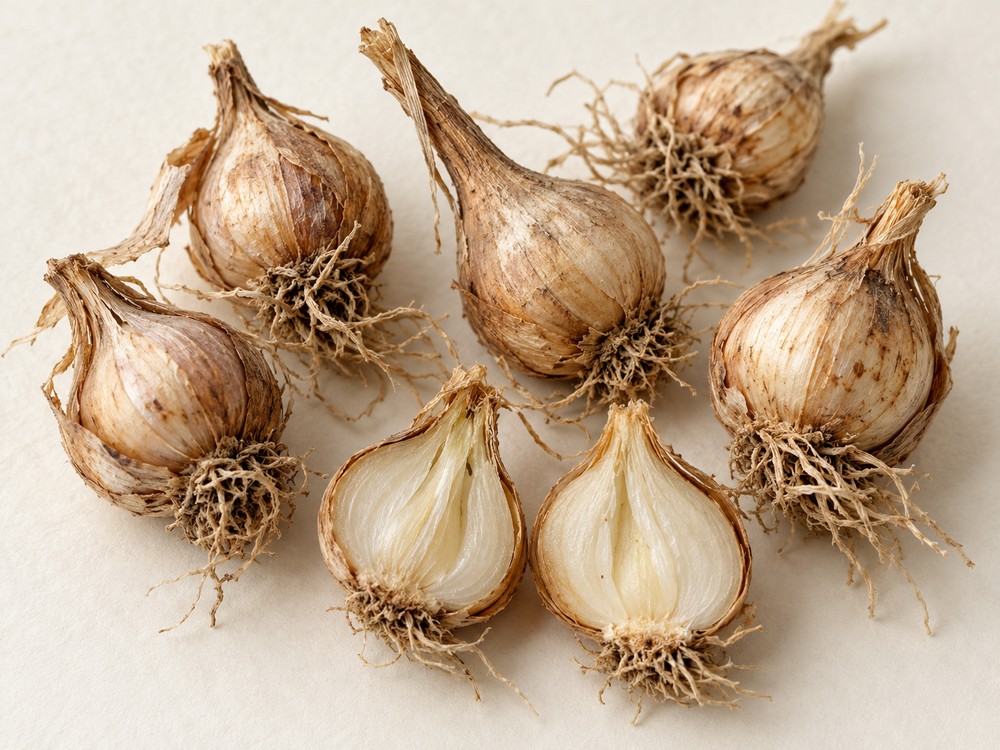
Source-recorded amounts: HKBU amounts: Gua Lou 1 fruit/12 g : Xie Bai half sheng/12 g : white wine 7 historical sheng (“as needed”). This cannot be converted to a modern drinking regimen.
Caution: Do not self-prepare this formula or drink alcohol as treatment. It is unsuitable for anyone who must avoid alcohol; chest pain or breathlessness needs emergency care.
Open formula record ↗Documented toxic incompatibility
No source reviewed confirms a specific toxic Gua Lou pair. More useful safeguards are distinguishing fruit, kernel, and root and checking allergy/interactions; absence of a toxicity report does not prove a combination safe.
FROM PLANT / SOURCE HABITAT TO DRIED MATERIAL · REFERENCE WORKFLOW
- Use authenticated Trichosanthes kirilowii planting stock; install a sturdy trellis before planting because the vine is vigorous.
- Sow treated seed under nursery guidance or plant seedlings in deep, drained organic soil with sun and room to climb.
- Water deeply when soil begins to dry and mulch; avoid waterlogging and keep the trellis airy to reduce fungal disease.
- Plants bear male and female flowers; support pollinators or hand-pollinate in gardens with few bees. Prune tangled growth without removing all female-flowering stems.
- Monitor aphids, powdery mildew, and fruit rot; use clean-culture measures and avoid unverified pesticide residues on medicinal fruit.
- Harvest only mature fruit from verified plants; track date, material part (fruit, seed, or root), and drying method by lot.
These are post-harvest study notes, not directions to prepare a remedy for self-treatment. Processing reference ↗
Traditional contraindication pairs in the “18 incompatibilities” appendix
The Beijing Municipal Drug Administration appendix lists the pairs below as traditional incompatibilities. This does not establish that every exposure causes poisoning; the appendix provides no safe ratio. Do not combine them yourself, even if an old formula is cited elsewhere.
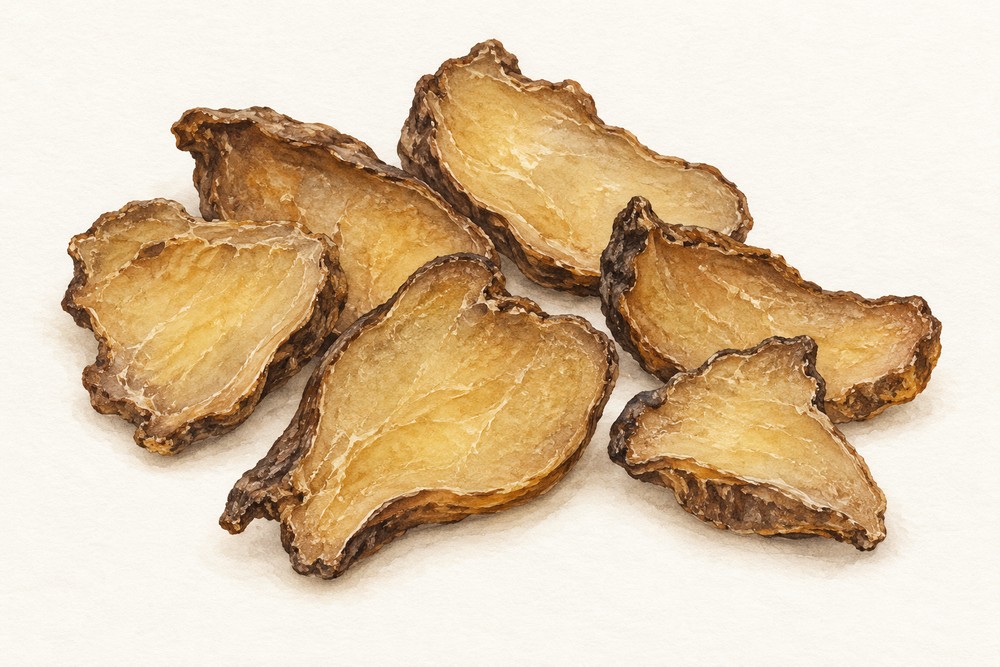
How to read formula amounts
Displayed amounts belong to the cited formula and source; they are not a general safe ratio, treatment dose, or home-decoction instruction. Do not transfer amounts to another formula or adjust them by body weight.