He Huan Pi · silk-tree bark · He Huan Pi
Albizia julibrissin Durazz. · Dried stem and branch bark
Name and part used
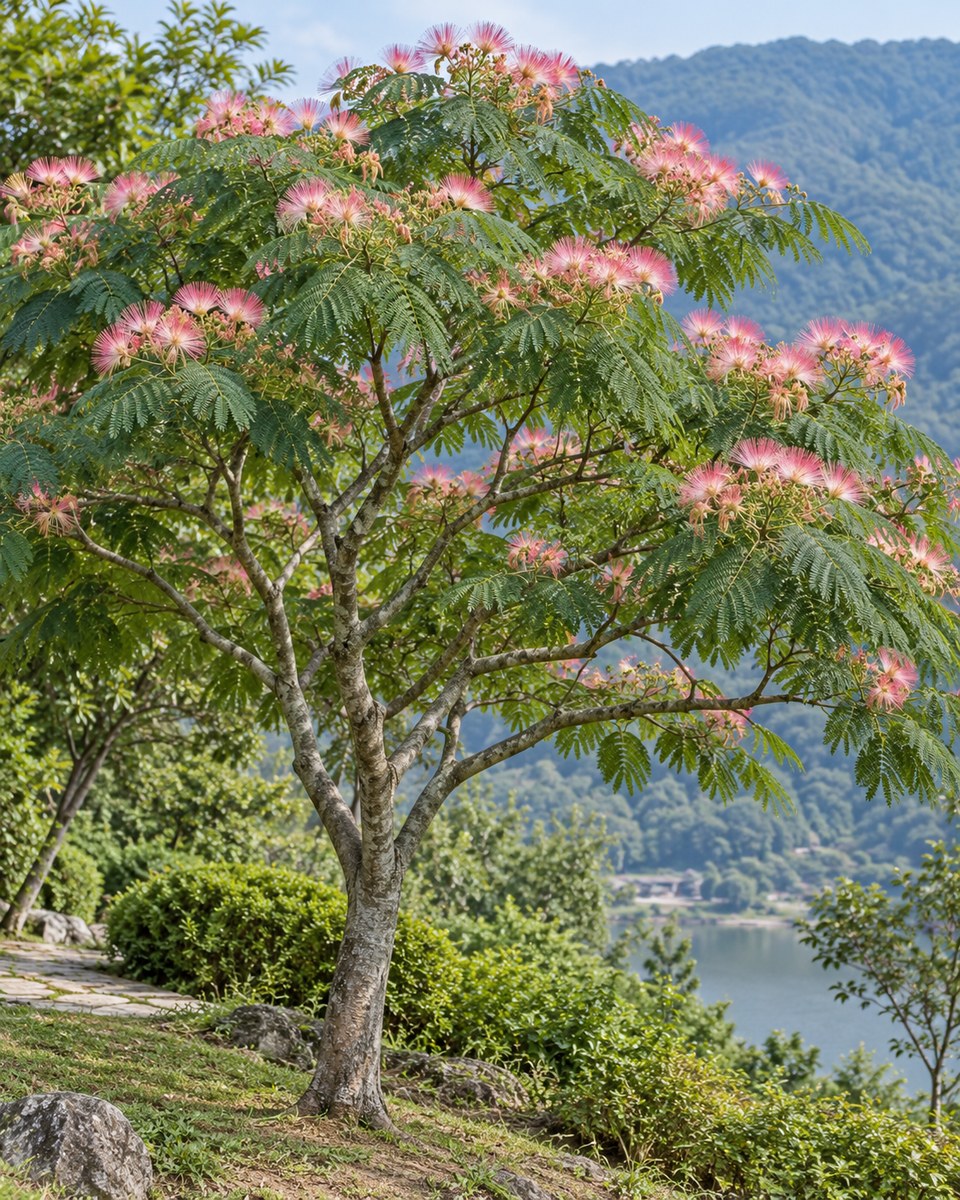
He Huan Pi is bark of Albizia julibrissin Durazz., a deciduous Fabaceae tree with bipinnate leaves and silky pink flower clusters. It is not He Huan Hua (the flower/bud of the same species) or every ornamental silk tree. HKBU records traditional actions for relieving constraint, calming the spirit, invigorating blood, and reducing swelling; modern human treatment evidence remains very limited.
Traditional context
HKBU records a sweet, neutral nature and traditional actions of relieving constraint, calming the spirit, invigorating blood, and reducing swelling. These belong to traditional theory and do not prove bark treats insomnia, anxiety, depression, abscess, or injury.
Modern evidence
Materia medica sources describe constituents, preclinical data, and traditional use, but cell/animal studies do not prove that Albizia bark treats psychiatric conditions in humans. Safety reviews note limited human data; effects of flower, bark, extracts, and multi-herb formulas cannot be treated as interchangeable.
Safety
Oral safety data are limited. A botanical safety reference notes a traditional warning that the bark may stimulate uterine contractions and advises avoiding it in pregnancy; do not use during pregnancy. Lactation safety is not established. Sedation is a concern based on traditional action; use caution with alcohol, sleep/sedative medicines, and CNS-active drugs. Do not substitute it for care for depression or persistent insomnia.
Safety reference ↗Pairing in reference texts
Reviewed sources do not establish a specific toxic incompatibility for He Huan Pi. Some traditional sources pair it with Ye Jiao Teng in calming formulas; amounts and methods vary and no universal ratio is validated for readers. Do not self-combine it with sleeping pills, antidepressants, or alcohol.
Identification and study notes
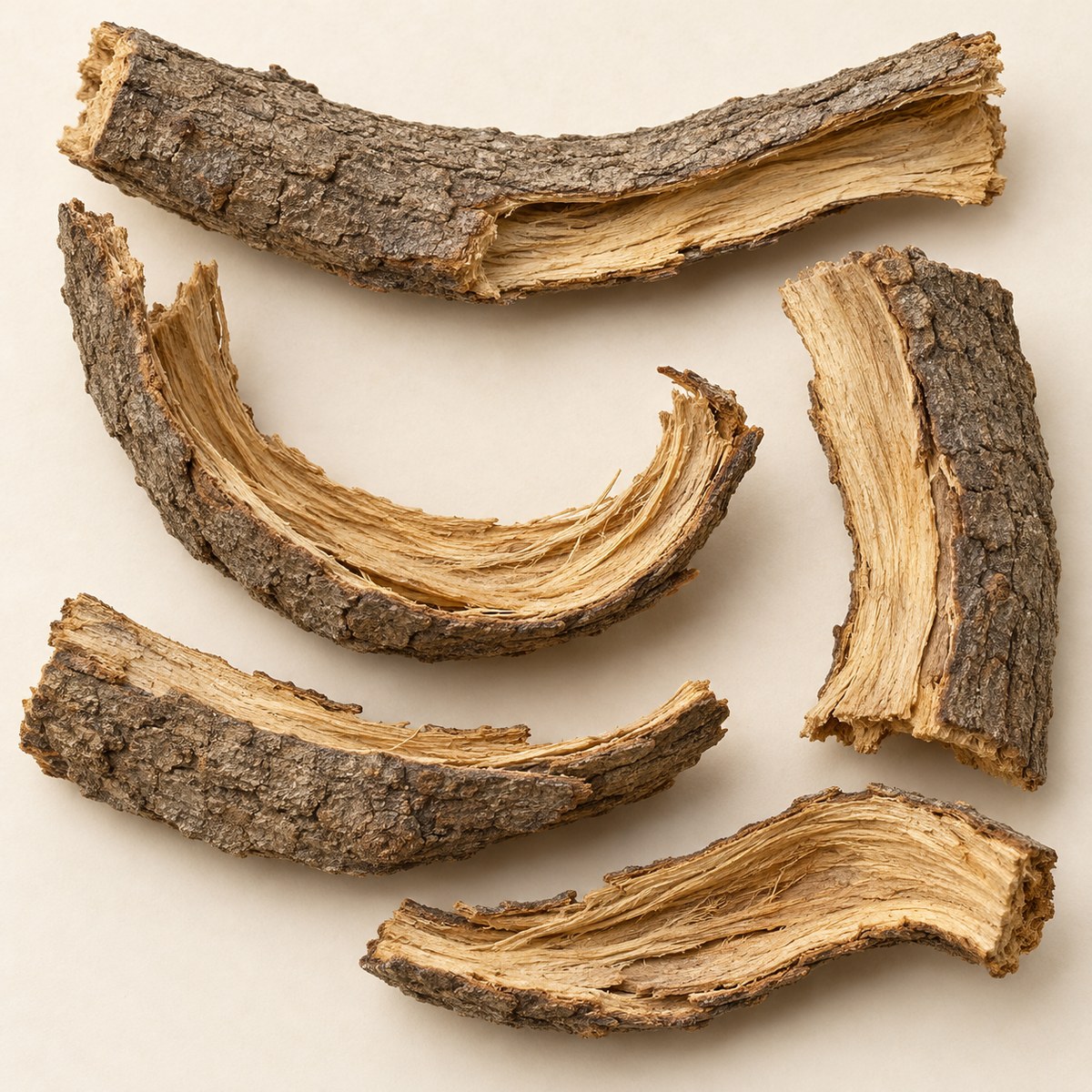
Albizia julibrissin is a deciduous tree with gray bark and a spreading crown; bipinnate leaves bear many tiny leaflets, giving a feathery appearance. Pink flower clusters have long silk-like stamens, and the fruit is a flat pod. He Huan Pi is the dried bark, with gray-brown outer surface, yellow-brown inner face, and fibrous curved strips; it is not the pink flower shown on the tree. HKBU describes summer/autumn bark harvest and sun or fire drying. He Huan Hua is a different part of the same species with its own record; do not interchange names or images. AI images aid recognition but cannot prove species, quality, or safety.
Growth and habitat
Albizia julibrissin occurs from northeastern through southern and southwestern China, growing on slopes and cultivated as an ornamental. It favors sun, well-drained soil, and space for a spreading canopy. HKBU lists Hubei, Jiangsu, Zhejiang, and Anhui as major medicinal production areas. Urban trees may carry dust or chemicals; ornamental bark should not be harvested for medicine.
Identification and study notes
Albizia julibrissin is a deciduous tree with gray bark and a spreading crown; bipinnate leaves bear many tiny leaflets, giving a feathery appearance. Pink flower clusters have long silk-like stamens, and the fruit is a flat pod. He Huan Pi is the dried bark, with gray-brown outer surface, yellow-brown inner face, and fibrous curved strips; it is not the pink flower shown on the tree. HKBU describes summer/autumn bark harvest and sun or fire drying. He Huan Hua is a different part of the same species with its own record; do not interchange names or images. AI images aid recognition but cannot prove species, quality, or safety.
Growing and care
- Trồng nơi nhiều nắng, đất thoát nước, có khoảng cách cho tán trưởng thành; tránh vị trí sát móng nhà/dây điện.
- Plant in full sun and drained soil with room for the mature canopy; avoid foundations and overhead utilities.
How long until harvest? Albizia julibrissin is a long-lived tree; the source gives no medicinal harvest age. Bark collection belongs to professional production, and home-grown trees should not be stripped. A summer/autumn harvest season does not translate into a “years until safe to drink” rule.
Documented toxic incompatibility
Reviewed sources do not name a specific toxic pair. The main caution is limited safety data and bark avoidance in pregnancy in a botanical safety reference; no partner herb is proven to neutralize that risk. Do not combine it casually with alcohol or sedatives.
AI study illustrations; not for specimen identification.
FROM PLANT / SOURCE HABITAT TO DRIED MATERIAL · REFERENCE WORKFLOW
- HKBU describes bark stripping in summer or autumn; only a managed facility should select suitable branches/trunks, avoiding girdling that can kill a tree.
- Clean away soil, moss, and damaged bark; segregate authenticated Albizia julibrissin bark from He Huan Hua flowers.
- Sun-dry or use facility-controlled heat, controlling moisture, mold, and debris while retaining species/lot records. This is not a home-processing instruction.
- Seal and label the plant part and pregnancy caution; do not self-decoct or combine with sedatives.
These are post-harvest study notes, not directions to prepare a remedy for self-treatment. Processing reference ↗
Material source, dried appearance, and processing forms (HKBU)
HKBU identifies He Huan Pi as Cortex Albiziae, bark of Albizia julibrissin Durazz. (Fabaceae). The deciduous tree has bipinnate foliage and pink silk-like flowers; medicinal production areas include Hubei, Jiangsu, Zhejiang, Anhui, and nearby regions. Bark is stripped in summer/autumn and sun- or fire-dried. Bark differs from He Huan Hua, the flower/bud; the whole-tree image supports source recognition but cannot grade the bark.
Open original materia medica record ↗Habitat, season, and harvest in the HKBU botanical record
HKBU records Albizia julibrissin on slopes or in cultivation; flowering occurs around June–July and fruiting August–October. Bark is harvested in summer/autumn, while flowers/buds are collected in summer and dried; they are distinct medicinal parts. The source gives no cultivation age for bark harvest.
Open botanical source ↗