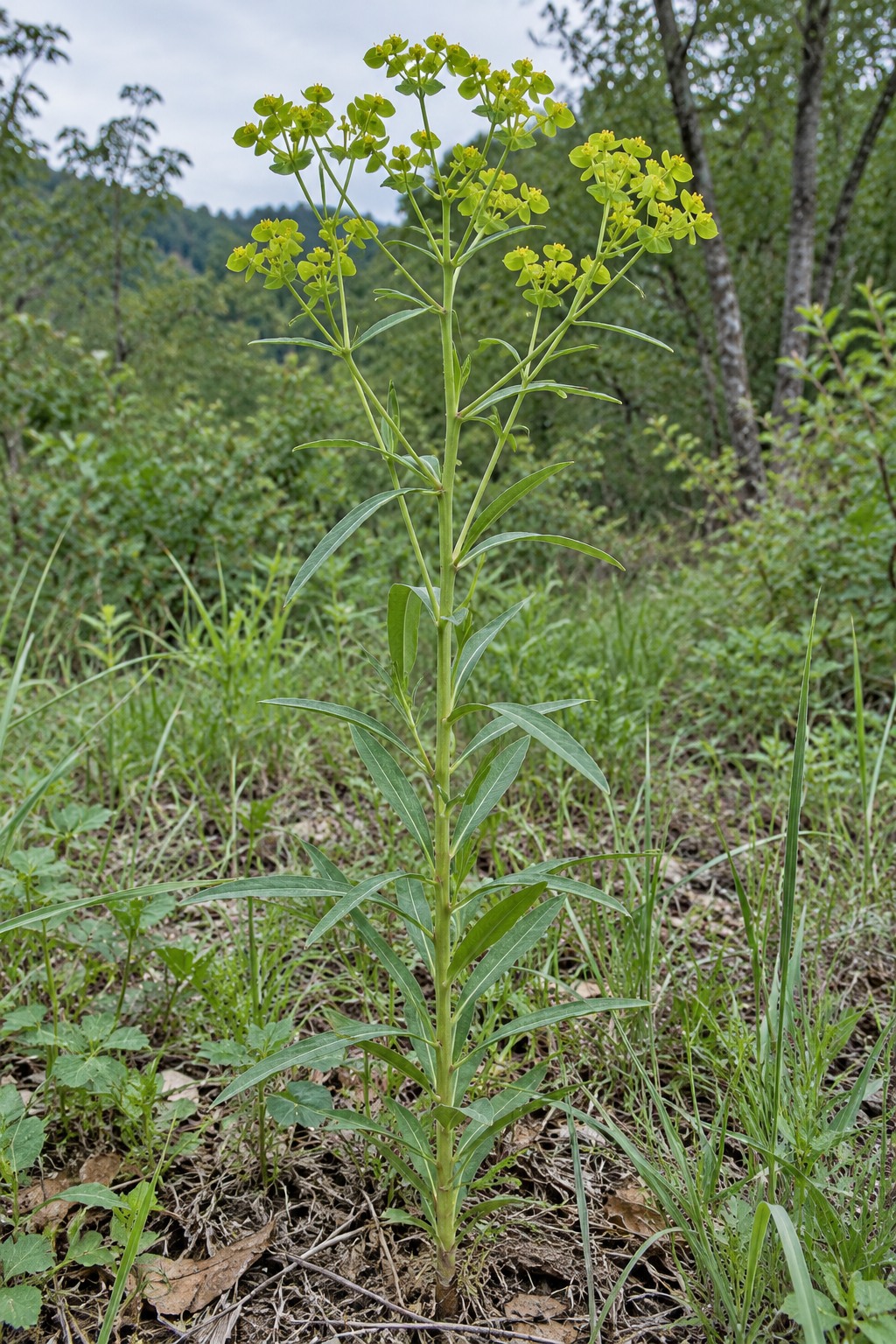
Jing Da Ji (Peking spurge root) · Jing Da Ji
Euphorbia pekinensis Rupr. · Dried root
Name and part used
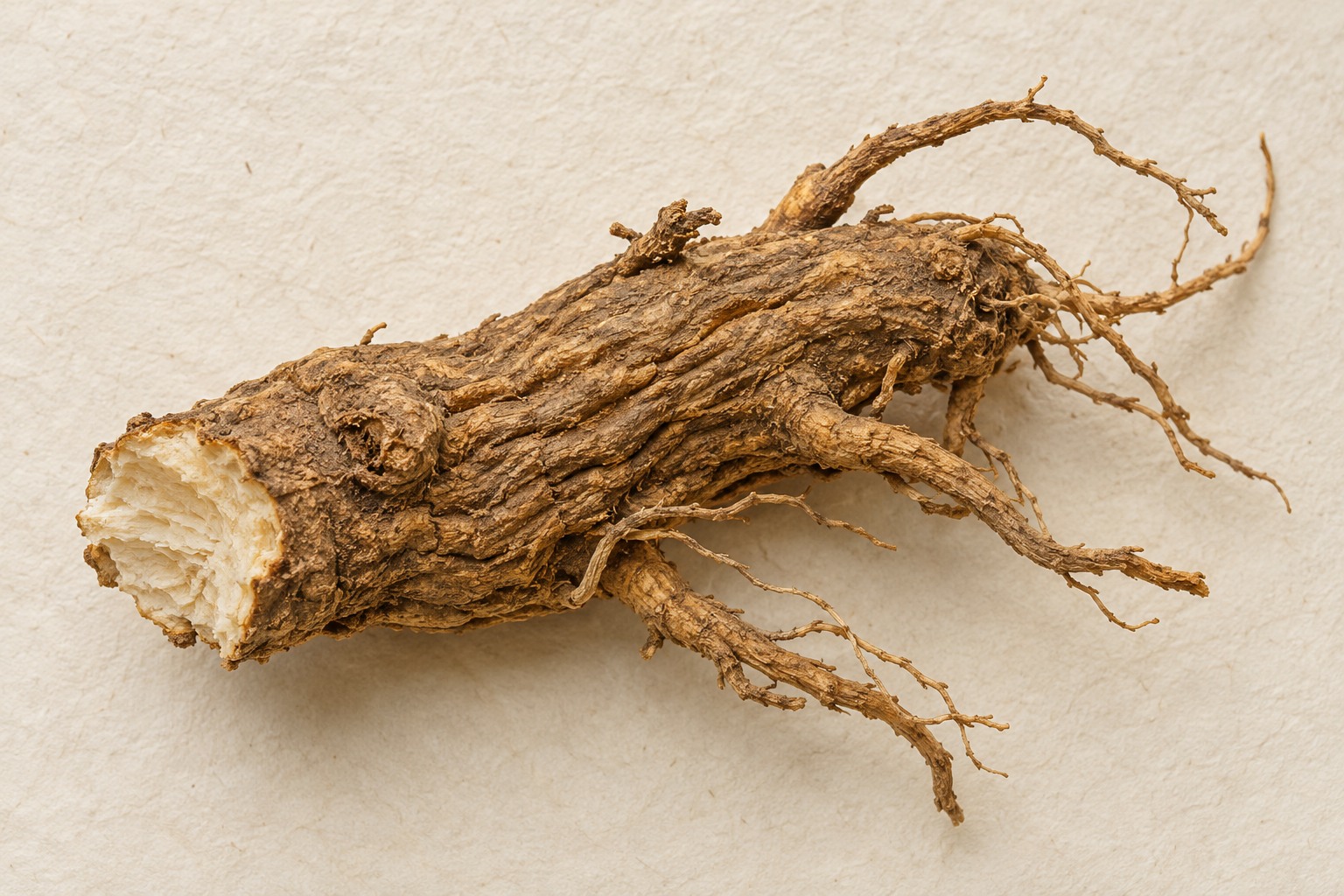
This record’s Jing Da Ji is the root of Euphorbia pekinensis, a latex-bearing spurge in Euphorbiaceae. It is a perennial herb with upright stems, alternate leaves, and small cyathia; the AI image is illustrative, not for field identification. The dried drug is processed root and can be confused with other Euphorbia species.
Traditional context
Historical sources classify it as a strong water-expelling herb for pattern-diagnosed fluid disorders. This tradition is not clinical evidence or a use instruction; its toxicity makes self-use particularly dangerous.
Modern evidence
HKBU provides identity, plant-part, harvest, and warning information, not a clinical trial. The cited sources do not establish that this root safely or effectively treats edema.
Safety
The latex is irritating and the root is toxic, with risks including vomiting, abdominal pain, diarrhea, and dehydration. Keep latex off eyes/skin; never taste, forage, or self-use it. Avoid entirely in pregnancy. Accidental ingestion requires urgent care.
Pairing in reference texts
Licorice (Gan Cao) is a traditional incompatibility. A fixed toxicity level across forms and amounts is not established, but no safe self-combination ratio exists; images below are AI study illustrations.
Growth and habitat
HKBU records grassland, roadsides, slopes, wasteland, and damp woodland in parts of China. Correct species identification is essential; do not forage because of look-alikes and toxicity.
Growing, care, and harvest timing
The profile above includes sourced steps and a documented harvest window. Harvest timing is agronomic information, not a self-use instruction.
Growing and care
- Do not grow it for medicinal use: latex and roots are toxic. For botany study, observe labeled specimens only at a botanical garden or qualified institution; do not propagate or dig roots.
- Keep children and animals away; do not cut stems or handle latex.
- Study verified images and voucher specimens, not wild-collected plants.
- Do not harvest roots at home; medicinal material requires professional sourcing and testing.
How long until harvest? The source records autumn/winter root harvest followed by cleaning and drying. This is a season for toxic raw material, not a plant age or use instruction. No universal month-count is given; home harvest is not recommended.
Documented formula pairing: Shi Zao Tang · historical record
HKBU records a historical formula containing the three toxic herbs Jing Da Ji, Gansui, and Yuan Hua with jujube. This is a formula-history reference, not a treatment or recommendation.
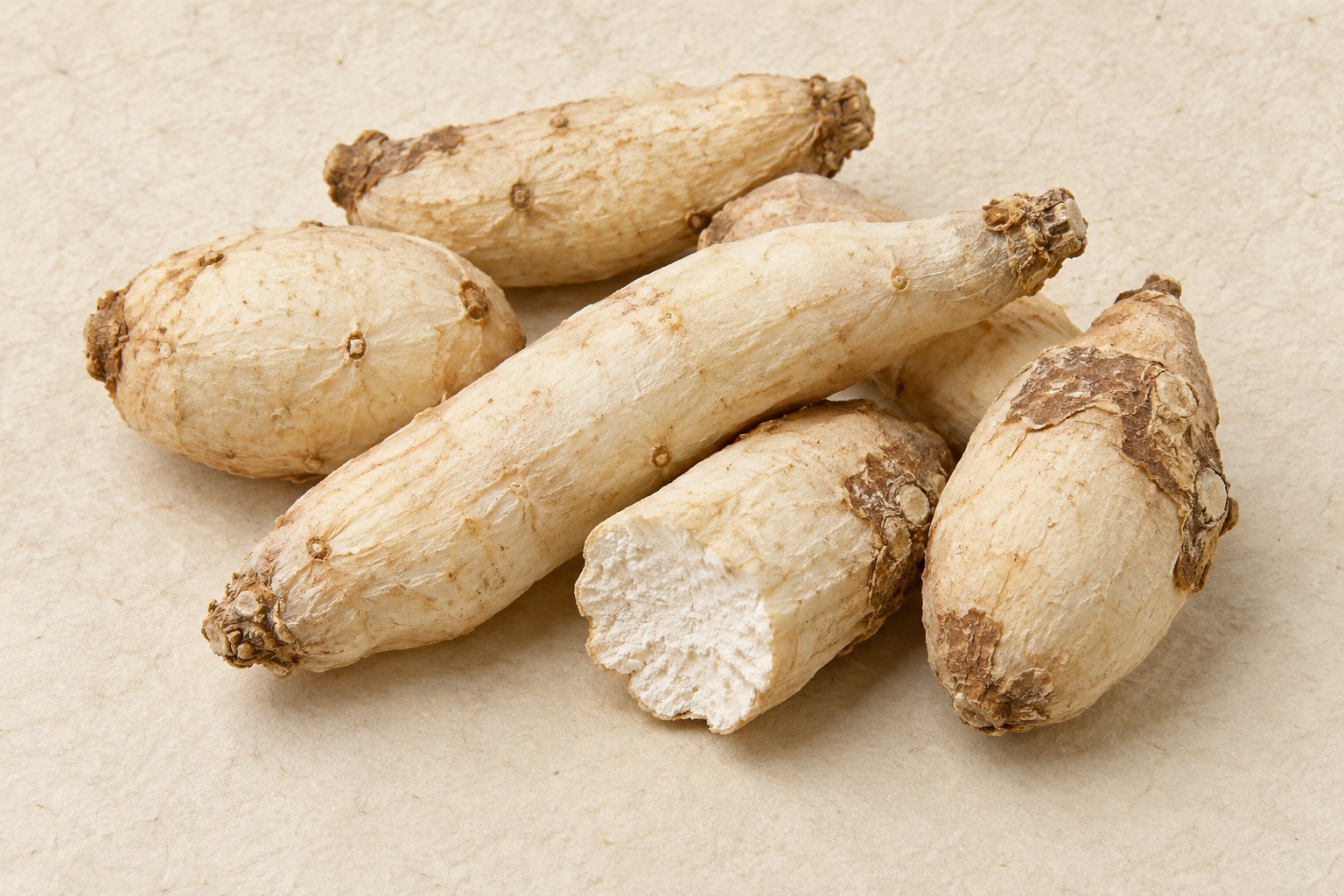
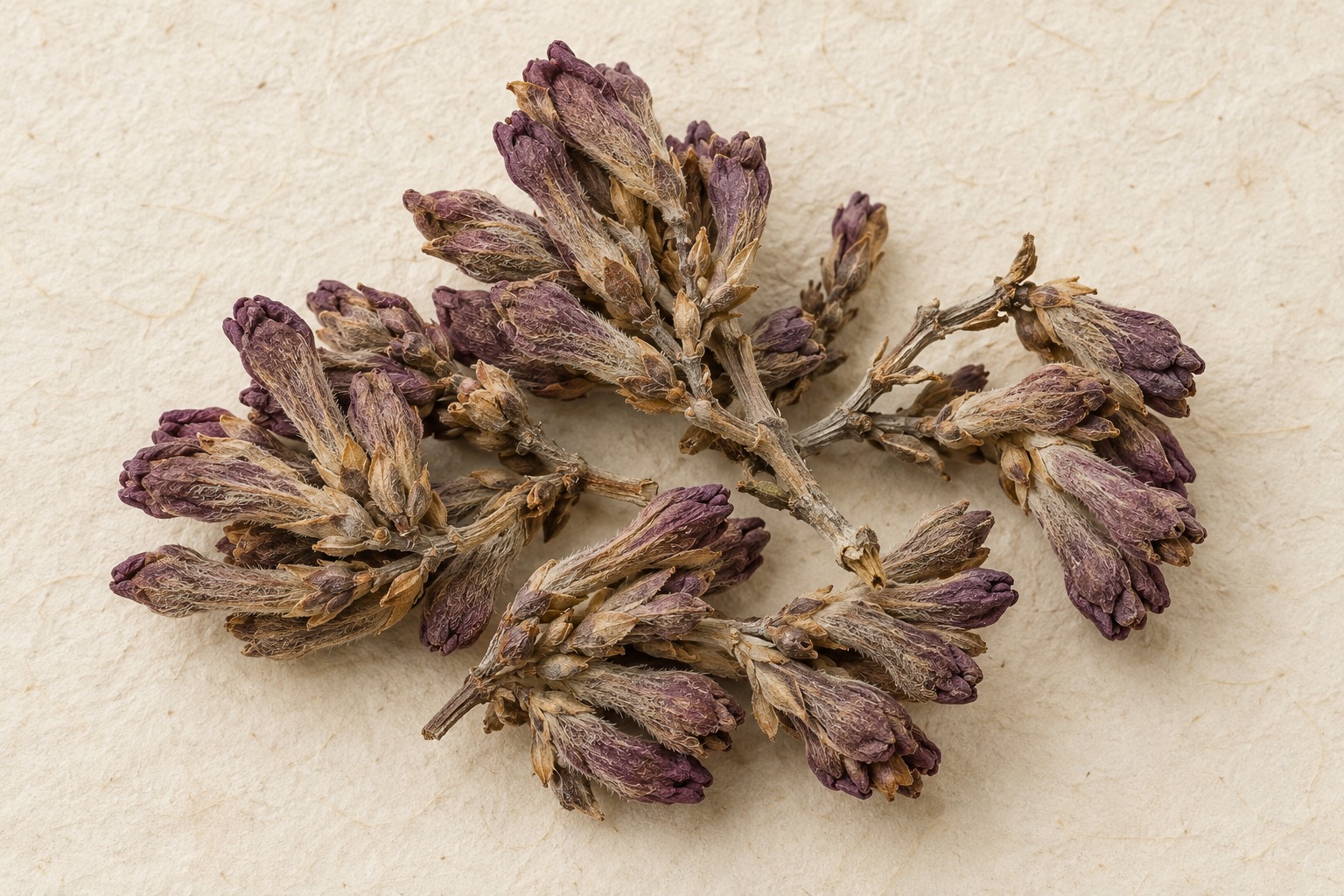
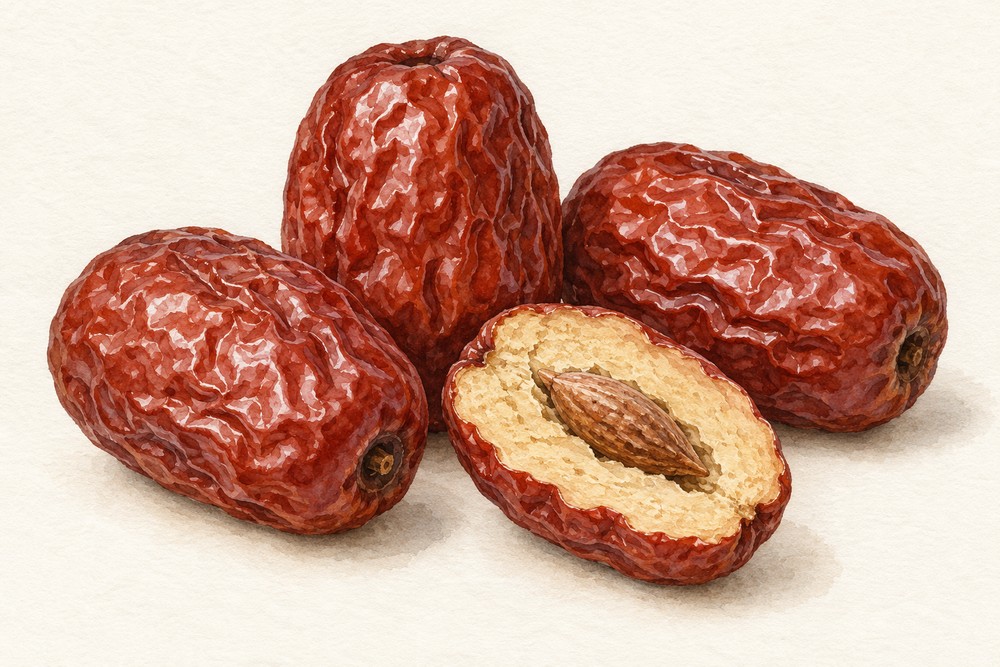
Source-recorded amounts: The source lists the three toxic herbs in equal proportions, 1:1:1, without a self-use amount. This is a historical textual ratio, not a safe ratio; do not combine or prepare it.
Caution: All three herbs carry toxicity warnings; historical recording does not establish modern safety. This profile gives no dose, decoction, or detoxification method. Avoid self-use; accidental exposure or ingestion needs urgent poison-control/medical advice.
Open formula record ↗Documented toxic incompatibility
The Gan Cao–Jing Da Ji incompatibility is recorded in traditional sources. Jing Da Ji is a toxic Euphorbia root that may cause severe gastrointestinal effects; do not grow, forage, process, or combine it with licorice for self-use. No safe self-use ratio is established.
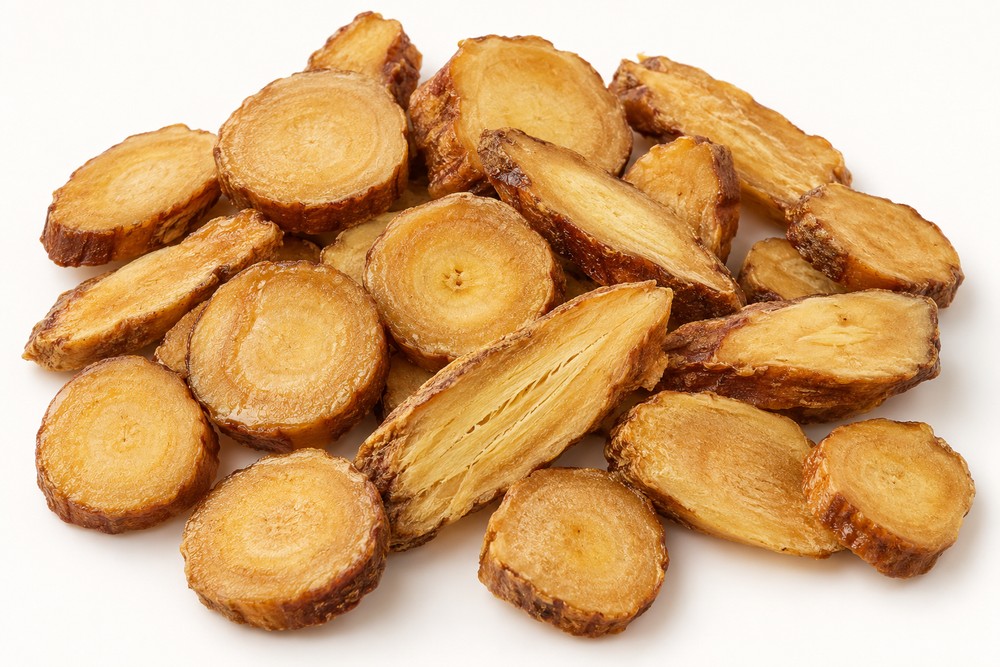
AI study illustrations; not for specimen identification.
HKBU licorice record ↗ ↗ Modern review of incompatibility research ↗ ↗FROM PLANT / SOURCE HABITAT TO DRIED MATERIAL · REFERENCE WORKFLOW
- Materia medica references describe seasonal root collection, soil removal, and drying in a controlled processing chain. Because this is toxic material, this profile provides only a high-level professional supply-chain note, not home processing, detoxification steps, or dosing.
These are post-harvest study notes, not directions to prepare a remedy for self-treatment. Processing reference ↗
How to read formula amounts
Displayed amounts belong to the cited formula and source; they are not a general safe ratio, treatment dose, or home-decoction instruction. Do not transfer amounts to another formula or adjust them by body weight.
Material source, dried appearance, and processing forms (HKBU)
HKBU identifies the materia medica and records toxicity/incompatibility warnings; species and plant part must be verified.
Open original materia medica record ↗