Jing Jie · fineleaf schizonepeta · Jing Jie
Schizonepeta tenuifolia Briq. · Dried aerial parts and spikes
Name and part used
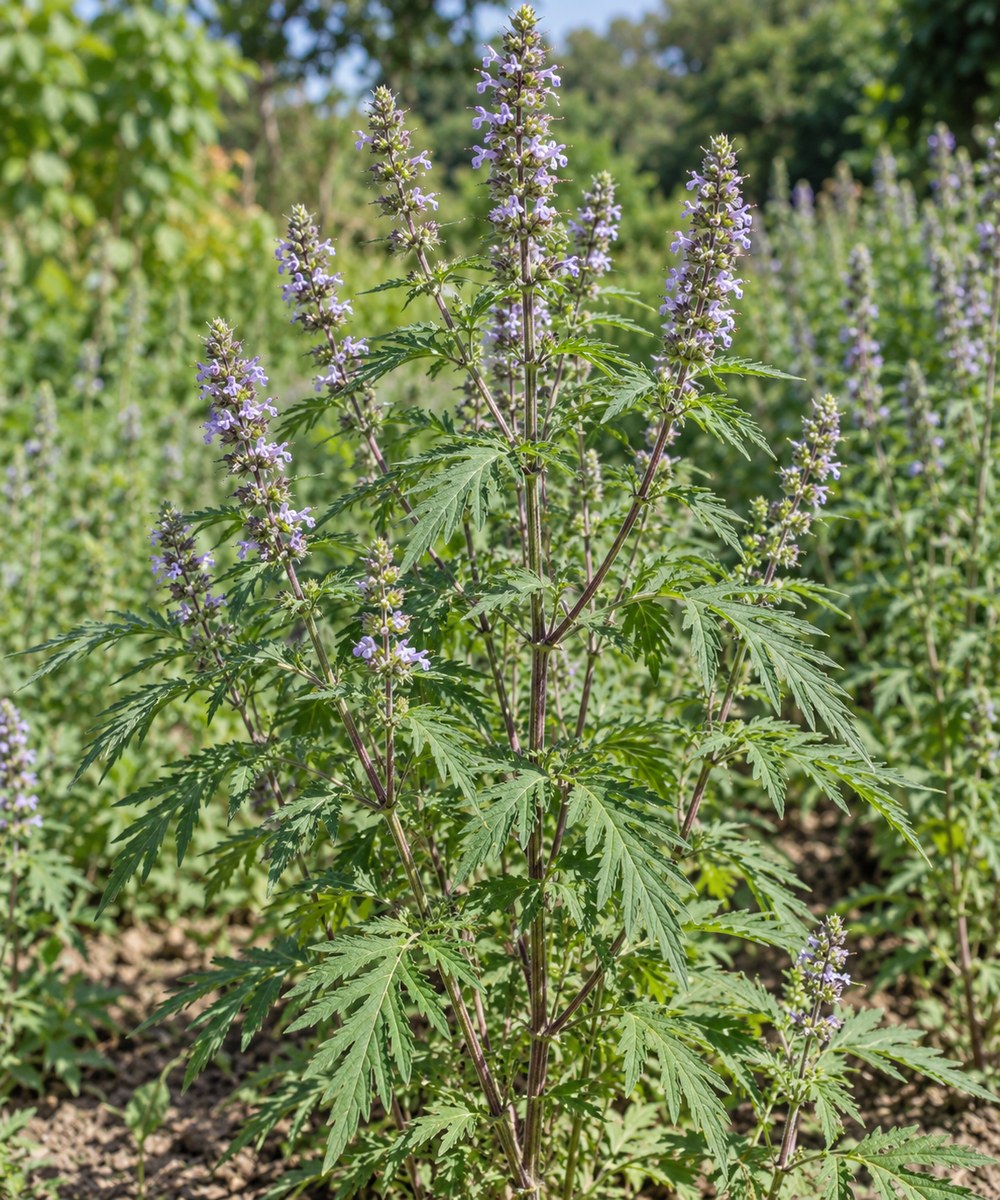
Jing Jie is the aerial part of Schizonepeta tenuifolia, an aromatic annual in the mint family. Its upright square stems branch, opposite leaves are pinnately divided, and interrupted spikes contain whorls of small pink-purple flowers. HKBU records plants 60–100 cm tall, flowering July–September and harvested in autumn while spikes remain green. Do not confuse it with catnip (Nepeta cataria), despite misleading English common names in some databases.
Traditional context
HKBU records an acrid, slightly warm nature and traditional actions of releasing the exterior, dispelling wind, promoting eruption, reducing sores, and stopping bleeding. These terms do not prove treatment of influenza, measles, bleeding, or skin disease.
Modern evidence
HKBU provides botanical, material, and traditional-use records, not clinical trials. Essential-oil constituents and preclinical effects do not confirm human efficacy for colds or skin disease. Do not replace anticoagulant or bleeding care with herbs.
Safety
People allergic to Lamiaceae may react; avoid concentrated essential oil or eating foraged plants. Pregnancy/breastfeeding, young children, anticoagulant/antiplatelet therapy, or bleeding disorders warrant professional advice. High fever, breathlessness, heavy bleeding, or a non-blanching purple rash requires urgent care.
Safety reference ↗Pairing in reference texts
HKBU notes a historical pairing of Jing Jie spike with Bo He and Niu Bang Zi, but the botanical record gives no standard ratio or clinical trial evidence; do not turn it into a cold remedy recipe. No specific toxic pair is established. Use caution with anticoagulants because specific interaction data are lacking, not because a toxic interaction is proven.
Identification and study notes
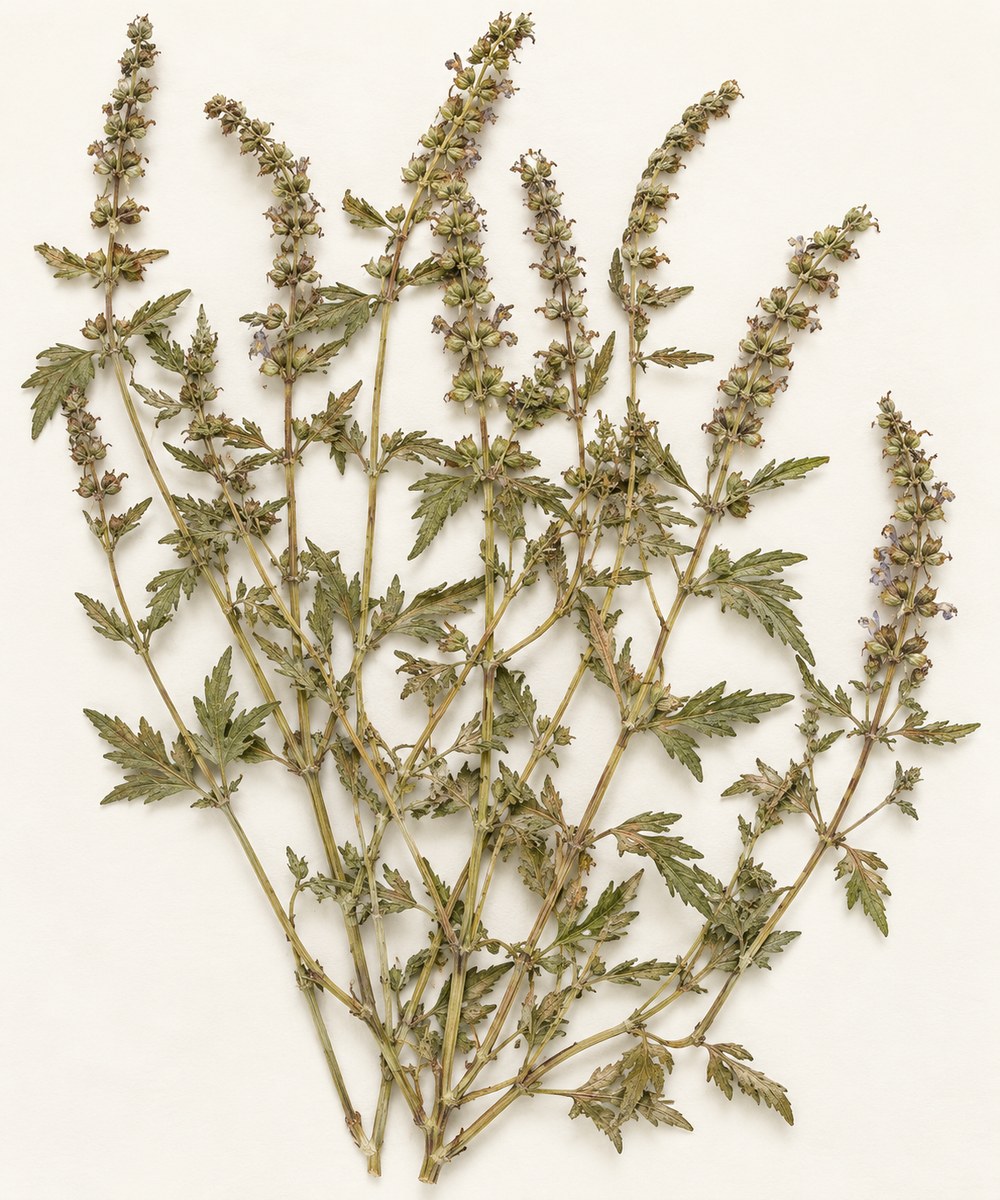
Jing Jie is a fragrant annual with upright square-branched stems about 60–100 cm tall. Leaves are opposite; lower leaves may be deeply divided, while middle/upper leaves are narrower and glandular-aromatic. Terminal spikes are interrupted, built from whorls of tiny flowers; pale pink-purple flowers are two-lipped and the bell-shaped calyx has five teeth. Many corollas fall during drying, leaving calyces; square yellow-green to pale-purple stems, divided leaves, and aroma aid recognition. HKBU records autumn harvest of flowering aerial parts and sun-drying. The English common name “catnip” on some records can confuse it with Nepeta cataria; verify the Latin name Schizonepeta tenuifolia.
Growth and habitat
HKBU places Schizonepeta tenuifolia on roadside slopes, valleys, and forest edges around 540–2,700 m and notes widespread cultivation. It prefers sun, drained soil, and temperate conditions; tall stems need spacing, support, and airflow.
Identification and study notes
Jing Jie is a fragrant annual with upright square-branched stems about 60–100 cm tall. Leaves are opposite; lower leaves may be deeply divided, while middle/upper leaves are narrower and glandular-aromatic. Terminal spikes are interrupted, built from whorls of tiny flowers; pale pink-purple flowers are two-lipped and the bell-shaped calyx has five teeth. Many corollas fall during drying, leaving calyces; square yellow-green to pale-purple stems, divided leaves, and aroma aid recognition. HKBU records autumn harvest of flowering aerial parts and sun-drying. The English common name “catnip” on some records can confuse it with Nepeta cataria; verify the Latin name Schizonepeta tenuifolia.
Growing and care
- Gieo hạt nông vào mùa ấm, giữ ẩm nhẹ; tỉa cây con để có khoảng thông thoáng. Cây thân cao có thể cần cọc nếu vùng nhiều gió.
- Sow shallowly in warm weather and keep lightly moist; thin seedlings for airflow. Tall stems may need staking in windy sites.
How long until harvest? An annual; the record uses autumn flowering with green spikes as the harvest stage, without days after sowing. Harvest only after confirming species and excluding catnip; garden material is not automatically suitable for ingestion.
Documented toxic incompatibility
No specific toxic pair for Jing Jie was confirmed in reviewed sources. Lack of interaction reports does not establish safety with anticoagulants or other Lamiaceae herbs; medication users should ask a clinician.
AI study illustrations; not for specimen identification.
FROM PLANT / SOURCE HABITAT TO DRIED MATERIAL · REFERENCE WORKFLOW
- Cut aerial parts in autumn at flowering while spikes remain green, per HKBU; label Schizonepeta tenuifolia and never mix with Nepeta.
- Remove soil, weeds, and damaged tissue; retain stems, divided opposite leaves, and spikes as whole-herb or separated-spike study lots.
- Sun-dry in a clean ventilated place, turning evenly until dry; identifying features include aroma, light square stems, and persistent calyces on spikes.
- Seal dry and record harvest date and source. Do not put essential oil in the mouth or self-treat feverish rash/bleeding.
These are post-harvest study notes, not directions to prepare a remedy for self-treatment. Processing reference ↗
Material source, dried appearance, and processing forms (HKBU)
HKBU identifies Jing Jie as dried aerial Schizonepeta tenuifolia. The materia medica description gives branched square stems around 50–80 cm, yellow-green/pale-purple with short hairs; opposite leaves are pinnately divided into 3–5 lobes, with terminal spikes and persistent calyces. It is strongly aromatic. Harvest in autumn while flowering and sun-dry.
Open original materia medica record ↗Habitat, season, and harvest in the HKBU botanical record
HKBU records Schizonepeta tenuifolia at 60–100 cm in slopes, valleys, and forest edges; flowering July–September and fruiting September–November. Harvest aerial parts in autumn while flowering and sun-dry.
Open botanical source ↗