Cherokee rose fruit · Jin Ying Zi
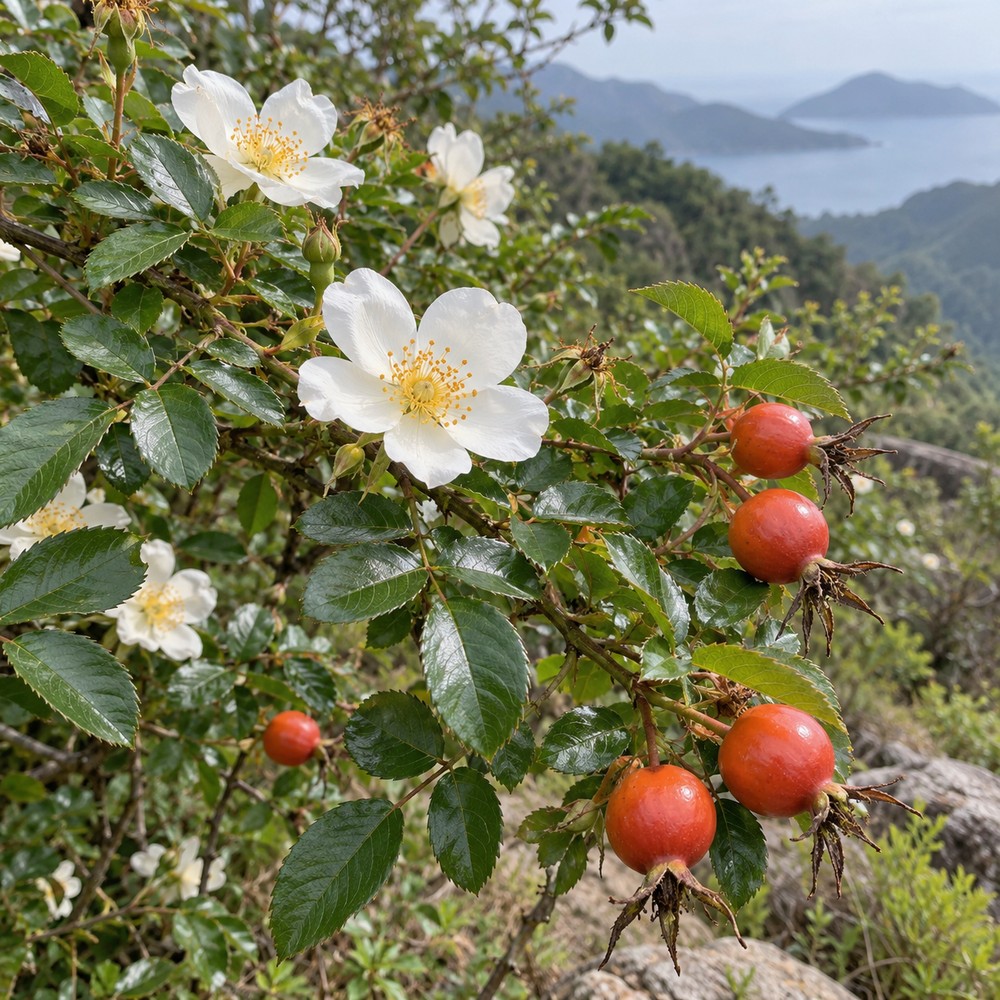
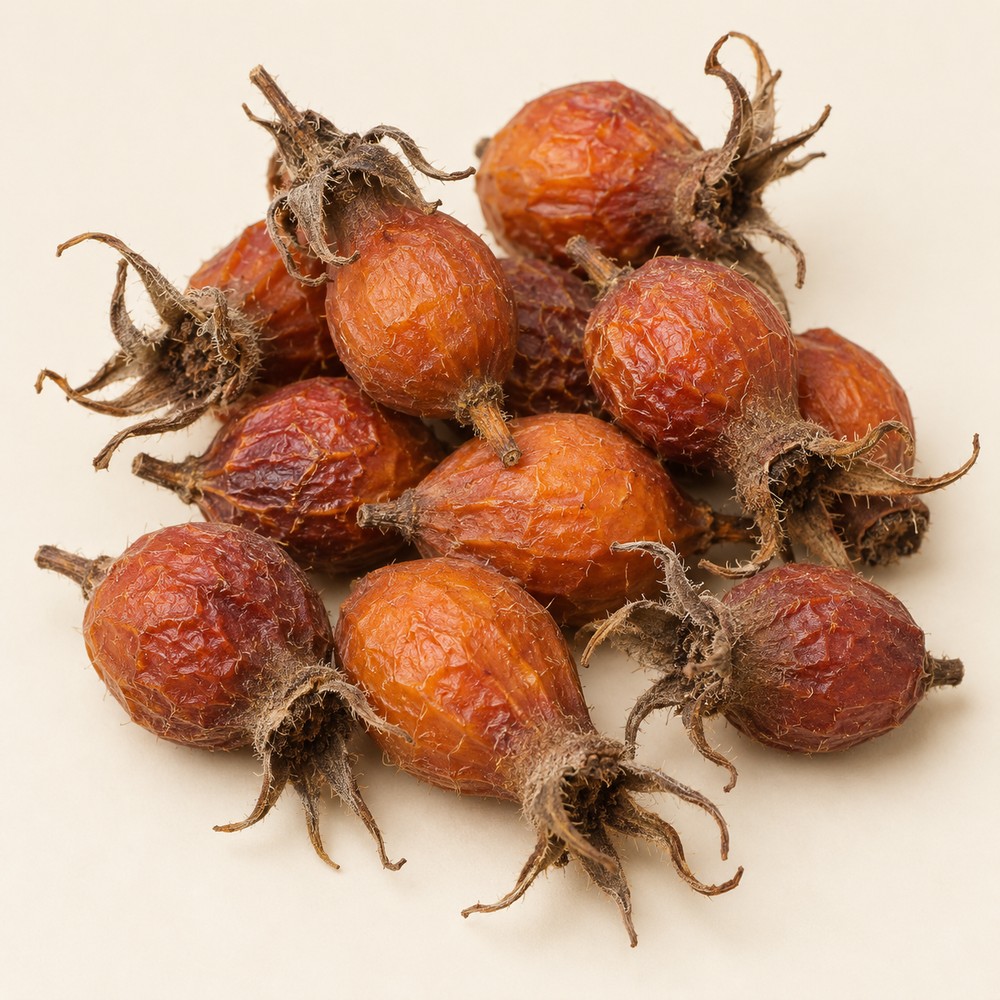
Rosa laevigata Michx. · Mature fruit
Name and part used
An evergreen climbing rose with three-to-five leaflets, hooked prickles, large white flowers, and bristly pear-shaped fruits.
Traditional context
Jin Ying Zi is mature Rosa laevigata fruit. HKBU records orange-yellow mature fruit harvested October-November; the external bristles must be properly removed during processing.
Modern evidence
Essence-astringing, urination-reducing, and bowel-astringing are traditional claims. Do not self-treat nocturia, diarrhea, or urinary disease.
Safety
Astringing may be unsuitable during infection or urinary retention; kidney disease, pregnancy, or diuretics warrant professional advice.
Pairing in reference texts
Jin Ying Zi appears with Dang Shen in some historical references for prolonged diarrhea. Do not self-combine before evaluating its cause.
Growing, care, and harvest timing
HKBU habitat record: Growing on sunny slopes and thickets along the streams at altitude 200-6,200m. Can be cultivated. Distributed in Central, East and South China. The medicinal materials are mainly produced in Guangdong, Sichuan, Yunnan and etc Harvest and processing as recorded: Harvested mature red fruits from October to November, dried and deburred
Source-recorded harvest/processing: Harvested mature red fruits from October to November, dried and deburred
The reviewed source does not provide a complete species-specific sowing/growing routine, irrigation/fertilization schedule, or universal plant age. The page therefore does not infer care instructions or years to harvest; consult local cultivation guidance.
Open habitat and season source ↗FROM PLANT / SOURCE HABITAT TO DRIED MATERIAL · REFERENCE WORKFLOW
- Harvest mature red-orange fruit in October-November; authenticate Rosa laevigata and use gloves for prickly stems and fruit.
- Remove stalks, debris, and bristles under facility procedures; contain bristle dust.
- Dry processed fruit to moisture specifications; cutting and screening equipment should limit sharp bristle fragments.
- Inspect residual prickles, mold, and foreign matter; record source and date and seal the lot.
These are post-harvest study notes, not directions to prepare a remedy for self-treatment. Processing reference ↗
How to read formula amounts
The cited sources do not provide a formula with specific amounts for this profile; no ratio is invented. Absence from the incompatibility list does not establish safety.
Habitat, season, and harvest in the HKBU botanical record
HKBU botanical record (translated summary): Flowering and fruiting dates: Flowering: April to June, fruiting: July to November Habitat and distribution: Growing on sunny slopes and thickets along the streams at altitude 200-6,200m. Can be cultivated. Distributed in Central, East and South China. The medicinal materials are mainly produced in Guangdong, Sichuan, Yunnan and etc Harvest and processing as recorded: Harvested mature red fruits from October to November, dried and deburred
Open botanical source ↗