Coltsfoot flower bud · Kuan Dong Hua
Tussilago farfara L. · Flower buds
Name and part used
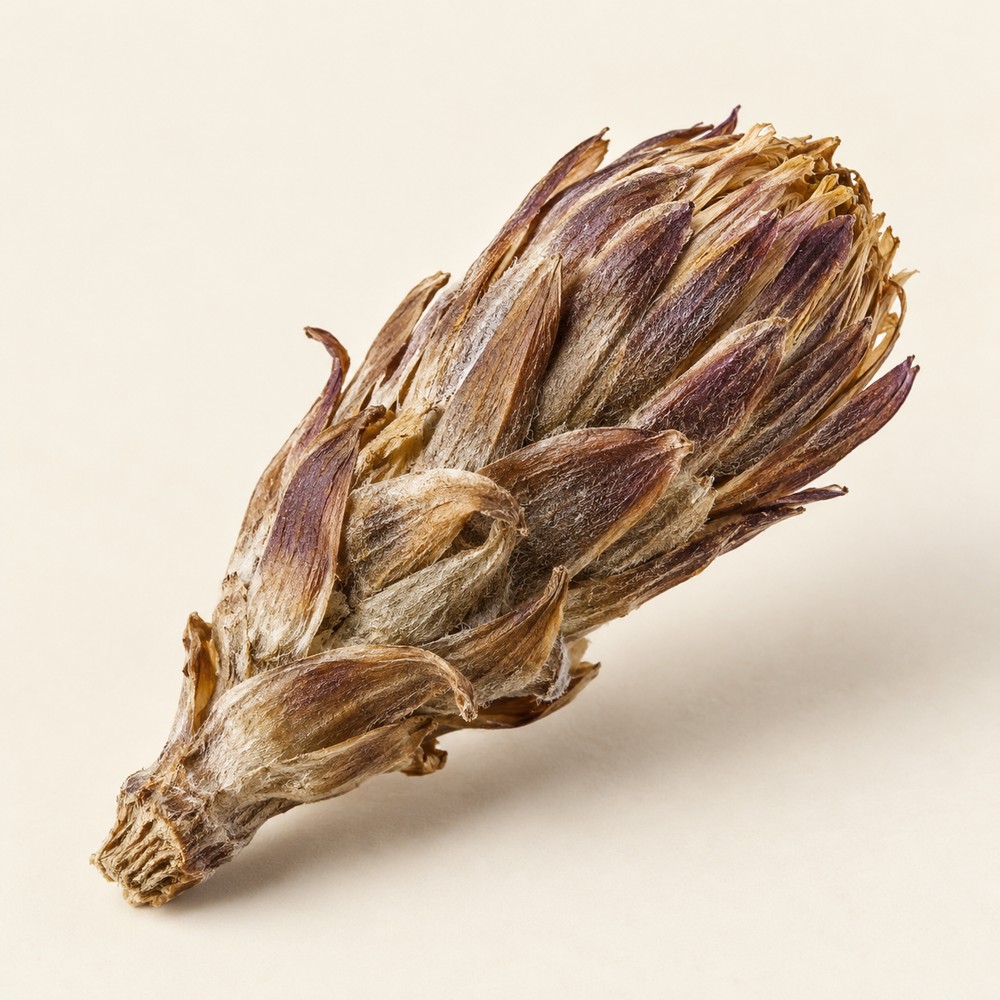
Kuan Dong Hua is an early flower bud, rod-shaped or oval and often solitary or paired, covered in layered purple-brown bracts.
Traditional context
Lung-moistening and cough-stopping are traditional terms; coughing blood or suspected tuberculosis requires medical care, not self-treatment. HKBU describes layered pink-purple or pale-brown bracts enclosing immature yellow-brown florets.
Modern evidence
Natural constituents and preclinical studies do not rule out liver toxicity from pyrrolizidine-alkaloid contamination.
Safety
Pyrrolizidine alkaloids may cause liver toxicity depending on species/source; avoid prolonged use, pregnancy, liver disease, or unscreened medication combinations.
Pairing in reference texts
Kuan Dong Hua is paired with Zi Wan in historical cough formulas; traditional pairing does not prove individual safety or efficacy.
Growing, care, and harvest timing
HKBU habitat record: Growing along sunny and wet ditches. Distributed in North and Northwest China, Jiangxi, Hubei, Hunan and etc. The medicinal materials are mainly produced in Henan, Gansu, Shanxi, Shaanxi and etc Harvest and processing as recorded: Excavated the buds before the herb growing out of the ground in Dec, not touched with hands or washed in case of color changing, put in ventilated place or dried in the shade, removed the earth when half dried, removed the peduncle, and dried. Not sun-dried or stirred with hands, not exposed in rain, snow or icy frost in case of getting black
Source-recorded harvest/processing: Excavated the buds before the herb growing out of the ground in Dec, not touched with hands or washed in case of color changing, put in ventilated place or dried in the shade, removed the earth when half dried, removed the peduncle, and dried. Not sun-dried or stirred with hands, not exposed in rain, snow or icy frost in case of getting black
The reviewed source does not provide a complete species-specific sowing/growing routine, irrigation/fertilization schedule, or universal plant age. The page therefore does not infer care instructions or years to harvest; consult local cultivation guidance.
Open habitat and season source ↗FROM PLANT / SOURCE HABITAT TO DRIED MATERIAL · REFERENCE WORKFLOW
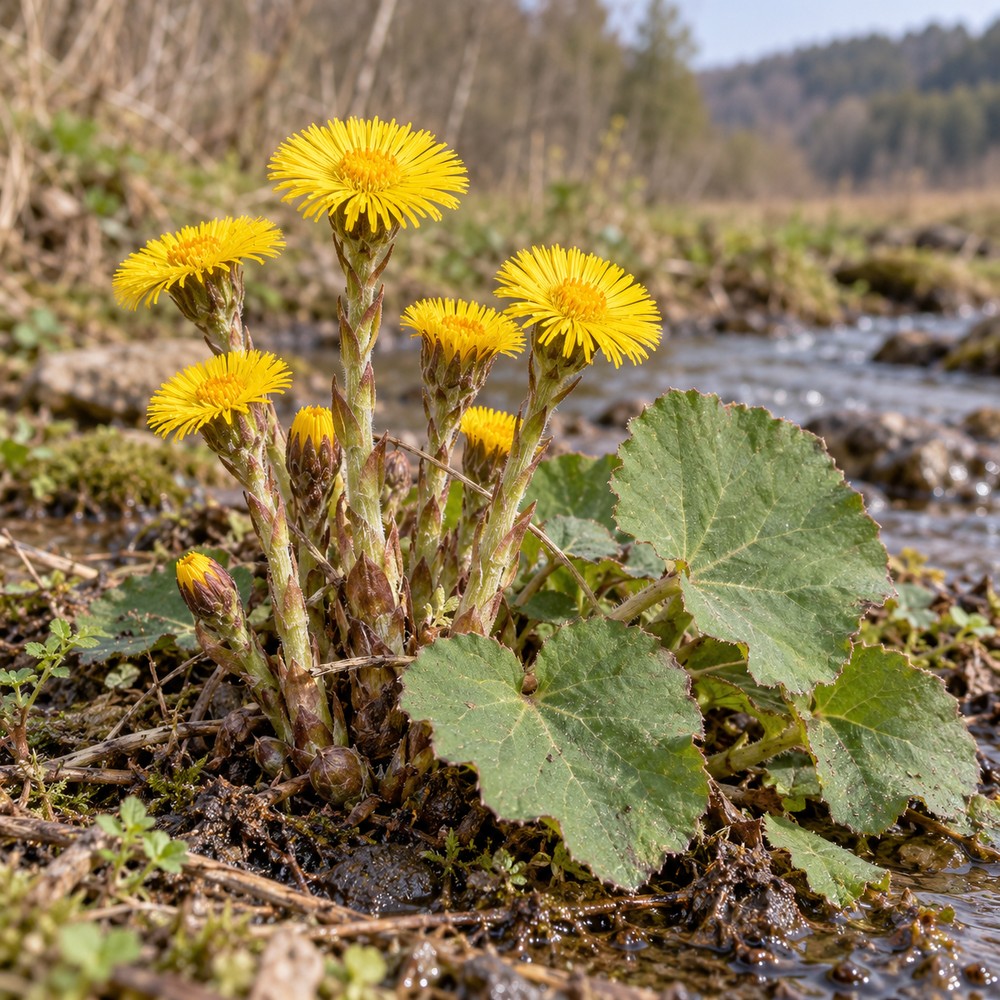
- Cultivate/source controlled Tussilago farfara; it bears large hoof-shaped leaves in moist habitats and yellow flowers may precede leaves.
- Collect unopened buds in season, retaining the layered pale purple bracts around the head.
- Dry gently and promptly in ventilation; prevent opening, discoloration, or moisture uptake.
- Grade purple-red short-stalked unopened buds, exclude leaves, and test identity and impurities.
These are post-harvest study notes, not directions to prepare a remedy for self-treatment. Processing reference ↗
How to read formula amounts
Displayed amounts belong to the cited formula and source; they are not a general safe ratio, treatment dose, or home-decoction instruction. Do not transfer amounts to another formula or adjust them by body weight.
Habitat, season, and harvest in the HKBU botanical record
HKBU botanical record (translated summary): Flowering and fruiting dates: Flowering: January to February; fruiting: May to August Habitat and distribution: Growing along sunny and wet ditches. Distributed in North and Northwest China, Jiangxi, Hubei, Hunan and etc. The medicinal materials are mainly produced in Henan, Gansu, Shanxi, Shaanxi and etc Harvest and processing as recorded: Excavated the buds before the herb growing out of the ground in Dec, not touched with hands or washed in case of color changing, put in ventilated place or dried in the shade, removed the earth when half dried, removed the peduncle, and dried. Not sun-dried or stirred with hands, not exposed in rain, snow or icy frost in case of getting black
Open botanical source ↗HKBU formula record containing this herb: Jiu Xian San / Nine Immortals Powder
Traditional action in the source: Astringes the lung, relieves cough, boosts qi and nourishes yin
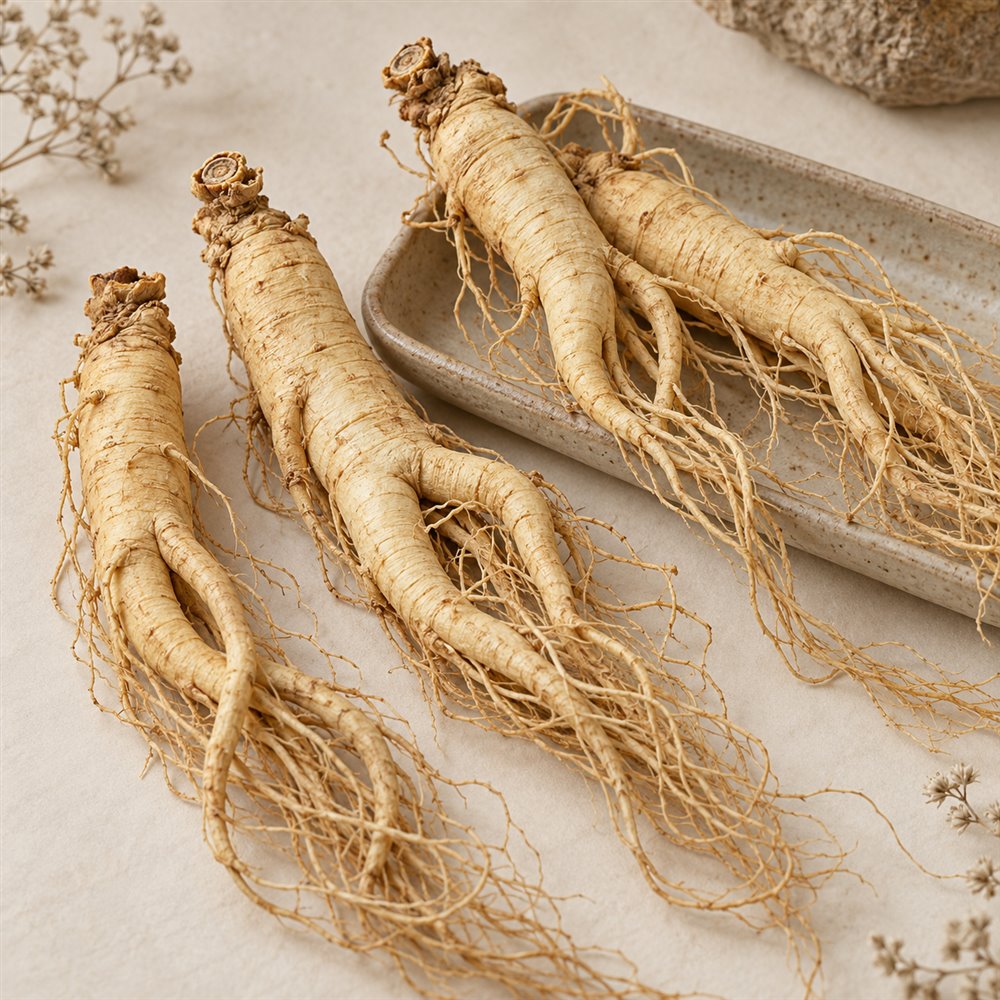
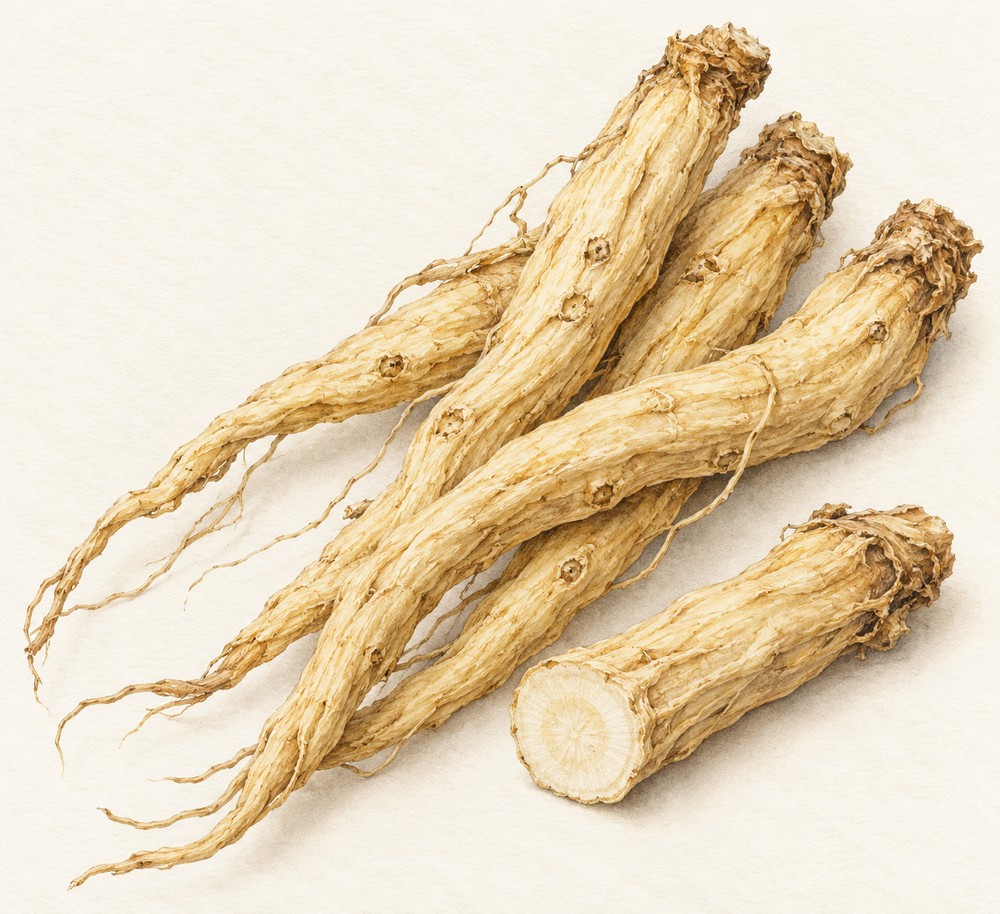
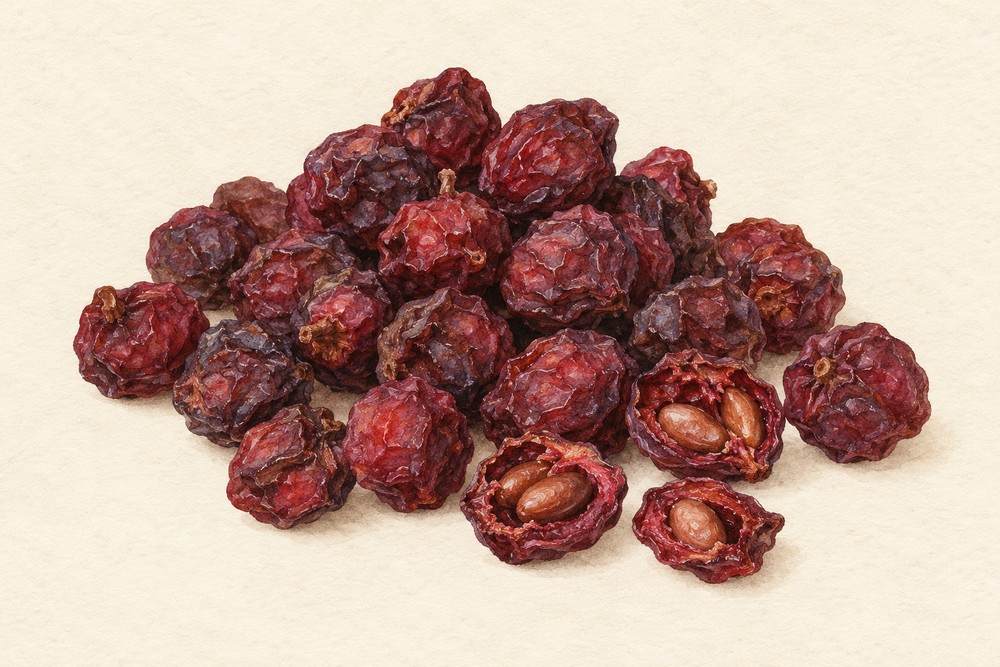
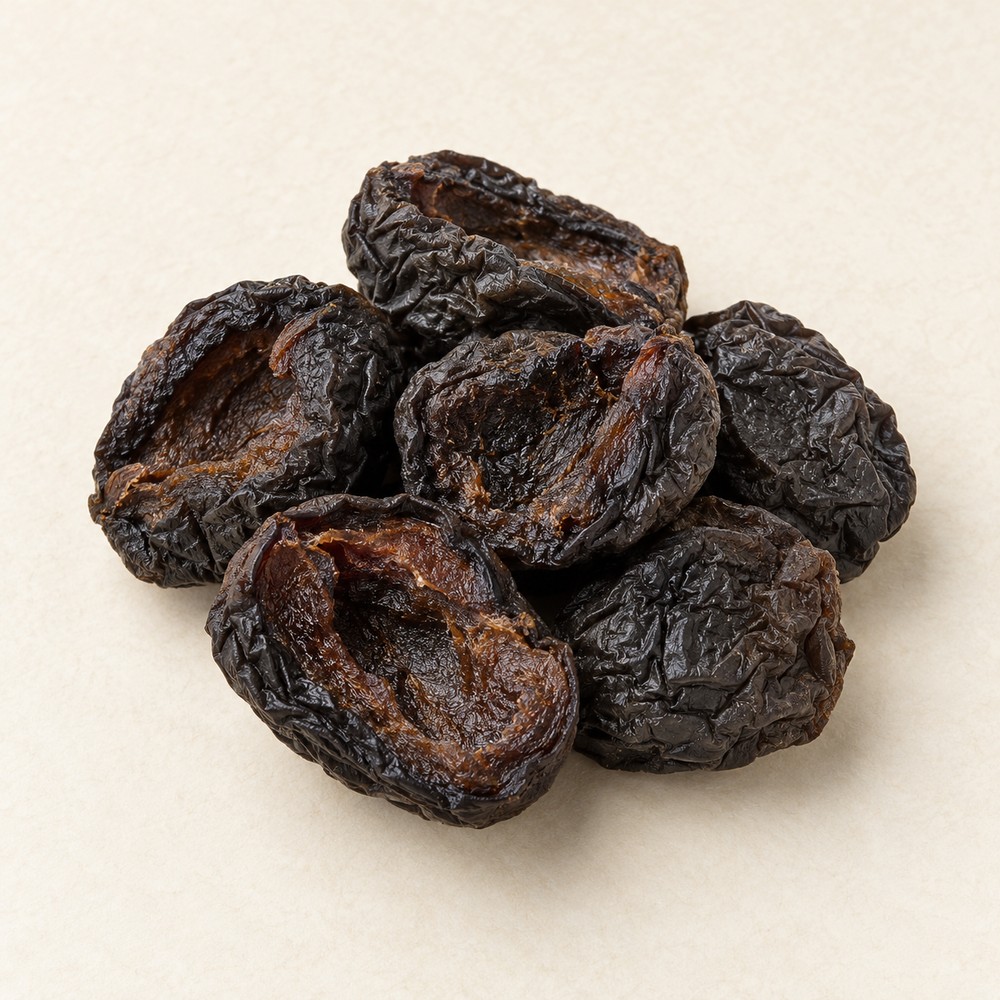
Ingredient images and source amounts are shown for comparison only; this is not a treatment recipe.
HKBU source-recorded composition
Ginseng Radix et Rhizoma (Ren Shen) 1 liang (30g), Farfarae Flos (Kuan Dong Hua) 1 liang (30g), Mori Cortex (Sang Bai Pi) 1 liang (30g), Platycodonis Radix (Jie Geng) 1 liang (30g), Schisandrae Chinensis Fructus (Wu Wei Zi) 1 liang (30g), Asini Corii Colla (E Jiao) 1 liang (30g), Mume Fructus (Wu Mei) 1 liang (30g), Fritillariae Bulbus (Bei Mu) 0.5 liang (15g), Papaveris Pericarpium (Ying Su Qiao honey-fried) 8 liang (240g)
The ingredients and amounts below are one HKBU-recorded version; texts, historical units, processing, and modern products can differ. This is comparative reference data, not a home-preparation recipe or personal dose.
Open complete HKBU formula record ↗