Monk fruit · Luo Han Guo
Siraitia grosvenorii (Swingle) C. Jeffrey ex Lu & Z. Y. Zhang · Mature fruit
Name and part used
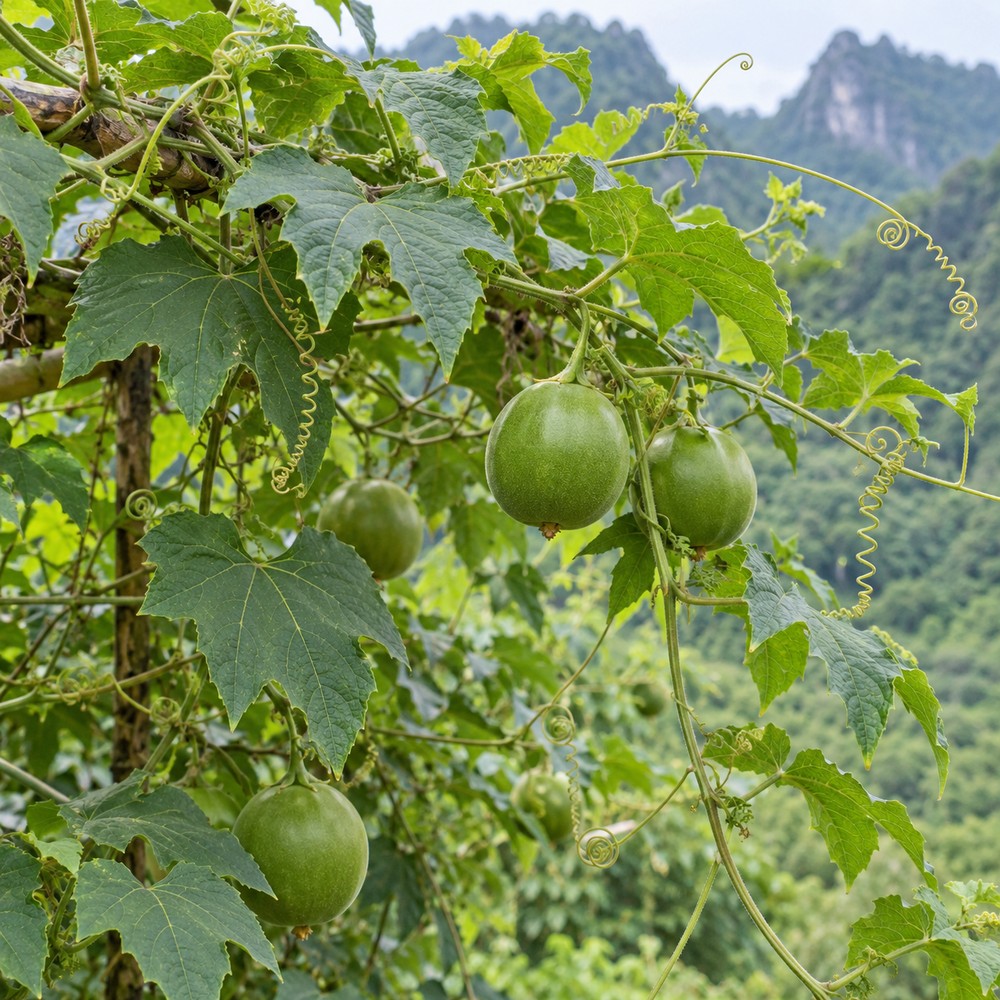
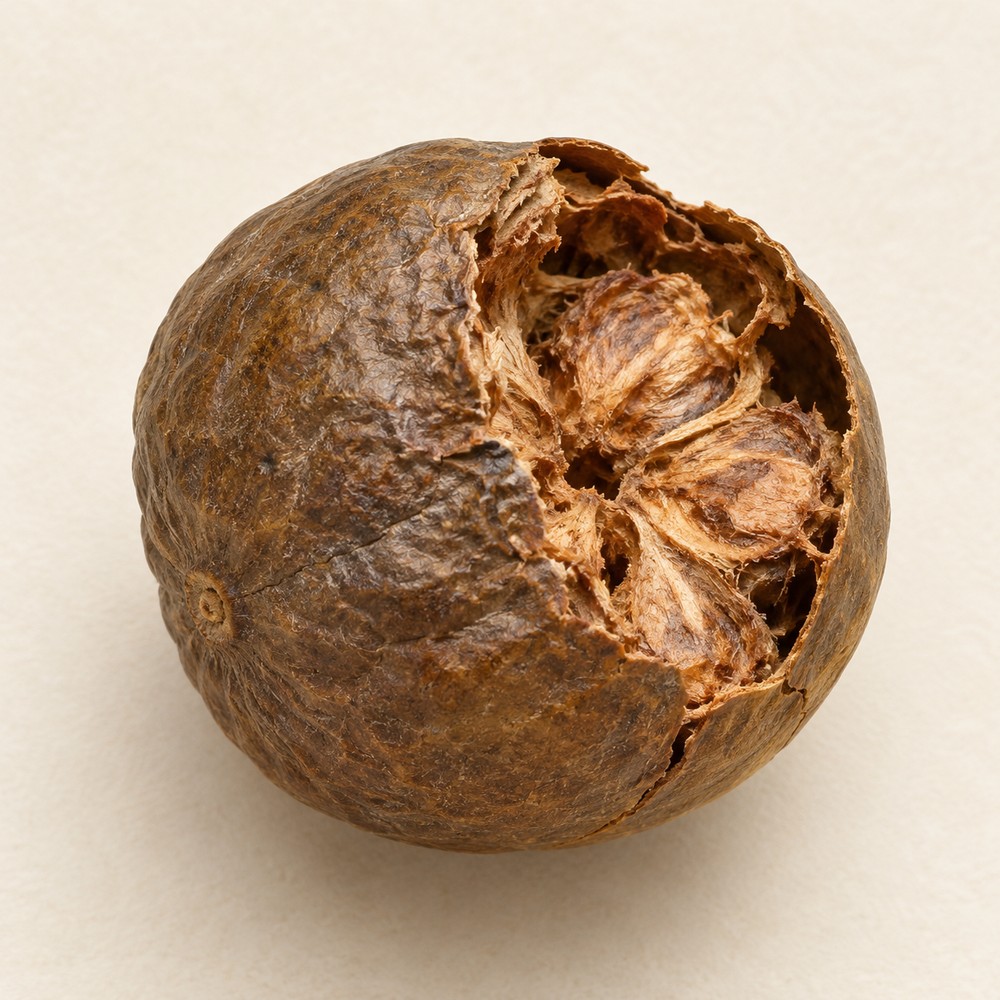
A tendrilled vine with large heart-shaped leaves and round fruit; dried fruit turns brown-gold and is often paper-wrapped.
Traditional context
Luo Han Guo is Siraitia grosvenorii fruit, cultivated mainly in southern China. HKBU records September-October harvest and slow drying; sweetener extracts differ from whole dried fruit.
Modern evidence
The fruit is sweet and used in foods and drinks. Mogroside research does not establish treatment for sore throat, cough, or diabetes.
Safety
Allergy or digestive discomfort may occur; commercial products may contain additives. People with diabetes should check sweetener labels and consult a clinician.
Pairing in reference texts
Luo Han Guo is commonly infused as a food beverage with chrysanthemum or Chen Pi. This is not a medicinal combination for respiratory disease.
Growing, care, and harvest timing
HKBU habitat record: Growing in mountain forests, humid places along riverbank and thickets. Distributed in West and Southwest Jiangxi, South Hunan, Guangdong, Guangxi and Southeast Guizhou. The medicinal materials are mainly produced in Yongfu and Lingui of Guangxi Harvest and processing as recorded: Fruits: collected in September and October when fruits become mature, placed on ground for 8-10 days when the pericarp turn yellow from dark green and dried by fire for 5-6 days, then removed foreign matters, wrapped with paper, packed, stored in dried area. Leaves: collected in summer, used fresh or sundried. Roots: collected in summer and autumn, well washed, used fresh or sundried
Source-recorded harvest/processing: Fruits: collected in September and October when fruits become mature, placed on ground for 8-10 days when the pericarp turn yellow from dark green and dried by fire for 5-6 days, then removed foreign matters, wrapped with paper, packed, stored in dried area. Leaves: collected in summer, used fresh or sundried. Roots: collected in summer and autumn, well washed, used fresh or sundried
The reviewed source does not provide a complete species-specific sowing/growing routine, irrigation/fertilization schedule, or universal plant age. The page therefore does not infer care instructions or years to harvest; consult local cultivation guidance.
Open habitat and season source ↗FROM PLANT / SOURCE HABITAT TO DRIED MATERIAL · REFERENCE WORKFLOW
- Harvest mature fruit in September-October; authenticate Siraitia grosvenorii and reject damaged or moldy fruit.
- Clean the surface, drain, and lot the fruit; avoid cutting before drying to preserve form.
- HKBU describes conditioning and several days of low-heat drying; facilities control temperature, hygiene, and moisture.
- Remove impurities, package to moisture-resistant commercial standards, document origin, and inspect for mold in storage.
These are post-harvest study notes, not directions to prepare a remedy for self-treatment. Processing reference ↗
How to read formula amounts
The cited sources do not provide a formula with specific amounts for this profile; no ratio is invented. Absence from the incompatibility list does not establish safety.
Habitat, season, and harvest in the HKBU botanical record
HKBU botanical record (translated summary): Flowering and fruiting dates: Flowering: May to July, fruiting: July to September Habitat and distribution: Growing in mountain forests, humid places along riverbank and thickets. Distributed in West and Southwest Jiangxi, South Hunan, Guangdong, Guangxi and Southeast Guizhou. The medicinal materials are mainly produced in Yongfu and Lingui of Guangxi Harvest and processing as recorded: Fruits: collected in September and October when fruits become mature, placed on ground for 8-10 days when the pericarp turn yellow from dark green and dried by fire for 5-6 days, then removed foreign matters, wrapped with paper, packed, stored in dried area. Leaves: collected in summer, used fresh or sundried. Roots: collected in summer and autumn, well washed, used fresh or sundried
Open botanical source ↗