Dwarf lilyturf tuber · Mai Men Dong
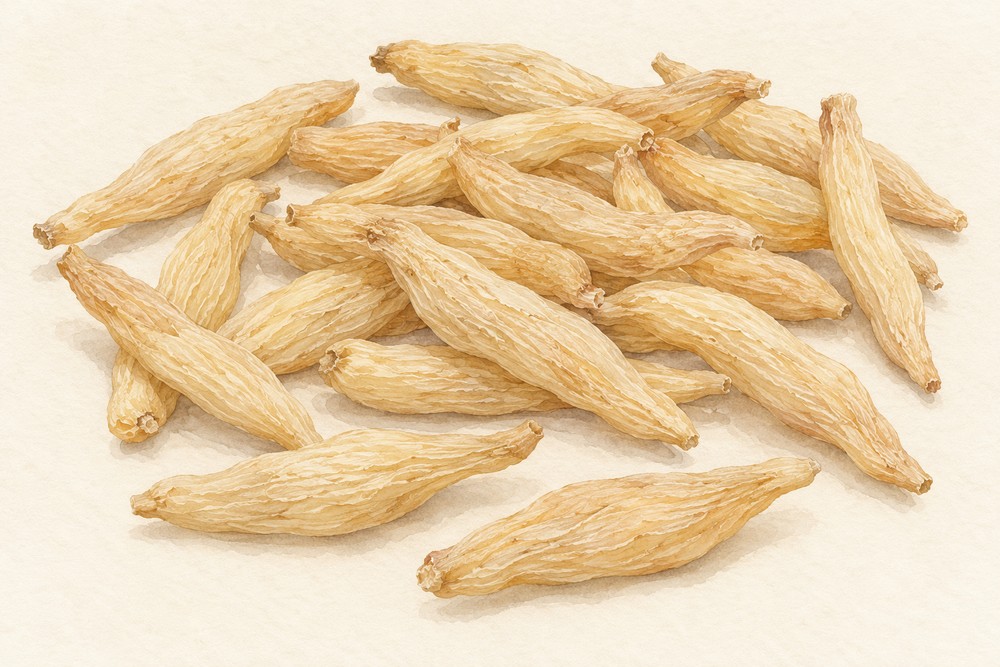
Ophiopogon japonicus (L.f.) Ker Gawl. · Tuberous roots
Name and part used
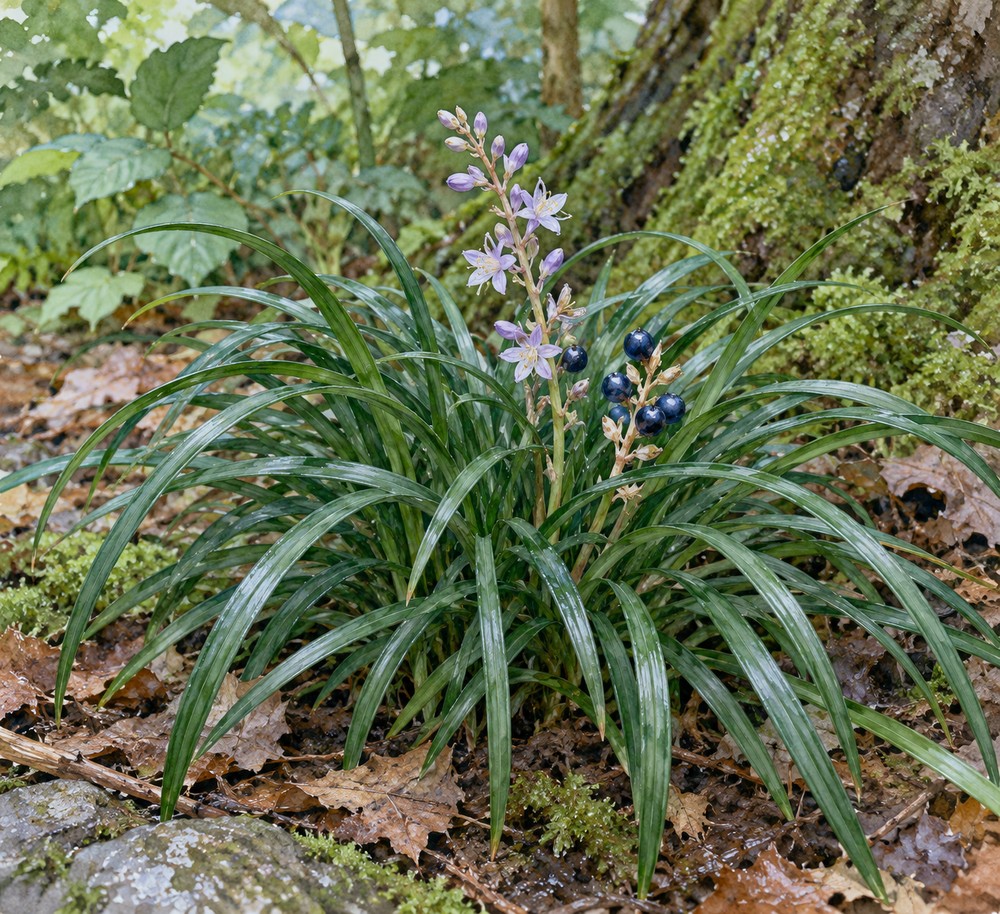
A low tuft with narrow arching leaves, pale-violet flowers, dark-blue ripe berries, and small root tubers.
Traditional context
Mai Men Dong is the tuberous root of Ophiopogon japonicus. It favors moist woodland or streamside settings; HKBU describes grasslike leaves and dark-blue ripe berries.
Modern evidence
Yin-nourishing, fluid-generating, and lung-moistening are traditional terms. Chemical and early-stage research does not establish treatment for cough, diabetes, or heart disorders.
Safety
Digestive discomfort or allergy may occur; identity and product quality need verification. People with chronic conditions or medicines should consult a qualified clinician.
Pairing in reference texts
Mai Men Dong appears with ginseng and Schisandra in Sheng Mai San. Its presence in a classical formula records history, not efficacy for everyone.
Growing, care, and harvest timing
HKBU habitat record: Growing in dank places of mountain slopes, under forests or along streams at altitude below 2,000m. Can be cultivated. Distributed in East and South-central China, Hebei, Shaanxi, Sichuan, Guizhou, Yunnan and etc. The medicinal materials are mainly produced in Zhejiang and Sichuan Harvest and processing as recorded: Excavated Radix Ophiopogonis in fine weather, removed soil, cut the earthnut and fibrous root, well washed, sun-dried and rubbed, sundried again for 4-5 times until all fibrous roots are totally removed, then dried
Source-recorded harvest/processing: Excavated Radix Ophiopogonis in fine weather, removed soil, cut the earthnut and fibrous root, well washed, sun-dried and rubbed, sundried again for 4-5 times until all fibrous roots are totally removed, then dried
The reviewed source does not provide a complete species-specific sowing/growing routine, irrigation/fertilization schedule, or universal plant age. The page therefore does not infer care instructions or years to harvest; consult local cultivation guidance.
Open habitat and season source ↗FROM PLANT / SOURCE HABITAT TO DRIED MATERIAL · REFERENCE WORKFLOW
- Excavate tuberous roots in fine weather and verify Ophiopogon japonicus, avoiding ornamental or related species.
- Remove soil, separate tubers from fibrous roots, clean under facility procedures, and reject damaged material.
- Sun-dry and rub away fine roots in repeated professional processing stages as described by HKBU, then dry to a stable endpoint.
- Grade and record origin and storage conditions; protect the dried tubers from moisture reabsorption.
These are post-harvest study notes, not directions to prepare a remedy for self-treatment. Processing reference ↗
How to read formula amounts
The cited sources do not provide a formula with specific amounts for this profile; no ratio is invented. Absence from the incompatibility list does not establish safety.
Habitat, season, and harvest in the HKBU botanical record
HKBU botanical record (translated summary): Flowering and fruiting dates: Flowering: May to August, fruiting: July to September Habitat and distribution: Growing in dank places of mountain slopes, under forests or along streams at altitude below 2,000m. Can be cultivated. Distributed in East and South-central China, Hebei, Shaanxi, Sichuan, Guizhou, Yunnan and etc. The medicinal materials are mainly produced in Zhejiang and Sichuan Harvest and processing as recorded: Excavated Radix Ophiopogonis in fine weather, removed soil, cut the earthnut and fibrous root, well washed, sun-dried and rubbed, sundried again for 4-5 times until all fibrous roots are totally removed, then dried
Open botanical source ↗