Barley malt · Mai Ya
Hordeum vulgare L. · Dried germinated barley grain
Name and part used
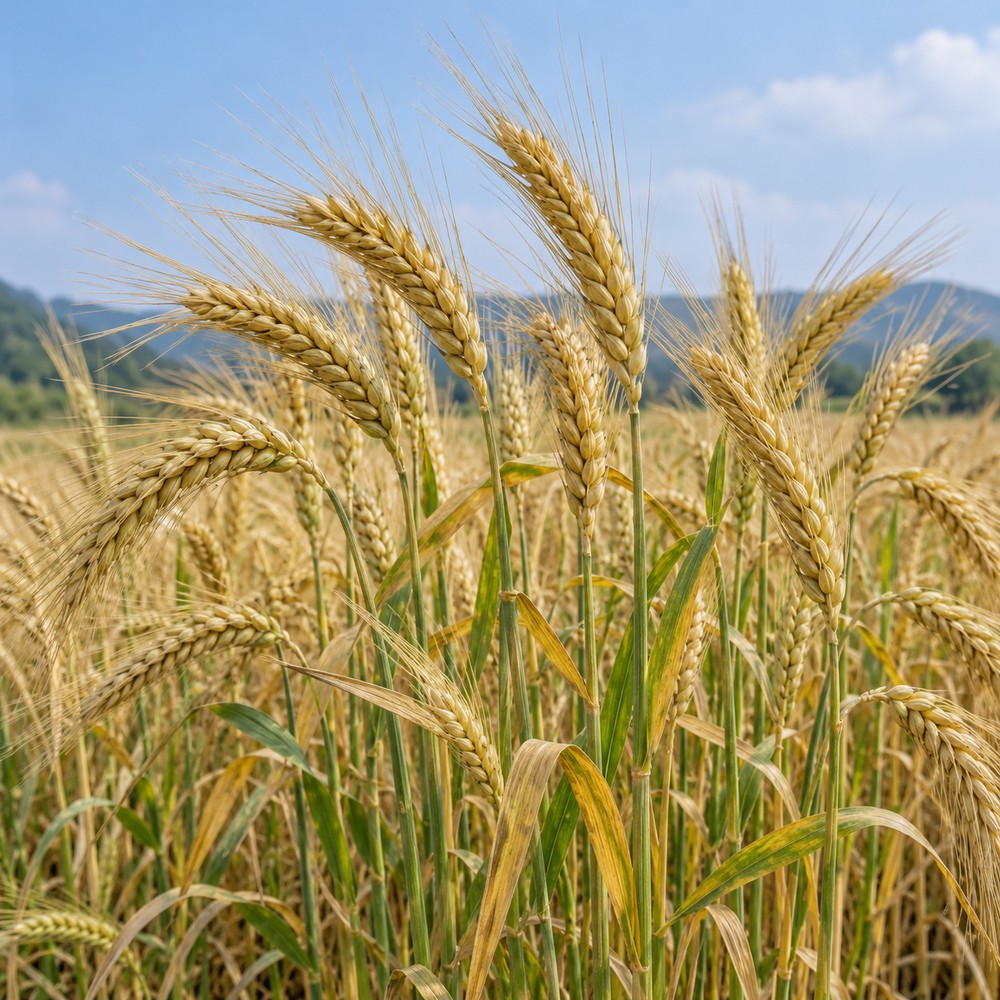
A cereal grass with upright stems, long leaves, and awned spikes; the materia medica is briefly germinated grain.
Traditional context
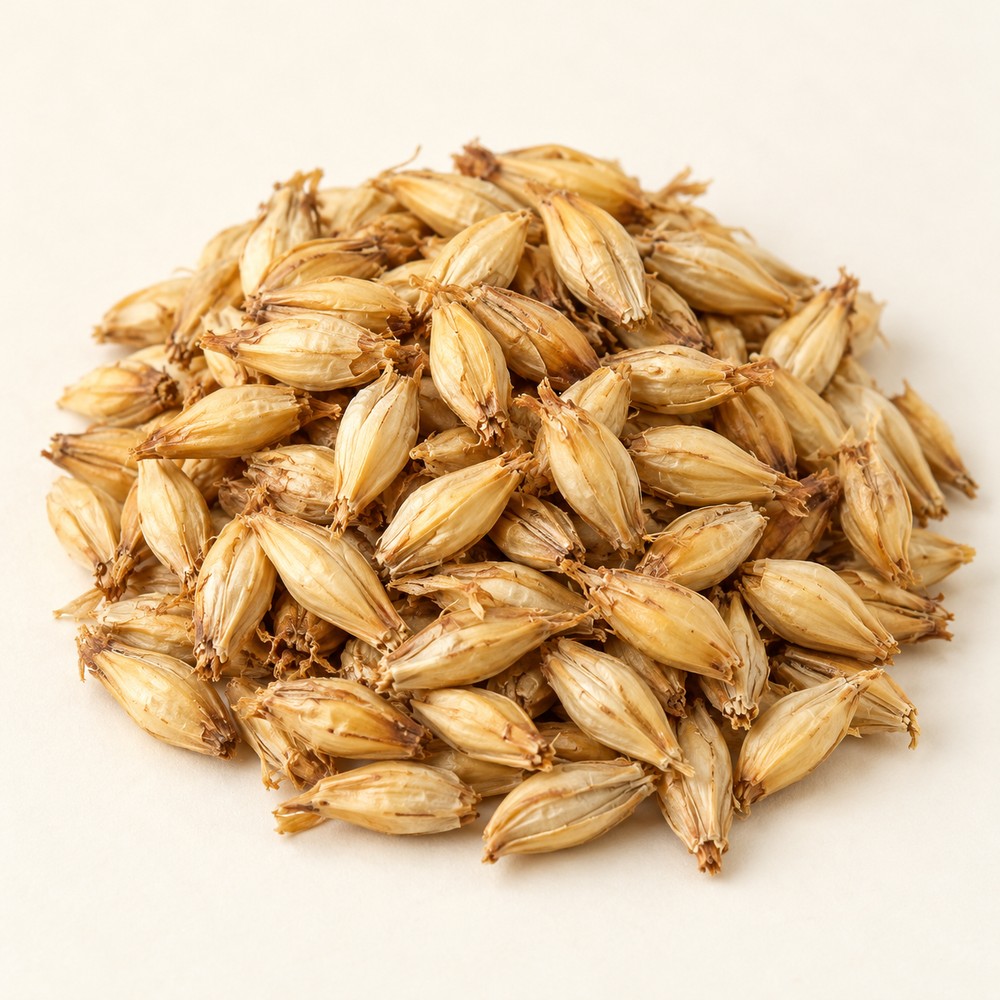
Mai Ya is germinated and dried Hordeum vulgare seed, distinct from whole barley or brewing malt processed differently. HKBU records drying when sprouts reach a few millimeters.
Modern evidence
Food-digesting, stomach-harmonizing, and lactation-regulating are traditional claims. Malt may affect milk supply; seek advice before use for lactation.
Safety
Contains gluten and is unsuitable for celiac disease or barley allergy. Consider pregnancy, breastfeeding, diabetes medicines, and dietary restrictions.
Pairing in reference texts
Mai Ya appears with hawthorn or medicated leaven in digestion formulas. This is not a recommendation for weight loss or weaning.
Growing, care, and harvest timing
HKBU habitat record: Growing on farmlands. Distributed in all parts of China. The medicinal materials are mainly produced in the Yangtze River basin and etc Harvest and processing as recorded: Immersed barley with water, fish out and place on basket, covered it with cattail bag, often watering, taken out and sun-dried when sprout grow 3-5mm long
Source-recorded harvest/processing: Immersed barley with water, fish out and place on basket, covered it with cattail bag, often watering, taken out and sun-dried when sprout grow 3-5mm long
The reviewed source does not provide a complete species-specific sowing/growing routine, irrigation/fertilization schedule, or universal plant age. The page therefore does not infer care instructions or years to harvest; consult local cultivation guidance.
Open habitat and season source ↗FROM PLANT / SOURCE HABITAT TO DRIED MATERIAL · REFERENCE WORKFLOW
- Select food-grade Hordeum vulgare kernels, clean, and soak under hygienic controlled conditions.
- Drain, sprout, and water under a safe germination protocol; HKBU describes stopping at a few millimeters.
- Sun- or machine-dry until sprouts are dry; monitor microbes because moist grain is vulnerable to mold.
- Screen damaged grain, control gluten cross-contact, document lot, and seal dry.
These are post-harvest study notes, not directions to prepare a remedy for self-treatment. Processing reference ↗
How to read formula amounts
The cited sources do not provide a formula with specific amounts for this profile; no ratio is invented. Absence from the incompatibility list does not establish safety.
Habitat, season, and harvest in the HKBU botanical record
HKBU botanical record (translated summary): Flowering and fruiting dates: Flowering: March to April, fruiting: April to May Habitat and distribution: Growing on farmlands. Distributed in all parts of China. The medicinal materials are mainly produced in the Yangtze River basin and etc Harvest and processing as recorded: Immersed barley with water, fish out and place on basket, covered it with cattail bag, often watering, taken out and sun-dried when sprout grow 3-5mm long
Open botanical source ↗