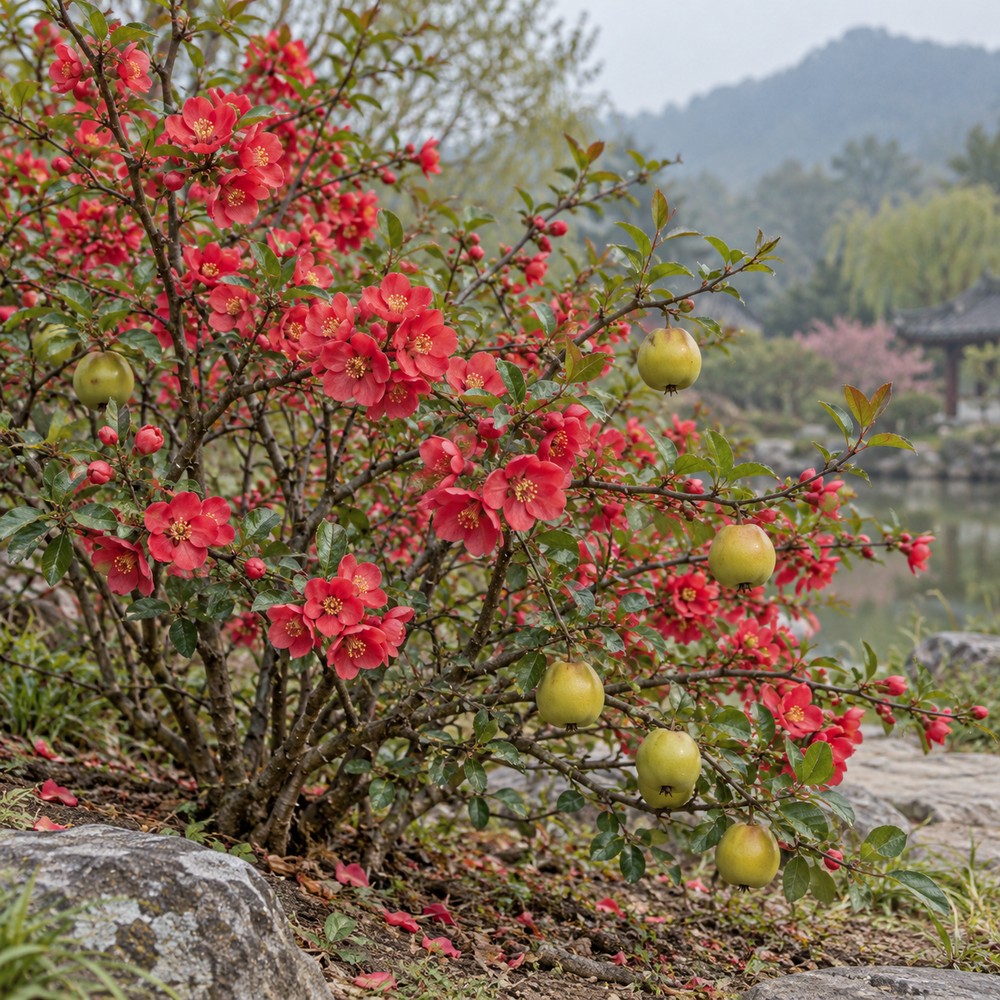
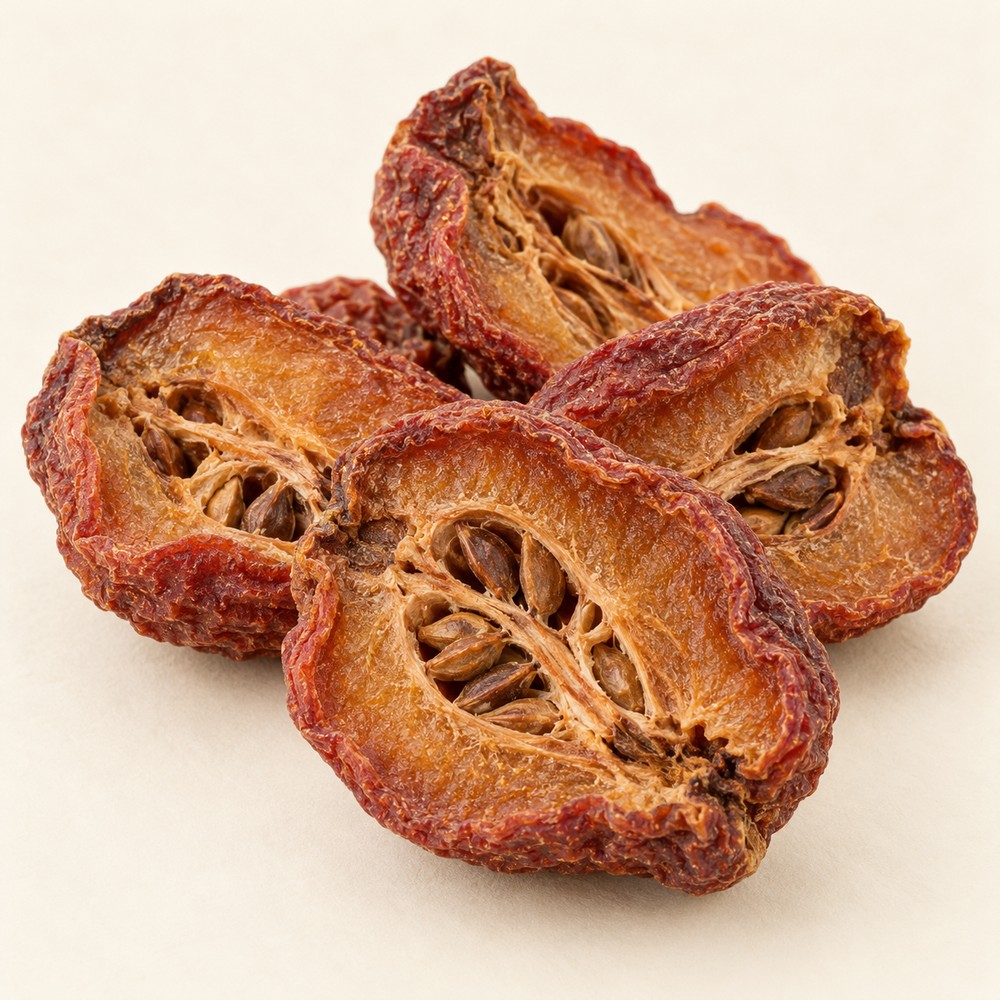
Chinese flowering quince fruit · Mu Gua
Chaenomeles speciosa (Sweet) Nakai · Mature fruit
Name and part used
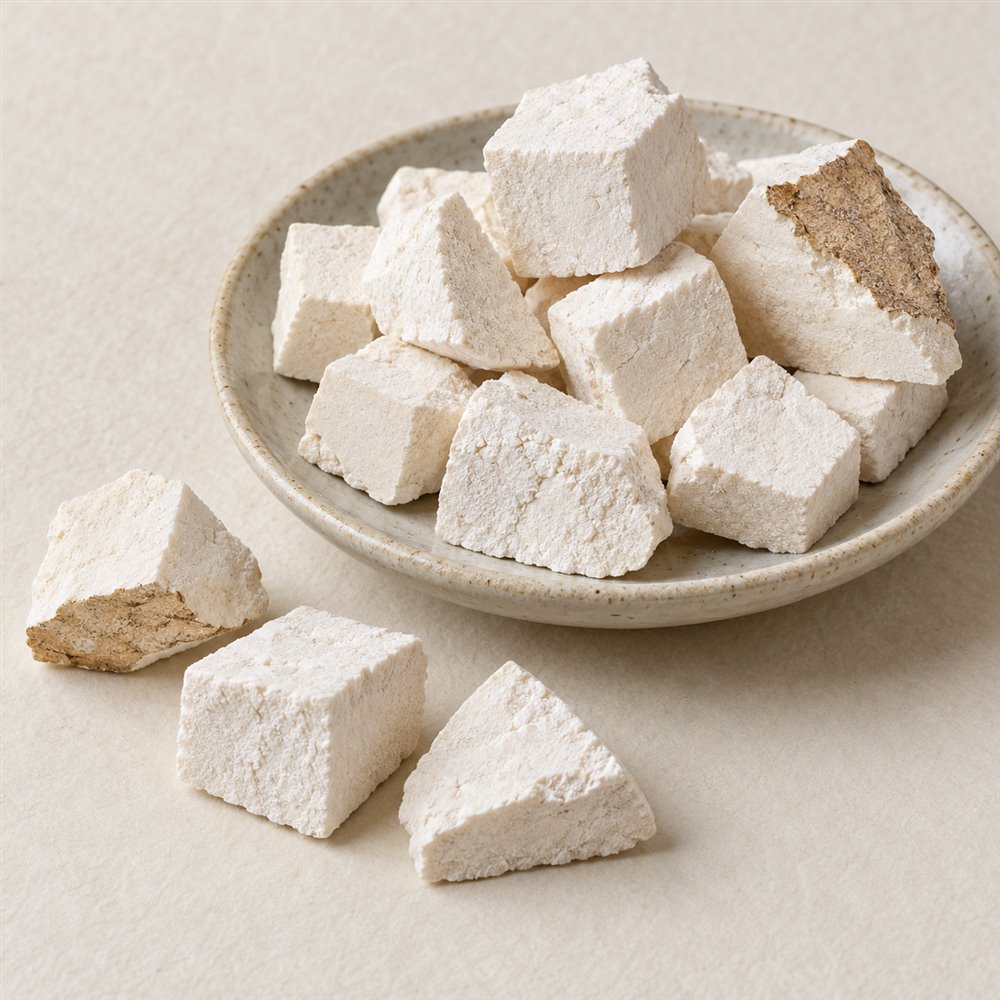
This Rosaceae shrub has stiff branches and pink-red flowers; the medicinal dried fruit is elongated, split, and deeply wrinkled reddish-brown.
Traditional context
Tendon-relaxing, stomach-harmonizing, and dampness-transforming are traditional claims; persistent joint pain or vomiting/diarrhea needs care. HKBU identifies mature dried fruit, commonly split lengthwise; reddish-brown slices contain flat triangular seeds centrally.
Modern evidence
Laboratory polyphenol or antioxidant findings do not prove treatment of rheumatic disease.
Safety
Sour fruit may irritate the stomach; use caution with ulcers/reflux, pregnancy, and medicines. Do not equate it with common papaya.
Pairing in reference texts
Mu Gua occurs in historical formulas for muscle tightness with Niu Xi or Du Zhong; do not self-treat back or knee pain.
Growing, care, and harvest timing
HKBU habitat record: Growing on slopes, forest edges and roadsides. Can be cultivated. Distributed in east, middle and southwest of China and other places. The medicinal materials are mainly produced in Anhui, Sichuan, Hubei and etc Harvest and processing as recorded: Harvested greenish yellow fruits in summer and autumn, scalded until skin grayish white, vertically cut into halves, and dried
Source-recorded harvest/processing: Harvested greenish yellow fruits in summer and autumn, scalded until skin grayish white, vertically cut into halves, and dried
The reviewed source does not provide a complete species-specific sowing/growing routine, irrigation/fertilization schedule, or universal plant age. The page therefore does not infer care instructions or years to harvest; consult local cultivation guidance.
Open habitat and season source ↗FROM PLANT / SOURCE HABITAT TO DRIED MATERIAL · REFERENCE WORKFLOW
- Harvest mature Chaenomeles speciosa from authenticated sources; distinguish it from fresh-eating papaya, Carica papaya.
- Wash, reject damaged fruit, and split lengthwise according to processing specification.
- Dry split fruit until stable, retaining the characteristic wrinkled appearance; prevent scorching and mold.
- Grade thick firm reddish-brown pieces and store dry, protected from insects.
These are post-harvest study notes, not directions to prepare a remedy for self-treatment. Processing reference ↗
How to read formula amounts
Displayed amounts belong to the cited formula and source; they are not a general safe ratio, treatment dose, or home-decoction instruction. Do not transfer amounts to another formula or adjust them by body weight.
Habitat, season, and harvest in the HKBU botanical record
HKBU botanical record (translated summary): Flowering and fruiting dates: Flowering: March to May, fruiting: September to October Habitat and distribution: Growing on slopes, forest edges and roadsides. Can be cultivated. Distributed in east, middle and southwest of China and other places. The medicinal materials are mainly produced in Anhui, Sichuan, Hubei and etc Harvest and processing as recorded: Harvested greenish yellow fruits in summer and autumn, scalded until skin grayish white, vertically cut into halves, and dried
Open botanical source ↗HKBU formula record containing this herb: Shi Pi San / Spleen-Strengthening Powder
Traditional action in the source: Warms yang and fortifies the spleen, moves qi, and promotes urination
Ingredient images and source amounts are shown for comparison only; this is not a treatment recipe.
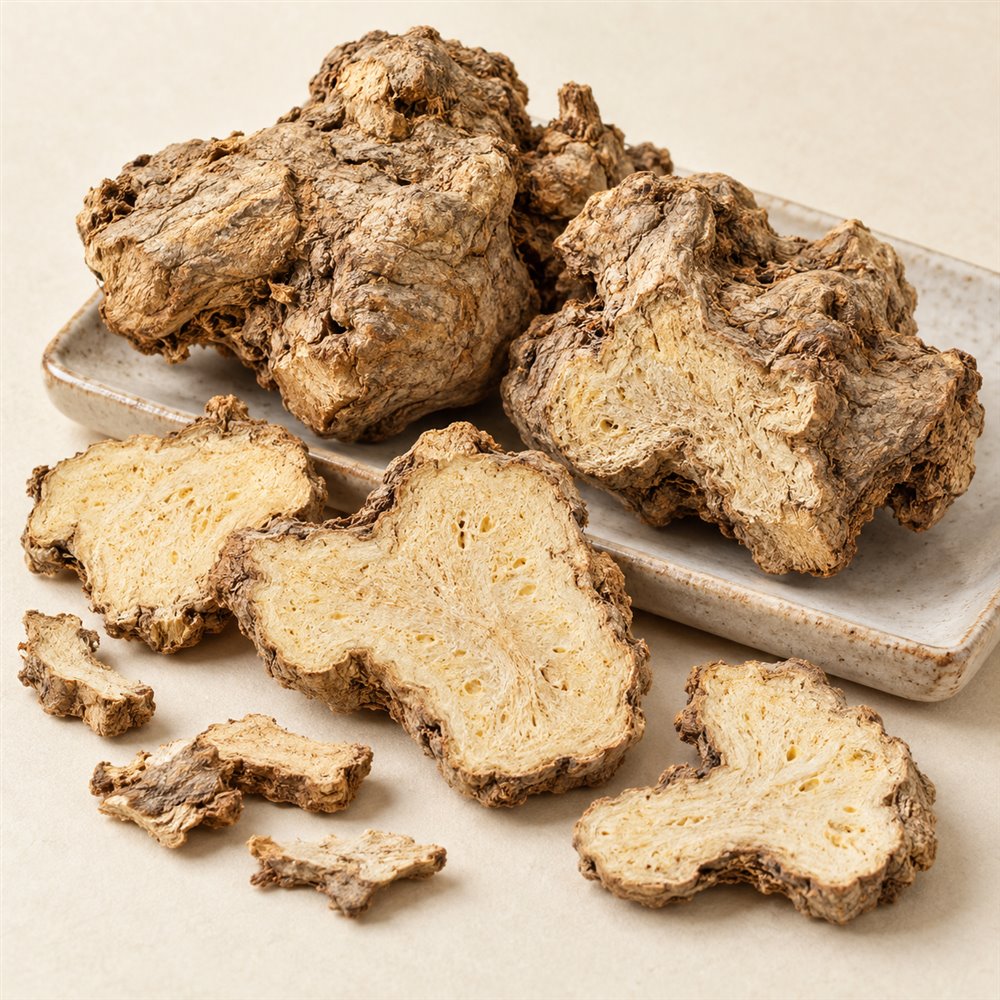
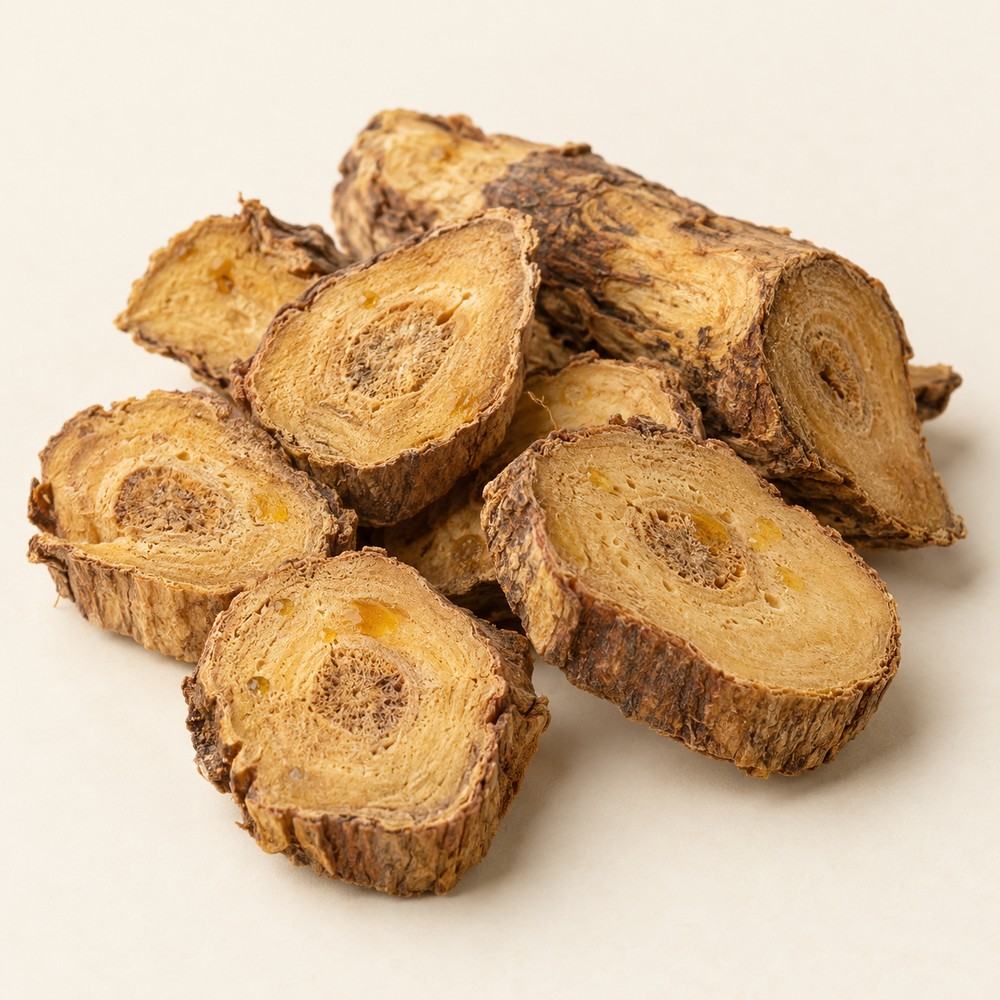
HKBU source-recorded composition
Magnoliae Officinalis Cortex (Hou Po processed with ginger juice) 1 liang (30g), Atractylodis Macrocephalae Rhizoma (Bai Zhu) 1 liang (30g), Chaenomelis Fructus (Mu Gua) 1 liang (30g), Aucklandiae Radix (Mu Xiang) 1 liang (30g), Tsaoko Fructus (Cao Guo) 1 liang (30g), Arecae Semen (Bing Lang) 1 liang (30g), Aconiti Lateralis Radix Praeparata (Fu Zi processed) 1 liang (30g), Poria (Fu Ling) 1 liang (30g), Zingiberis Rhizoma Praeparatum (Gan Jiang processed) 1 liang (30g), Glycyrrhizae Radix et Rhizoma Praeparata cum Melle (Zhi Gan Cao) 0.5 liang (15g)
The ingredients and amounts below are one HKBU-recorded version; texts, historical units, processing, and modern products can differ. This is comparative reference data, not a home-preparation recipe or personal dose.
Open complete HKBU formula record ↗