Great burdock fruit · Niu Bang Zi
Arctium lappa L. · Mature achenes
Name and part used
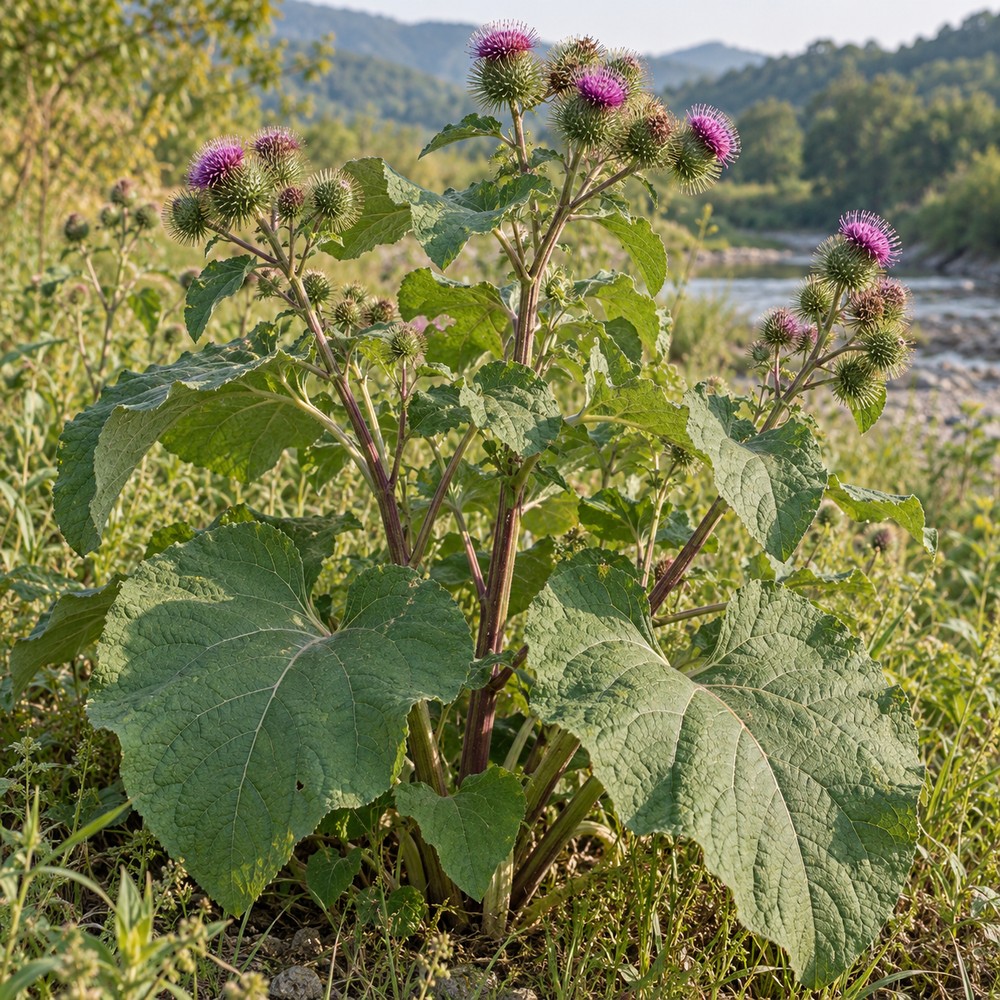
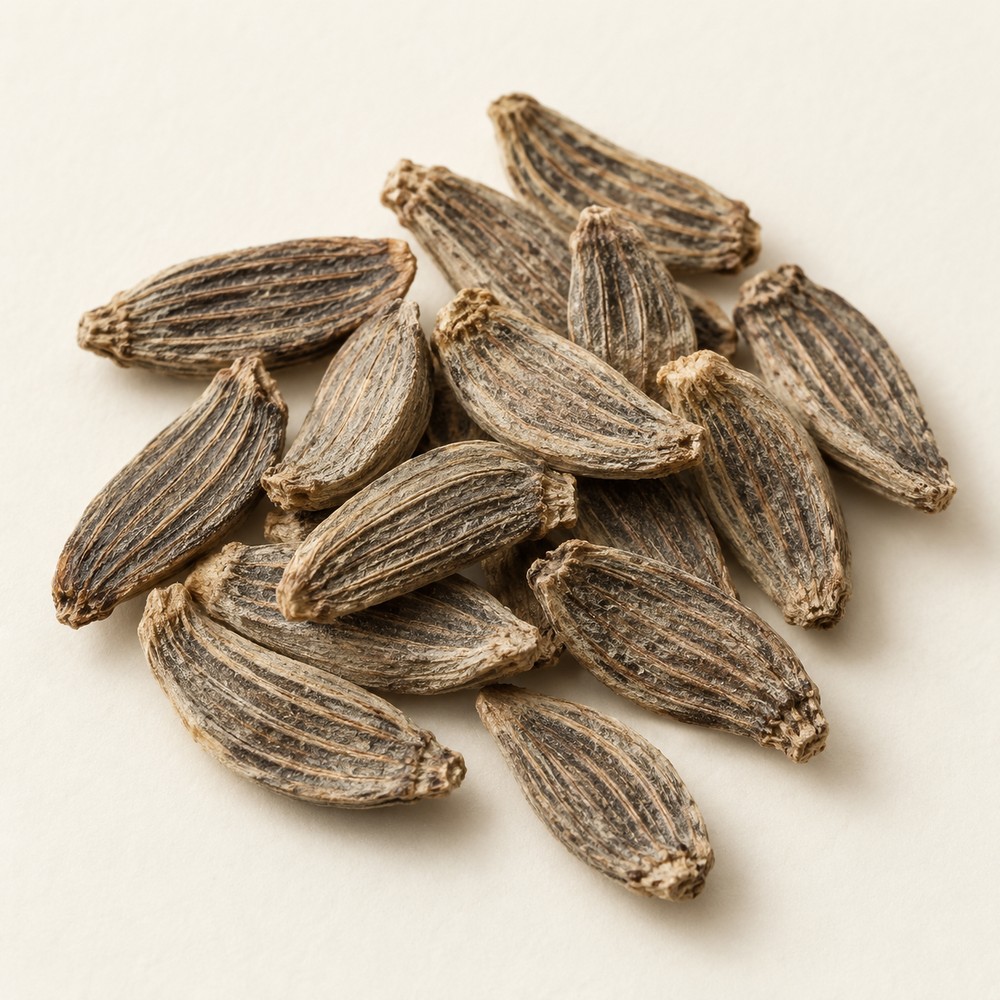
Burdock is tall with broad heart-shaped leaves and purple heads bearing hooked bracts; the drug is a small gray-brown ridged fruit.
Traditional context
Wind-heat dispersing and throat-relieving are traditional descriptions; they do not replace care for severe sore throat, rash, or breathing difficulty. HKBU describes small elongated, slightly flattened, curved gray-brown fruits with dark-purple spots and longitudinal ridges.
Modern evidence
Arctiin and other lignans are studied; constituent data do not prove cancer or infection prevention/treatment.
Safety
Asteraceae allergy is possible; fruit may affect glucose or diuresis. Review diabetes, diuretic, anticoagulant medicines and pregnancy with a professional.
Pairing in reference texts
Niu Bang Zi appears in Yin Qiao San with Lian Qiao, Bo He, Jie Geng, and others; the historical formula is not treatment guidance.
Growing, care, and harvest timing
HKBU habitat record: Growing on ditch sides, roadsides, wastelands, sunny grasslands of mountain slopes and in forest margin. Distributed in Northeast, Northwest and South-central China, Hebei, Shandong, Shanxi, Zhejiang, Jiangsu, Anhui and etc. Always cultivated. Mainly produced in Northeast China, Zhejiang Harvest and processing as recorded: Roots: excavated root grown for more than 2 year in October and sun-dried. Cauline leaf: collected in June to September, sun-dried, or used fresh. Fruit: partial collected when fruits turn taupe from July to August, heaped up for 2-3 days, sundried, threshed, cleaned and completely dried
Source-recorded harvest/processing: Roots: excavated root grown for more than 2 year in October and sun-dried. Cauline leaf: collected in June to September, sun-dried, or used fresh. Fruit: partial collected when fruits turn taupe from July to August, heaped up for 2-3 days, sundried, threshed, cleaned and completely dried
The reviewed source does not provide a complete species-specific sowing/growing routine, irrigation/fertilization schedule, or universal plant age. The page therefore does not infer care instructions or years to harvest; consult local cultivation guidance.
Open habitat and season source ↗FROM PLANT / SOURCE HABITAT TO DRIED MATERIAL · REFERENCE WORKFLOW
- Cultivate/authenticate Arctium lappa; it has very large heart-shaped basal leaves and purple heads that form hooked fruits.
- Partly collect fruits as they turn taupe in summer; HKBU records heaping them for 2–3 days for maturation.
- Sun-dry, thresh and clean the fruits, then dry completely while controlling prickly debris.
- Remove empty, moldy, or mixed fruits; store sealed and dry away from insects.
These are post-harvest study notes, not directions to prepare a remedy for self-treatment. Processing reference ↗
How to read formula amounts
Displayed amounts belong to the cited formula and source; they are not a general safe ratio, treatment dose, or home-decoction instruction. Do not transfer amounts to another formula or adjust them by body weight.
Habitat, season, and harvest in the HKBU botanical record
HKBU botanical record (translated summary): Flowering and fruiting dates: Flowering June to August, fruiting: August to October Habitat and distribution: Growing on ditch sides, roadsides, wastelands, sunny grasslands of mountain slopes and in forest margin. Distributed in Northeast, Northwest and South-central China, Hebei, Shandong, Shanxi, Zhejiang, Jiangsu, Anhui and etc. Always cultivated. Mainly produced in Northeast China, Zhejiang Harvest and processing as recorded: Roots: excavated root grown for more than 2 year in October and sun-dried. Cauline leaf: collected in June to September, sun-dried, or used fresh. Fruit: partial collected when fruits turn taupe from July to August, heaped up for 2-3 days, sundried, threshed, cleaned and completely dried
Open botanical source ↗HKBU formula record containing this herb: Yin Qiao San / Lonicera and Forsythia Powder
Traditional action in the source: Vents the exterior with acrid-cool, clears heat, and resolves toxin
Ingredient images and source amounts are shown for comparison only; this is not a treatment recipe.
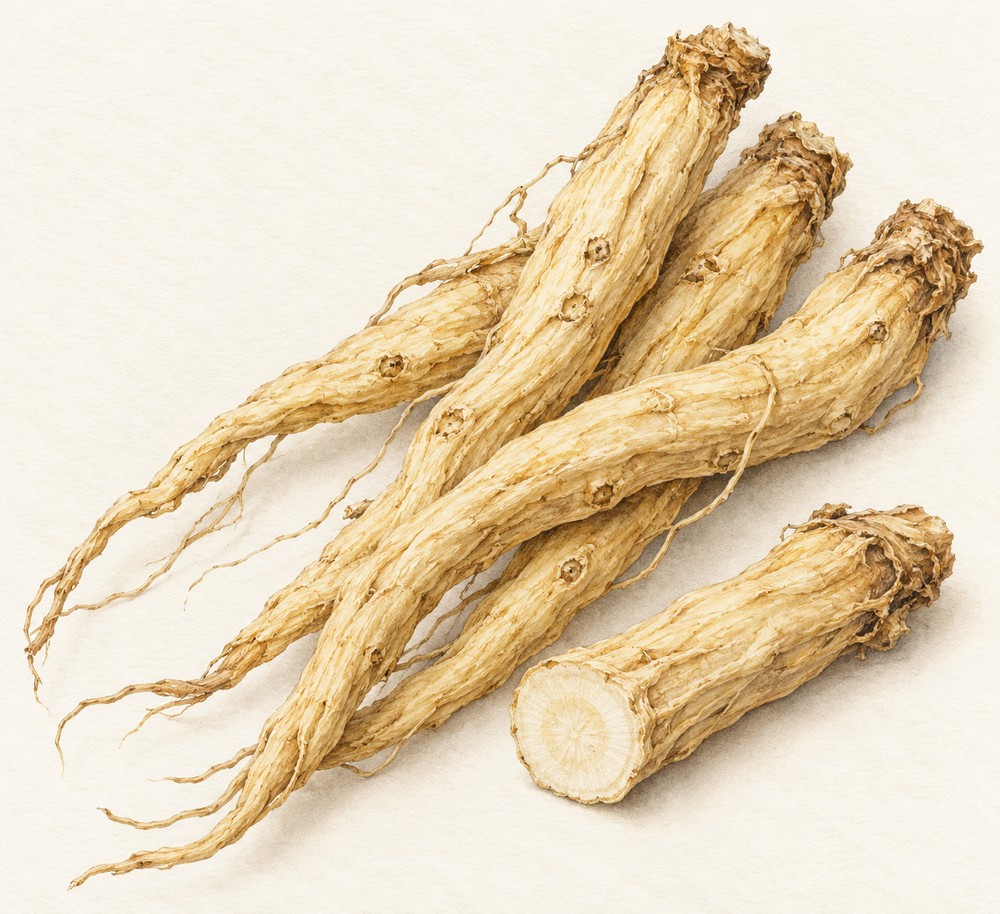
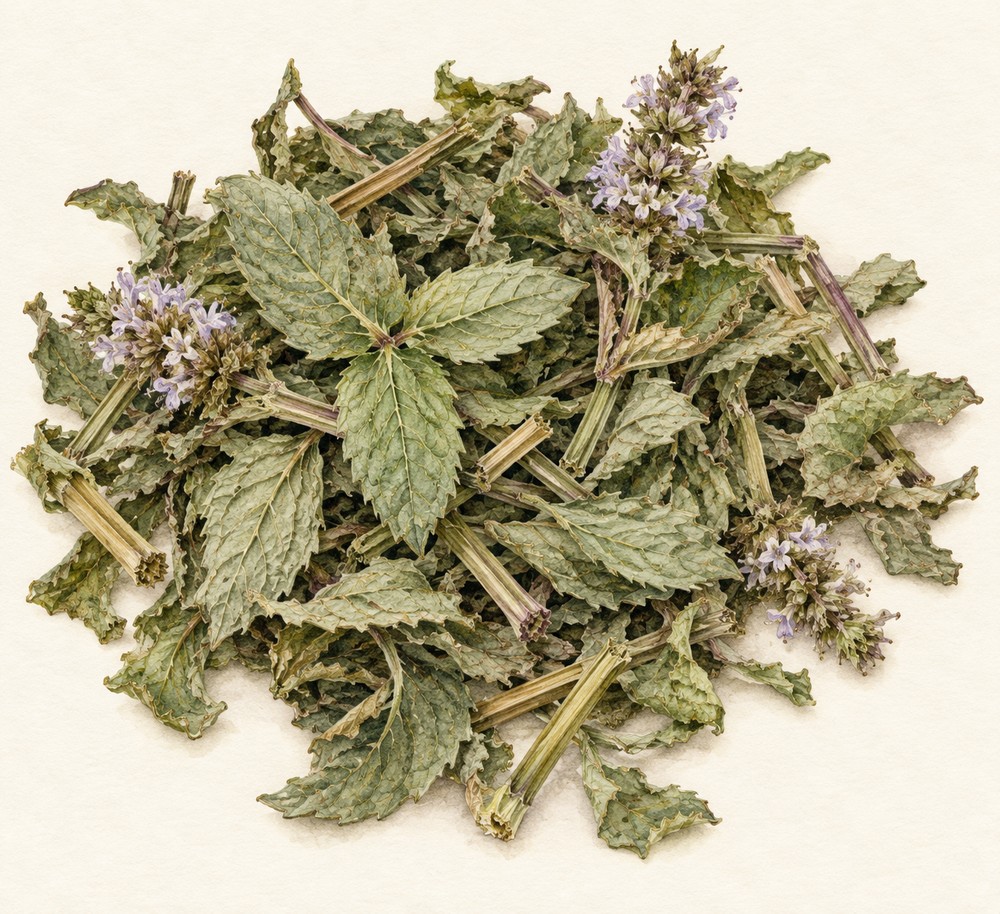
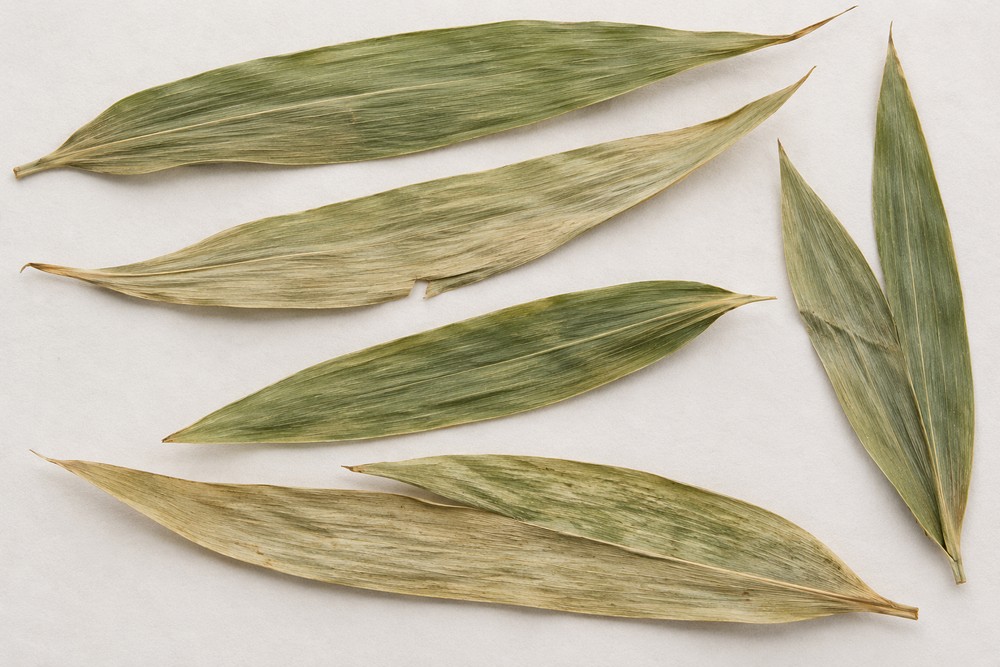
HKBU source-recorded composition
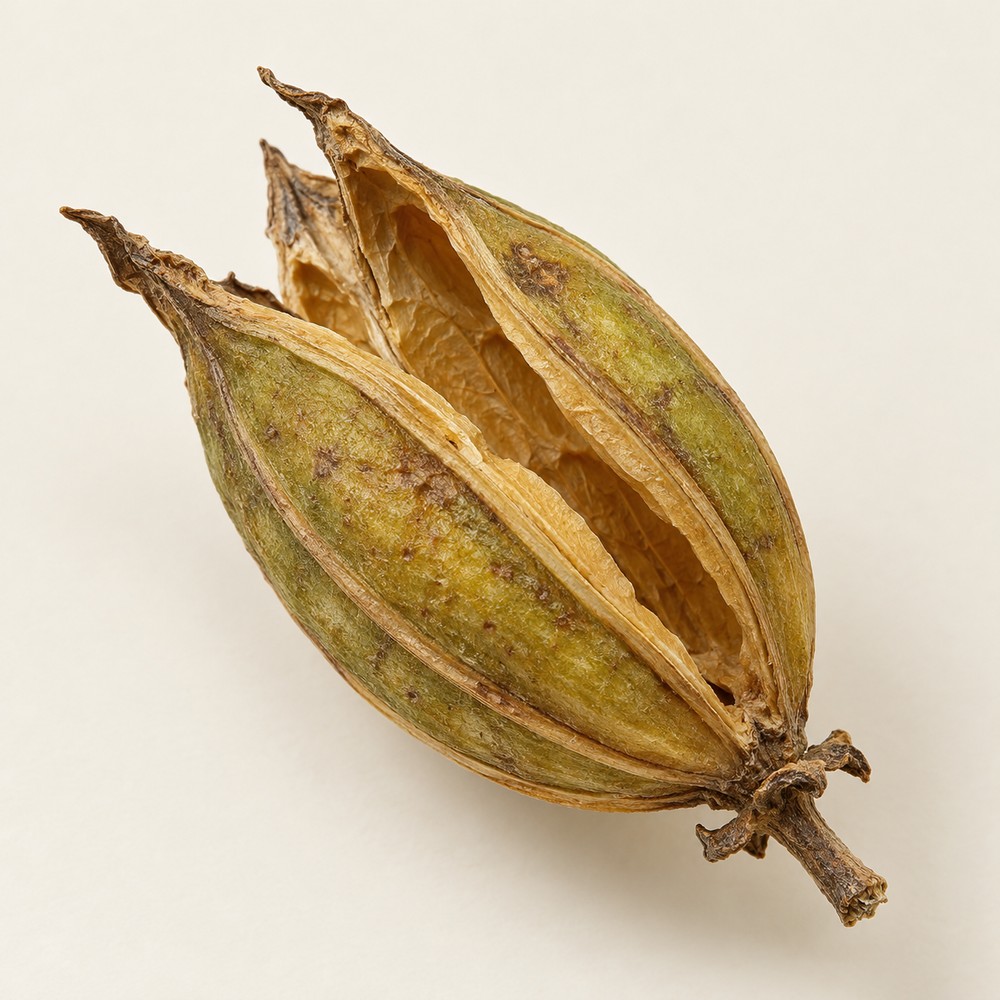
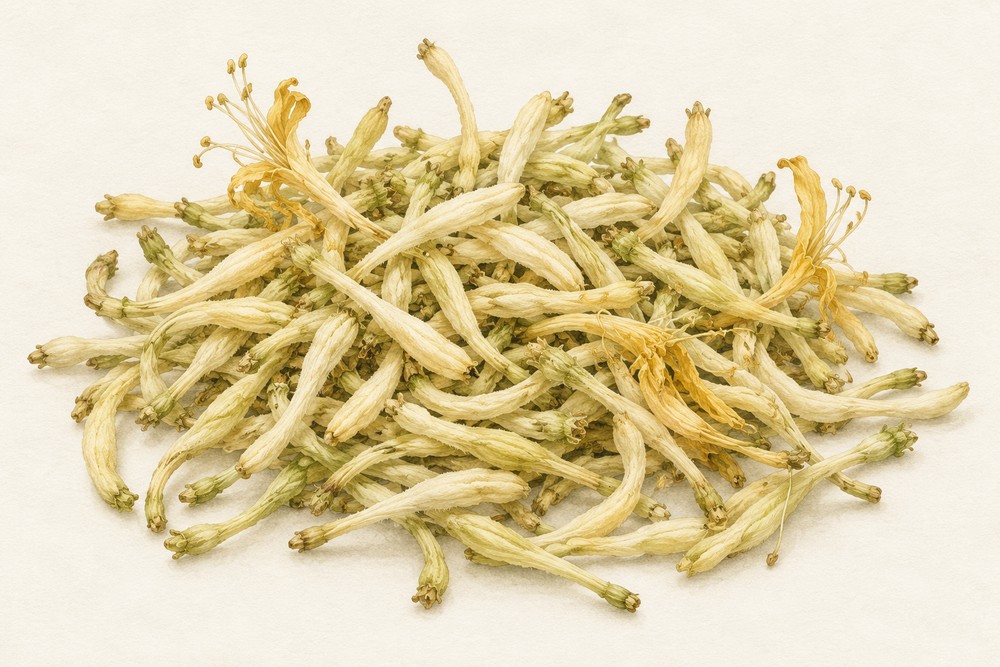
Forsythiae Fructus (Lian Qiao) 1 liang (30g), Lonicerae Japonicae Flos (Jin Yin Hua) 1 liang (30g), Platycodonis Radix (Jie Geng) 6 qian (18g), Menthae Haplocalycis Herba (Bo He) 6 qian (18g), Lophatheri Herba (Zhu Ye) 4 qian (12g), Glycyrrhizae Radix et Rhizoma (Sheng Gan Cao) 5 qian (15g), Schizonepetae Spica (Jing Jie Sui) 4 qian (12g), Sojae Semen Praeparatum (Dan Dou Chi) 5 qian (15g), Arctii Fructus (Niu Bang Zi) 6 qian (18g)
The ingredients and amounts below are one HKBU-recorded version; texts, historical units, processing, and modern products can differ. This is comparative reference data, not a home-preparation recipe or personal dose.
Open complete HKBU formula record ↗