Pang Da Hai · boat-fruited sterculia seed · Pang Da Hai
Sterculia lychnophora Hance · Dried mature seed
Name and part used
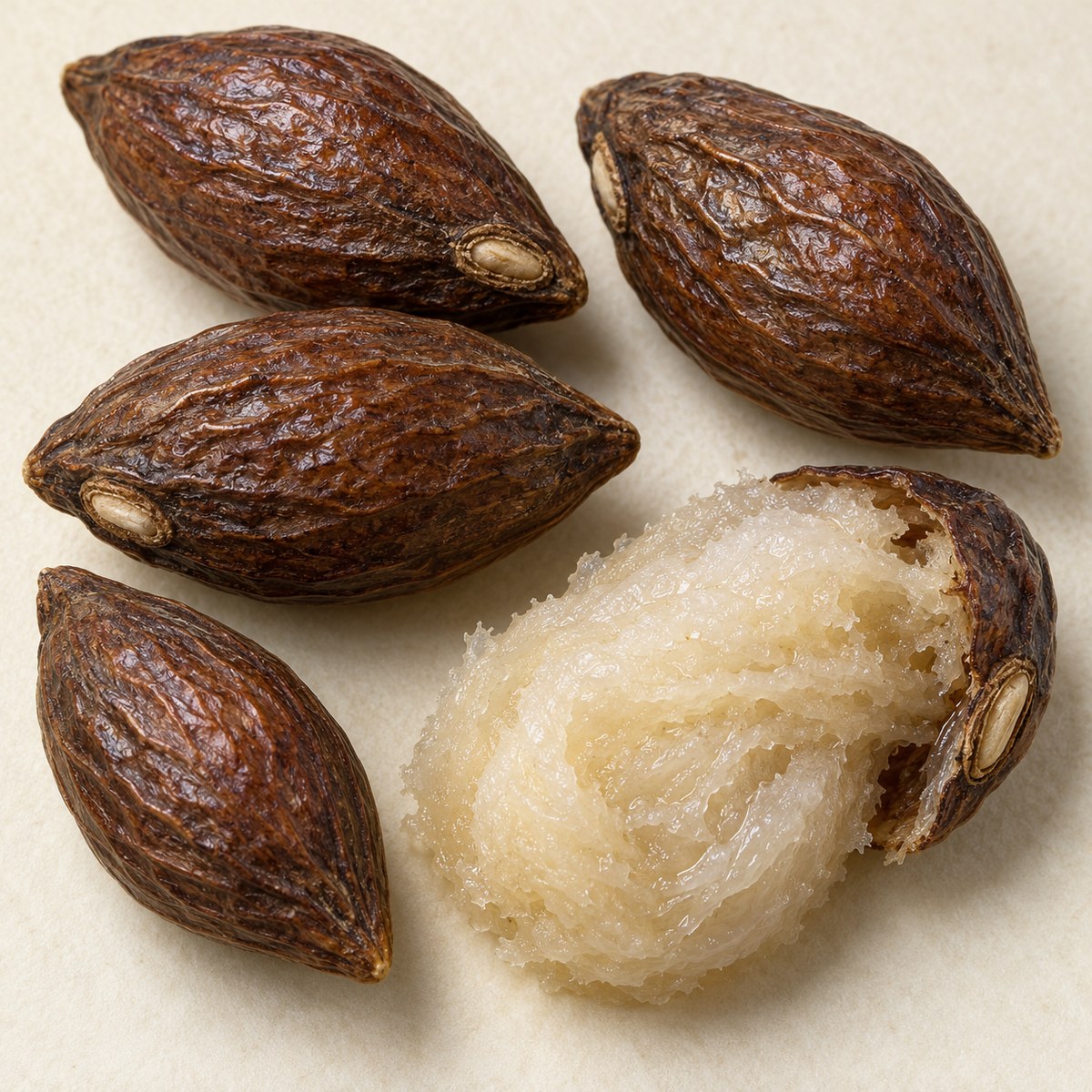
Pang Da Hai is the dried mature seed of Sterculia lychnophora, a tropical Malvaceae tree; its boat-shaped follicles bear brown fusiform seeds. Dried seeds are around 2–3 cm long with wrinkled coats; soaking swells the middle coat into a spongy mass. HKBU lists Vietnam, Thailand, Indonesia, and Malaysia as major production regions. Swelling in water is a recognition feature, not evidence of treatment.
Traditional context
HKBU records a sweet, slightly cold nature and traditional actions of clearing heat, moistening the lung, benefiting the throat, and moistening the bowels. This does not establish treatment for hoarseness, sore throat, constipation, or eye disease.
Modern evidence
Pharmacology reviews describe constituents and extract effects in preclinical work, but this does not show that the dried seed treats human hoarseness or sore throat. A systematic safety review reports hematuria and gastrointestinal symptoms after Pang Da Hai ingestion; the mechanism is unclear. One report described recurrence on rechallenge, so the seed should not be presumed harmless because it is often brewed as tea.
Safety
Do not use repeatedly or for prolonged periods. Reports include hematuria, abdominal pain, nausea/vomiting, and allergic reactions; accidental ingestion of multiple seeds can be serious in children. Stop and seek urgent care for blood in urine, breathing difficulty, lip swelling, repeated vomiting, or severe abdominal pain. Kidney disease, low blood pressure, digestive disorders, pregnancy/breastfeeding, or medicines warrant professional advice.
Safety reference ↗Pairing in reference texts
Reviewed sources do not establish a specific toxic pair for Pang Da Hai. Some traditional records pair it with licorice, but co-use does not remove adverse reports for the seed or prove safety/benefit. No universal combination ratio is established. Do not self-combine with laxatives or blood-pressure medicines, and do not give it to young children without professional guidance.
Identification and study notes
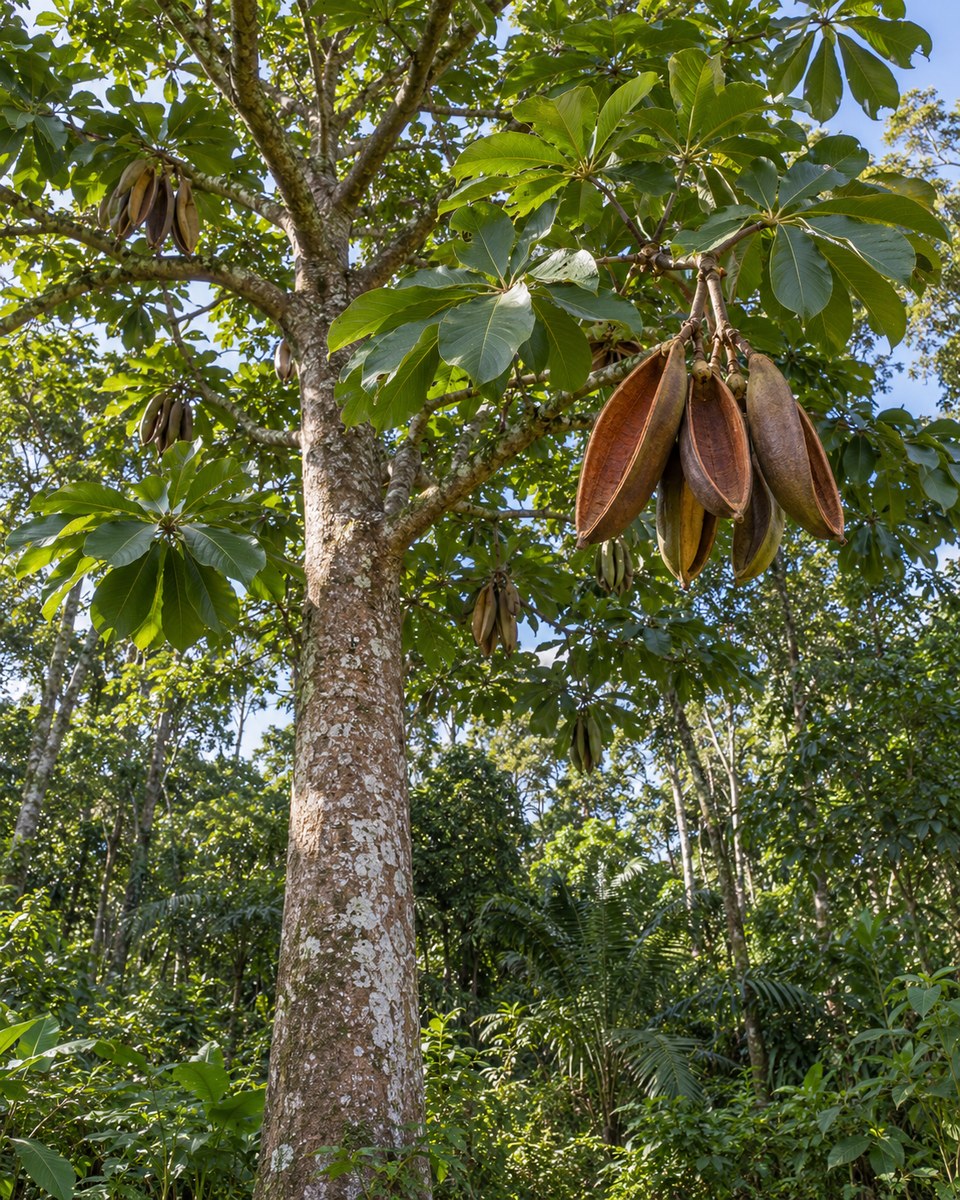
Sterculia lychnophora is a tall tropical tree with large alternate simple leaves, often shallowly lobed; long boat-shaped follicles hang in clusters. Seeds inside are brown, fusiform/oval, 2–3 cm long, slightly pointed at one end with a pale hilum. The dry coat is wrinkled, with a thin outer layer that may peel and a thick dark-brown middle layer; soaking expands the middle coat into a sponge-like mass. A cut surface may show resin-like spots and internal seed tissue. AI images illustrate dry and soaked appearances but cannot detect contamination, spoilage, or a wrong species. Do not confuse it with similarly sized tropical seeds.
Growth and habitat
Sterculia lychnophora is a tropical deciduous tree that may reach around 40 m, occurring in Southeast Asia including Vietnam, Thailand, Malaysia, and Indonesia. It needs warm conditions, a long growing season, and deep drained soil; commercial seed mainly comes from these tropical regions. It is not suitable for outdoor cultivation in every temperate climate; an AI image of a mature tree does not verify seed provenance.
Identification and study notes
Sterculia lychnophora is a tall tropical tree with large alternate simple leaves, often shallowly lobed; long boat-shaped follicles hang in clusters. Seeds inside are brown, fusiform/oval, 2–3 cm long, slightly pointed at one end with a pale hilum. The dry coat is wrinkled, with a thin outer layer that may peel and a thick dark-brown middle layer; soaking expands the middle coat into a sponge-like mass. A cut surface may show resin-like spots and internal seed tissue. AI images illustrate dry and soaked appearances but cannot detect contamination, spoilage, or a wrong species. Do not confuse it with similarly sized tropical seeds.
Growing and care
- Trồng nơi khí hậu ấm, nhiều sáng, đất sâu thoát nước và có khoảng trống lớn cho cây gỗ; bảo vệ cây non khỏi lạnh kéo dài.
- Plant in a warm, bright climate with deep, well-drained soil and ample room for a large tree; protect young plants from prolonged cold.
How long until harvest? A long-lived tropical tree; HKBU gives no years from sowing to seed harvest. A plant record places mature-seed collection from splitting fruits around April–June in its production region. This is a regional season, not a promise for trees elsewhere.
Documented toxic incompatibility
Reviewed sources do not establish a specific toxic pair; reported concerns involve Pang Da Hai seed itself. Do not assume licorice pairing or longer soaking removes risk. No safe combination ratio is established.
AI study illustrations; not for specimen identification.
FROM PLANT / SOURCE HABITAT TO DRIED MATERIAL · REFERENCE WORKFLOW
- Collect mature seed from splitting fruits during the source-region harvest season; do not climb or harvest wild trees without training and permission.
- Separate seed from fruit, discard moldy/damaged seed and debris, and segregate lots. HKBU records Southeast Asian production; verify import provenance and species.
- Sun-dry or dry appropriately after harvest, controlling moisture and mold; the seed may swell in water, but swelling is not a dose test.
- Seal and keep away from children; adverse reports include hematuria and digestive symptoms, so processing does not make the seed safe for self-use.
These are post-harvest study notes, not directions to prepare a remedy for self-treatment. Processing reference ↗
Material source, dried appearance, and processing forms (HKBU)
HKBU identifies Semen Sterculiae Lychnophorae as dried mature Sterculia lychnophora Hance seed (Malvaceae), with Vietnam, Thailand, Indonesia, and Malaysia as major production regions. Seeds are fusiform/oval, 2–3 cm long and 1–1.5 cm wide, brown to dark brown with irregular wrinkles; the thick black-brown middle coat swells spongily in water. Odor is faint, taste mild and sticky when chewed. This supports morphology study, not safety authentication; hematuria and digestive reactions have been reported after ingestion.
Open original materia medica record ↗Habitat, season, and harvest in the HKBU botanical record
HKBU records Sterculia lychnophora as a tropical tree in Vietnam, India, Malaysia, Thailand, and Indonesia; mature seed is collected from splitting fruits around April–June in source regions and dried. The tree may grow tens of meters tall; the source does not provide a home-cultivation duration to harvest.
Open botanical source ↗