Sang Bai Pi · Sang Bai Pi
Morus alba L. · Dried root bark
Name and part used
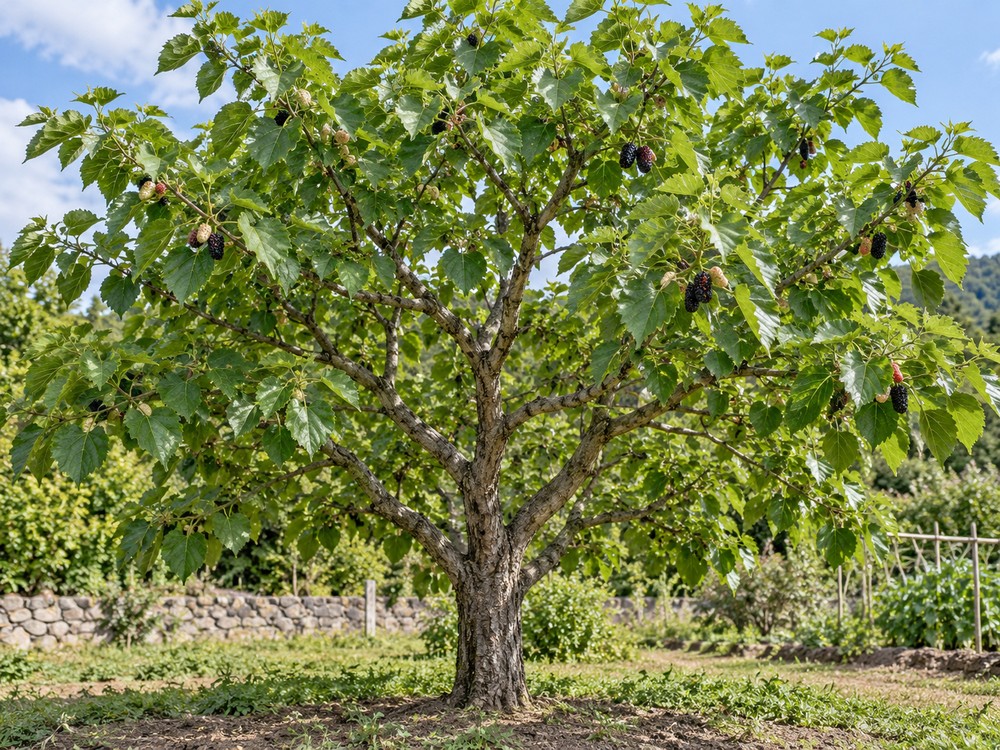
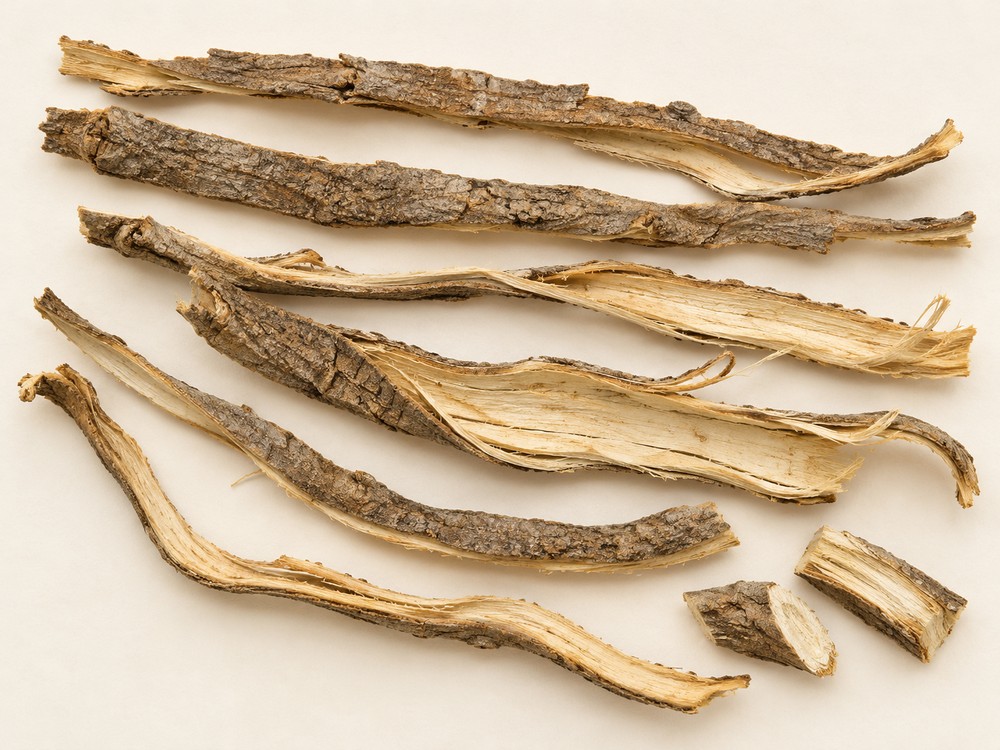
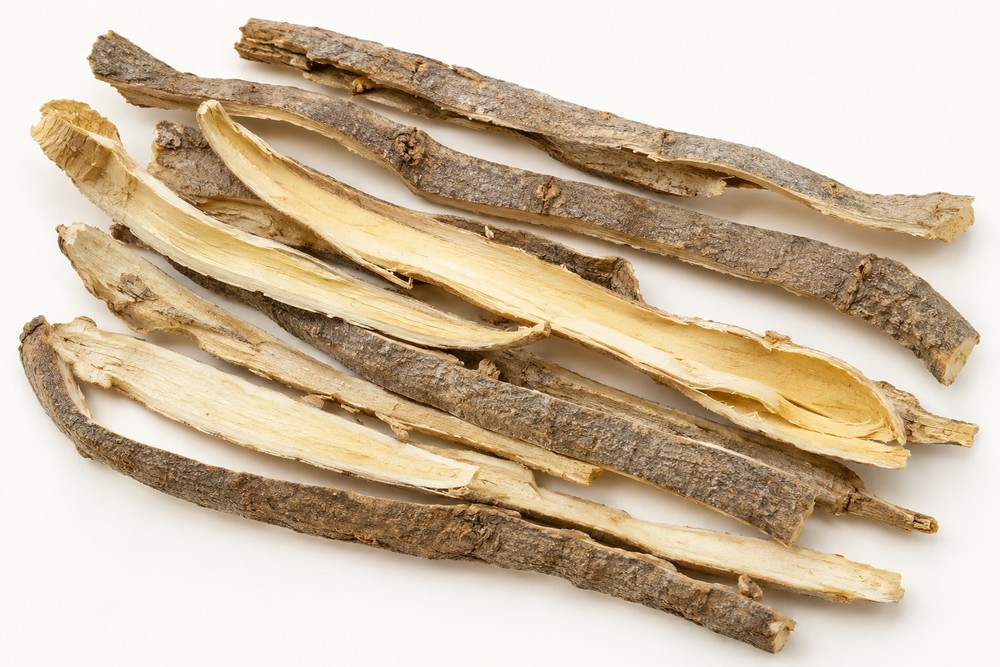
Sang Bai Pi is dried root bark of white mulberry (Morus alba), not stem bark, leaf, or fruit. The small-to-medium tree has alternate heart-shaped toothed leaves and compound berries. Dried root bark forms long strips with rolled edges, gray-yellow/pale outer surface, light longitudinal fibers, and powder on tearing. Stripping living roots can injure or kill the tree; do not forage.
Traditional context
Classical sources describe it as sweet and cold in traditional theory for lung heat, wheezing, and fluid retention. This does not prove treatment of asthma, edema, chronic cough, or heart/kidney disease; acute breathlessness needs care.
Modern evidence
HKBU identifies Morus alba root bark, describes quality and honey-processing, and records Xie Bai San. Historical records are not clinical trials; studies of other mulberry parts/extracts do not establish root-bark efficacy.
Safety
Part confusion, allergy, contamination, or possible diuretic/blood-pressure effects matter. Pregnancy, dehydration, kidney disease, low blood pressure, or prescription drugs warrant professional review. Use traceable batches under supervision.
Pairing in reference texts
HKBU records dry-fried Sang Bai Pi 30 g, Di Gu Pi 30 g, and honey-prepared licorice 3 g in Xie Bai San, a 10:10:1 weight ratio in that historical record. It is not personal dosing or self-treatment for cough/asthma; the source cautions against certain cough patterns. No specific toxic single pair is confirmed.
Growth and habitat
White mulberry is cultivated from temperate to subtropical regions in drained soil and sun/partial shade; HKBU records material from Zhejiang, Jiangsu, Anhui, Hunan, and Sichuan.
Growing, care, and harvest timing
The profile above includes sourced steps and a documented harvest window. Harvest timing is agronomic information, not a self-use instruction.
Growing and care
- C
- h
- ọ
- n
- đ
- ấ
- t
- s
- â
- u
- t
- h
- o
- á
- t
- n
- ư
- ớ
- c
- ,
- n
- ắ
- n
- g
- đ
- ế
- n
- b
- á
- n
- p
- h
- ầ
- n
- ;
- c
- â
- y
- n
- o
- n
- c
- ầ
- n
- ẩ
- m
- ổ
- n
- đ
- ị
- n
- h
- .
How long until harvest? Mulberry is a perennial tree; sources verify the used part but give no universal root-bark age. No safe household harvest time is established.
Documented formula pairing: Xie Bai San
HKBU records traditional lung-heat actions in a pattern-diagnosed formula; it does not replace asthma medicines or emergency care.
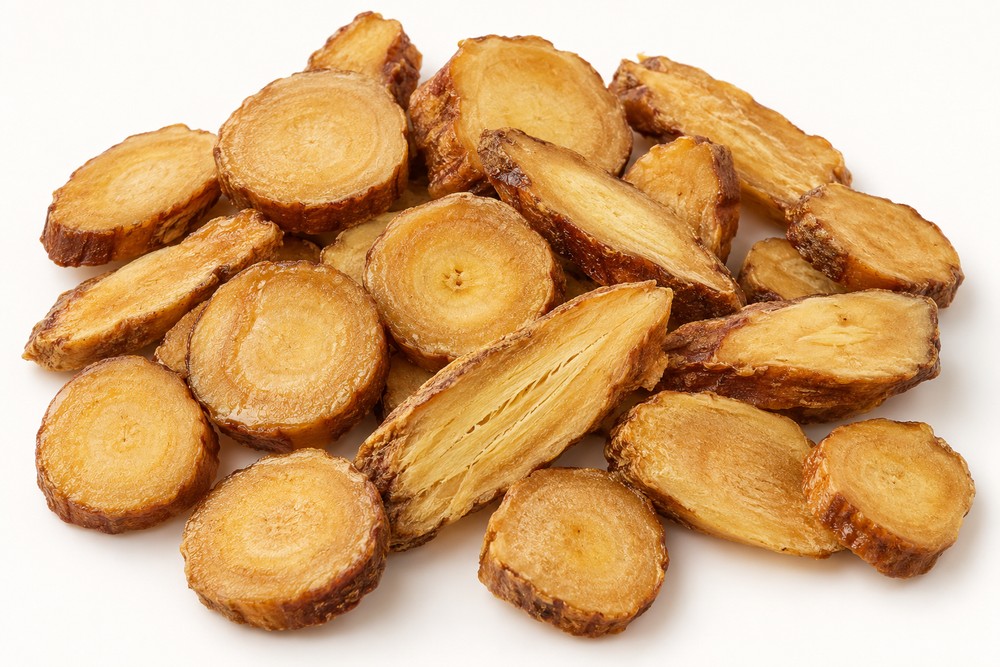
Source-recorded amounts: 30:30:3 g for Sang Bai Pi:Di Gu Pi:honey-prepared licorice, a 10:10:1 ratio in the historical record, not a dose recommendation.
Caution: Do not self-decoct or replace asthma treatment; breathlessness needs medical care.
Open formula record ↗Documented toxic incompatibility
Reviewed sources do not confirm a specific toxic herb pair; that does not prove all combinations safe. Identity, processing, medicines, and conditions still need professional review.
FROM PLANT / SOURCE HABITAT TO DRIED MATERIAL · REFERENCE WORKFLOW
- Root bark is the medicinal part; harvest only from verified source stock under professional controls, never strip living roots at home.
- Remove soil and decayed material; clean according to facility procedure without damaging the bark strips.
- Cut to the monograph; honey-processing belongs in qualified facilities with controlled source ratios.
- Dry, inspect moisture/mold, and package sealed with traceability.
These are post-harvest study notes, not directions to prepare a remedy for self-treatment. Processing reference ↗
How to read formula amounts
Displayed amounts belong to the cited formula and source; they are not a general safe ratio, treatment dose, or home-decoction instruction. Do not transfer amounts to another formula or adjust them by body weight.