Notoginseng · San Qi
Panax notoginseng (Burkill) F.H.Chen · Root and rhizome
Name and part used
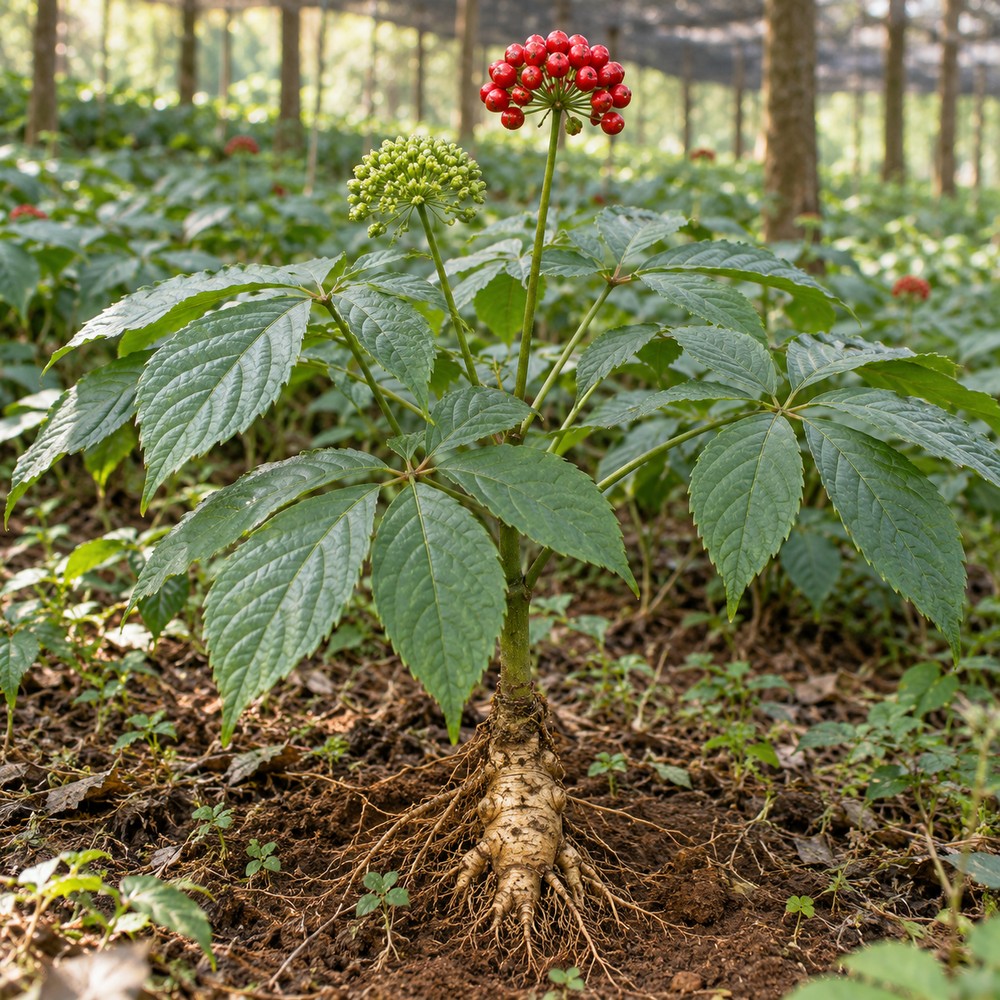
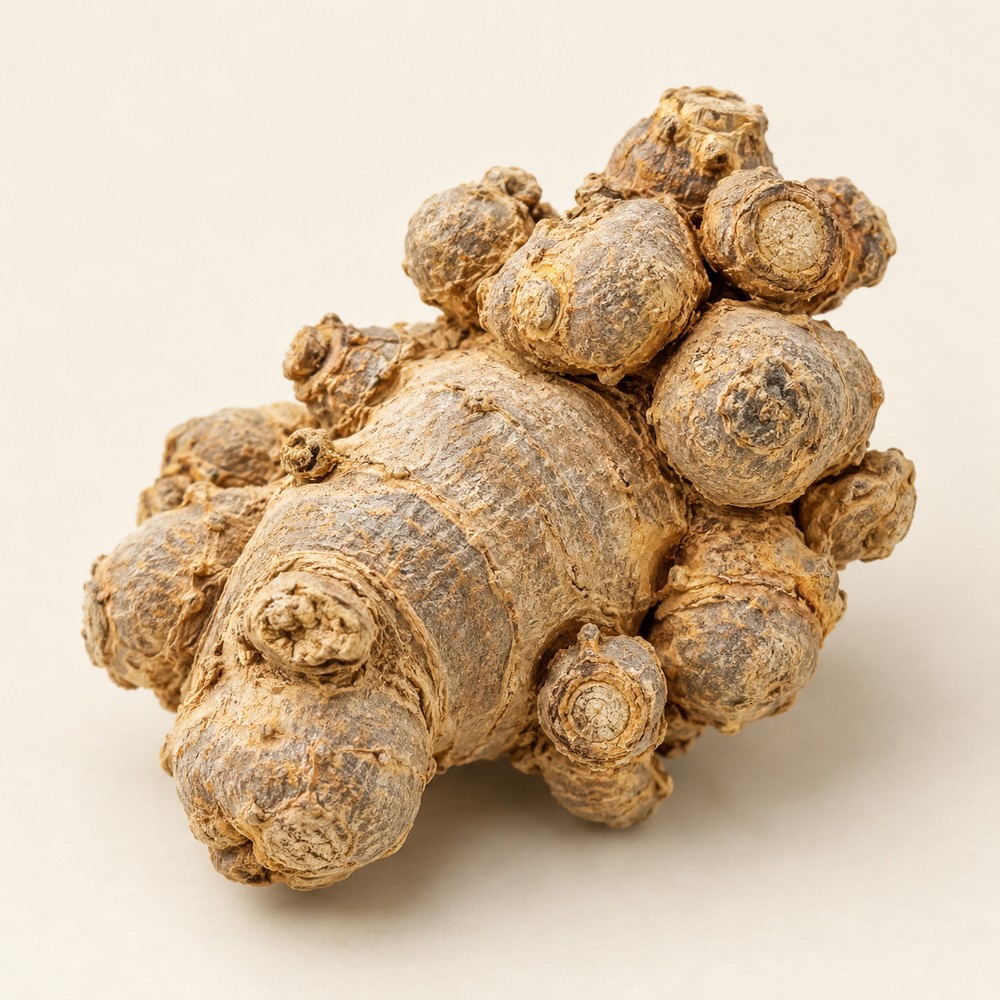
A perennial herb with palmately compound leaves, an umbel, and red berries; its tuberous root is short, heavy, and firm. Do not confuse it with Panax ginseng.
Traditional context
HKBU records dried root and rhizome of Panax notoginseng, mainly from Yunnan and Guangxi. Roots have a stem scar, lateral root marks, and gray-green to yellow-green fracture.
Modern evidence
Hemostatic, stasis-dispersing, and swelling/pain-relieving are traditional claims. Saponin and biological studies do not establish clinical benefit for each indication.
Safety
May affect coagulation and interact with warfarin, anticoagulants/antiplatelets, glucose-lowering or blood-pressure drugs. Avoid self-use in pregnancy, before surgery, or with active bleeding; tell a clinician.
Pairing in reference texts
San Qi occurs in traditional formulas for bleeding or stasis, but these are not emergency hemostatic treatments. Severe bleeding requires emergency care.
Growing, care, and harvest timing
HKBU habitat record: Growing under hillside trees. Can be cultivated. Distributed in Hubei, Jiangxi, Sichuan, Yunnan or Guangxi and etc. The medicinal materials are mainly produced in Yunnan, Guangxi and etc Harvest and processing as recorded: Excavated before blossom in autumn, washed, separated taproots, rootlets and stem base and dried
Source-recorded harvest/processing: Excavated before blossom in autumn, washed, separated taproots, rootlets and stem base and dried
The reviewed source does not provide a complete species-specific sowing/growing routine, irrigation/fertilization schedule, or universal plant age. The page therefore does not infer care instructions or years to harvest; consult local cultivation guidance.
Open habitat and season source ↗FROM PLANT / SOURCE HABITAT TO DRIED MATERIAL · REFERENCE WORKFLOW
- Cultivate authenticated Panax notoginseng in suitable regions, maintain source records, and distinguish it from P. ginseng.
- HKBU reports digging roots before flowering in autumn; wash and separate taproots, rootlets, and stem bases.
- Dry separated materials under moisture control; do not taste or grind samples as an identification method.
- Grade intact heavy, firm roots; test identity, contaminants, residues, and microbes, then moisture-proof package.
These are post-harvest study notes, not directions to prepare a remedy for self-treatment. Processing reference ↗
How to read formula amounts
The cited sources do not provide a formula with specific amounts for this profile; no ratio is invented. Absence from the incompatibility list does not establish safety.
Habitat, season, and harvest in the HKBU botanical record
HKBU botanical record (translated summary): Flowering and fruiting dates: Flowering: June to August, fruiting: August to October Habitat and distribution: Growing under hillside trees. Can be cultivated. Distributed in Hubei, Jiangxi, Sichuan, Yunnan or Guangxi and etc. The medicinal materials are mainly produced in Yunnan, Guangxi and etc Harvest and processing as recorded: Excavated before blossom in autumn, washed, separated taproots, rootlets and stem base and dried
Open botanical source ↗