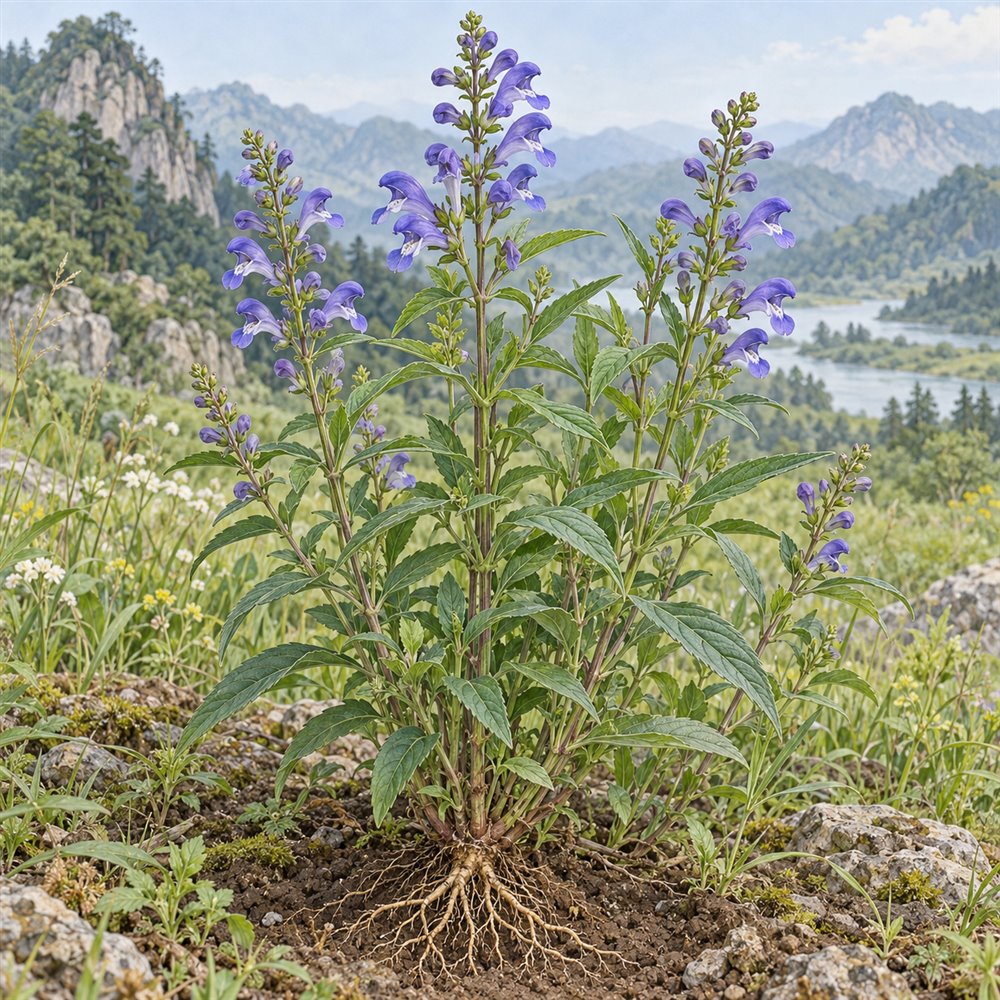
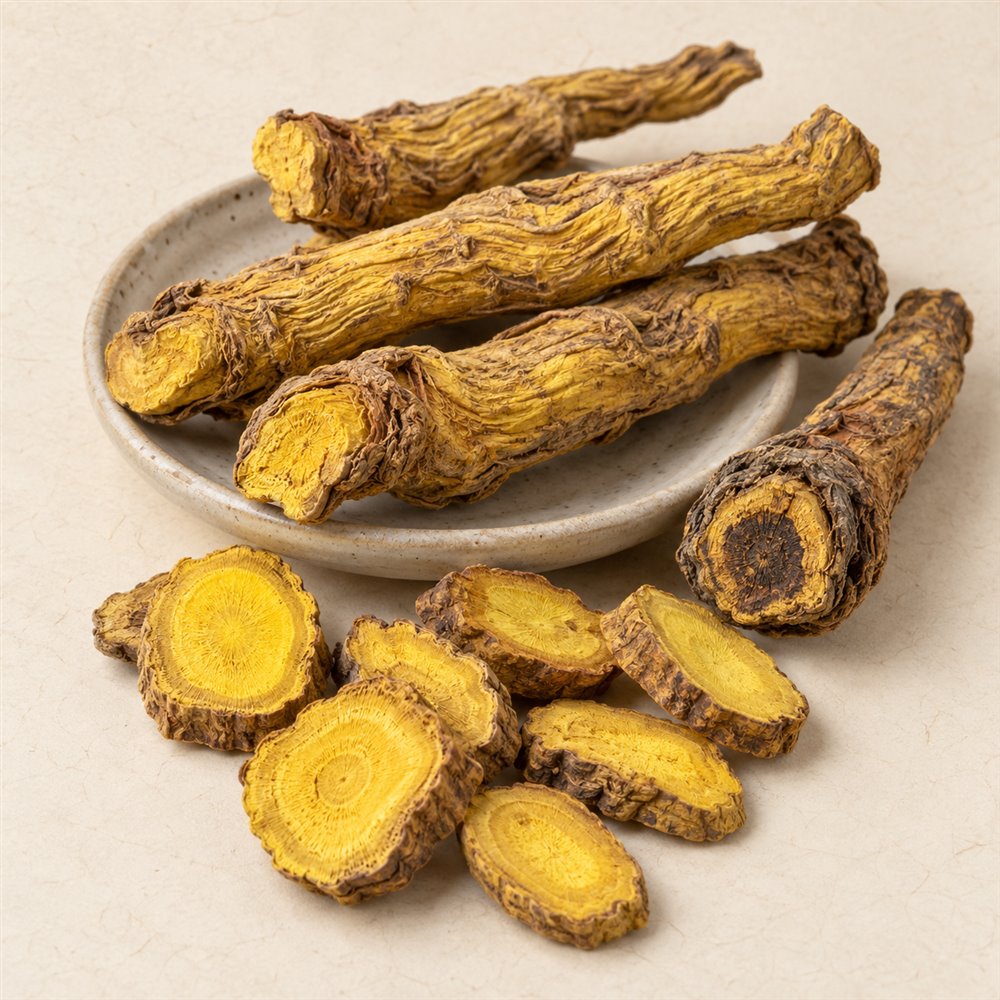
The paired study images show two forms for comparison. Use scientific nomenclature and source records for reference; do not identify real specimens from the image alone.
Baikal skullcap · Huang Qin
Scutellaria baicalensis Georgi · Root
Name and part used
A Lamiaceae herb with opposite leaves and blue-violet hooded flowers; the materia medica is its yellow root.
Traditional context
Huang Qin refers to the root of Scutellaria baicalensis in HKBU records; do not confuse it with other skullcap species or blends.
Modern evidence
Studies of baicalin/baicalein, extracts, and whole herb are different evidence types; results for one compound cannot be generalized to every preparation.
Safety
Skullcap products have reported adverse effects and interactions; common names can refer to different species. Verify identity and consult a professional.
Pairing in reference texts
It appears in traditional formula references. Common names alone are insufficient to label a pairing safe or toxic.
Growing, care, and harvest timing
HKBU habitat record: Growing on sunny and dry hillslopes at altitude 60-2,000m, on wastelands, often by roadsides. Distributed in Northeast China, Inner Mongolia, Hebei, Shanxi, Shaanxi, Gansu, Shandong, Henan and etc. The medicinal materials are mainly produced in Northeast China, Hebei, Henan, Shanxi, Shaanxi and Inner Mongolia Harvest and processing as recorded: After cultivation of 2-3 years, excavated after autumn when stem leaves wither, removed stem leaves near root, sun-dried to half dried, knocked off bark, sun-dried or baked to dry
Source-recorded harvest/processing: After cultivation of 2-3 years, excavated after autumn when stem leaves wither, removed stem leaves near root, sun-dried to half dried, knocked off bark, sun-dried or baked to dry
The reviewed source does not provide a complete species-specific sowing/growing routine, irrigation/fertilization schedule, or universal plant age. The page therefore does not infer care instructions or years to harvest; consult local cultivation guidance.
Open habitat and season source ↗FROM PLANT / SOURCE HABITAT TO DRIED MATERIAL · REFERENCE HANDLING
- HKBU describes harvesting Huang Qin roots after several years of cultivation, in autumn after the stems and leaves wither.
- Lift the root, trim the stem near the crown, remove soil and damaged material, and verify Scutellaria baicalensis.
- Partially dry and remove outer bark under the materia medica processing procedure; continue drying until the required condition is reached.
- The reference distinguishes young yellow roots from older roots with darker centers; color alone cannot identify a real specimen.
These steps describe post-harvest handling for study; they are not directions for self-medication. Processing reference ↗
How to read formula amounts
Displayed amounts belong to the cited formula and source; they are not a general safe ratio, treatment dose, or home-decoction instruction. Do not transfer amounts to another formula or adjust them by body weight.
Material source, dried appearance, and processing forms (HKBU)
Medicinal material source: The dried root of Scutellaria baicalensis Georgi.(Fabaceae) Dried appearance and identification features: Conical, twisted, 8~25cm long, 1~3cm diameter. Externally brownish-yellow or dark yellow, with loose verrucous thin root scars; upper portion is relatively rough, with twisted longitudinal wrinkles or irregular reticular pattern, lower portion has smooth lines and thin wrinkles. Young roots are hard and brittle, easily broken, fractured surface is yellow, middle is reddish-brown; also called zi qin, this form primarily clears fire. The center of old roots is dark brown or brownish-black, rotten or hollow, also called ku qin, clears fire and resolves toxin. faint odor, bitter taste Quality markers recorded by HKBU: Superior medicinal material has long root, firm texture, yellow color Processing forms recorded by HKBU: Wine huang qin: Processed the huang qin slices following the way of wine-process. Sun-spherical or irregular thin slices, externally brown, cut surface is yellowish-brown, radial pattern, slightly with burnt spots, some have brown center
Open original materia medica record ↗Habitat, season, and harvest in the HKBU botanical record
HKBU botanical record (translated summary): Flowering and fruiting dates: fruiting, waxy; corolla bilabiate, purplish red or bluish purple, upper lip galeate, apex emarginate, lower lip wide, middle lobes triangular oval, 7.5mm wide, lobes on both sides connivent to the upper lip, corolla tube thin, densely glandular pilose, base geniculate; Stamens 4, cleft of anther chamber white barbs; Ovary brown, glabrous, 4 parted, grown on the circular disk, style slender, apex slightly cleft Habitat and distribution: Growing on sunny and dry hillslopes at altitude 60-2,000m, on wastelands, often by roadsides. Distributed in Northeast China, Inner Mongolia, Hebei, Shanxi, Shaanxi, Gansu, Shandong, Henan and etc. The medicinal materials are mainly produced in Northeast China, Hebei, Henan, Shanxi, Shaanxi and Inner Mongolia Harvest and processing as recorded: After cultivation of 2-3 years, excavated after autumn when stem leaves wither, removed stem leaves near root, sun-dried to half dried, knocked off bark, sun-dried or baked to dry
Open botanical source ↗HKBU formula record containing this herb: Jiu Wei Qiang Huo Tang / Nine Ingredients Notopterygium Decoction
Traditional action in the source: Induces sweating, expels dampness, and clears internal heat
Ingredient images and source amounts are shown for comparison only; this is not a treatment recipe.
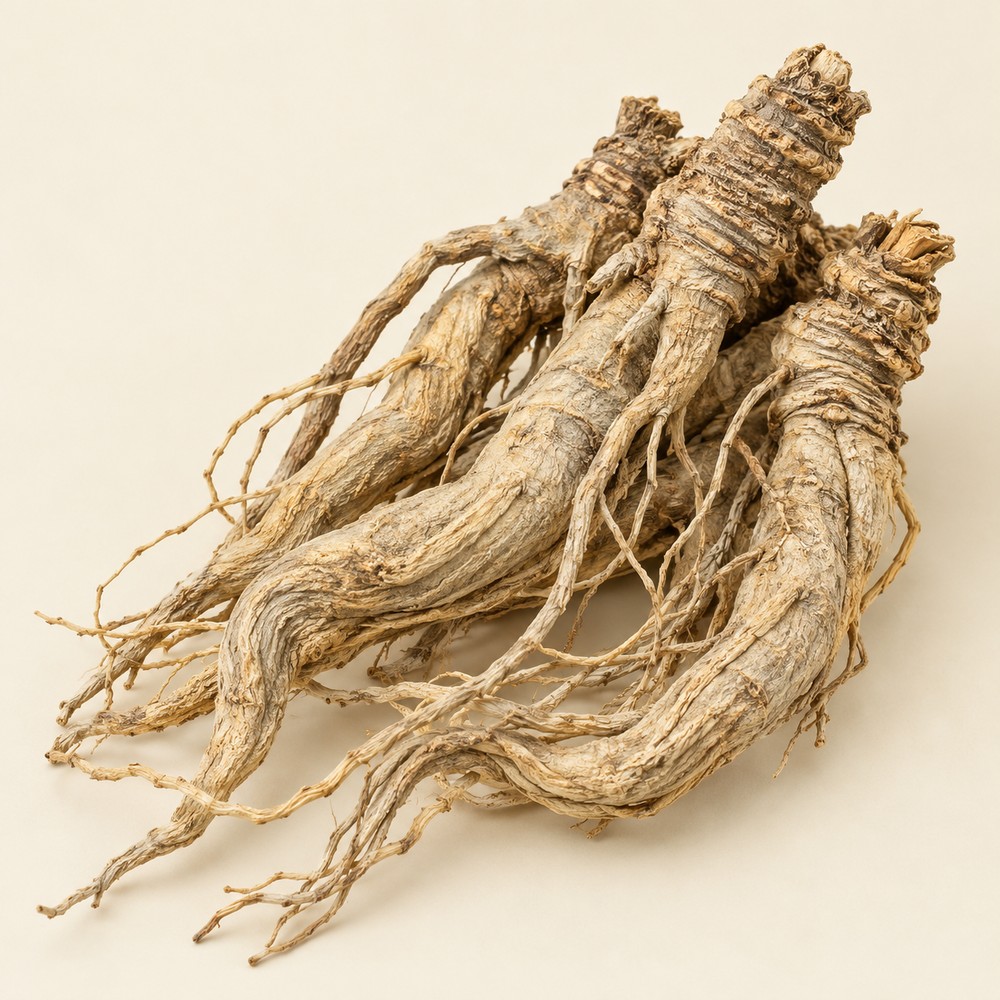
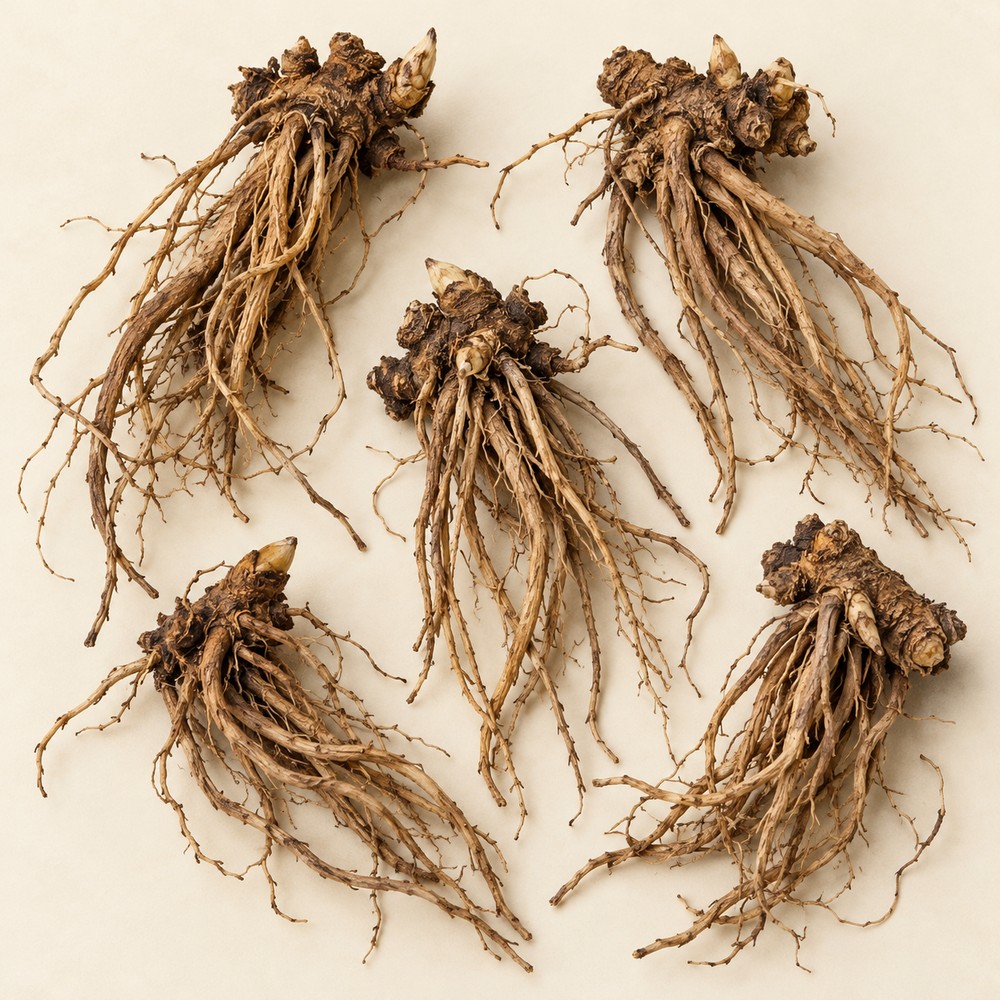
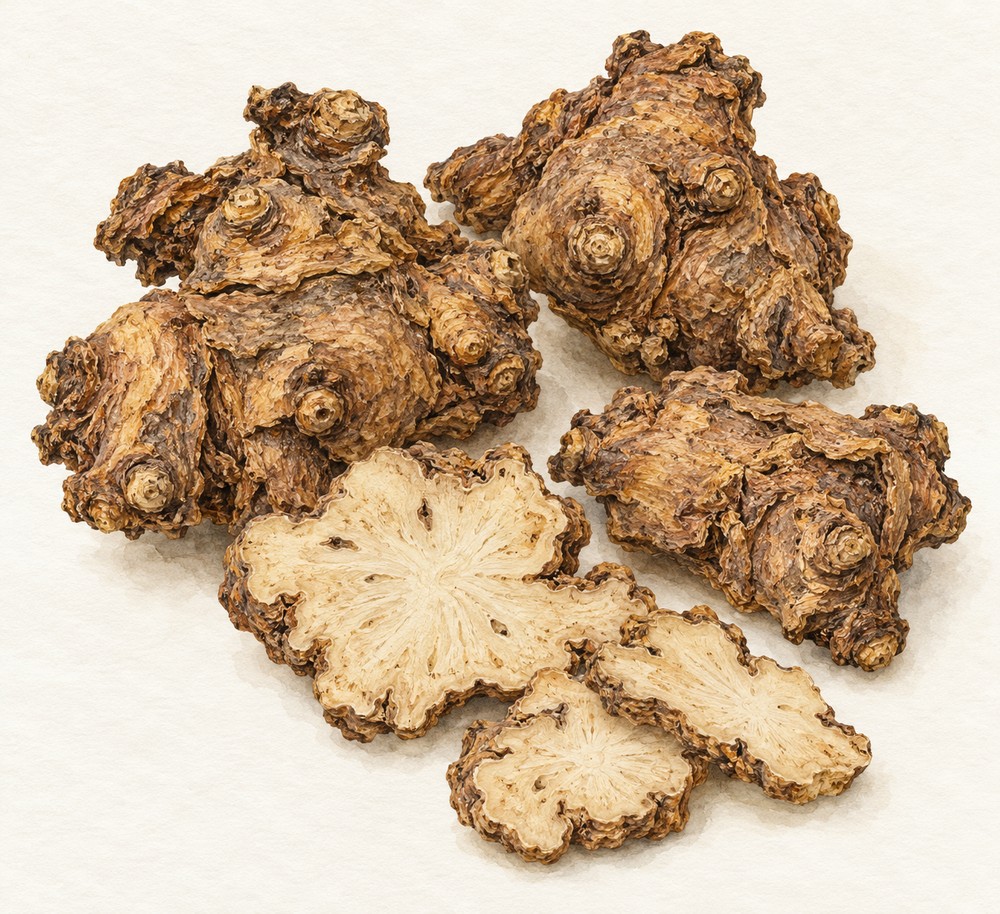
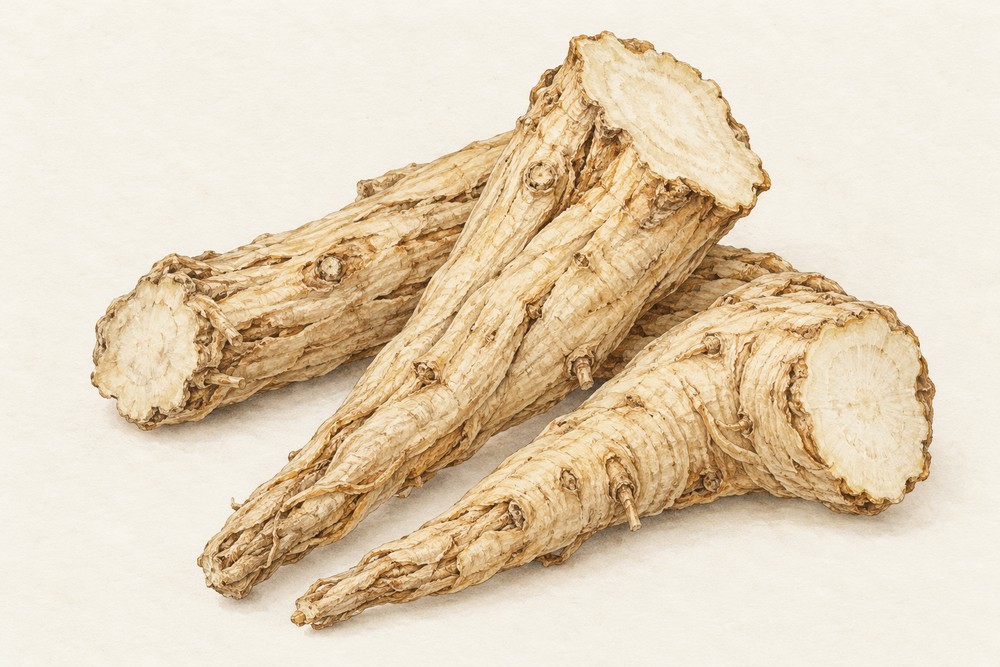
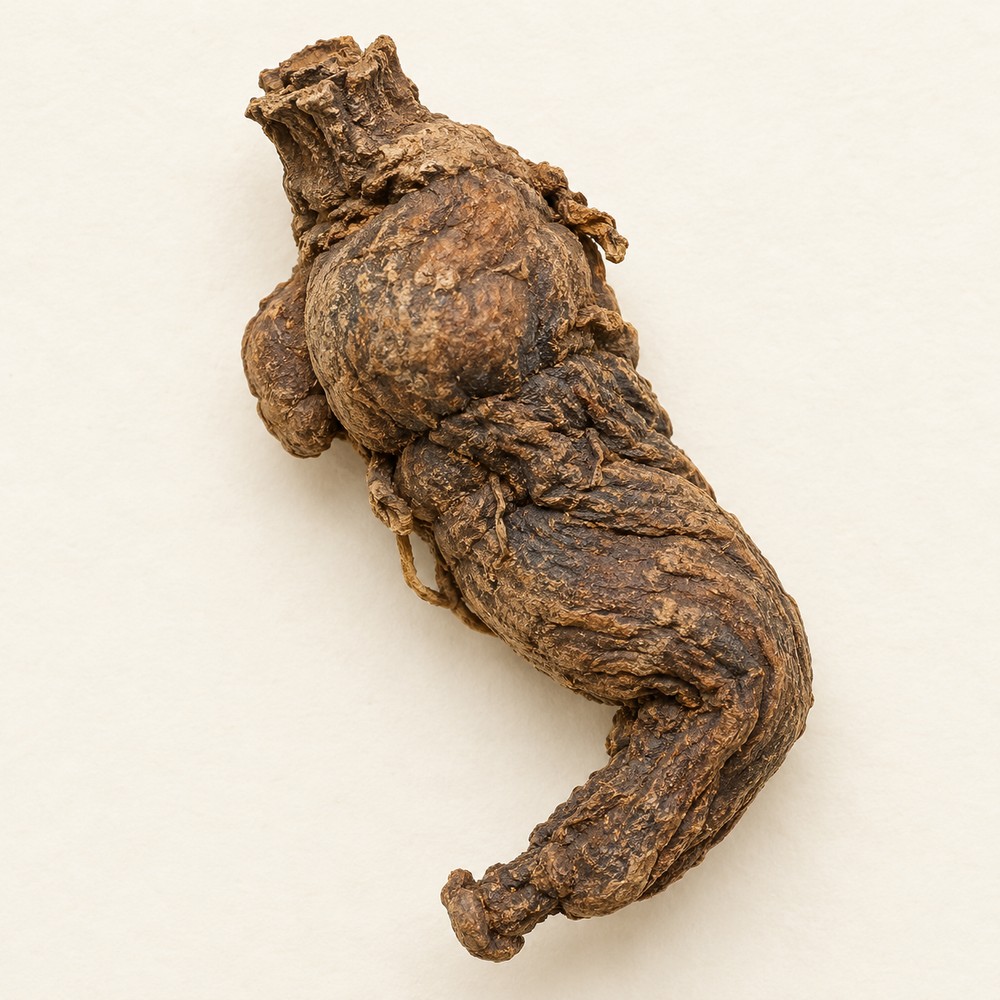
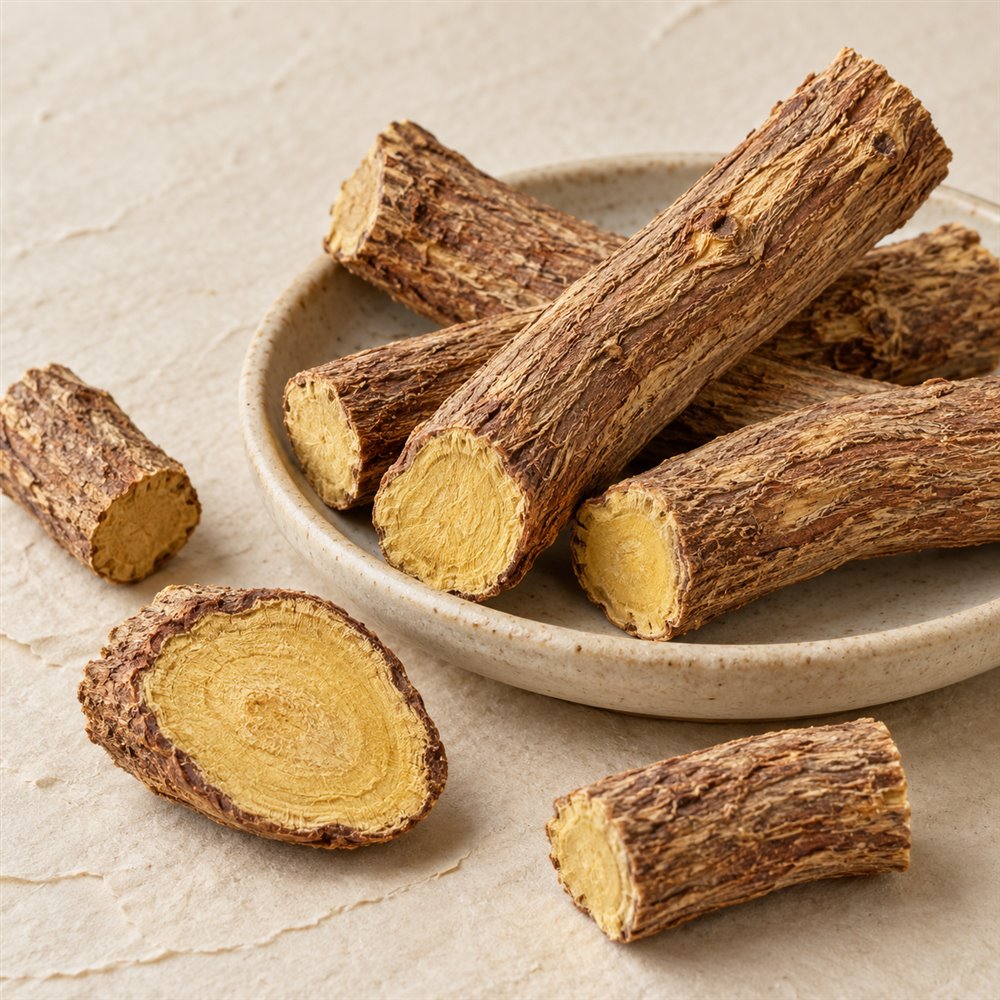
HKBU source-recorded composition
Notopterygii Rhizoma et Radix (Qiang Huo) 1.5 liang (9g), Saposhnikoviae Radix (Fang Feng) 1.5 liang (9g), Atractylodis Rhizoma (Cang Zhu) 1.5 liang (9g), Asari Radix et Rhizoma (Xi Xin) 5 fen (3g), Chuanxiong Rhizoma (Chuan Xiong) 1 liang (6g), Angelicae Dahuricae Radix (Bai Zhi) 1 liang (3g), Rehmanniae Radix (Sheng Di Huang) 1 liang (6g), Scutellariae Radix (Huang Qin) 1 liang (6g), Glycyrrhizae Radix et Rhizoma (Gan Cao) 1 liang (6g)
The ingredients and amounts below are one HKBU-recorded version; texts, historical units, processing, and modern products can differ. This is comparative reference data, not a home-preparation recipe or personal dose.
Open complete HKBU formula record ↗