Shan Dou Gen · Vietnamese sophora root · Shan Dou Gen
Sophora tonkinensis Gagnep. · Root and rhizome
Name and part used
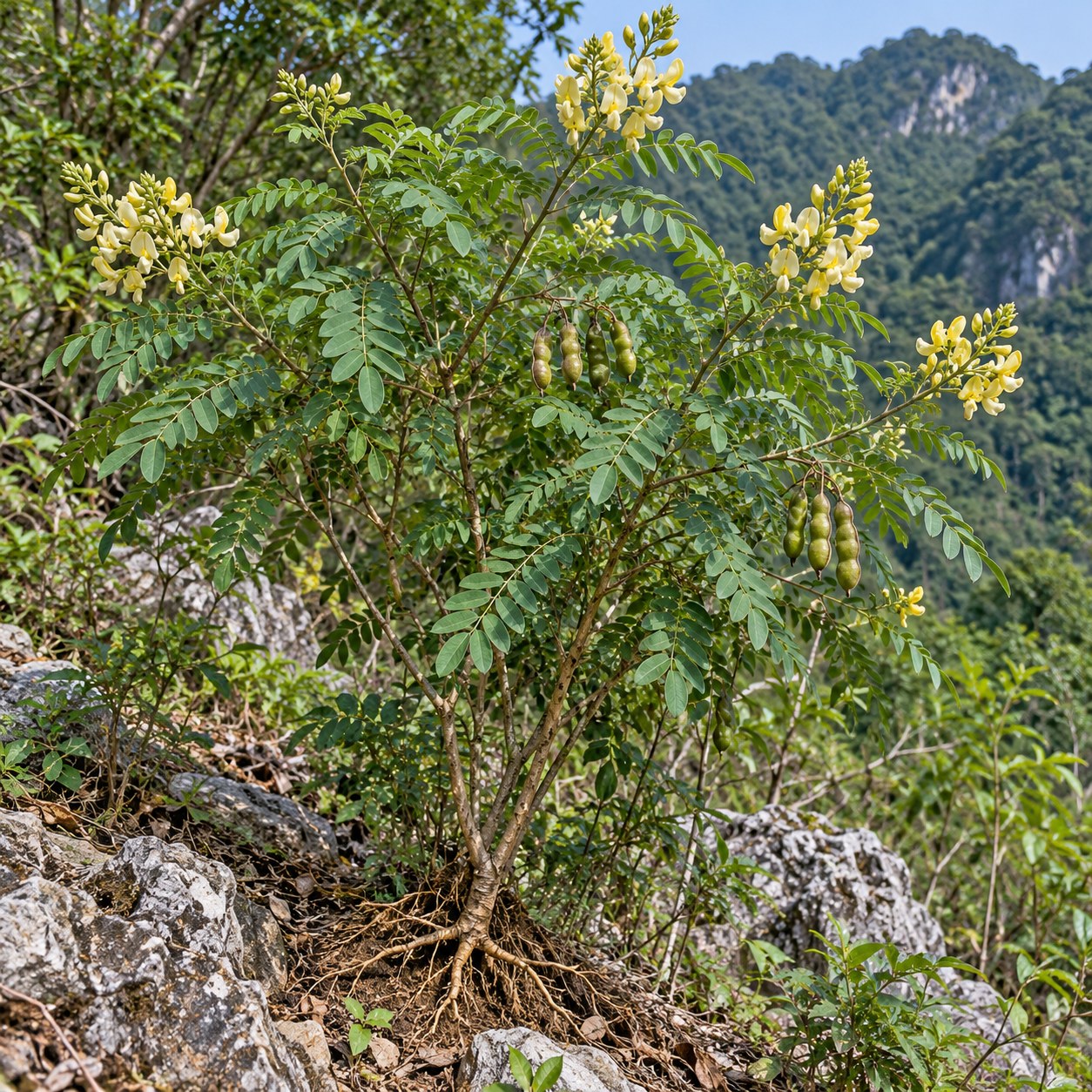
HKBU identifies Shan Dou Gen as Sophora tonkinensis, a 1–2 m Fabaceae shrub. Alternate odd-pinnate leaves have oval leaflets; pale-yellow pea-like flowers form clusters and pods have one to three joints. It grows in rocky slopes, forest edges, or thickets in Guangdong, Guangxi, and Guizhou; Guangxi is a main production area. Root/rhizome is used, but HKBU marks it toxic. Images are for study, not foraging or processing.
Traditional context
HKBU records an extremely bitter, cold, toxic material with traditional actions of clearing heat-toxin, reducing swelling, benefiting the throat, and relieving pain. This is not advice to treat sore throat or cancer. Do not forage, taste, soak in alcohol, decoct, or combine it at home. Classical formulas do not remove toxicity or validate modern products.
Modern evidence
HKBU documents morphology, plant part, and toxicity; traditional actions do not prove clinical benefit. No oral dose or recipe is given because toxicity and processing vary. Suspected poisoning requires emergency/poison-control advice; keep label/specimen for professionals and do not induce vomiting.
Safety
HKBU includes Shan Dou Gen among 31 toxic/potent Chinese medicines regulated in Hong Kong and labels it toxic. Do not grow for personal use, dig roots, grind, or store beside food. Keep away from children/pets; research specimens need locked storage and hazard labels. Suspected ingestion/mucosal exposure needs emergency care.
Safety reference ↗Pairing in reference texts
Reviewed records establish no safe combination ratio. Because it is toxic, this page gives no dose, decoction, or pairing. A classical record does not prove a safe pair; do not combine with medicines, herbs, alcohol, or supplements outside qualified oversight.
Identification and study notes
The shrub has pinnate leaves with many leaflets, pale flowers, and jointed pods; the drug is root/rhizome. Never taste bitterness for identification. Other Sophora or similar trade names may be confused. Latin labels, lawful provenance, and lot testing matter more than images. AI art cannot confirm a real species or toxicity.
Growth and habitat
HKBU records rocky slopes, forest margins, and thickets in Guangdong/Guangxi/Guizhou; Guangxi is a main production area. This is ecology, not an invitation to dig wild roots. Because the plant is toxic, study digital records or controlled botanical collections, not home-grown medicine.
Identification and study notes
The shrub has pinnate leaves with many leaflets, pale flowers, and jointed pods; the drug is root/rhizome. Never taste bitterness for identification. Other Sophora or similar trade names may be confused. Latin labels, lawful provenance, and lot testing matter more than images. AI art cannot confirm a real species or toxicity. For visual comparison, note pinnate leaves and jointed pods on the living shrub, then compare the root material only in a controlled collection. Do not taste it to test the recorded bitterness. Common-name substitution within Sophora can make a superficially plausible label misleading. Sơn đậu căn là rễ/thân rễ Sophora tonkinensis, cây bụi có thể bị nhầm với Sophora khác khi bán dạng rễ thái. Lá kép và hoa vàng nhạt giúp quan sát cây nhưng không khiến việc đào rễ hoang an toàn. HKBU gắn nhãn độc và liệt kê trong nhóm dược liệu mạnh bị quản lý tại Hồng Kông. Điều này quan trọng cho học ảnh và bảo quản: dùng ảnh số hoặc mẫu cơ sở được phép, khóa kín; không trồng dùng tại nhà hay để mẫu rời cạnh dược liệu thường. “Lợi họng/thanh nhiệt độc” cổ truyền không cho phép tự chữa đau họng, ung thư hay sưng. Trang bỏ liều và cách sắc vì mẹo sơ chế tại nhà không an toàn. Nguồn có thể ghi phối hợp nhưng không đưa tỷ lệ chung an toàn. Khi học bài cổ, chép chính xác loài, dạng chế và văn bản; không suy vị khác làm rễ độc an toàn. Để xa trẻ/vật nuôi và tuân thủ quy định nguyên liệu chuyên môn. Thẻ học số phù hợp hơn mẫu rễ thật với Sơn đậu căn. Lá kép, hoa vàng và sinh cảnh sườn đá là mô tả, không chấp nhận hái cây hoang. Vì nguyên liệu bị quản lý/độc ở một số nơi, bảo quản và quyền tiếp cận cũng là bài học định danh. Sách cổ mô tả họng/sưng nhưng không phải căn cứ liều. Không dùng nếm, mùi hay sơ chế nhà để quyết định rễ đã khử độc. Nếu bài viết ghi phối hợp, giữ đúng nguồn và không suy an toàn từ vị khác. Mục tiêu là nhận ra dược liệu và nguy cơ, không trồng, thu hay bào chế.
Growing and care
- No instructions for growing it to harvest medicine. A specialist botanical garden needs authenticated Sophora tonkinensis stock, toxic signage, and restricted access.
- HKBU gives no pH, irrigation, seed treatment, or germination data. Do not turn rocky/forest-edge habitat into a commercial cultivation schedule.
- In a controlled collection, isolate from paths/edible plants and track specimens, fallen roots, and waste under institutional procedure.
- No home-grower safe root age is established. Study from images/curated specimens; do not harvest or process it yourself.
How long until harvest? There is no home-growing interval to “ready for use”: this is toxic and the source only records professional autumn harvest. Do not grow, harvest, or use it yourself.
FROM PLANT / SOURCE HABITAT TO DRIED MATERIAL · REFERENCE WORKFLOW
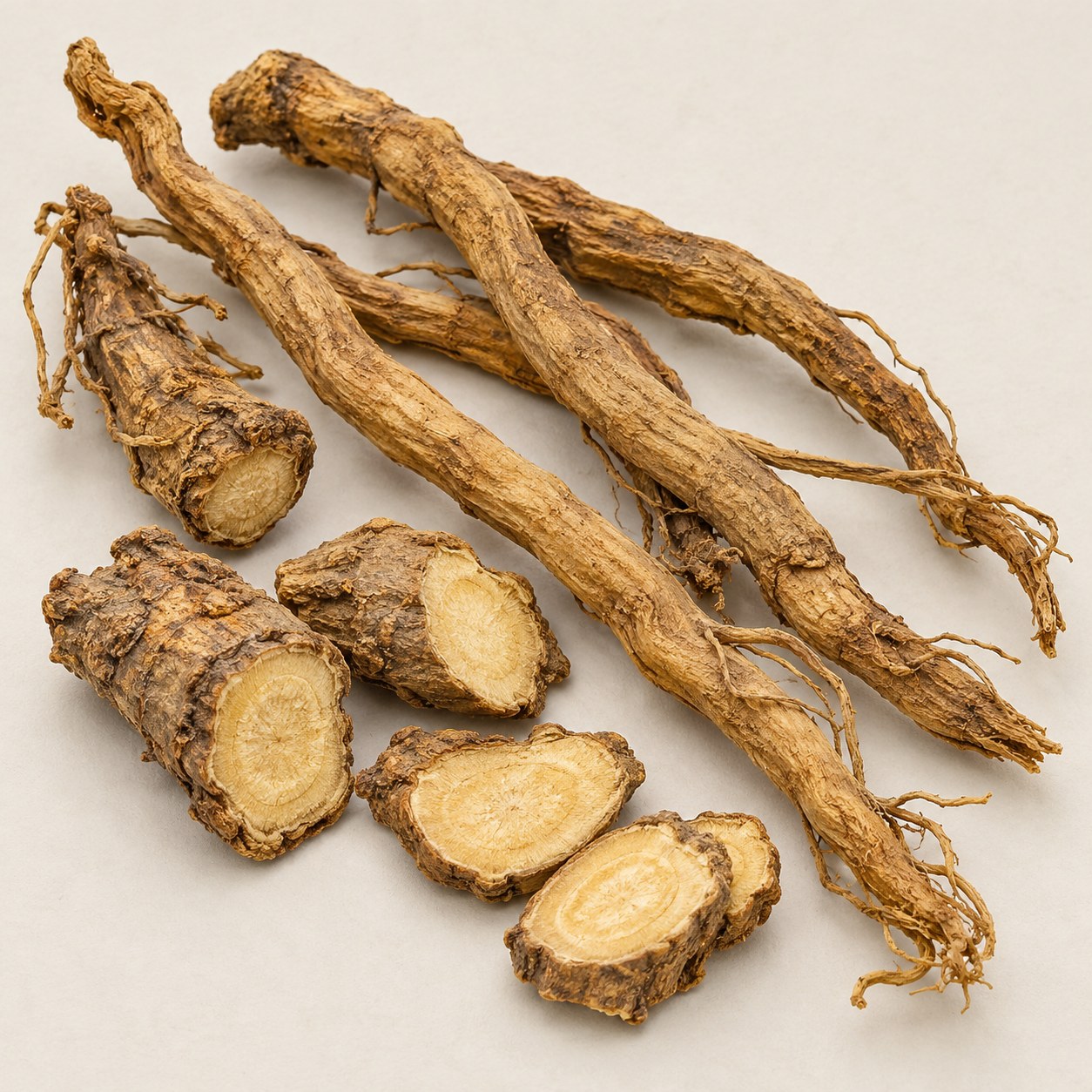
- HKBU records autumn root/rhizome excavation, cleaning, washing, and sun-drying. This is professional context; do not do it at home because the plant is toxic.
- Authorized facilities must authenticate species and control dust, exposure, and waste. Students should not touch, taste, grind, or wash raw material.
- Dried roots may be yellow-brown and cylindrical/branched; AI art cannot distinguish authentic material, look-alikes, or alkaloid levels.
- Store specimens locked and labeled toxic; suspected exposure requires immediate emergency/poison-control advice.
These are post-harvest study notes, not directions to prepare a remedy for self-treatment. Processing reference ↗
Habitat, season, and harvest in the HKBU botanical record
HKBU describes a 1–2 m shrub with compound leaves, pale flowers, and jointed pods in rocky/forest-edge habitat. Roots/rhizomes are collected in autumn, washed, and dried; the source flags toxicity.
Open botanical source ↗