Shan Zhu Yu · Asiatic cornelian cherry fruit · Shan Zhu Yu
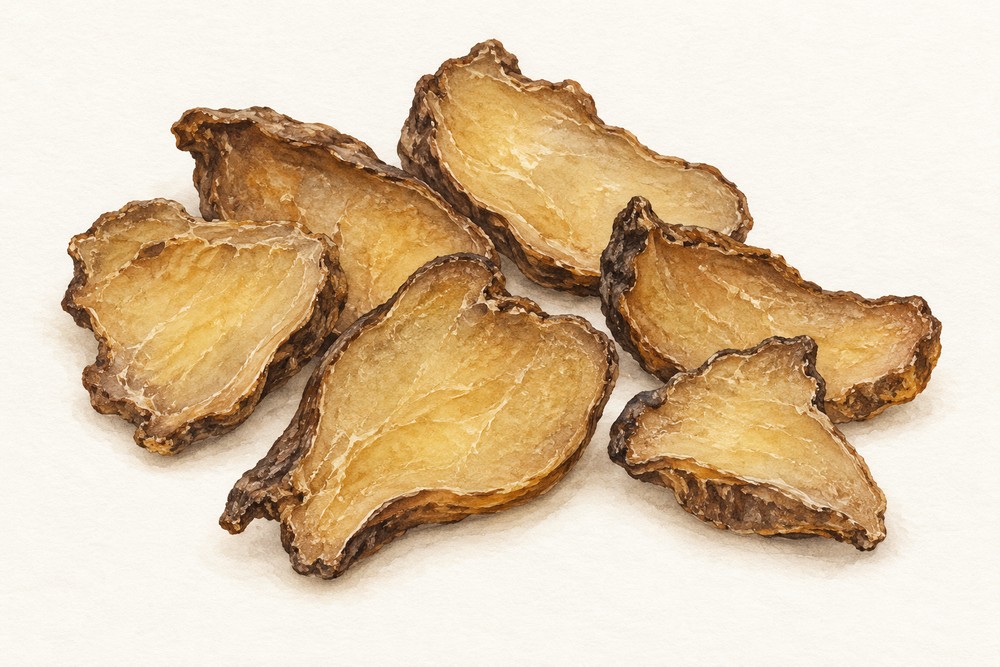
Cornus officinalis Siebold & Zucc. · Dried mature fruit flesh, pit removed
Name and part used
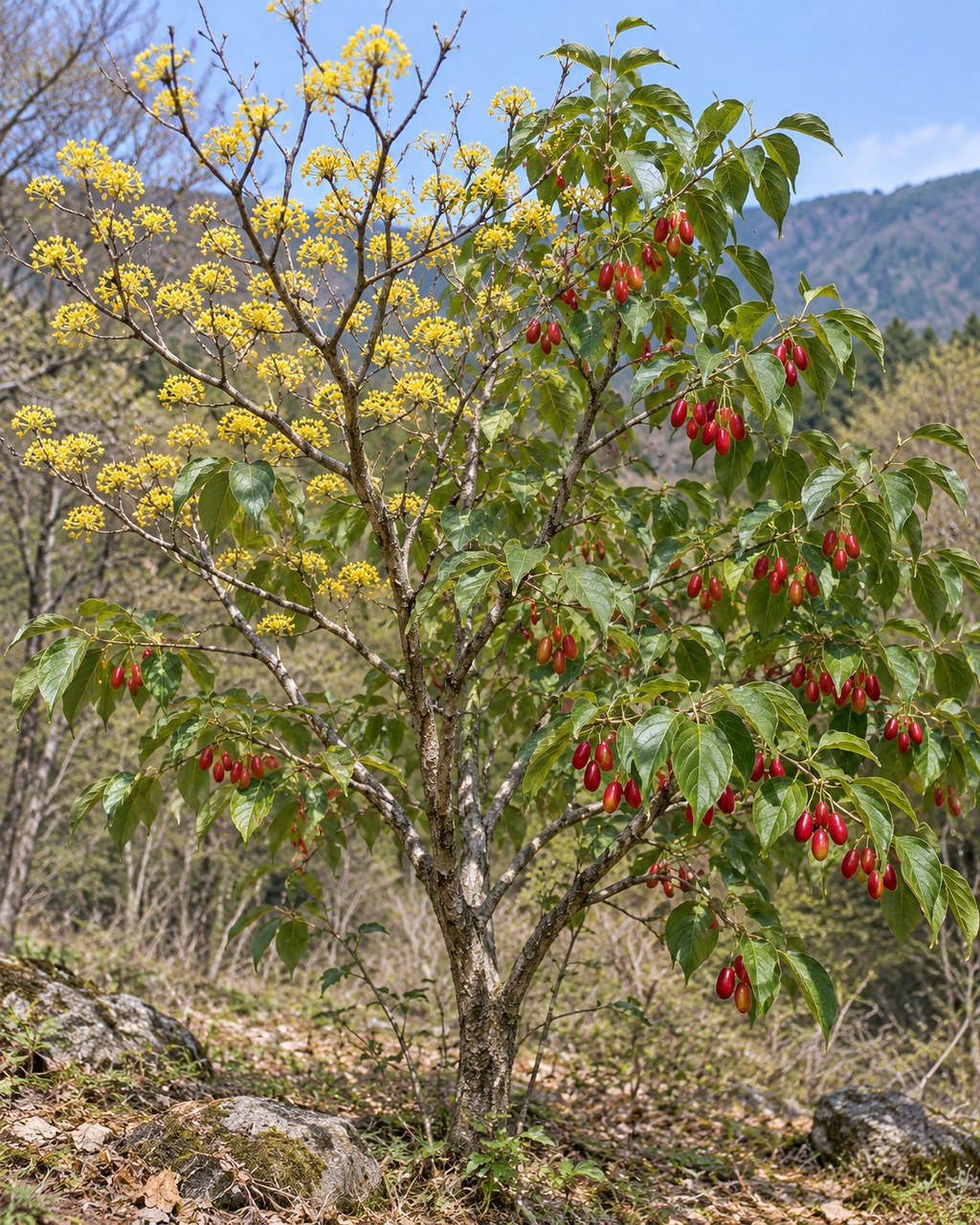
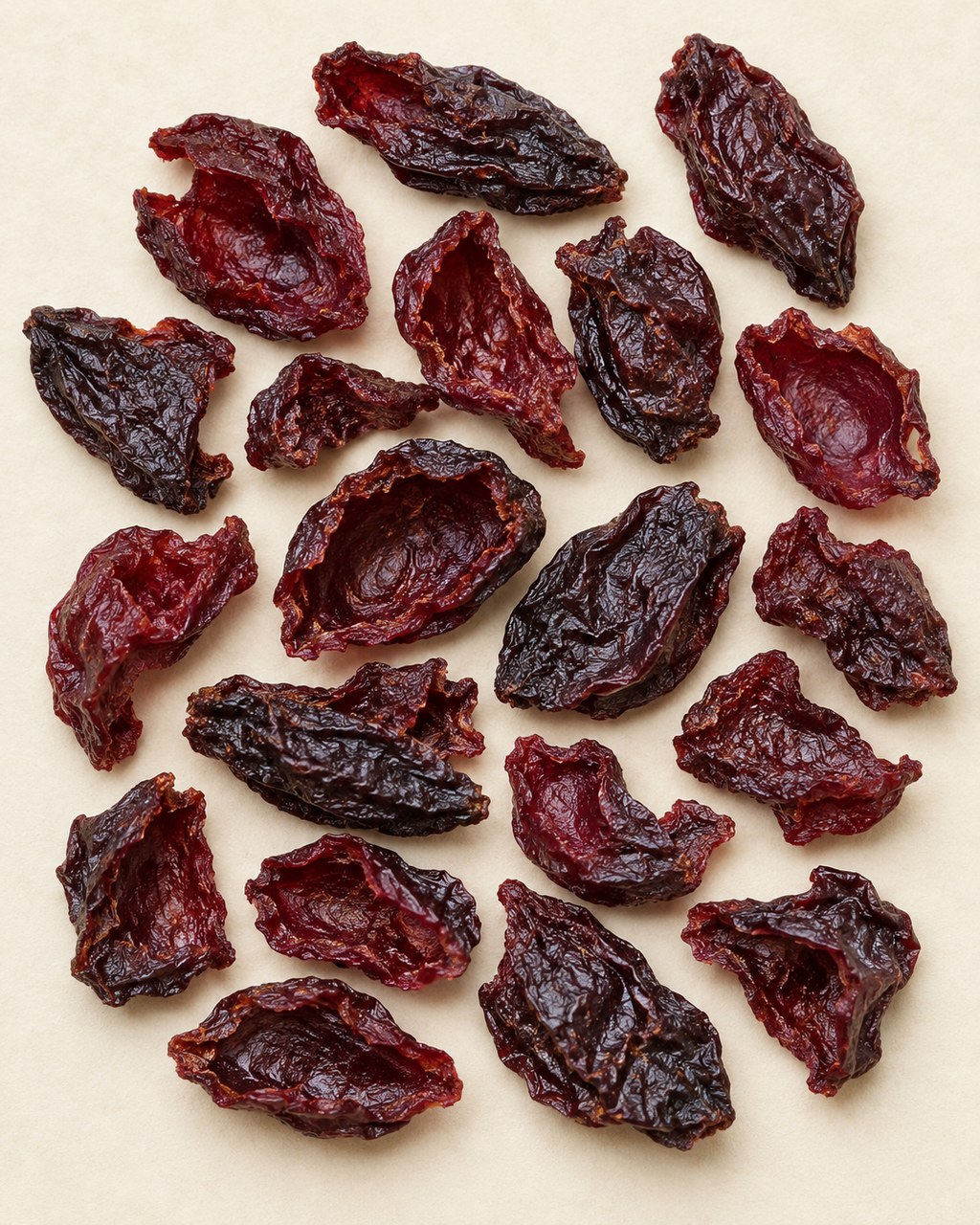
Shan Zhu Yu comes from Cornus officinalis, a deciduous small tree or shrub about 4–10 m tall. Opposite ovate-lanceolate leaves have curved veins; small yellow flowers bloom before or near leaf-out. Ellipsoid drupes turn red to purplish red in late summer/autumn. The materia medica is not the hard pit: HKBU identifies the dried mature fleshy pericarp with the stone removed, wrinkled and purplish red to nearly black. A pinyin label does not replace species authentication; AI images teach morphology only.
Traditional context
HKBU records sour, astringent, slightly warm qualities and traditional actions of supplementing liver/kidney and astringing essence. These are not proof of treatment for incontinence, infertility, diabetes, or kidney disease. Do not use it to delay assessment of blood in urine, flank pain, fainting, or urinary changes.
Modern evidence
HKBU documents identity, habitat, harvest, and traditional actions; it is not a clinical trial. Chemical or animal findings about tannins/glycosides do not prove benefit for kidney disease, diabetes, fertility, or urinary symptoms. The source does not validate home-grown/dried lots. Persistent urinary symptoms, blood in urine, fever, or flank pain require medical evaluation.
Safety
HKBU reports constituents and some pharmacological observations but no safe dose for foraged material. Do not eat unknown fruit/seeds; people taking medicines or living with chronic conditions should ask a clinician before concentrated products. Avoid self-use during pregnancy; discard moldy, mixed-species, or untraceable material.
Safety reference ↗Pairing in reference texts
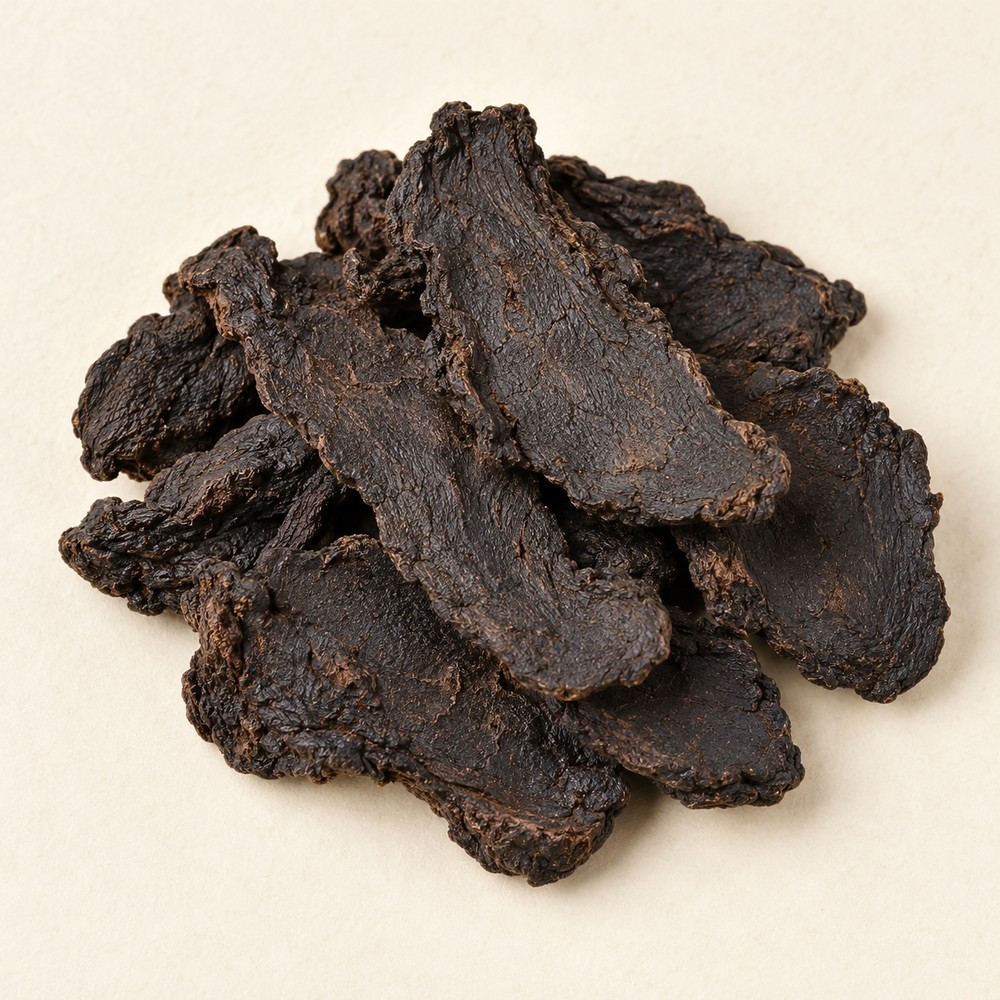
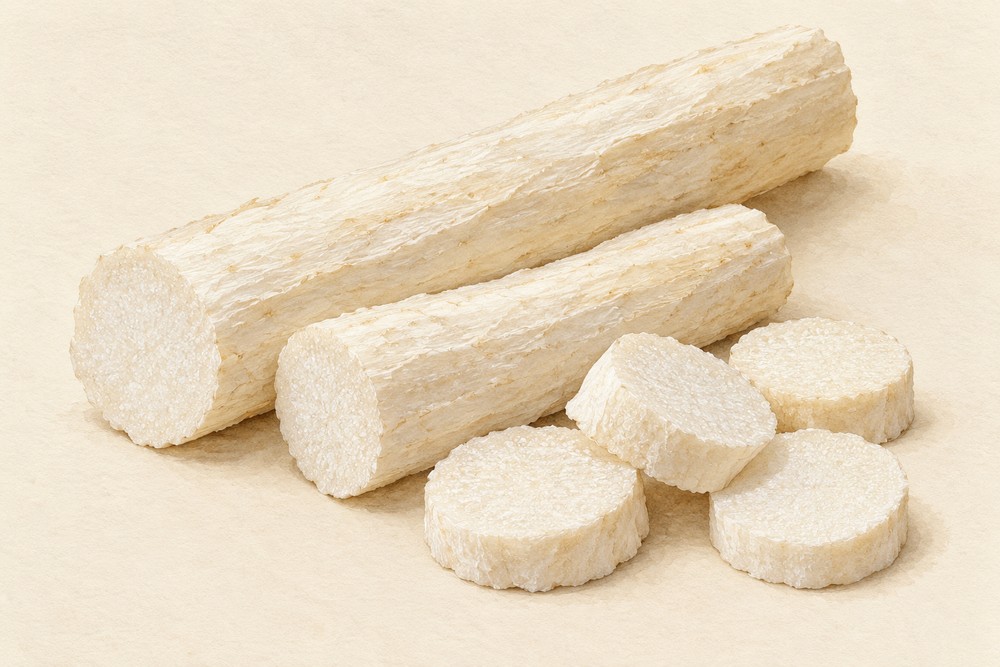
HKBU records Shan Zhu Yu in Shen Qi Wan with prepared Rehmannia, Chinese yam, Ze Xie, Poria, Moutan bark, Gui Zhi, and processed Fu Zi; ingredient images and source amounts appear below. This is historical documentation, not a home-decoction recommendation. Fu Zi can cause severe poisoning; never self-combine or use source quantities.
Identification and study notes
Opposite leaves and small yellow flowers appear before/near leaf-out; red oblong drupes contain a hard pit. The materia medica is the thin, wrinkled, soft purplish flesh after pit removal. Do not confuse it with other red Cornus, goji, or jujube; compare Latin identity and cross-section. AI art may misrender season/details and cannot authenticate specimens.
Growth and habitat
It occurs at woodland margins and temperate mountain forests, commonly around 400–1,500 m; HKBU lists regions in China, Korea, and Japan. It favors seasonal climates with cool winters and moist growing periods, while soils still need drainage. For study cultivation, use morning sun or partial shade and avoid waterlogging/contaminated soil. Geographic range alone cannot authenticate a wild specimen.
Identification and study notes
Opposite leaves and small yellow flowers appear before/near leaf-out; red oblong drupes contain a hard pit. The materia medica is the thin, wrinkled, soft purplish flesh after pit removal. Do not confuse it with other red Cornus, goji, or jujube; compare Latin identity and cross-section. AI art may misrender season/details and cannot authenticate specimens.
Growing and care
- Buy a Latin-labeled Cornus officinalis sapling; seedlings can take years to fruit. Do not dig forest plants.
- Choose deep, drained soil in morning sun/partial shade; keep the root collar level and water thoroughly once.
- Keep evenly moist while establishing, mulch but leave the trunk clear; hand-weed and prune dead wood after dormancy.
- Observe early-spring yellow flowers and red fruit around September–October in HKBU’s account. Grow for study only; do not harvest as medicine.
How long until harvest? A small tree needs multiple seasons to establish and fruit; HKBU gives no harvest age or fixed years from planting. It records mature fruit in late summer/autumn. No supported “ready after X months” claim exists; record the plant’s own dates for study and do not use it medicinally.
Habitat, season, and harvest in the HKBU botanical record
HKBU describes Cornus officinalis as a 4–10 m deciduous tree/shrub with opposite leaves, tiny yellow flowers, and red-purple oblong fruit ripening around September–October. Habitat is forest margins around 400–1,500 m; the materia medica is dried ripe flesh with the pit removed.
Open botanical source ↗HKBU formula record containing this herb: Shen Qi Wan · Kidney Qi Pill
Công năng theo lý luận truyền thống của nguồn: In classical theory, Shan Zhu Yu is recorded among the liver-kidney supporting ingredients; HKBU describes the whole formula as warming kidney yang and supporting qi transformation. This is not evidence of kidney-disease treatment.
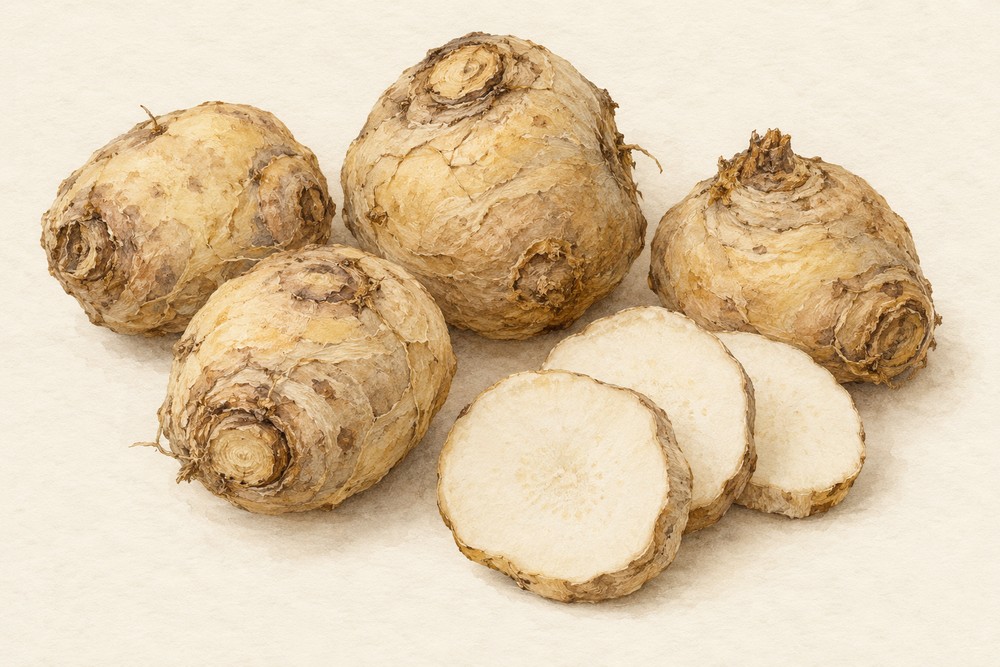
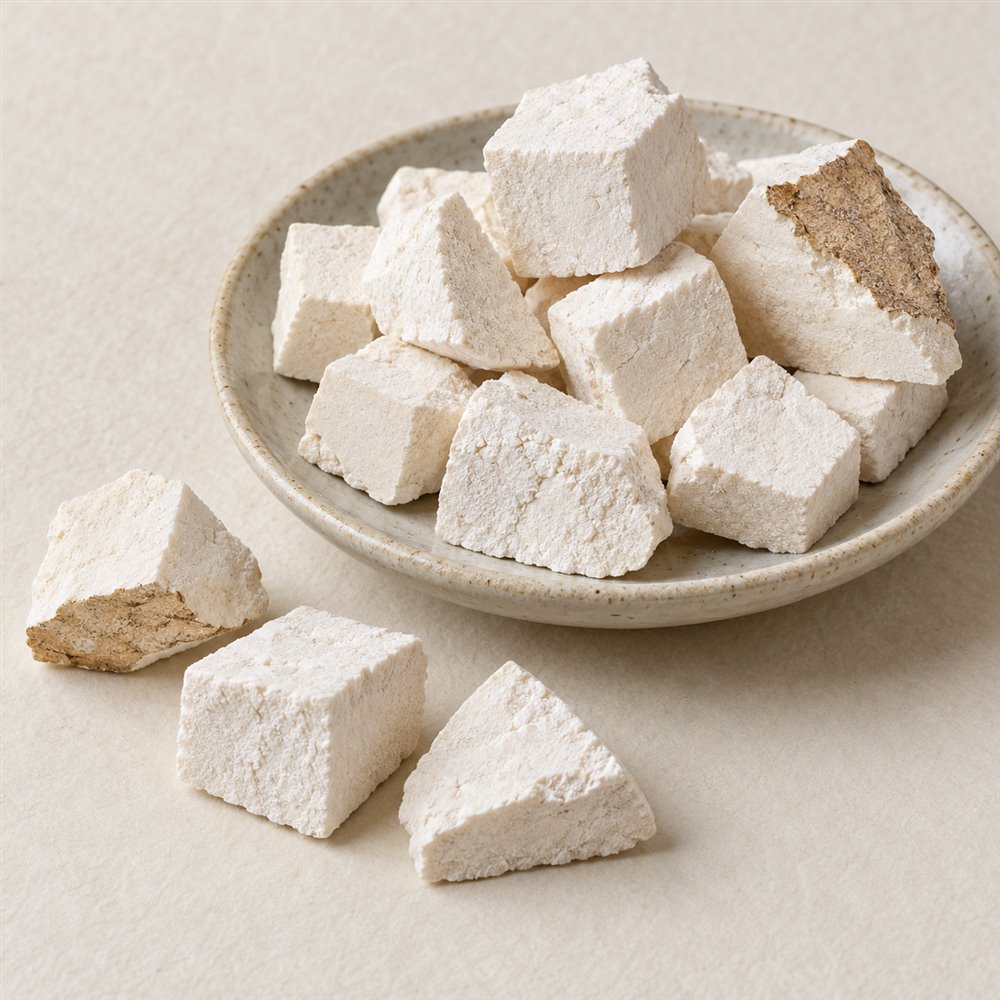
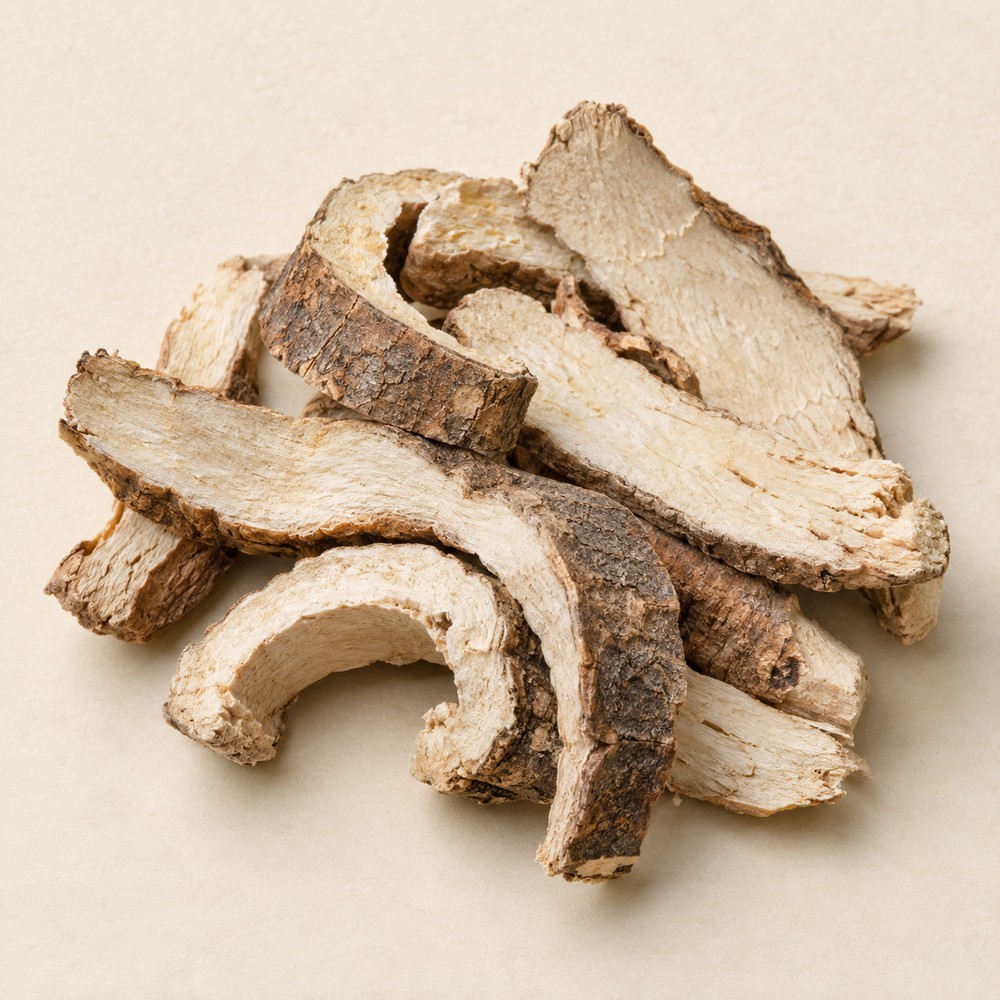
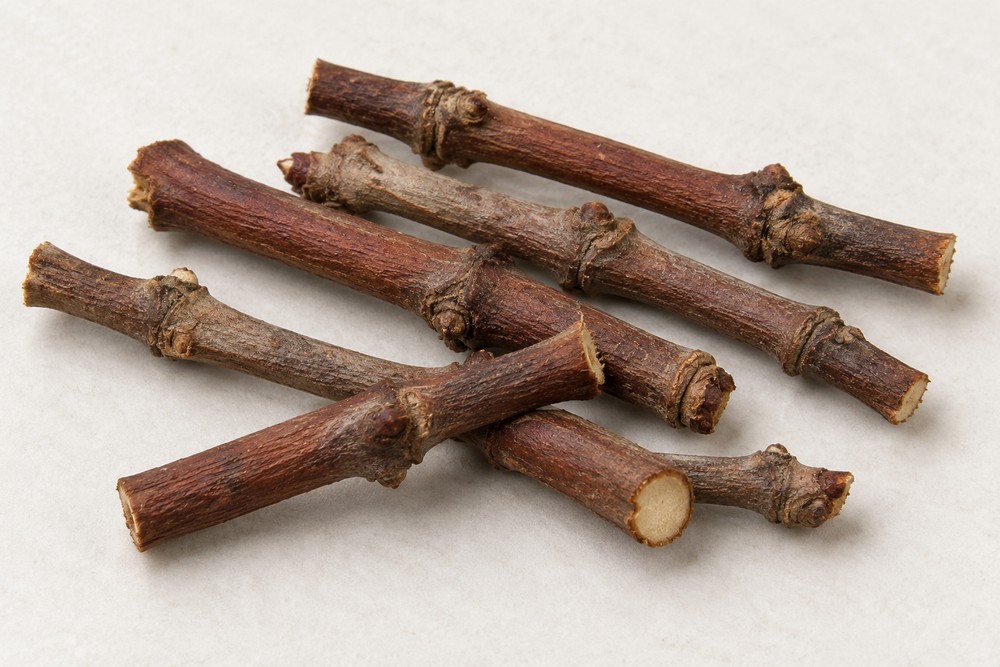
Ingredient images and source amounts are shown for comparison only; this is not a treatment recipe.
HKBU source-recorded composition
HKBU F00082: Gan Di Huang 8 liang (240 g), Shan Yao 4 liang (120 g), Shan Zhu Yu 4 liang (120 g), Ze Xie 3 liang (90 g), Fu Ling 3 liang (90 g), Mu Dan Pi 3 liang (90 g), Gui Zhi 1 liang (30 g), processed Fu Zi 1 liang (30 g).
These are historical source quantities, not a dose. The formula contains toxic processed Fu Zi; do not buy, combine, decoct, or adapt the amounts for self-use.
Open complete HKBU formula record ↗FROM PLANT / SOURCE HABITAT TO DRIED MATERIAL · REFERENCE WORKFLOW
- HKBU records ripe fruit collection in late summer/autumn; authenticate and collect legally, never from unverified ornamentals.
- Remove stalks/debris; briefly rinse if dirty and drain. The source describes gentle scalding/warming before pit removal as professional processing context, not a home-medicine recipe.
- A processing facility removes the pit, retains fruit flesh, and dries it to lot standards. Dried material is soft, wrinkled, purplish red to black, and sour/astringent.
- Cool, seal against moisture/mold, and label Latin name, harvest date, and origin. Discard moldy/untraceable lots; AI art cannot prove quality.
These are post-harvest study notes, not directions to prepare a remedy for self-treatment. Processing reference ↗