Villous amomum fruit · Sha Ren
Amomum villosum Lour. · Dried mature fruit
Name and part used
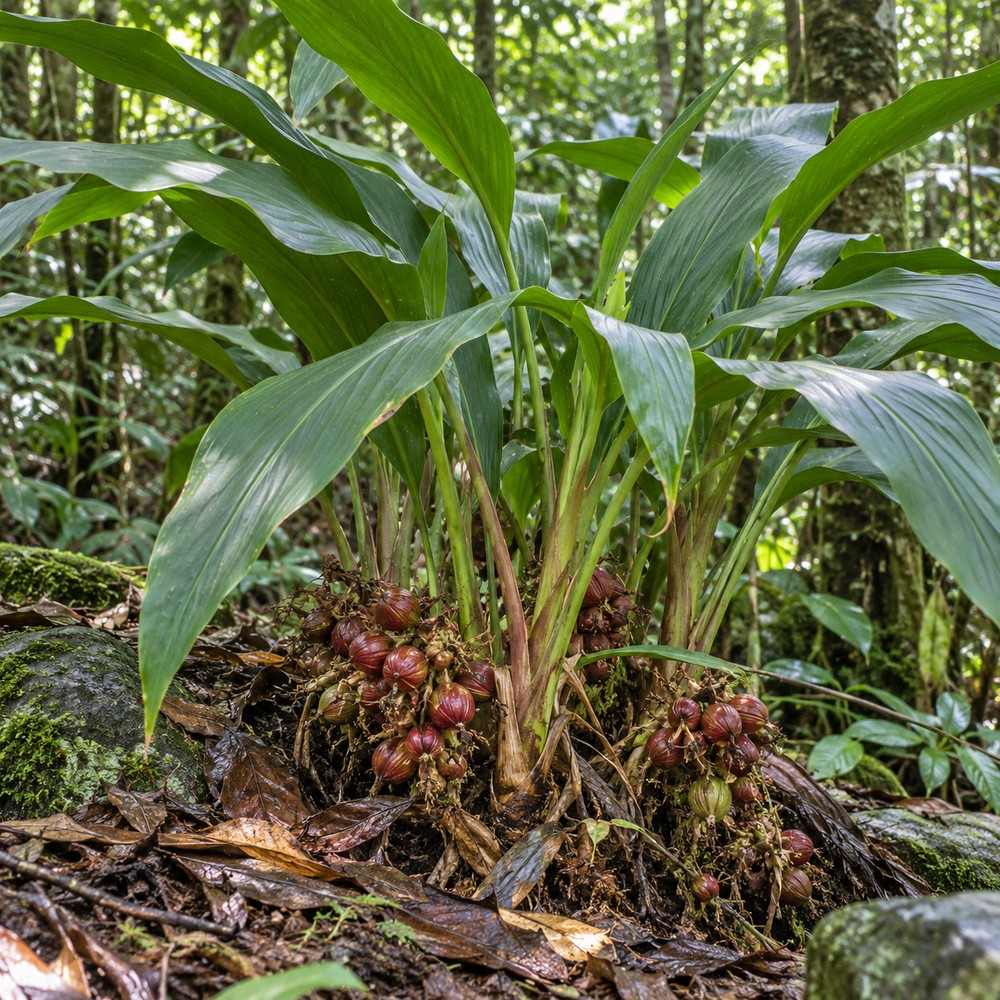
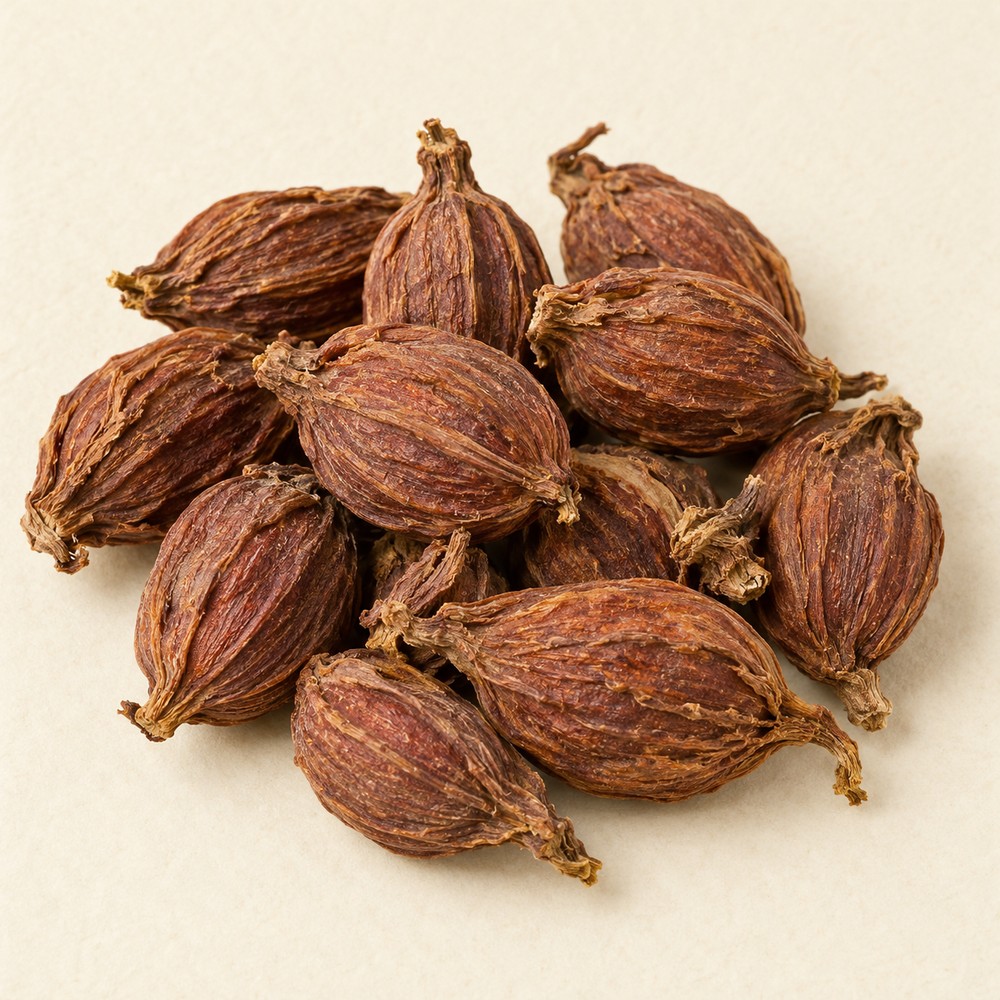
A ginger-family rhizomatous herb with long leaves, pseudostems, basal flowers, and softly spiny oval fruits.
Traditional context
Sha Ren is dried fruit of Amomum villosum and other pharmacopoeially accepted species. HKBU describes three-ridged capsules with soft spines and clustered seeds; commercial species vary by region.
Modern evidence
Dampness-transforming, qi-moving, and middle-warming are traditional terms. Aromatic oils do not prove treatment of indigestion, pregnancy nausea, or threatened miscarriage.
Safety
Pregnancy use requires qualified direction; ginger-family allergy and aromatic-oil content can vary. Avoid homemade concentrated oils.
Pairing in reference texts
Sha Ren appears with Atractylodes, Poria, or Astragalus in some classical prescriptions; this does not establish suitability during pregnancy or with medicines.
Growing, care, and harvest timing
HKBU habitat record: Growing in dank places under forests of warm, humid and humus-rich ravine. Distributed in Fujian, Guangdong, Hainan, Guangxi and etc. The medicinal materials are produced in Yunnan, Guangdong, Fujian and Guangxi Harvest and processing as recorded: Flowering and bearing fruits after 2-3 years. In late July to early August bright red fruits become aborigine, seeds become black brown, harvested when broken fruits have strong spicy taste
Source-recorded harvest/processing: Flowering and bearing fruits after 2-3 years. In late July to early August bright red fruits become aborigine, seeds become black brown, harvested when broken fruits have strong spicy taste
The reviewed source does not provide a complete species-specific sowing/growing routine, irrigation/fertilization schedule, or universal plant age. The page therefore does not infer care instructions or years to harvest; consult local cultivation guidance.
Open habitat and season source ↗FROM PLANT / SOURCE HABITAT TO DRIED MATERIAL · REFERENCE WORKFLOW
- Harvest mature capsules from authenticated Amomum villosum; timing varies by region, and immature or overripe fruits are rejected.
- Remove pedicels and foreign matter with clean equipment; retain whole capsules to limit volatile-oil loss.
- Dry under controlled heat and ventilation; avoid prolonged harsh sunlight that dissipates aroma.
- Grade by size, integrity, and aroma, document species and origin, and seal against moisture.
These are post-harvest study notes, not directions to prepare a remedy for self-treatment. Processing reference ↗
How to read formula amounts
The cited sources do not provide a formula with specific amounts for this profile; no ratio is invented. Absence from the incompatibility list does not establish safety.
Habitat, season, and harvest in the HKBU botanical record
HKBU botanical record (translated summary): Flowering and fruiting dates: Flowering: May -June, Fruiting: August to September Habitat and distribution: Growing in dank places under forests of warm, humid and humus-rich ravine. Distributed in Fujian, Guangdong, Hainan, Guangxi and etc. The medicinal materials are produced in Yunnan, Guangdong, Fujian and Guangxi Harvest and processing as recorded: Flowering and bearing fruits after 2-3 years. In late July to early August bright red fruits become aborigine, seeds become black brown, harvested when broken fruits have strong spicy taste
Open botanical source ↗