Bugbane rhizome · Sheng Ma
Cimicifuga heracleifolia, C. dahurica, or C. foetida · Rhizome
Name and part used
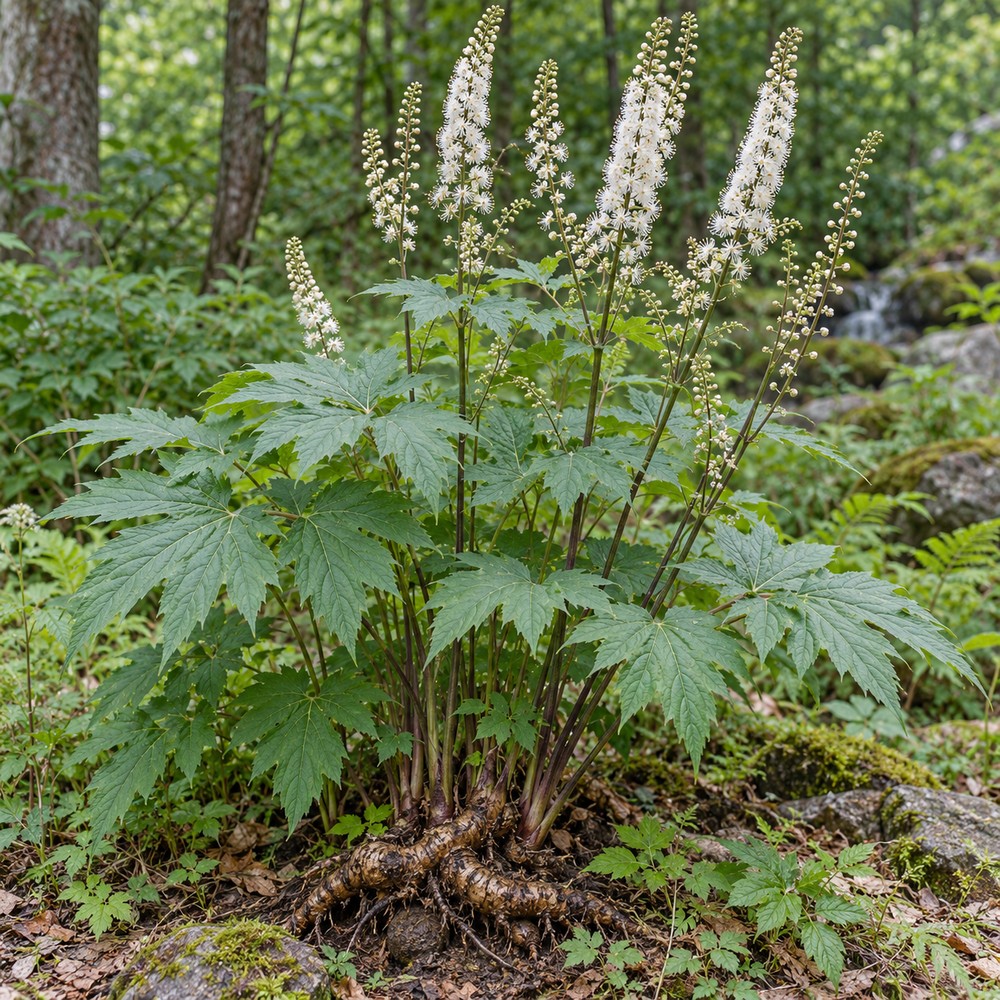
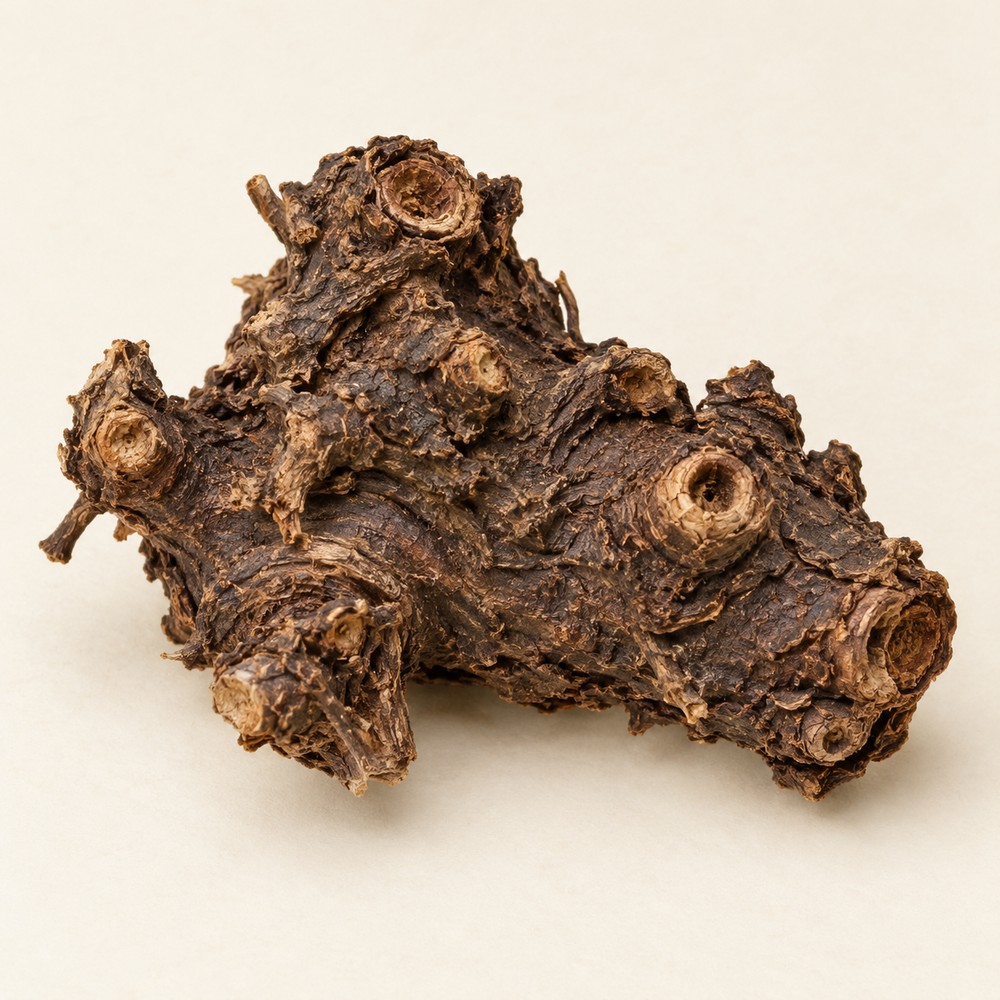
A perennial with large compound leaves and small clustered flowers; dried rhizomes are rough dark brown with hollow stem scars.
Traditional context
Yang-lifting, detoxifying, and rash-releasing are traditional claims; do not self-treat prolapse, rash, or infection.
Modern evidence
HKBU lists three source species with hollow round stem scars and fibrous cut surfaces; AI imagery cannot distinguish species.
Safety
Cimicifuga may affect liver/hormones and interact with medicines; use caution with liver disease, hormone-sensitive conditions, pregnancy, or treatment.
Pairing in reference texts
Sheng Ma pairs with Ge Gen, Bai Shao, and Gan Cao in some historical formulas; do not self-treat measles or uterine prolapse.
Growing, care, and harvest timing
HKBU habitat record: Growing in forest margins of hilly areas at altitude 1,700-2,300m or in roadside tussock. Distributed in Shanxi, Shaanxi, Gansu, Qinghai, West Henan, Hubei, Sichuan, Yunnan and Tibet. The medicinal materials are mainly produced in Sichuan, Shaanxi, Qinghai and etc Harvest and processing as recorded: Excavated in autumn, sun-dried till the fibrils get dried
Source-recorded harvest/processing: Excavated in autumn, sun-dried till the fibrils get dried
The reviewed source does not provide a complete species-specific sowing/growing routine, irrigation/fertilization schedule, or universal plant age. The page therefore does not infer care instructions or years to harvest; consult local cultivation guidance.
Open habitat and season source ↗FROM PLANT / SOURCE HABITAT TO DRIED MATERIAL · REFERENCE WORKFLOW
- Thu thân rễ trưởng thành vào mùa thu, rũ đất và cắt phần trên theo hồ sơ loài.
- Harvest mature rhizomes in autumn, shake off soil, and trim tops per species record.
These are post-harvest study notes, not directions to prepare a remedy for self-treatment. Processing reference ↗
How to read formula amounts
Displayed amounts belong to the cited formula and source; they are not a general safe ratio, treatment dose, or home-decoction instruction. Do not transfer amounts to another formula or adjust them by body weight.
Habitat, season, and harvest in the HKBU botanical record
HKBU botanical record (translated summary): Flowering and fruiting dates: Flowering: July to September, fruiting: August to October Habitat and distribution: Growing in forest margins of hilly areas at altitude 1,700-2,300m or in roadside tussock. Distributed in Shanxi, Shaanxi, Gansu, Qinghai, West Henan, Hubei, Sichuan, Yunnan and Tibet. The medicinal materials are mainly produced in Sichuan, Shaanxi, Qinghai and etc Harvest and processing as recorded: Excavated in autumn, sun-dried till the fibrils get dried
Open botanical source ↗HKBU formula record containing this herb: Sheng Ma Ge Gen Tang / Cimicifuga and Pueraria Decoction
Traditional action in the source: Releases the flesh and promotes complete eruption of rashes
Ingredient images and source amounts are shown for comparison only; this is not a treatment recipe.
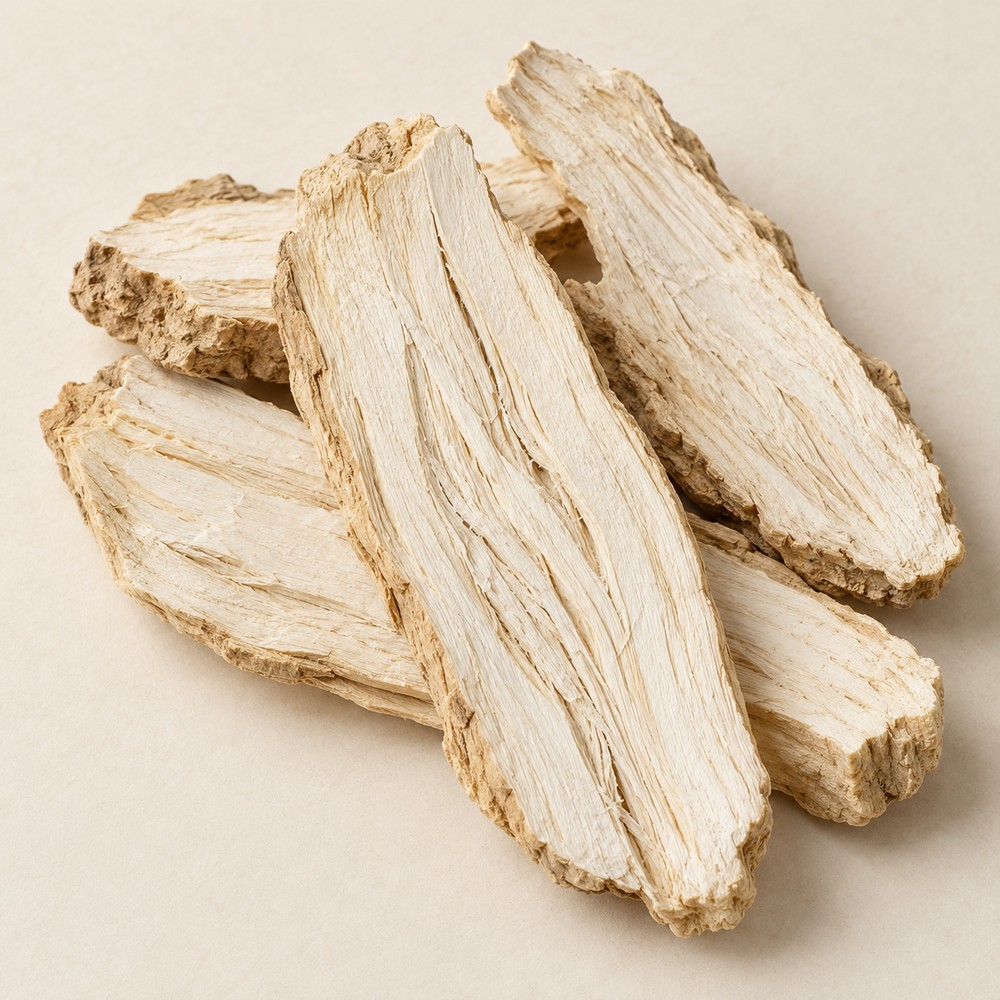
HKBU source-recorded composition
Cimicifugae Rhizoma (Sheng Ma) 10 liang (300g), Paeoniae Radix Alba (Shao Yao) 10 liang (300g), Glycyrrhizae Radix et Rhizoma (Zhi Gan Cao) 10 liang (300g), Puerariae Lobatae Radix (Ge Gen) 15 liang (450g)
The ingredients and amounts below are one HKBU-recorded version; texts, historical units, processing, and modern products can differ. This is comparative reference data, not a home-preparation recipe or personal dose.
Open complete HKBU formula record ↗