Su Mu · Sappan wood · Su Mu
Caesalpinia sappan L. · Dried heartwood
Name and part used
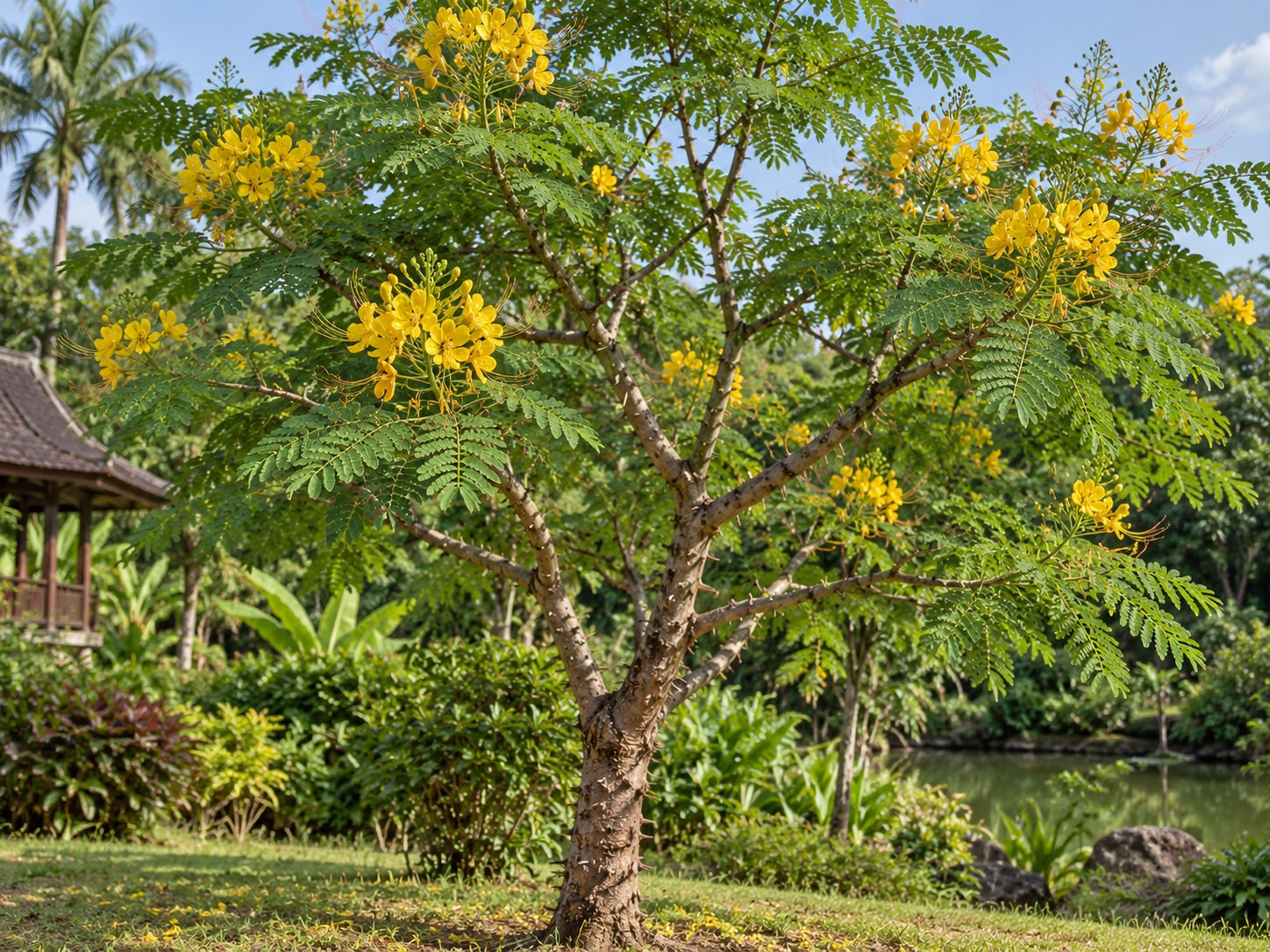
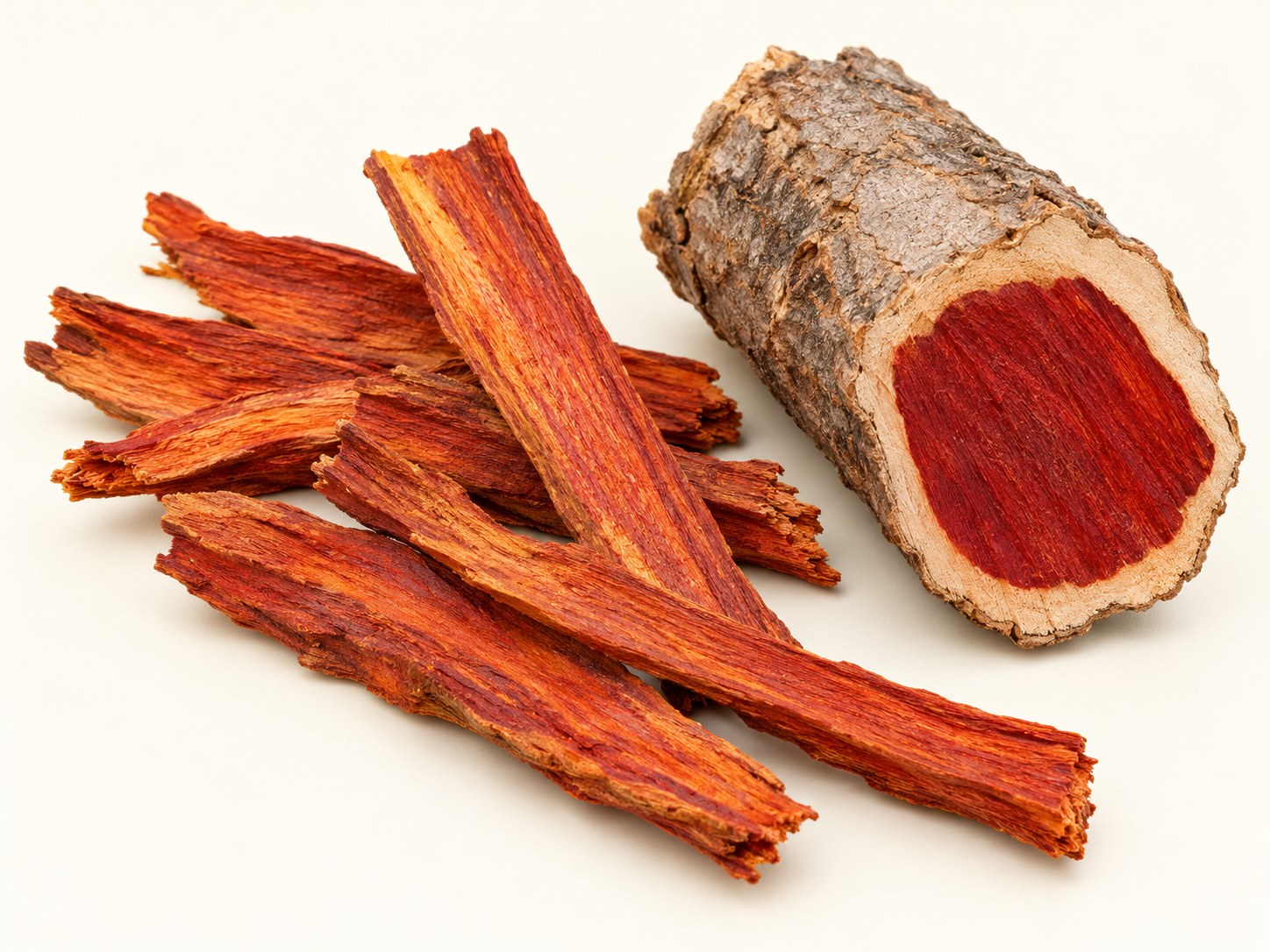
Su Mu is the heartwood of Caesalpinia sappan L., a large shrub or small Fabaceae tree about 5–10 m tall. Trunks and branches bear thorns; twice-pinnate leaves carry many opposite small leaflets, flowers are yellow, and the fruit is a flat hard pod. The drug is reddish-brown heartwood, dense and fibrous, commonly cut into chips or slices; it may color water red. It is not red sandalwood or another similarly named timber. HKBU describes a tropical tree and the drug as heartwood from stems/branches. Red color is a study cue, not proof of purity; dyes can alter appearance, so do not identify it by a colored soak alone.
Traditional context
HKBU records Su Mu as salty and neutral, with traditional actions of moving blood, resolving stasis, reducing swelling, and relieving pain. Historical indications for injury, pain, or menstrual complaints do not establish treatment of bleeding, fractures, or gynecological disease. Heavy bleeding, traumatic pain, suspected fracture, or pregnancy requires professional evaluation; do not self-administer a blood-moving drug.
Modern evidence
Brazilin and other heartwood pigments are studied chemically and in preclinical models, but that does not show a wood decoction treats injury or pain in people. A dye bath, standardized extract, and wood slice are different preparations. Deep red color cannot establish active content or quality. HKBU provides materia-medica records and historical examples, not clinical proof for a specific disease.
Safety
Avoid self-use during pregnancy or active bleeding; effects may add to anticoagulant or antiplatelet medicines. Do not drink a dye bath or unidentified wood and do not apply it to open wounds. Topical use may irritate or stain skin. Chronic conditions, planned surgery, or medicines warrant clinician/pharmacist advice. Pain after a fall, deformity, or loss of sensation needs medical care rather than a decoction.
Safety reference ↗Pairing in reference texts
Historical sources pair Su Mu with Ru Xiang, Mo Yao, or Dang Gui for injury/stasis concepts, but amounts and methods vary. Do not copy a “10 g each” formula from one text for another person, especially with anticoagulants, heavy menstruation, or pregnancy. Ingredient images are for comparison, not self-treatment instructions.
Identification and study notes
Su Mu is heartwood, not bark or root; slices are dense, fibrous, and red-brown. The living tree has thorns, tiny compound leaflets, and yellow flowers. A red extract can dye paper or cloth, which also makes visual adulteration hard to detect. A study specimen should show cross-section, sapwood, and heartwood for comparison. Never boil an unidentified sample and drink the colored water. The AI image depicts wood form and color but cannot certify natural pigment or species. Su Mu is also used as a natural dye and in crafts, so red wood samples may have different intended uses. Medicinal material requires heartwood structure, grain, tree provenance, and analytical standards—not just colored water. On the living tree, thorns and small compound leaflets are useful cues; the pod is not the drug part. A tree develops heartwood over years; a young potted plant cannot yield medicinal heartwood. Study the distinctions among bark removal, sapwood separation, heartwood retention, and drying. Avoid unlabeled wood powder and do not drink a red soak, because color may come from dye and says nothing about contaminants. Chuỗi chế biến bắt đầu từ cây trưởng thành có nguồn hợp pháp và kết thúc bằng lô tâm gỗ ghi nhãn; nhầm loài ảnh hưởng cả học dược liệu lẫn nhuộm màu. Khi học cấu trúc gỗ, so lõi đỏ với giác gỗ nhạt, quan sát thớ dày. Không suy rằng nước đỏ vô hại hoặc uống được. Bột đắp trong sách xưa có thể kèm vị khác; chăm sóc vết thương hiện đại là việc riêng. Với chấn thương, cần đánh giá nguyên nhân và mức độ trước khi cân nhắc bất kỳ dược liệu nào.
Growth and habitat
HKBU records Caesalpinia sappan in southern China and tropical Asia. It prefers sun and light, well-drained soil and tolerates moderate drought once established. The thorny plant should be kept away from paths. Waterlogged soil damages roots and young plants need protection from prolonged cold. Commercial heartwood comes from mature trees, not a one-season crop.
Identification and study notes
Su Mu is heartwood, not bark or root; slices are dense, fibrous, and red-brown. The living tree has thorns, tiny compound leaflets, and yellow flowers. A red extract can dye paper or cloth, which also makes visual adulteration hard to detect. A study specimen should show cross-section, sapwood, and heartwood for comparison. Never boil an unidentified sample and drink the colored water. The AI image depicts wood form and color but cannot certify natural pigment or species. Su Mu is also used as a natural dye and in crafts, so red wood samples may have different intended uses. Medicinal material requires heartwood structure, grain, tree provenance, and analytical standards—not just colored water. On the living tree, thorns and small compound leaflets are useful cues; the pod is not the drug part. A tree develops heartwood over years; a young potted plant cannot yield medicinal heartwood. Study the distinctions among bark removal, sapwood separation, heartwood retention, and drying. Avoid unlabeled wood powder and do not drink a red soak, because color may come from dye and says nothing about contaminants. Chuỗi chế biến bắt đầu từ cây trưởng thành có nguồn hợp pháp và kết thúc bằng lô tâm gỗ ghi nhãn; nhầm loài ảnh hưởng cả học dược liệu lẫn nhuộm màu. Khi học cấu trúc gỗ, so lõi đỏ với giác gỗ nhạt, quan sát thớ dày. Không suy rằng nước đỏ vô hại hoặc uống được. Bột đắp trong sách xưa có thể kèm vị khác; chăm sóc vết thương hiện đại là việc riêng. Với chấn thương, cần đánh giá nguyên nhân và mức độ trước khi cân nhắc bất kỳ dược liệu nào.
Growing and care
- Start with correctly identified Caesalpinia sappan seed or nursery plants; follow the nursery’s scarification guidance because the seed coat may be hard.
- Plant in full sun and light, well-drained soil with room for the canopy; protect young plants from frost and grazing.
- Water moderately during establishment and deeply in dry periods; remove dead branches, control weeds, and do not cut wood from young plants.
- Record planting year and trunk size; harvest only under local forestry rules when the tree meets managed maturity criteria.
How long until harvest? HKBU describes harvesting heartwood from mature trees but gives no exact year count. As a woody tree, it requires years and varies with stock and site; it is not a months-long crop. Harvest only when locally managed maturity rules are met, then separate authenticated red heartwood.
Habitat, season, and harvest in the HKBU botanical record
HKBU identifies Su Mu as Caesalpinia sappan L. in Fabaceae, a thorny 5–10 m shrub/tree with twice-pinnate leaves and yellow flowers. The drug is dried red heartwood from mature stems after bark/sapwood removal. Production includes southern China and Southeast Asia. Other Caesalpinia species may also have yellow flowers or red compounds, so Latin identity matters.
Open botanical source ↗FROM PLANT / SOURCE HABITAT TO DRIED MATERIAL · REFERENCE WORKFLOW
- Authenticate the tree and obtain harvest permission; use only mature stem/branch wood from a lawful source.
- Remove rough bark and sapwood to the specification, keeping red heartwood separate; discard rot, mold, and foreign matter.
- Air- or kiln-dry the wood, then plane or split into slices/chips to the required grade; prevent dye adulteration and species mixing.
- Record Latin name, part, region, harvest year, and process; store dry. Red soak-water alone is not a quality test.
These are post-harvest study notes, not directions to prepare a remedy for self-treatment. Processing reference ↗