Peach kernel · Tao Ren
Prunus persica (L.) Batsch · Mature seed kernel
Name and part used
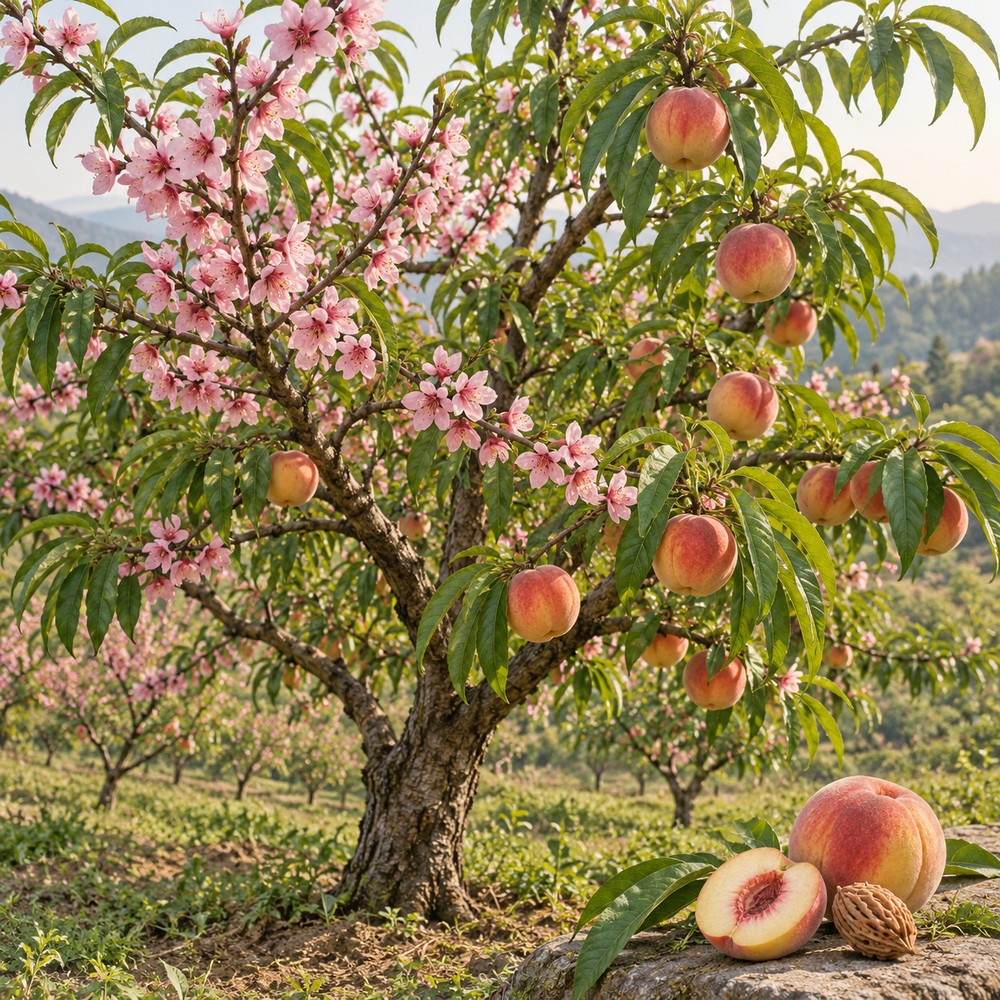
Peach trees have lance-shaped leaves, spring pink blossoms, and fuzzy fruit; the medicinal seed is inside the hard stone, not the flesh.
Traditional context
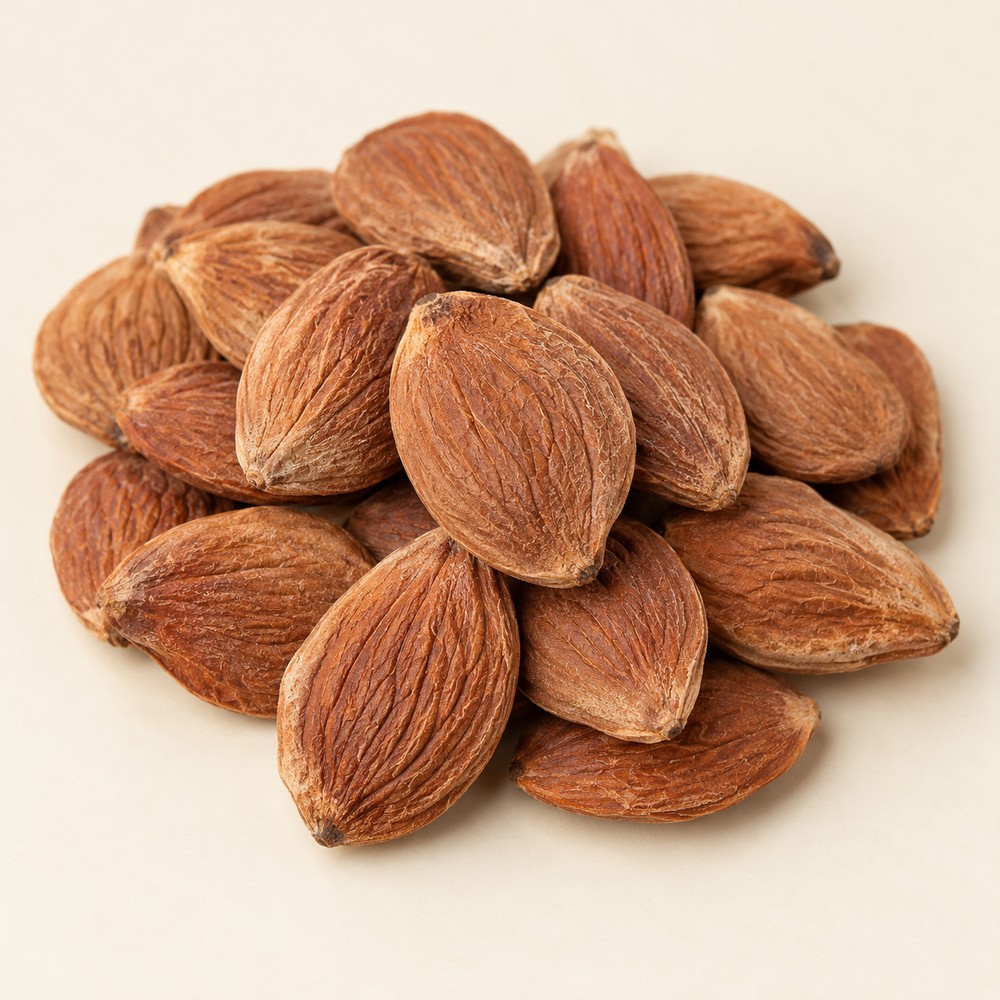
HKBU identifies Tao Ren as the dried mature seed of Prunus persica or P. davidiana. Seeds are flattened oval, brown, veined, with oily kernels.
Modern evidence
Blood-moving and bowel-moistening are traditional concepts, not substitutes for diagnosis or condition-specific clinical evidence.
Safety
Prunus seeds may contain cyanogenic compounds. Avoid raw or home-ground use; bleeding risk and anticoagulant interactions need professional review. Avoid self-use during pregnancy.
Pairing in reference texts
Tao Ren appears in Sheng Hua Tang with Dang Gui, Chuan Xiong, Pao Jiang, and honey-prepared Gan Cao in HKBU's formula database. This is historical documentation, not a self-treatment recipe.
Growing, care, and harvest timing
HKBU habitat record: Originating in China. Can be cultivated. Distributed in all parts of China. The medicinal materials are mainly produced in Sichuan, Yunnan, Shaanxi, Shandong, Hebei and etc Harvest and processing as recorded: Mature fruits harvested, removed the flesh and the shell, taken out the seeds, and dried
Source-recorded harvest/processing: Mature fruits harvested, removed the flesh and the shell, taken out the seeds, and dried
The reviewed source does not provide a complete species-specific sowing/growing routine, irrigation/fertilization schedule, or universal plant age. The page therefore does not infer care instructions or years to harvest; consult local cultivation guidance.
Open habitat and season source ↗FROM PLANT / SOURCE HABITAT TO DRIED MATERIAL · REFERENCE WORKFLOW
- Authenticate peach or accepted source species; do not confuse the medicinal kernel with almonds or apricot seeds.
- Harvest ripe fruits, remove the flesh, and retain the stones; clean off adhering debris.
- Dry stones under controlled conditions; trained facilities separate kernels, not home users.
- Grade intact characteristic kernels, test the lot, and package with supplier traceability.
These are post-harvest study notes, not directions to prepare a remedy for self-treatment. Processing reference ↗
How to read formula amounts
Displayed amounts belong to the cited formula and source; they are not a general safe ratio, treatment dose, or home-decoction instruction. Do not transfer amounts to another formula or adjust them by body weight.
Habitat, season, and harvest in the HKBU botanical record
HKBU botanical record (translated summary): Flowering and fruiting dates: Flowering: March to April, fruiting: June to July Habitat and distribution: Originating in China. Can be cultivated. Distributed in all parts of China. The medicinal materials are mainly produced in Sichuan, Yunnan, Shaanxi, Shandong, Hebei and etc Harvest and processing as recorded: Mature fruits harvested, removed the flesh and the shell, taken out the seeds, and dried
Open botanical source ↗HKBU formula record containing this herb: Da Huang Mu Dan Tang / Rhubarb and Cortex Moutan Decoction
Traditional action in the source: Drains heat, breaks up stasis, dissipates masses, and relieves swollen sores
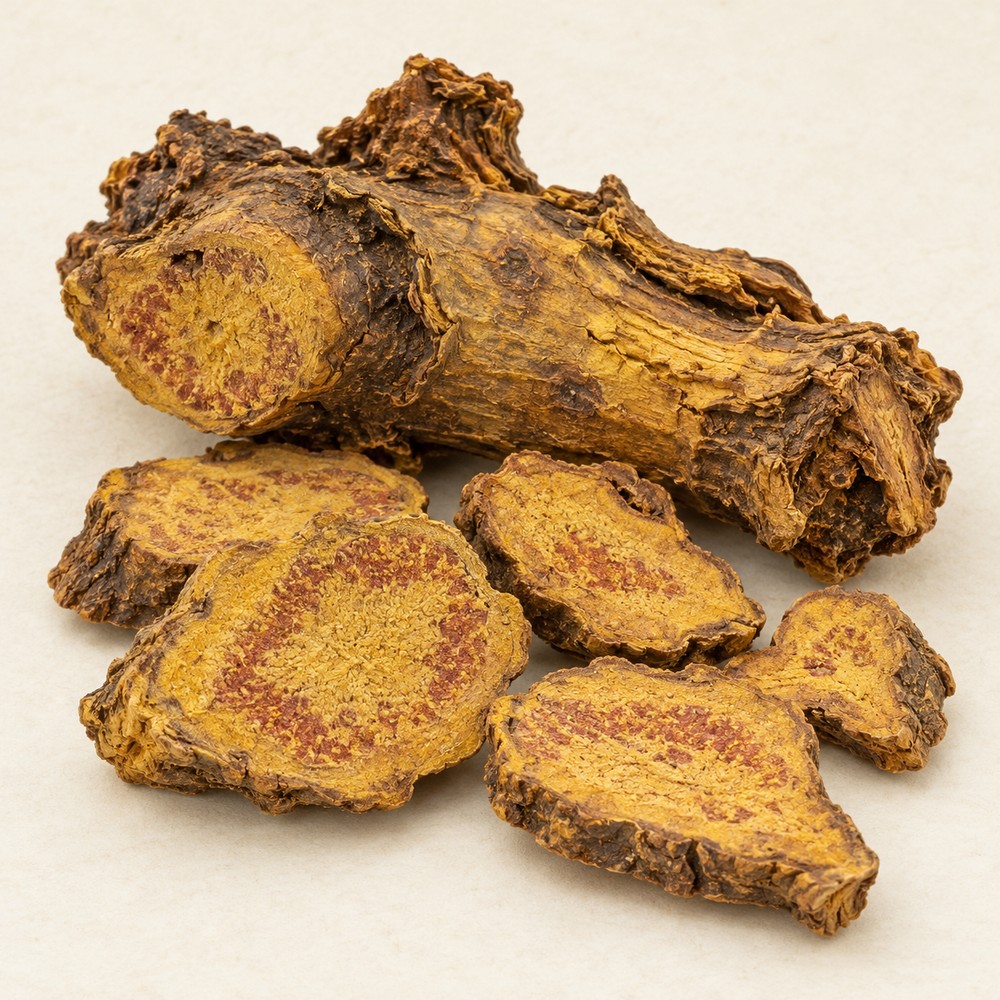
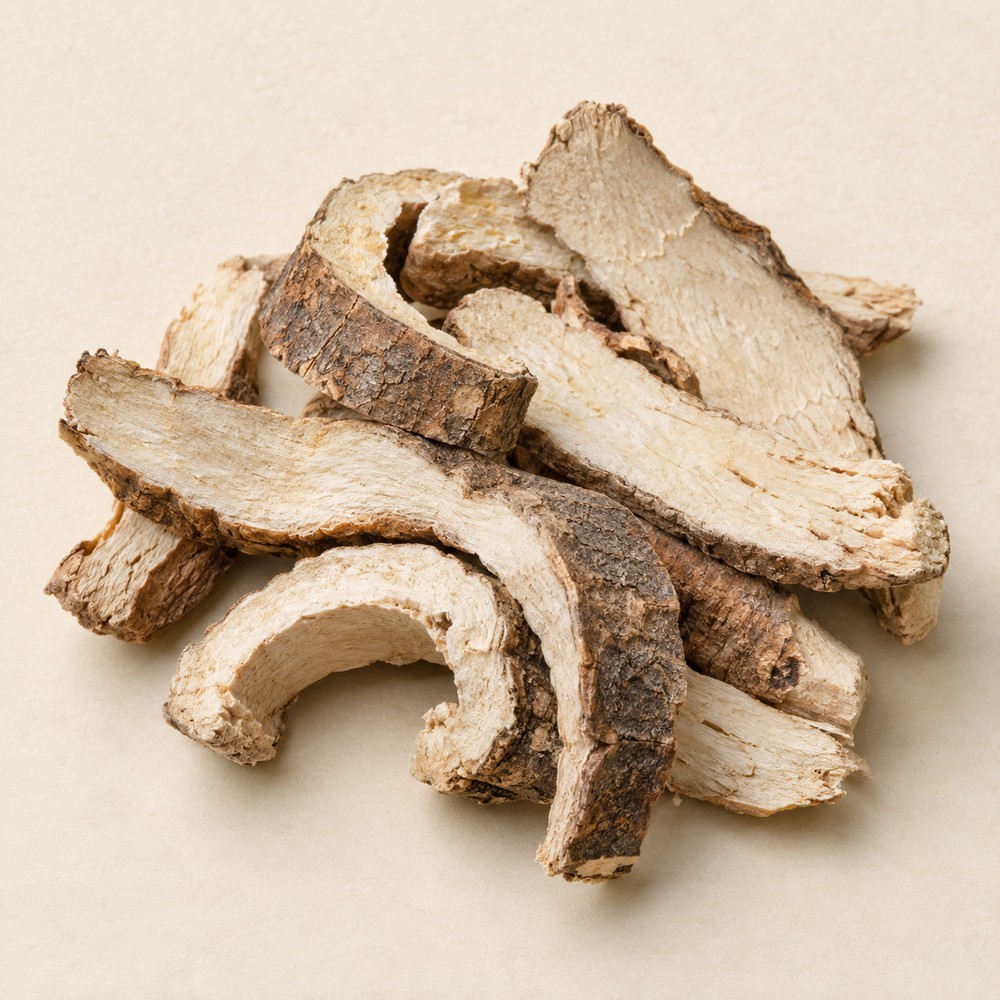
Ingredient images and source amounts are shown for comparison only; this is not a treatment recipe.
HKBU source-recorded composition
Rhei Radix et Rhizoma (Da Huang) 4 liang (12g), Moutan Cortex (Mu Dan Pi) 1 liang (3g), Persicae Semen (Tao Ren) 50 pieces (9g), Benincasae Semen (Dong Gua Ren) 0.5 sheng (30g), Natrii Sulfas (Mang Xiao) 3 he (9g)
The ingredients and amounts below are one HKBU-recorded version; texts, historical units, processing, and modern products can differ. This is comparative reference data, not a home-preparation recipe or personal dose.
Open complete HKBU formula record ↗