Wei Ling Xian · Wei Ling Xian
Clematis chinensis Osbeck · Dried root and rhizome
Name and part used
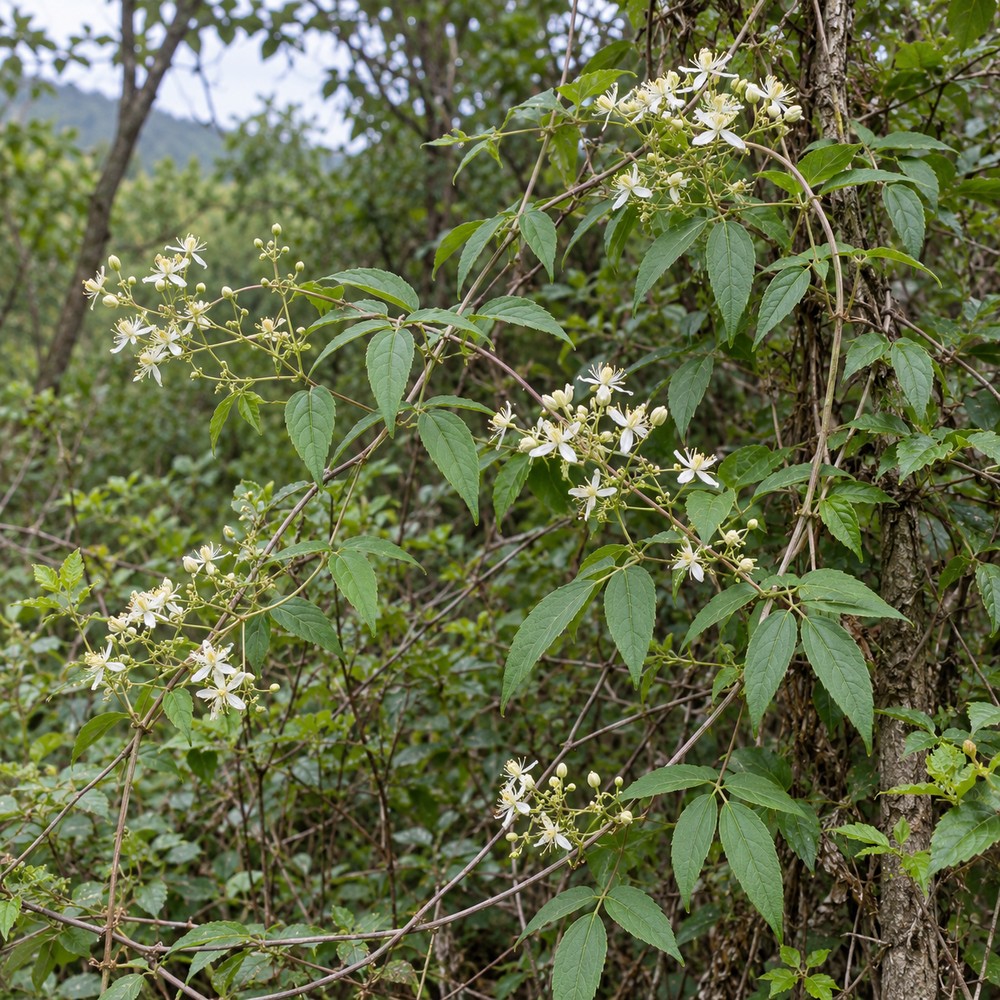
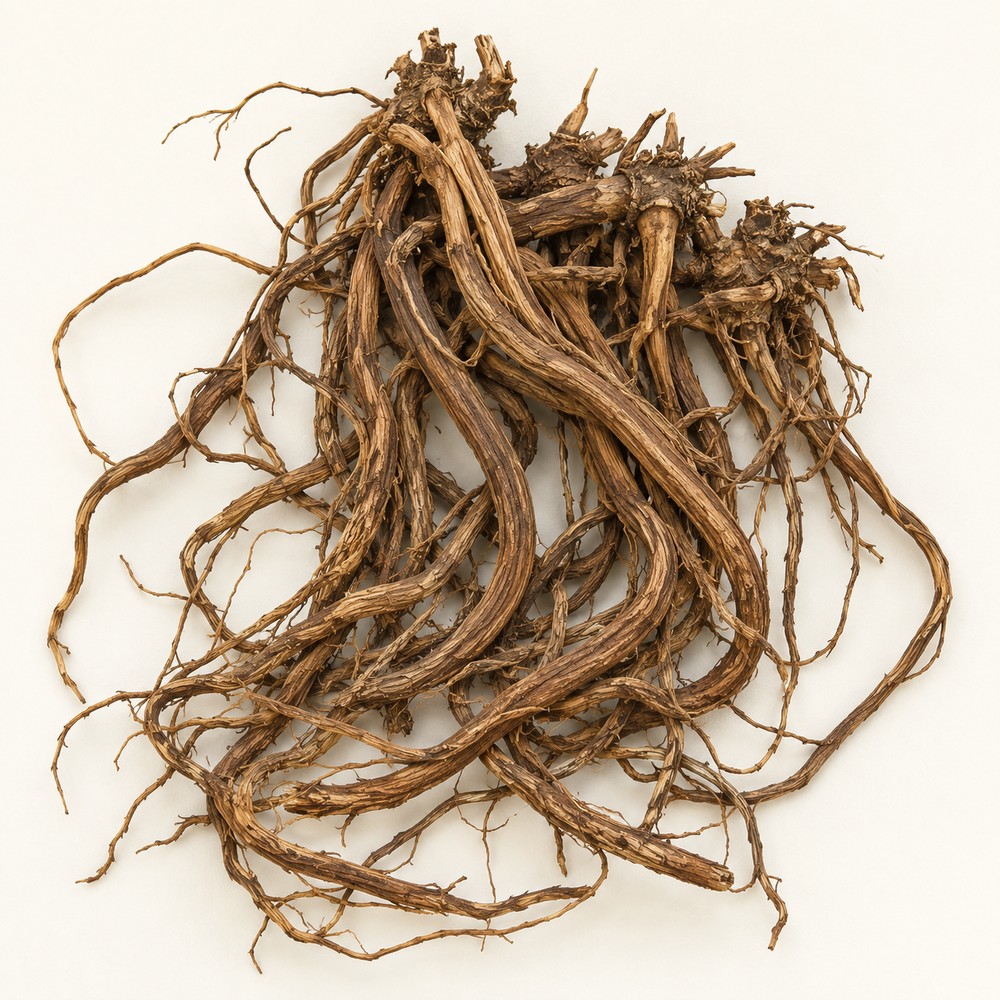
Wei Ling Xian is dried root/rhizome from accepted Clematis species including C. chinensis, C. hexapetala, and C. manshurica; one plant image cannot represent all. Clematis often climbs or scrambles, with opposite compound leaves, twining petioles, and distinctive flowers/feathery seed heads. Dried C. chinensis roots are long and dark with a cylindrical rhizome and fibrous pale-yellow fracture. Verify species and origin.
Traditional context
Traditional sources describe acrid, salty, warm properties in pattern-based wind-damp pain, numbness, or stiffness. This does not prove treatment of arthritis or neuropathy.
Modern evidence
HKBU describes three source species and materia-medica features. Chemical research does not establish clinical benefit; hot swollen joints, fever, or weakness needs assessment.
Safety
Species substitution, allergy, and irritation from fresh plant material are concerns; do not ingest ornamentals or fresh roots. Only consider traceable processed material under professional supervision. Review pregnancy, children, conditions, and medicines.
Pairing in reference texts
Sources include it in formulas for pain/numbness patterns, but reviewed references establish no universal pair or ratio. Do not add Du Huo, Qiang Huo, or analgesics based on similar traditional labels; assess individually.
Growth and habitat
HKBU records source Clematis species in China, with material from Shanxi, Henan, Hebei, and Shandong; habitat varies by species.
Growing, care, and harvest timing
The profile above includes sourced steps and a documented harvest window. Harvest timing is agronomic information, not a self-use instruction.
Growing and care
- L
- à
- m
- g
- i
- à
- n
- t
- h
- o
- á
- n
- g
- ,
- đ
- ấ
- t
- m
- ù
- n
- t
- h
- o
- á
- t
- n
- ư
- ớ
- c
- v
- à
- r
- ễ
- m
- á
- t
- ;
- y
- ê
- u
- c
- ầ
- u
- t
- ù
- y
- l
- o
- à
- i
- .
How long until harvest? HKBU describes harvest/processing but no universal household harvest age. An ornamental plant is not automatically medicinal-grade.
Documented toxic incompatibility
Reviewed sources do not confirm a specific toxic herb pair; that does not prove all combinations safe. Identity, processing, medicines, and conditions still need professional review.
FROM PLANT / SOURCE HABITAT TO DRIED MATERIAL · REFERENCE WORKFLOW
- Harvest only a verified Clematis lot and follow the monograph for that species.
- Wash soil away and remove damaged roots/debris; do not soak for long.
- Cut, dry, and store to a professionally approved batch specification.
- Record species, origin, and processing date; never use ornamentals or fresh material.
These are post-harvest study notes, not directions to prepare a remedy for self-treatment. Processing reference ↗
How to read formula amounts
The cited sources do not provide a formula with specific amounts for this profile; no ratio is invented. Absence from the incompatibility list does not establish safety.