White peony root · Bai Shao
Paeonia lactiflora Pall. · Root
Name and part used
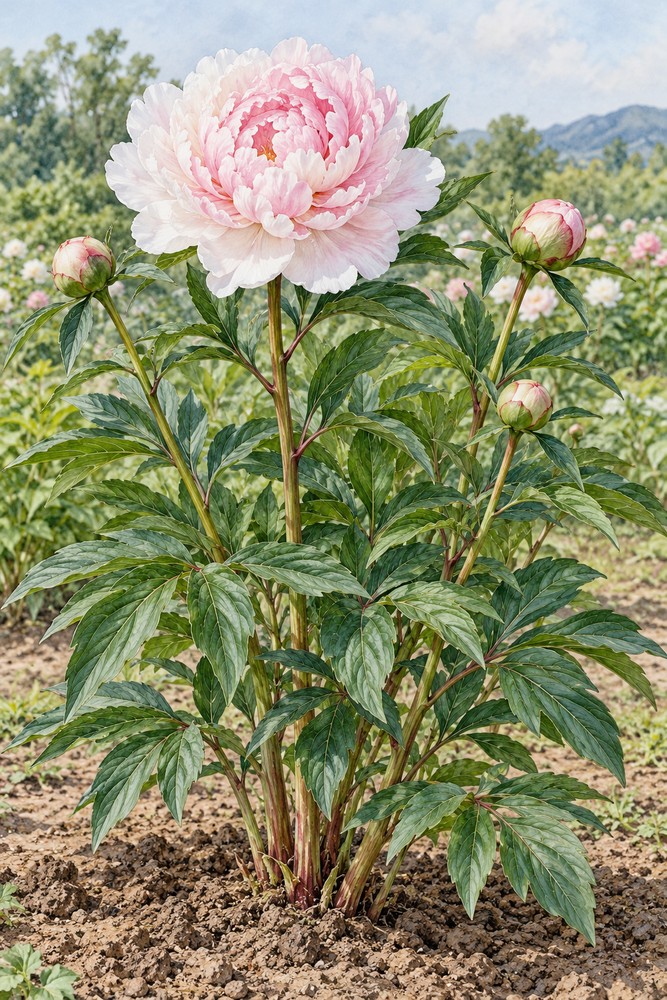
A herbaceous peony with divided leaves and large blooms; Bai Shao is its processed root.
Traditional context
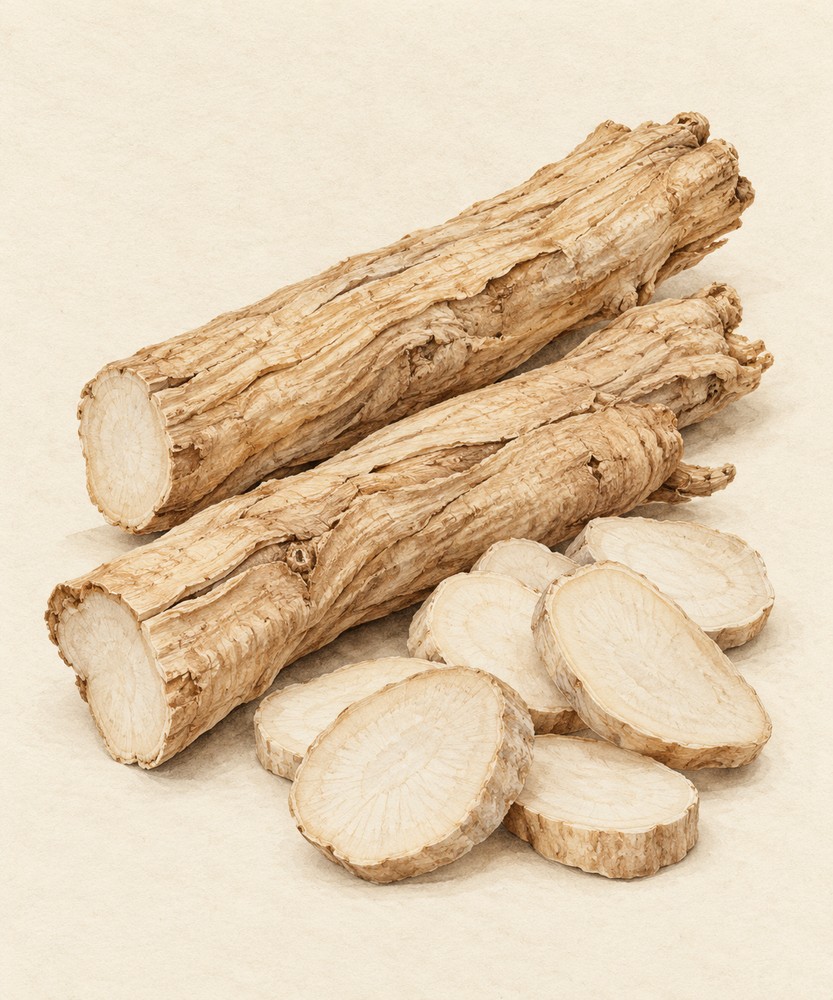
HKBU records Bai Shao as processed Paeonia lactiflora root. Do not conflate all peonies or white and red peony materials.
Modern evidence
Traditional descriptions are not proof of treatment for a specific symptom; identity and processing define the material.
Safety
Interaction evidence is limited. Consult a clinician or pharmacist when taking medicines, before surgery, during pregnancy, or with chronic illness.
Pairing in reference texts
HKBU records it in classical formulas including Gui Zhi Fu Ling Wan. That does not establish safety for every person.
Growing, care, and harvest timing
HKBU habitat record: Growing on mountain slopes, thickets or tussock of valleys. Distributed in Heilongjiang, Jilin, Liaoning, Hebei, Henan, Shandong, Shanxi, Shaanxi, Inner Mongolia and etc. The medicinal materials are mainly produced in Zhejiang, Anhui, Sichuan and et. Also produced in Shandong, Guizhou, Hunan, Hubei, Gansu, Shaanxi, Henan, Yunnan and etc Harvest and processing as recorded: In summer and autumn, excavated peony root cultivated for 3-4 years, removed rhizome and fibrous root, well washed, removed raw barks, simply stewed in boiling water to soften the root, then sundried
Source-recorded harvest/processing: In summer and autumn, excavated peony root cultivated for 3-4 years, removed rhizome and fibrous root, well washed, removed raw barks, simply stewed in boiling water to soften the root, then sundried
The reviewed source does not provide a complete species-specific sowing/growing routine, irrigation/fertilization schedule, or universal plant age. The page therefore does not infer care instructions or years to harvest; consult local cultivation guidance.
Open habitat and season source ↗FROM PLANT / SOURCE HABITAT TO DRIED MATERIAL · REFERENCE WORKFLOW
- Harvest roots from appropriately aged cultivated peony in summer or autumn as described by HKBU; keep species and source separate.
- Remove rhizome and fine roots and wash; do not substitute another peony species.
- HKBU describes brief hot-water softening followed by sun drying; commercial processing should follow current materia medica standards.
- Label Latin name, growing region, process, and lot; cool and store dry, protected from mold.
These are post-harvest study notes, not directions to prepare a remedy for self-treatment. Processing reference ↗
How to read formula amounts
The cited sources do not provide a formula with specific amounts for this profile; no ratio is invented. Absence from the incompatibility list does not establish safety.
Habitat, season, and harvest in the HKBU botanical record
HKBU botanical record (translated summary): Flowering and fruiting dates: Flowering: June, fruiting: August to September Habitat and distribution: Growing on mountain slopes, thickets or tussock of valleys. Distributed in Heilongjiang, Jilin, Liaoning, Hebei, Henan, Shandong, Shanxi, Shaanxi, Inner Mongolia and etc. The medicinal materials are mainly produced in Zhejiang, Anhui, Sichuan and et. Also produced in Shandong, Guizhou, Hunan, Hubei, Gansu, Shaanxi, Henan, Yunnan and etc Harvest and processing as recorded: In summer and autumn, excavated peony root cultivated for 3-4 years, removed rhizome and fibrous root, well washed, removed raw barks, simply stewed in boiling water to soften the root, then sundried
Open botanical source ↗