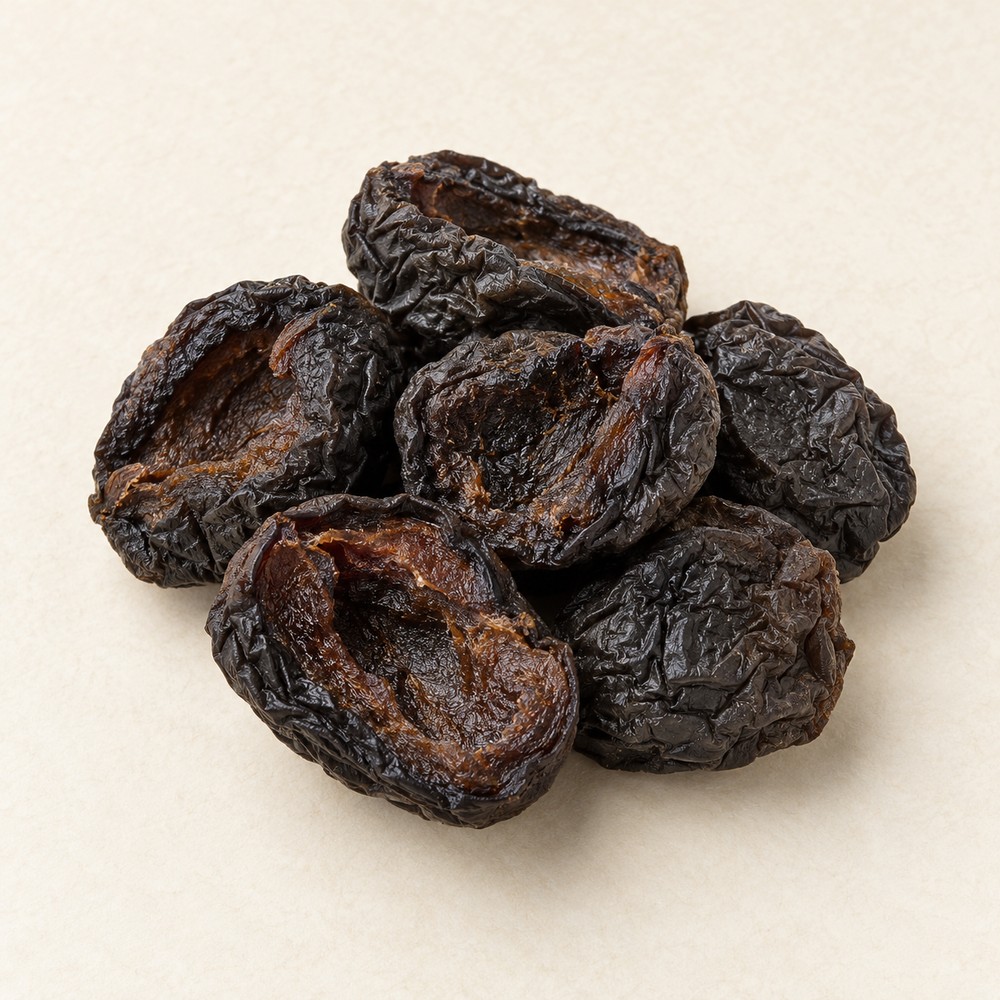
Smoked mume fruit · Wu Mei
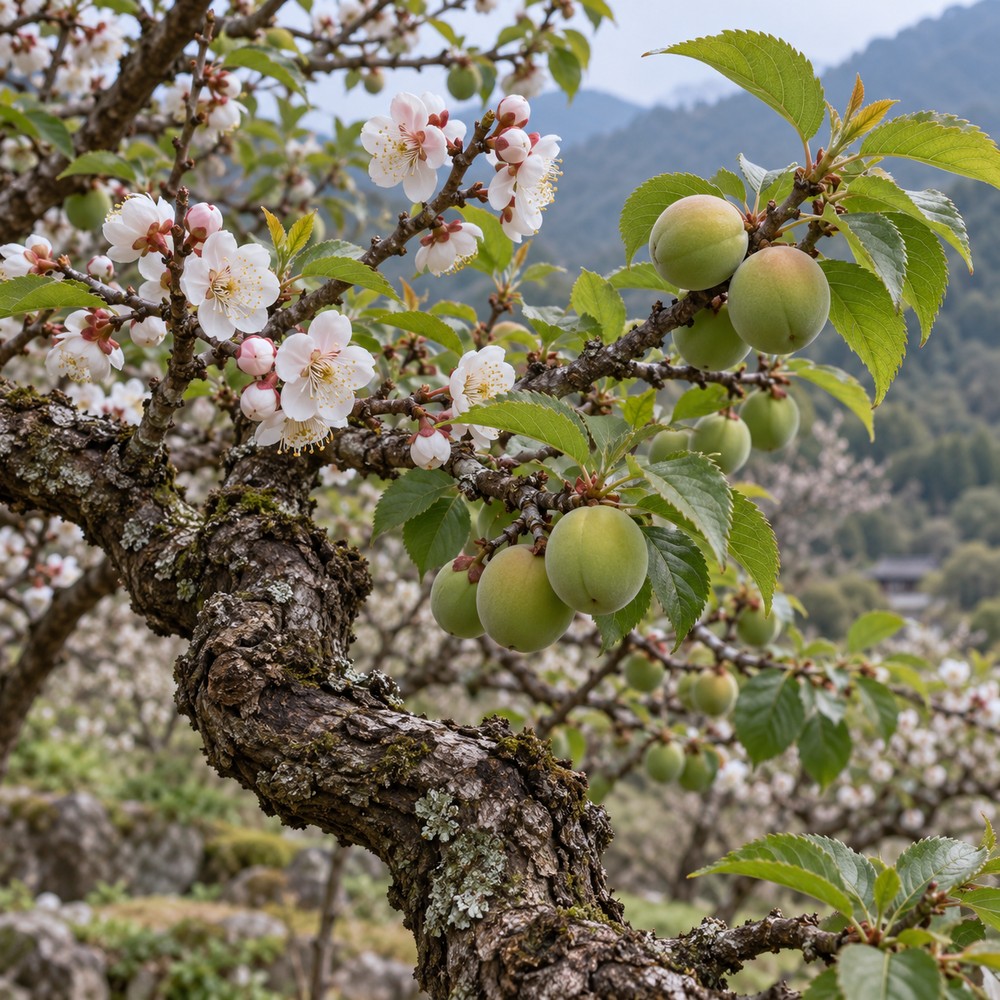
Prunus mume (Siebold) Siebold & Zucc. · Nearly mature fruit
Name and part used
A deciduous mume with fragrant pale flowers before leaf-out; round green fruits turn yellow as they mature.
Traditional context
Wu Mei is nearly mature Prunus mume fruit processed and dried to standard, distinct from the flower bud materia medica. HKBU records summer harvest while green-yellow; its black color is processing, not mold.
Modern evidence
Lung-astringing, intestinal astringing, and fluid-generating are traditional terms. Organic-acid data do not establish treatment of diarrhea, chronic cough, or parasites.
Safety
Acidic products can irritate the stomach or affect enamel; food use differs from medicinal preparations. Take care with ulcers or chronic illness.
Pairing in reference texts
Wu Mei appears in historical formulas, including Wu Mei Wan with Coptis or dried ginger in specific contexts. This record is not a diarrhea prescription.
Growing, care, and harvest timing
HKBU habitat record: Growing on warm, humid and sunny places. Can be cultivated. Distributed in all parts of Southwest China and the south of the Yangtze River. The medicinal materials are mainly produced in Zhejiang, Fujian, Yunnan and etc Harvest and processing as recorded: Fruits: harvested nearly mature fruits in summer, low temperature dried until black. Buds: picked early spring flower before blooming, immediately low-temperature dried
Source-recorded harvest/processing: Fruits: harvested nearly mature fruits in summer, low temperature dried until black. Buds: picked early spring flower before blooming, immediately low-temperature dried
The reviewed source does not provide a complete species-specific sowing/growing routine, irrigation/fertilization schedule, or universal plant age. The page therefore does not infer care instructions or years to harvest; consult local cultivation guidance.
Open habitat and season source ↗FROM PLANT / SOURCE HABITAT TO DRIED MATERIAL · REFERENCE WORKFLOW
- Harvest nearly mature fruit in summer at the green-yellow stage; authenticate Prunus mume and reject damaged fruit.
- Wash, drain, and lot the fruit; distinguish it from ripe dessert fruit and flower-bud material.
- HKBU describes low-temperature drying followed by controlled conditioning to a black color; do not smoke or chemically process fruit at home.
- Finish-dry and check uniform color, odor, and moisture; document processing and store sealed and dry.
These are post-harvest study notes, not directions to prepare a remedy for self-treatment. Processing reference ↗
How to read formula amounts
The cited sources do not provide a formula with specific amounts for this profile; no ratio is invented. Absence from the incompatibility list does not establish safety.
Habitat, season, and harvest in the HKBU botanical record
HKBU botanical record (translated summary): Flowering and fruiting dates: Flowering: winter-spring, fruiting: May to June Habitat and distribution: Growing on warm, humid and sunny places. Can be cultivated. Distributed in all parts of Southwest China and the south of the Yangtze River. The medicinal materials are mainly produced in Zhejiang, Fujian, Yunnan and etc Harvest and processing as recorded: Fruits: harvested nearly mature fruits in summer, low temperature dried until black. Buds: picked early spring flower before blooming, immediately low-temperature dried
Open botanical source ↗