Nutgrass galingale · Xiang Fu
Cyperus rotundus L. · Dried rhizome
Name and part used
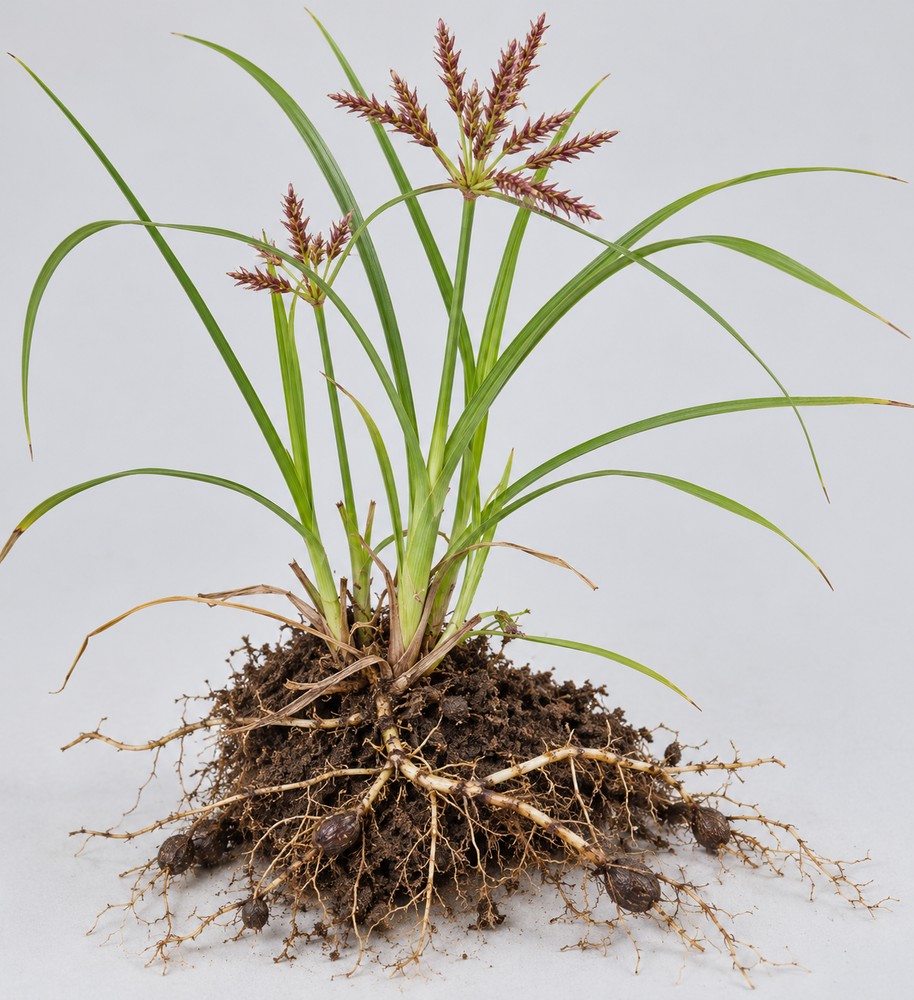
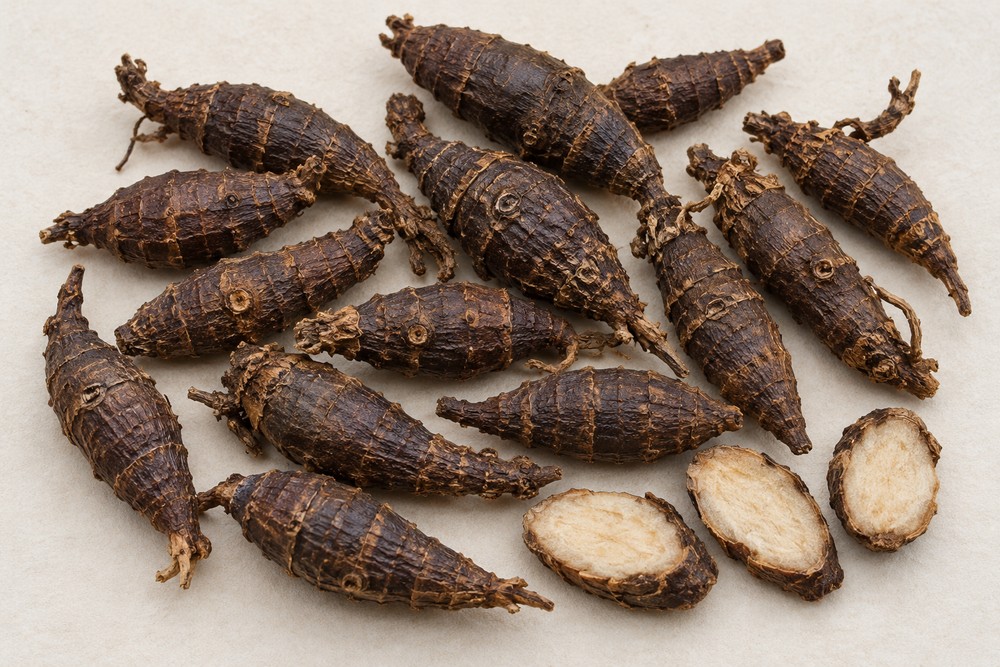
A perennial sedge has triangular stems, narrow leaves, and reddish-brown flower clusters. Underground rhizomes form chains with small dark tubers; the dried material is aromatic and jointed.
Traditional context
Traditional texts describe moving qi, relieving constraint, regulating menstruation, and easing pain. These are not evidence of treatment for menstrual disorders, infertility, pelvic pain, or depression.
Modern evidence
HKBU identifies the dried rhizome of Cyperus rotundus and describes spindle-shaped tubers with root scars. Field sedges have lookalikes; smell or AI art alone cannot authenticate them.
Safety
Allergy or digestive discomfort is possible; interaction data are limited. Avoid self-use in pregnancy, bleeding disorders, or with medicines, especially without verified species and product identity.
Pairing in reference texts
A sourced example is Xiang Su San: Xiang Fu 4 liang, Zi Su Ye 4 liang, Chen Pi 2 liang, and honey-fried licorice 1 liang; HKBU gives 120:120:60:30 g. The classical formula describes releasing the exterior and regulating qi; it is not a cold-treatment recipe.
Growth and habitat
A perennial weed of warm climates and many soils; tubers and rhizome fragments spread through soil. New Zealand’s weed guidance warns that even small tuber fragments can regrow.
Growing, care, and harvest timing
The profile above includes sourced steps and a documented harvest window. Harvest timing is agronomic information, not a self-use instruction.
Growing and care
- Home cultivation for medicinal harvest is not recommended. If kept as a study specimen, use a sealed container with a catch tray and mark it as invasive.
- Inspect for new shoots/tubers; bag the entire tuber system and do not till fragments into soil.
- Do not compost tubers/rhizomes or dump soil into drains, vacant lots, or fields.
- Follow local invasive-weed rules; choose a non-invasive teaching plant when possible.
How long until harvest? Medicinal cultivation is not recommended; rapid tuber spread and container control do not make the crop a safe drug source. No ‘ready-to-use’ age is stated.
Documented formula pairing: Xiang Su San
In HKBU’s account, Zi Su Ye releases the exterior and regulates qi, Xiang Fu supports qi movement, Chen Pi regulates qi, and licorice harmonizes the formula—traditional explanations.
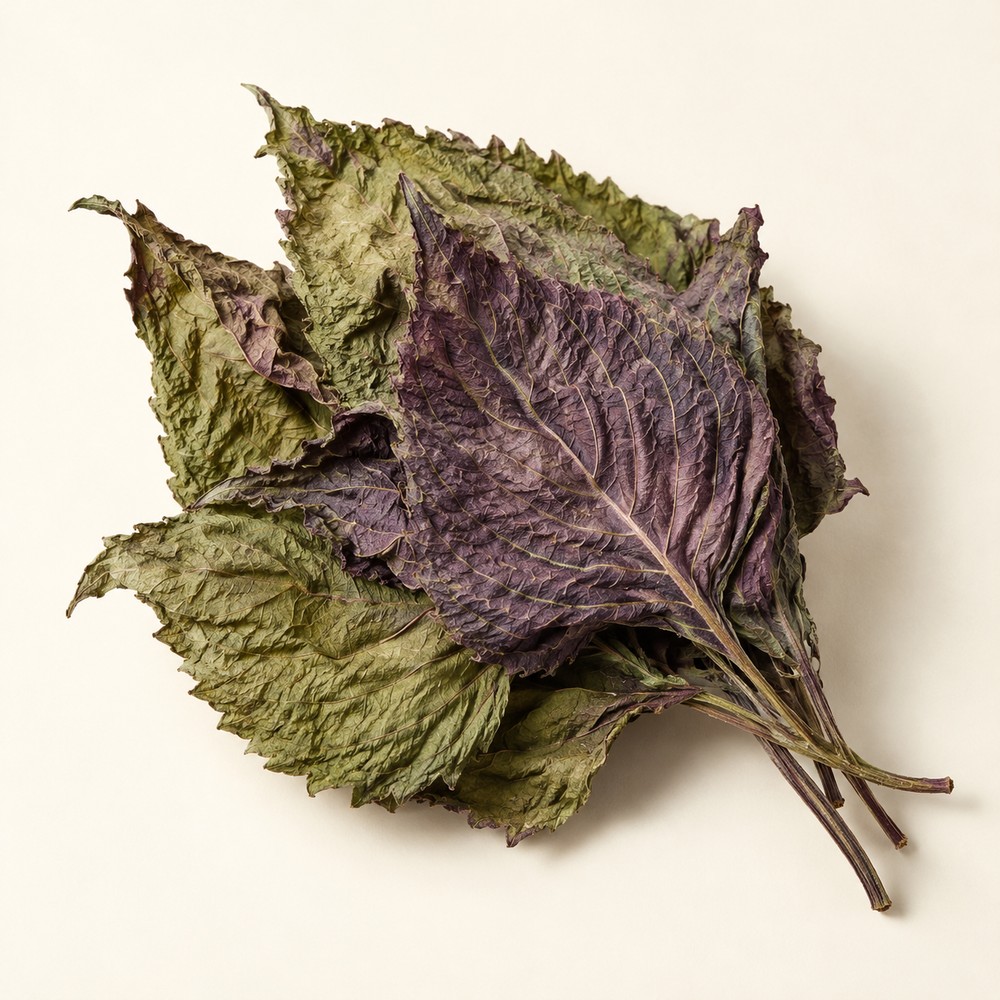
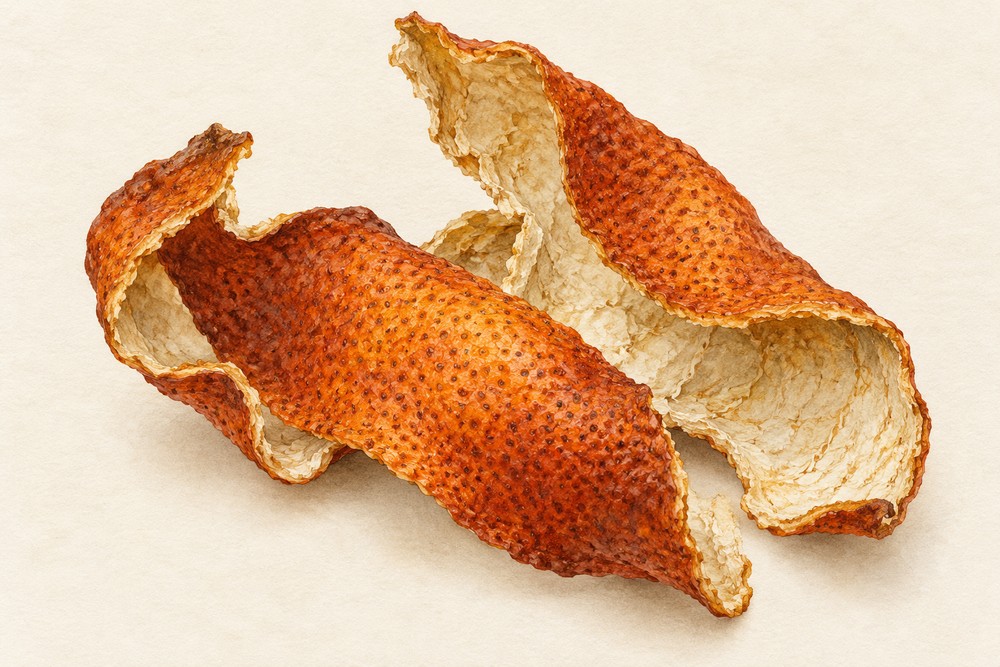
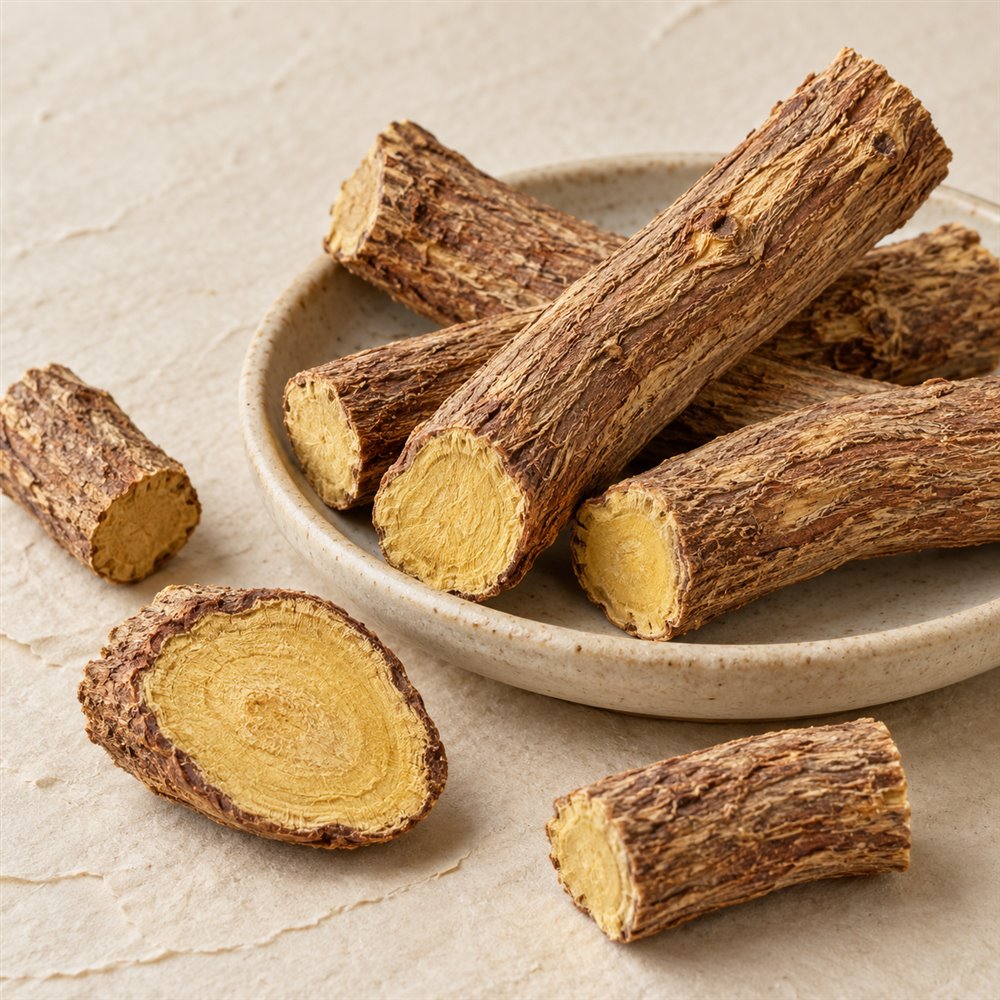
Source-recorded amounts: Source ratio: 4:4:2:1 by weight. HKBU records a classical version and notes adaptation by proportion; do not convert it into a personal dose.
Caution: Licorice can affect blood pressure, potassium, and cardiovascular medicines with substantial/prolonged exposure; the formula is not automatically safe. Do not self-treat fever or colds with it.
Open formula record ↗Documented toxic incompatibility
No checked source confirms a specific toxic incompatibility between Xiang Fu and the three partners in Xiang Su San. No warning found is not proof of safety; this only documents a historical formula.
FROM PLANT / SOURCE HABITAT TO DRIED MATERIAL · REFERENCE WORKFLOW
- Do not plant in an open bed: Cyperus rotundus is a serious weed in many regions and spreads through tubers and rhizome fragments.
- For study only, keep a specimen in a sealed-bottom container on a hard surface; never discard soil or tubers into the environment.
- It favors warm, sunny conditions; new tubers sprout and form chains, so spread must be contained.
- Do not use self-harvested tubers medicinally without species authentication, contamination controls, and qualified testing.
These are post-harvest study notes, not directions to prepare a remedy for self-treatment. Processing reference ↗
How to read formula amounts
Displayed amounts belong to the cited formula and source; they are not a general safe ratio, treatment dose, or home-decoction instruction. Do not transfer amounts to another formula or adjust them by body weight.
Habitat, season, and harvest in the HKBU botanical record
HKBU botanical record (translated summary): Flowering and fruiting dates: Flowering: May to August, fruiting: July to November Habitat and distribution: Growing in mountain grasslands, cultivated lands and roadside humid places. Distributed in North, South-central and Southwest China, Liaoning, Hebei, Shanxi, Shaanxi, Gansu, Taiwan and etc. The medicinal materials are mainly produced in Shandong, Zhejiang, Fujian, Hunan, Henan and etc Harvest and processing as recorded: Excavated rhizome in spring and autumn, removed fibrous root with fire, and sun-dried
Open botanical source ↗HKBU formula record containing this herb: Xiang Su San / Cyperus and Perilla Powder
Traditional action in the source: of zi su ye are amplified with xiang fu. With the uplifting and dispersing nature of zi su ye, xiang fu’s pathogen-dispelling effect is promoted. Deputy Xiang Fu moves qi relieves qi stagnation Assistant Chen Pi rectifies qi dries dampness Helps the chief to rectify stagnant qi and normalize the qi mechanism. Prevents fluid stagnation due to obstructed qi. Envoy Gan Cao harmonizes the middle jiao harmonizes the other ingredients Chief Zi Su Ye dispels external cold regulates qi flow comforts the middle jiao The qi regulating and smoothing actions of zi su ye are amplified with xiang fu. With the uplifting and dispersing nature of zi su ye, xiang fu’s pathogen-dispelling effect is promoted. Deputy Xiang Fu moves qi relieves qi stagnation Assistant Chen Pi rectifies qi dries dampness Helps the chief to rectify stagnant qi and normalize the qi mechanism. Prevents fluid stagnation due to obstructed qi. Envoy Gan Cao harmonizes the middle jiao harmonizes the other ingredients Chinese Name 香蘇散 Phonetic Xiang Su San English Name Cyperus and Perilla Powder Classification Exterior-releasing formulas Source 《Formulas from the Imperial Pharmacy》Tai Ping Hui Min He Ji Ju Fang《太平惠民和劑局方》 Combination Cyperi Rhizoma (Xiang Fu) 4 liang (120g), Perillae Folium (Zi Su Ye) 4 liang (120g), Glycyrrhizae Radix et Rhizoma (Zhi Gan Cao) 1 liang (30g), Citri Reticulatae Pericarpium (Chen Pi) 2 liang (60g) Method Grind all of the medicinals into powder and blend together evenly. Boil nine grams for each dose, and take while it is warm. Xiang Su San can also be prepared as a decoction by adjusting the medicinals’ quantities based on the original ratio. Action Scatters and dissipates external wind wind-cold, rectifies qi and harmonizes the middle jiao
Ingredient images and source amounts are shown for comparison only; this is not a treatment recipe.
HKBU source-recorded composition
Cyperi Rhizoma (Xiang Fu) 4 liang (120g), Perillae Folium (Zi Su Ye) 4 liang (120g), Glycyrrhizae Radix et Rhizoma (Zhi Gan Cao) 1 liang (30g), Citri Reticulatae Pericarpium (Chen Pi) 2 liang (60g)
The ingredients and amounts below are one HKBU-recorded version; texts, historical units, processing, and modern products can differ. This is comparative reference data, not a home-preparation recipe or personal dose.
Open complete HKBU formula record ↗