Xuan Fu Hua · Japanese inula flower · Xuan Fu Hua
Inula japonica Thunb. · Dried flower heads
Name and part used
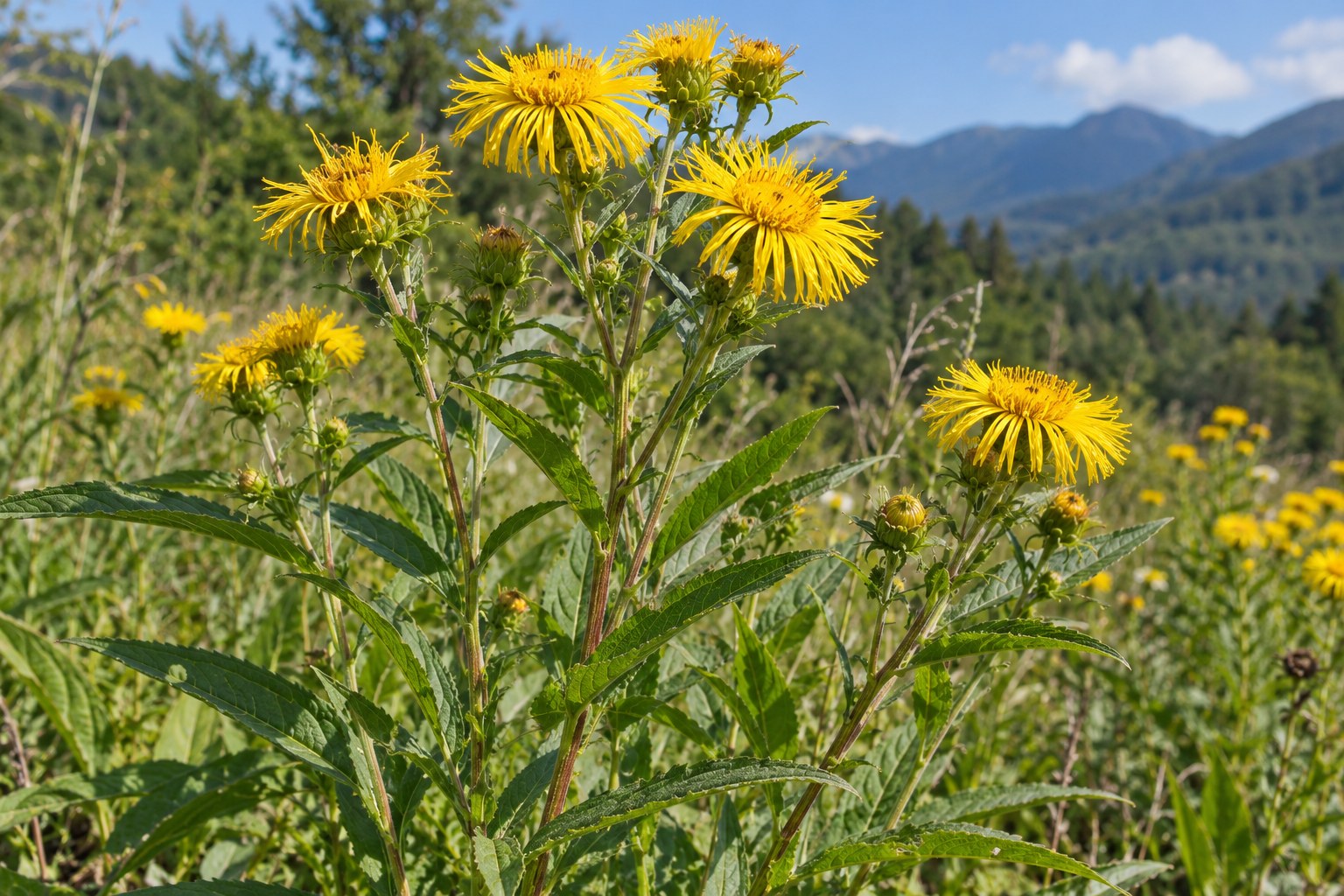
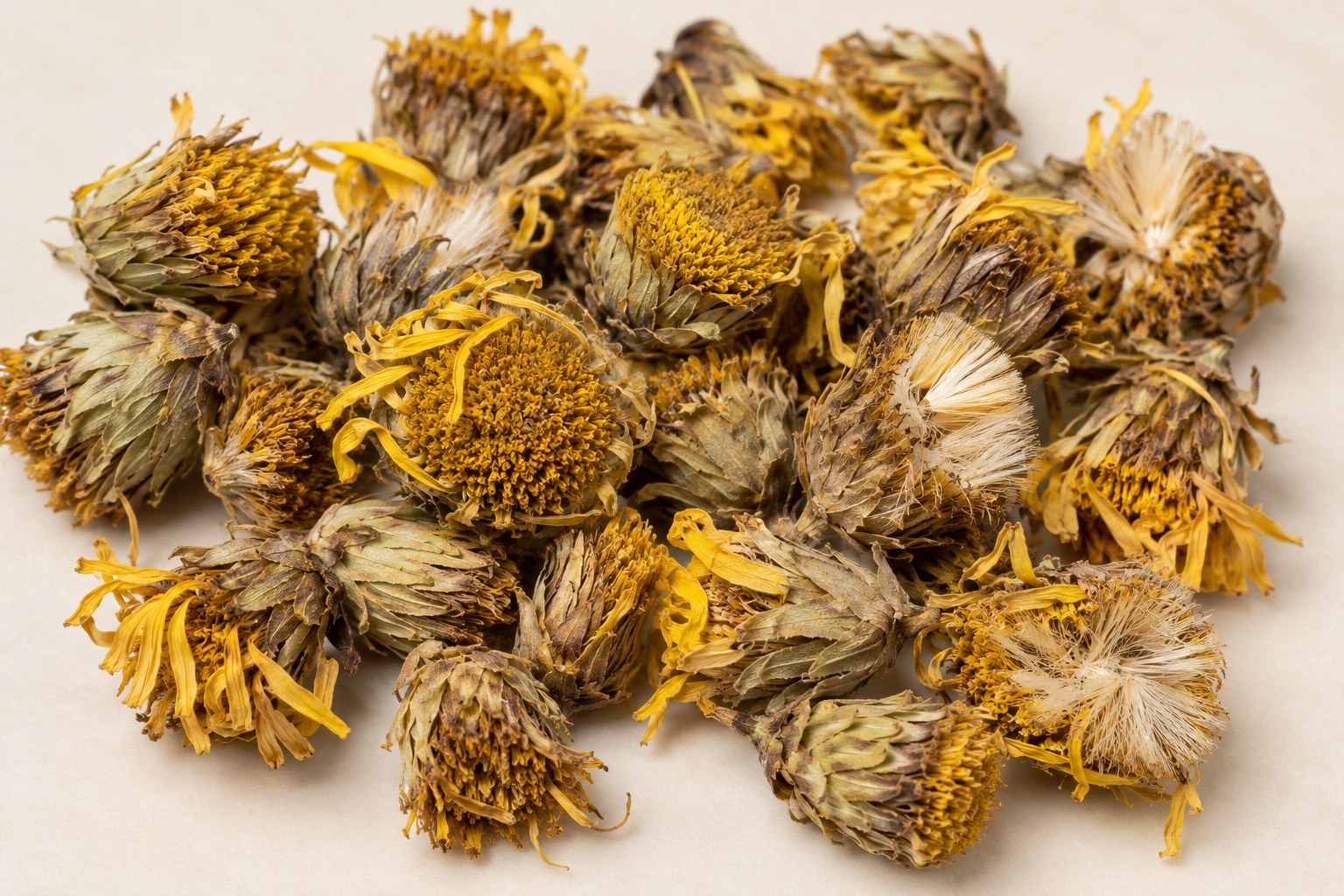
Xuan Fu Hua is the dried flower head of Inula japonica Thunb. (Asteraceae), not the whole plant or root. This perennial herb is about 30–80 cm tall; green or purple stems bear appressed hairs. Middle leaves are oblong to lanceolate, nearly sessile, with small auricles that partly clasp the stem; upper leaves become smaller. Numerous yellow heads occur on slender peduncles in loose clusters. Each head has yellow ray florets around disk florets, and white pappus may appear as fruits develop. HKBU records slopes, roadsides, damp grassland, riverbanks, and field margins from roughly 150 to 2,400 m; flower heads are collected in batches from July to October and sun-dried. The root of the same species has a separate materia-medica name and must not be mixed with the flower drug. Dried heads are light and brittle, with pale hairs; AI art does not replace species or quality testing.
Traditional context
HKBU specimen and materia-medica records list traditional descending-qi, phlegm-resolving, fluid-moving, and vomiting-relieving concepts; historical indications include cough with phlegm, chest fullness, belching, and vomiting. These terms do not prove the flower treats asthma, pneumonia, reflux, or persistent vomiting. Breathlessness, chest pain, coughing blood, high fever, or inability to keep fluids down requires medical care.
Modern evidence
HKBU is a materia-medica and specimen database, not a clinical trial. Chemical data on lactones/flavonoids or preclinical activity do not establish that dried heads improve human respiratory disease. The materia-medica name may be associated with I. japonica and some records also mention I. britannica; a purchased lot should specify species, part, and standard. Traditional categories are not grounds for reducing asthma or stomach medicines.
Safety
Do not decoct the flower yourself for cough or vomiting. Dried heads are brittle and may contain dust, mold, insects, or another Inula species; do not put powder in the nose or eyes. People allergic to Asteraceae, pregnant/breastfeeding people, children, those with chronic conditions, and anyone taking medicines should seek professional advice before any product. Cough with breathlessness, chest pain, prolonged fever, cyanosis, or blood in vomit must not be delayed for an herbal trial.
Safety reference ↗Pairing in reference texts
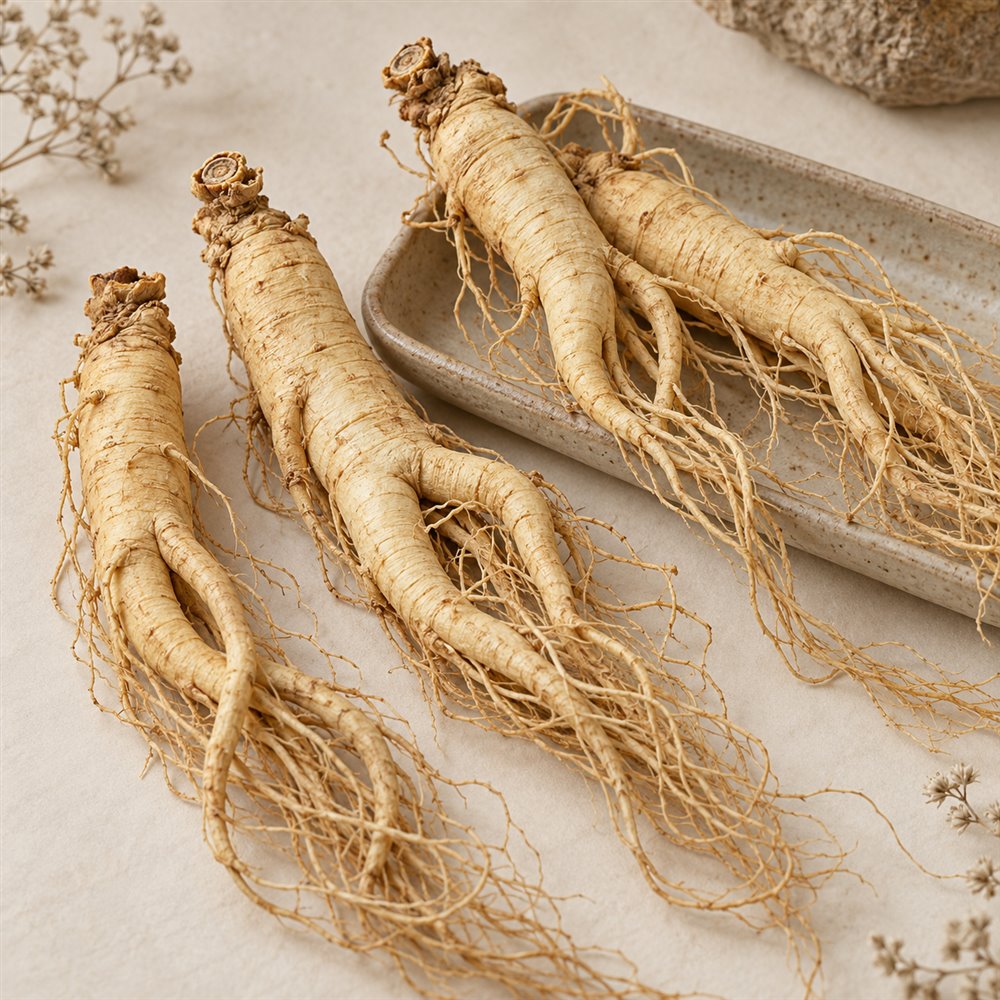
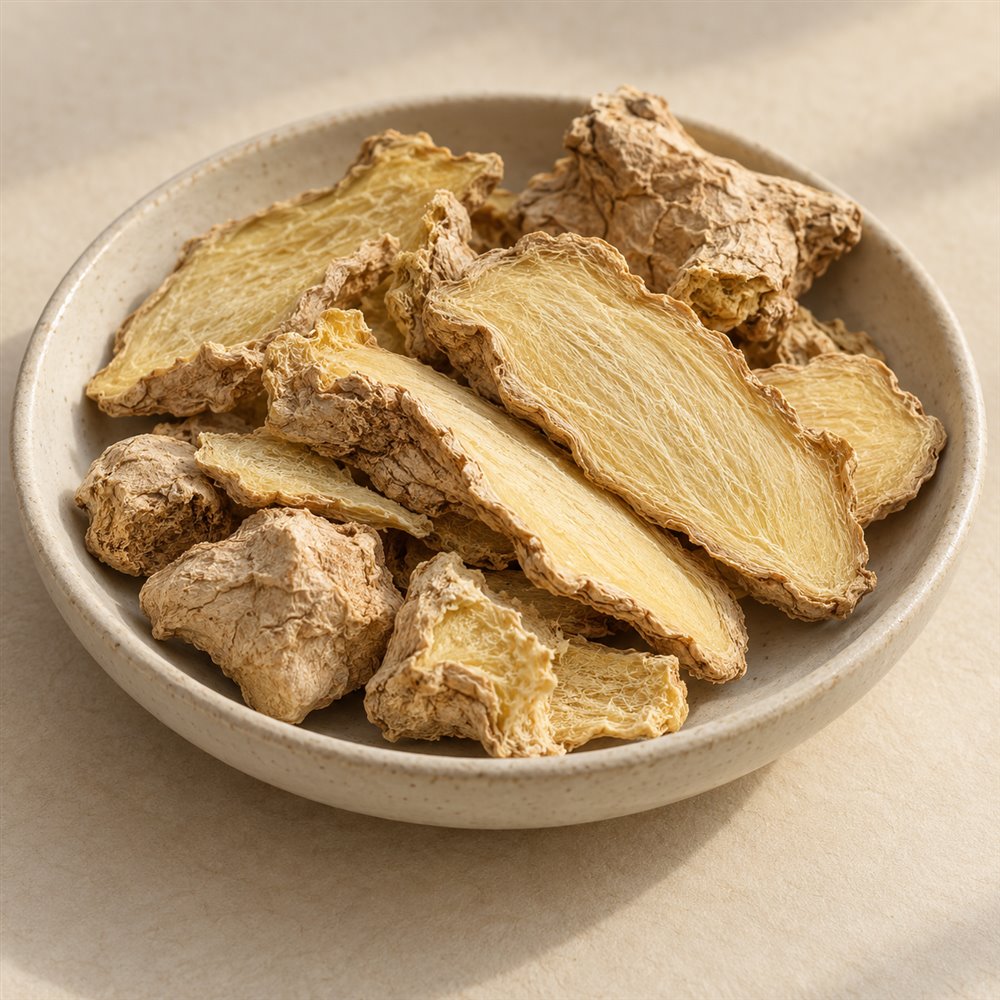
HKBU records the classical Xuan Fu Dai Zhe Tang with Xuan Fu Hua, Dai Zhe Shi, Ban Xia, Ren Shen, Sheng Jiang, Zhi Gan Cao, and Da Zao. The database gives modern converted amounts of 9 g, 6 g, 9 g, 6 g, 15 g, 9 g, and four fruits respectively. This is a source record for study, not an individual dose or a recommendation to prepare it at home. Library images appear for available ingredients; the mineral Dai Zhe Shi is named separately and is not represented by a plant image. Do not combine it casually with antiemetics, stomach medicines, or prescriptions.
Identification and study notes
Xuan Fu Hua is the flower drug, while the living plant is an upright leafy stem bearing many heads. Middle leaves are alternate and nearly sessile, with small auricles partly clasping the stem; the underside may show glandular dots and hairs along veins. Golden heads have many narrow ray florets around disk florets. When dry, heads are often flattened-spherical with layered gray-yellow bracts; rays may curl or fall, exposing pale pappus. The dried image shows loose heads, not roots. Trade records should state whether the material is Inula japonica or another species accepted by the source, because the materia-medica name may cover more than one species. Do not confuse Xuan Fu Hua with Xuan Fu Hua Gen, the root of the plant.
Growth and habitat
HKBU places Inula japonica on hillsides, roadsides, damp grassland, riverbanks, and field margins at roughly 150–2,400 m; distribution includes northeastern, northern, eastern, and central China and other areas. It favors bright sites with naturally moist but not waterlogged soil. An observation plot should have clean draining soil, full light, and room for stems and flower clusters. These conditions describe source regions; hot lowland Vietnam may differ, and a garden trial does not produce standardized materia medica.
Identification and study notes
Xuan Fu Hua is the flower drug, while the living plant is an upright leafy stem bearing many heads. Middle leaves are alternate and nearly sessile, with small auricles partly clasping the stem; the underside may show glandular dots and hairs along veins. Golden heads have many narrow ray florets around disk florets. When dry, heads are often flattened-spherical with layered gray-yellow bracts; rays may curl or fall, exposing pale pappus. The dried image shows loose heads, not roots. Trade records should state whether the material is Inula japonica or another species accepted by the source, because the materia-medica name may cover more than one species. Do not confuse Xuan Fu Hua with Xuan Fu Hua Gen, the root of the plant.
Growing and care
- Obtain legally sourced seed/stock labeled Inula japonica; sow in a clean sunny bed with loose, draining soil. Do not dig roadside or sprayed-field plants.
- Keep moist while establishing, then water to prevent severe drying without waterlogging. Stake tall stems if they lodge; HKBU does not state a numeric pH or fertilizer formula.
- Weed and monitor aphids/fungal disease without spraying a study plant. Record auriculate stem-clasping middle leaves, hairy stems, and yellow heads; date budding and flowering.
- The source records batch collection of flower heads from July–October at the appropriate stage, not a number of months after sowing. Keep specimens for observation; do not treat home-grown flowers as medicine.
How long until harvest? The source gives July–October flowering/flower-head harvest, not a fixed time from sowing to use; timing depends on climate and plant age. Keep a garden log for buds and bloom rather than collecting for ingestion. The root is a separately named materia medica with a different harvest schedule.
Habitat, season, and harvest in the HKBU botanical record
HKBU describes Inula japonica at about 30–80 cm tall, with appressed hairy stems, partly stem-clasping middle leaves, and yellow flower heads; flowering is June–October and fruiting September–November. Habitats range from hillsides and roadsides to damp grassland, riverbanks, and fields. Xuan Fu Hua flower heads are collected in batches from July–October and dried; Xuan Fu Hua Gen root is collected separately in autumn.
Open botanical source ↗HKBU formula record containing this herb: Toàn phúc đại giả thang · Xuan Fu Dai Zhe Tang
Công năng theo lý luận truyền thống của nguồn: Directs counterflow, resolves phlegm, boosts qi, and harmonizes the stomach in the source’s traditional framework.
Ingredient images and source amounts are shown for comparison only; this is not a treatment recipe.
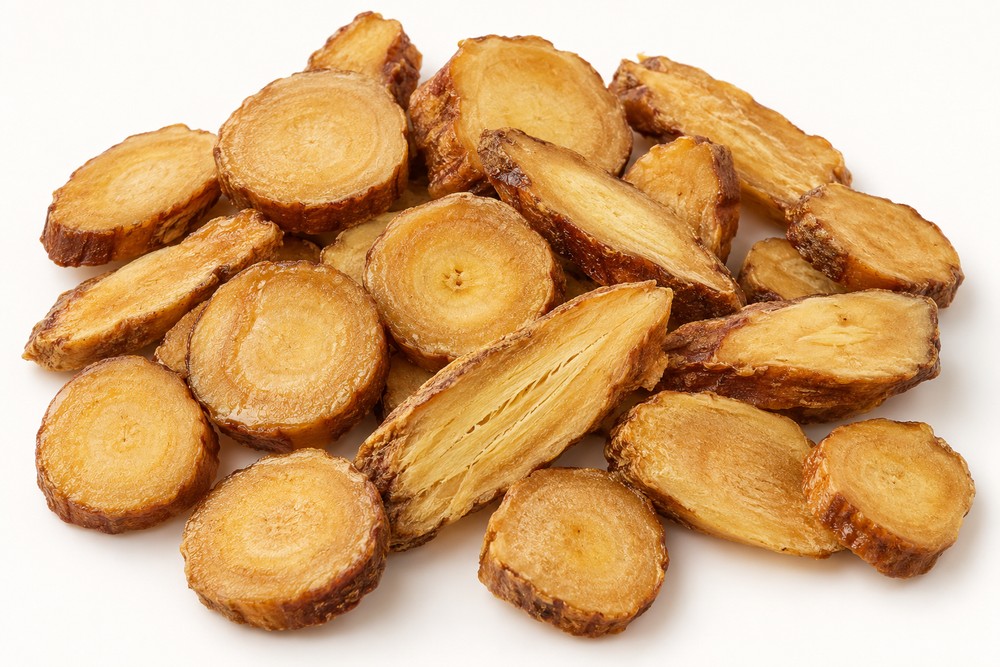
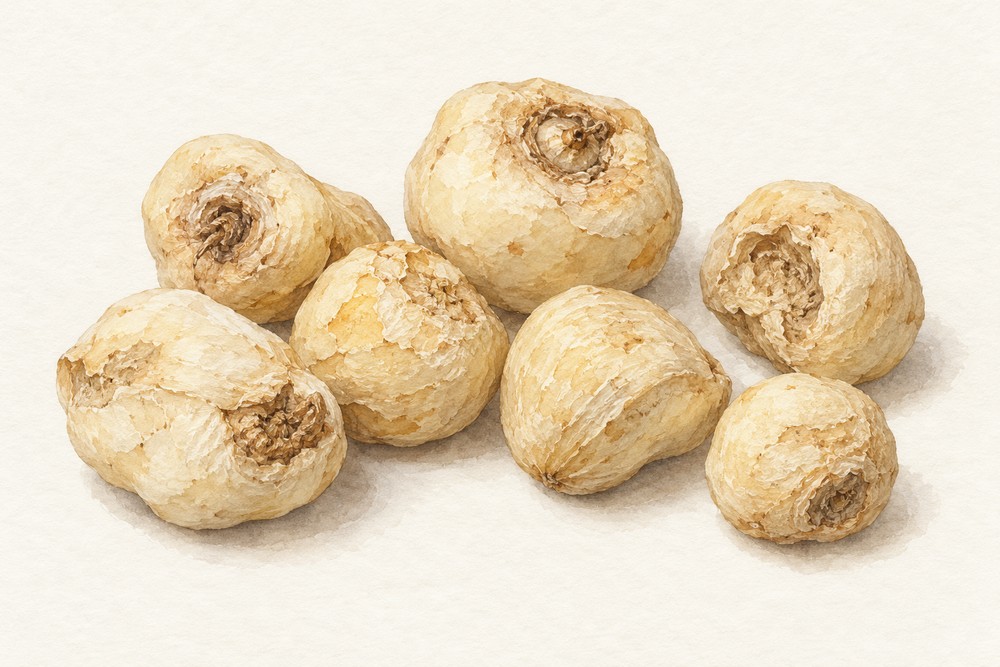
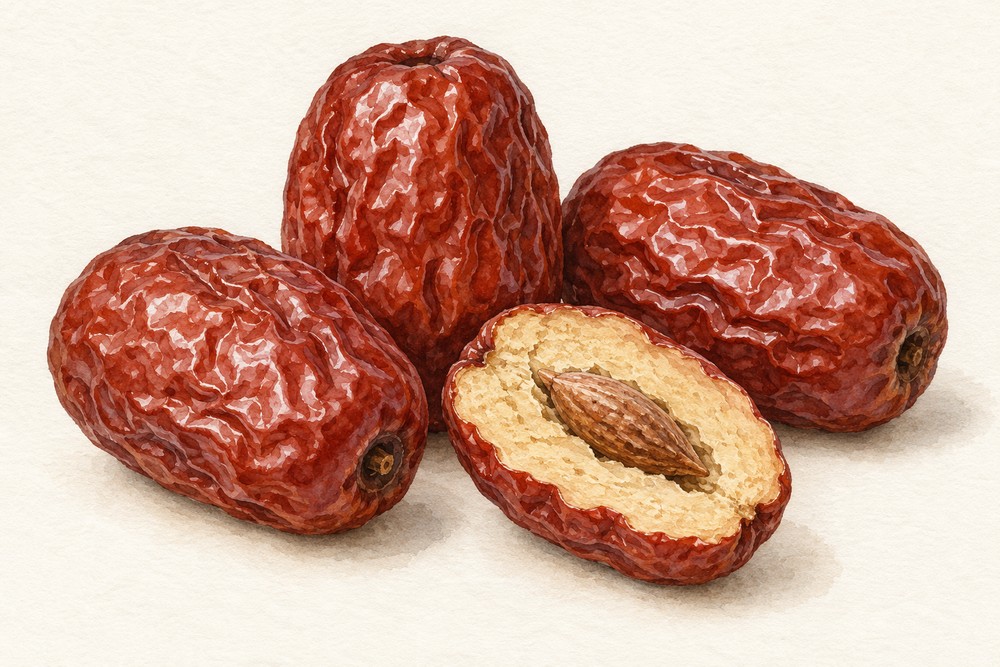
HKBU source-recorded composition
Inulae Flos (Xuan Fu Hua) 3 liang (9 g); Ginseng Radix et Rhizoma (Ren Shen) 2 liang (6 g); fresh ginger (Sheng Jiang) 5 liang (15 g); Haematitum (Dai Zhe Shi) 1 liang (6 g); honey-prepared licorice (Zhi Gan Cao) 3 liang (9 g); Pinellia Rhizome (Ban Xia) 5 sheng (9 g); jujube (Da Zao) 4 pieces. Database conversions are reproduced as source study data; they are not a personal regimen.
A classical source records ingredients and amounts; it does not establish modern efficacy or personal safety. Pinellia and hematite require professional identity/processing; do not source, substitute, or decoct them yourself. Persistent vomiting or chest pain needs care.
Open complete HKBU formula record ↗FROM PLANT / SOURCE HABITAT TO DRIED MATERIAL · REFERENCE WORKFLOW
- HKBU records flower-head collection in batches from July to October; the root is a different part harvested in autumn. Keep these materials distinct.
- Pick correctly identified heads and remove long excess peduncles, leaves, insects, and damaged flowers; keep harvest batches separate to track color and stage.
- Sun-dry as recorded or use a controlled facility process; protect from dust, rain, mold, and unverified high heat. Dried heads are brittle and shed easily.
- Label Latin name, flower-head part, harvest date/batch, and drying method; store dry and sealed. Do not prepare a classical formula at home or use unidentified flowers.
These are post-harvest study notes, not directions to prepare a remedy for self-treatment. Processing reference ↗