Yanhusuo tuber · Yan Hu Suo
Corydalis yanhusuo W.T.Wang · Tuberous rhizome
Name and part used
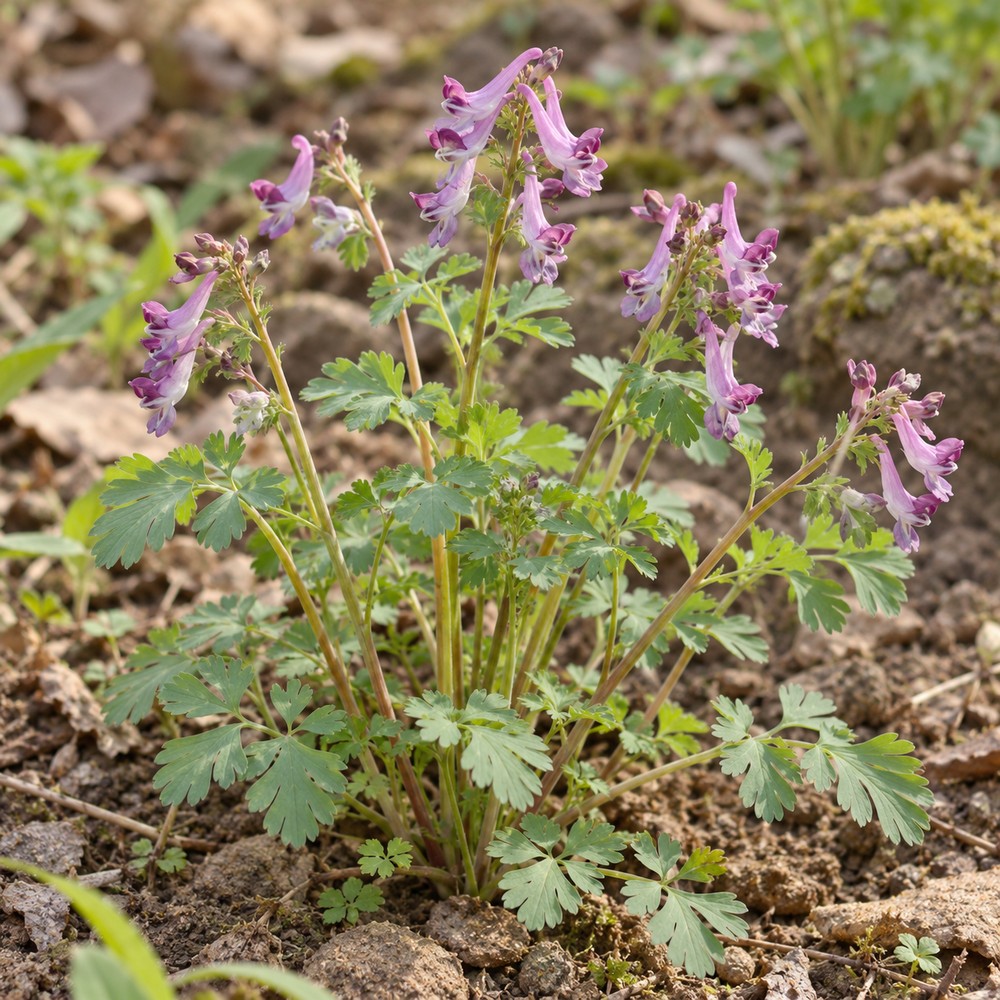
Corydalis yanhusuo is a low herb with finely divided leaves and pink-purple racemes; the medicinal part is a flattened, nearly spherical underground tuber.
Traditional context
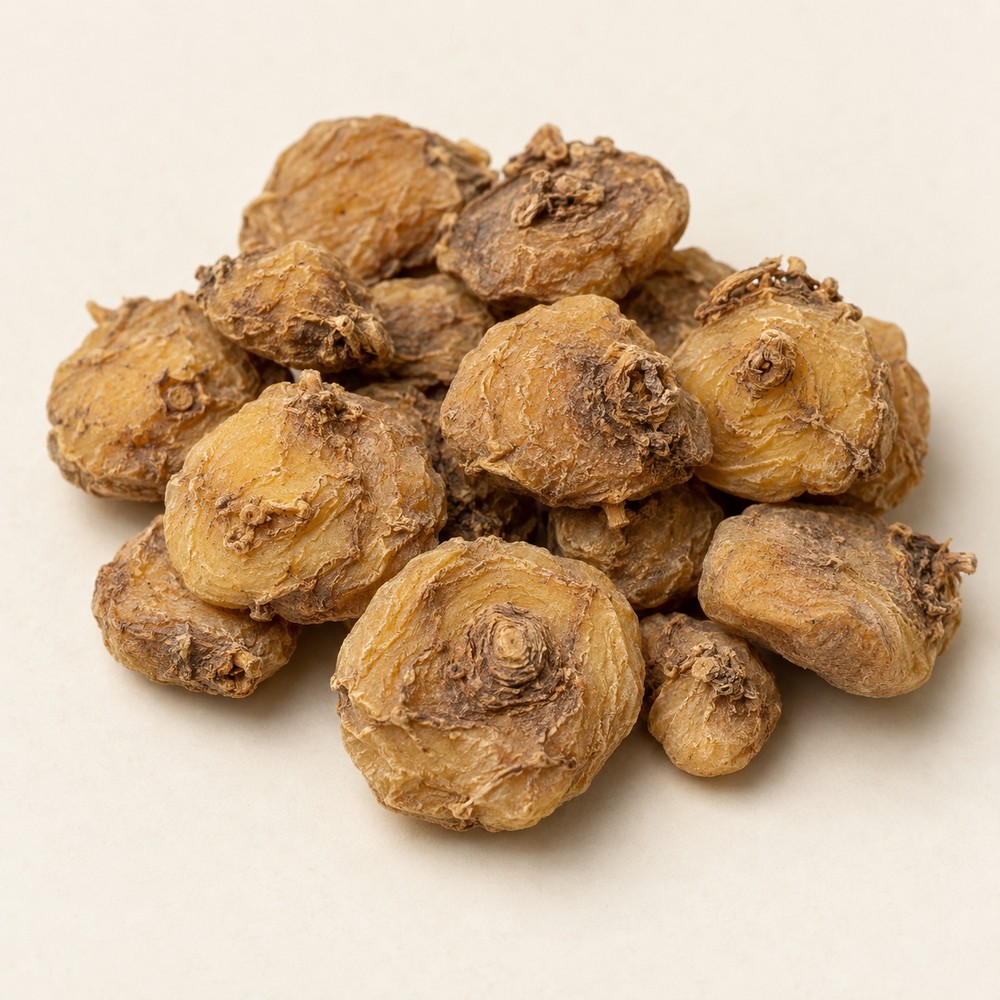
HKBU describes dried tubers as yellow to yellow-brown, hard and brittle, with a waxy yellow fracture. Zhejiang is a major production area; some traditional preparations use vinegar or wine.
Modern evidence
Qi-moving, blood-moving, and pain-relieving are traditional descriptions. Corydalis alkaloids are studied, but that does not validate self-treatment for pain.
Safety
May cause drowsiness or dizziness and interact with CNS-active, sedative, or liver-metabolized medicines; avoid driving and combining with alcohol/sleep drugs. Avoid pregnancy; seek professional advice.
Pairing in reference texts
Yanhusuo appears in pain-related historical formulas, whose names and proportions vary by source. This guide intentionally gives no dosing or home remedy recipe.
Growing, care, and harvest timing
HKBU habitat record: Growing in forests. Can be cultivated. Distributed in Hebei, Shandong, Jiangsu, Zhejiang and etc. The medicinal materials are mainly produced in Zhejiang Harvest and processing as recorded: Excavated in May and June when cauline leaves withered. Removed the external bark, well washed, separate by size, stewed in boiling water, stir any time until inner part become yellow without white part, taken out, sundried, stored in dried and ventilate places, dampproof and insect prevention
Source-recorded harvest/processing: Excavated in May and June when cauline leaves withered. Removed the external bark, well washed, separate by size, stewed in boiling water, stir any time until inner part become yellow without white part, taken out, sundried, stored in dried and ventilate places, dampproof and insect prevention
The reviewed source does not provide a complete species-specific sowing/growing routine, irrigation/fertilization schedule, or universal plant age. The page therefore does not infer care instructions or years to harvest; consult local cultivation guidance.
Open habitat and season source ↗FROM PLANT / SOURCE HABITAT TO DRIED MATERIAL · REFERENCE WORKFLOW
- Authenticate Corydalis yanhusuo through cultivation records and verified planting stock; do not dig wild plants.
- Harvest tubers in the production season, remove soil, wash promptly, and discard rotten or damaged pieces.
- Licensed facilities may process by official materia-medica standards, including standardized vinegar or wine preparations; do not improvise at home.
- Dry to a stable state, grade full yellow firm tubers, and test identity, contaminants, and residues before packaging.
These are post-harvest study notes, not directions to prepare a remedy for self-treatment. Processing reference ↗
How to read formula amounts
Displayed amounts belong to the cited formula and source; they are not a general safe ratio, treatment dose, or home-decoction instruction. Do not transfer amounts to another formula or adjust them by body weight.
Habitat, season, and harvest in the HKBU botanical record
HKBU botanical record (translated summary): Flowering and fruiting dates: Flowering in April, fruiting: May to June Habitat and distribution: Growing in forests. Can be cultivated. Distributed in Hebei, Shandong, Jiangsu, Zhejiang and etc. The medicinal materials are mainly produced in Zhejiang Harvest and processing as recorded: Excavated in May and June when cauline leaves withered. Removed the external bark, well washed, separate by size, stewed in boiling water, stir any time until inner part become yellow without white part, taken out, sundried, stored in dried and ventilate places, dampproof and insect prevention
Open botanical source ↗HKBU formula record containing this herb: Jin Ling Zi San / Toosendan Powder
Traditional action in the source: Soothes the liver qi, drain the liver fire, invigorates blood and relieves pain
Ingredient images and source amounts are shown for comparison only; this is not a treatment recipe.
HKBU source-recorded composition
Fructus Toosendan (Chuan Lian Zi/Jin Ling Zi) 1 liang (30g), Corydalis Rhizoma (Yan Hu Suo) 1 liang (30g)
The ingredients and amounts below are one HKBU-recorded version; texts, historical units, processing, and modern products can differ. This is comparative reference data, not a home-preparation recipe or personal dose.
Open complete HKBU formula record ↗