Capillary wormwood herb · Yin Chen Hao
Artemisia capillaris Thunb. and Artemisia scoparia Waldst. & Kit. · Aerial parts
Name and part used
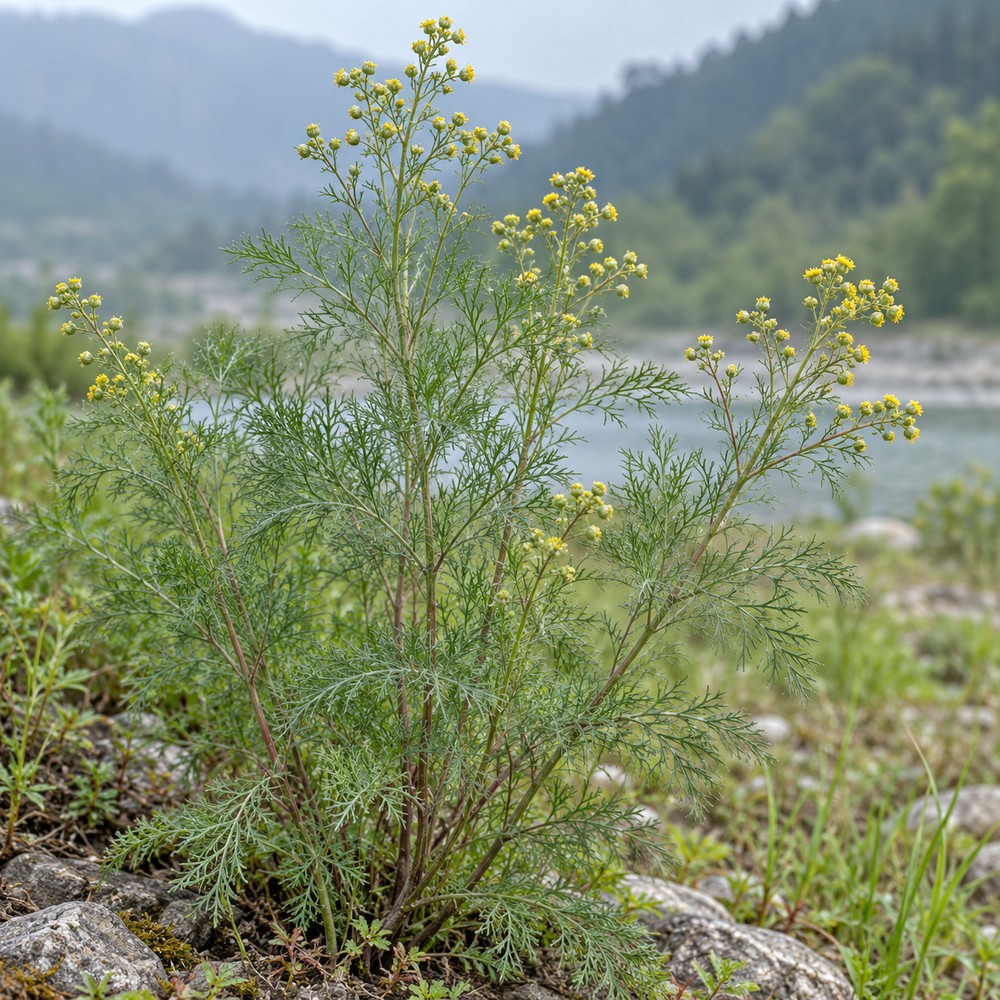
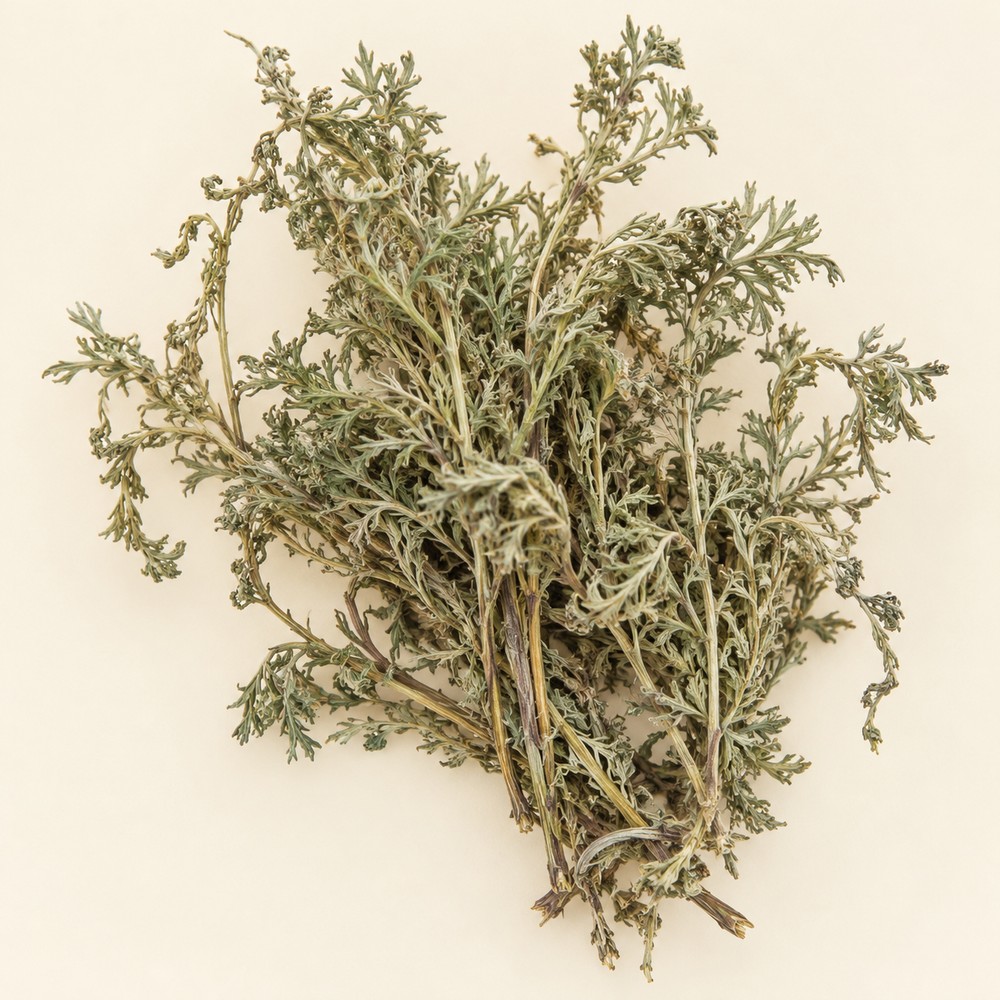
An aromatic wormwood has finely divided leaves and yellow flower heads; spring young herb and autumn mature herb differ in appearance.
Traditional context
Damp-heat clearing and bile-related actions are traditional; jaundice can signal serious hepatobiliary disease requiring prompt care.
Modern evidence
HKBU distinguishes spring Mian Yin Chen and autumn Yin Chen Hao, with two Artemisia sources; season and species labeling matter.
Safety
May interact with hepatobiliary or anticoagulant medicines or cause Asteraceae allergy; avoid self-use in children, pregnancy, or jaundice.
Pairing in reference texts
Yin Chen Hao is recorded with Zhi Zi or Da Huang in historical formulas; do not self-combine for hepatitis or jaundice.
Growing, care, and harvest timing
HKBU habitat record: Growing on low-altitude riverbanks, coastal humid sandy soil, roadsides and hill-slopes. Distributed in East and South-central China, Liaoning, Hebei, Shaanxi, Sichuan, Taiwan and etc. The medicinal materials are mainly produced in Shandong, Jiangsu, Zhejiang, Fujian and etc Harvest and processing as recorded: Collected twigs in March to April of the second year, successively harvested 3-4 years
Source-recorded harvest/processing: Collected twigs in March to April of the second year, successively harvested 3-4 years
The reviewed source does not provide a complete species-specific sowing/growing routine, irrigation/fertilization schedule, or universal plant age. The page therefore does not infer care instructions or years to harvest; consult local cultivation guidance.
Open habitat and season source ↗FROM PLANT / SOURCE HABITAT TO DRIED MATERIAL · REFERENCE WORKFLOW
- Thu ngọn/lá non mùa xuân hoặc phần trên mặt đất trưởng thành mùa thu theo chuyên luận.
- Collect spring shoots/leaves or mature autumn aerial parts according to monograph.
These are post-harvest study notes, not directions to prepare a remedy for self-treatment. Processing reference ↗
How to read formula amounts
Displayed amounts belong to the cited formula and source; they are not a general safe ratio, treatment dose, or home-decoction instruction. Do not transfer amounts to another formula or adjust them by body weight.
Habitat, season, and harvest in the HKBU botanical record
HKBU botanical record (translated summary): Flowering and fruiting dates: Flowering: August to September; fruiting: September to October Habitat and distribution: Growing on low-altitude riverbanks, coastal humid sandy soil, roadsides and hill-slopes. Distributed in East and South-central China, Liaoning, Hebei, Shaanxi, Sichuan, Taiwan and etc. The medicinal materials are mainly produced in Shandong, Jiangsu, Zhejiang, Fujian and etc Harvest and processing as recorded: Collected twigs in March to April of the second year, successively harvested 3-4 years
Open botanical source ↗HKBU formula record containing this herb: Zhen Gan Xi Feng Tang / Liver-Sedating and Wind-Extinguishing Decoction
Traditional action in the source: Tranquilizes the liver and extinguishes wind, enriches yin and subdues yang
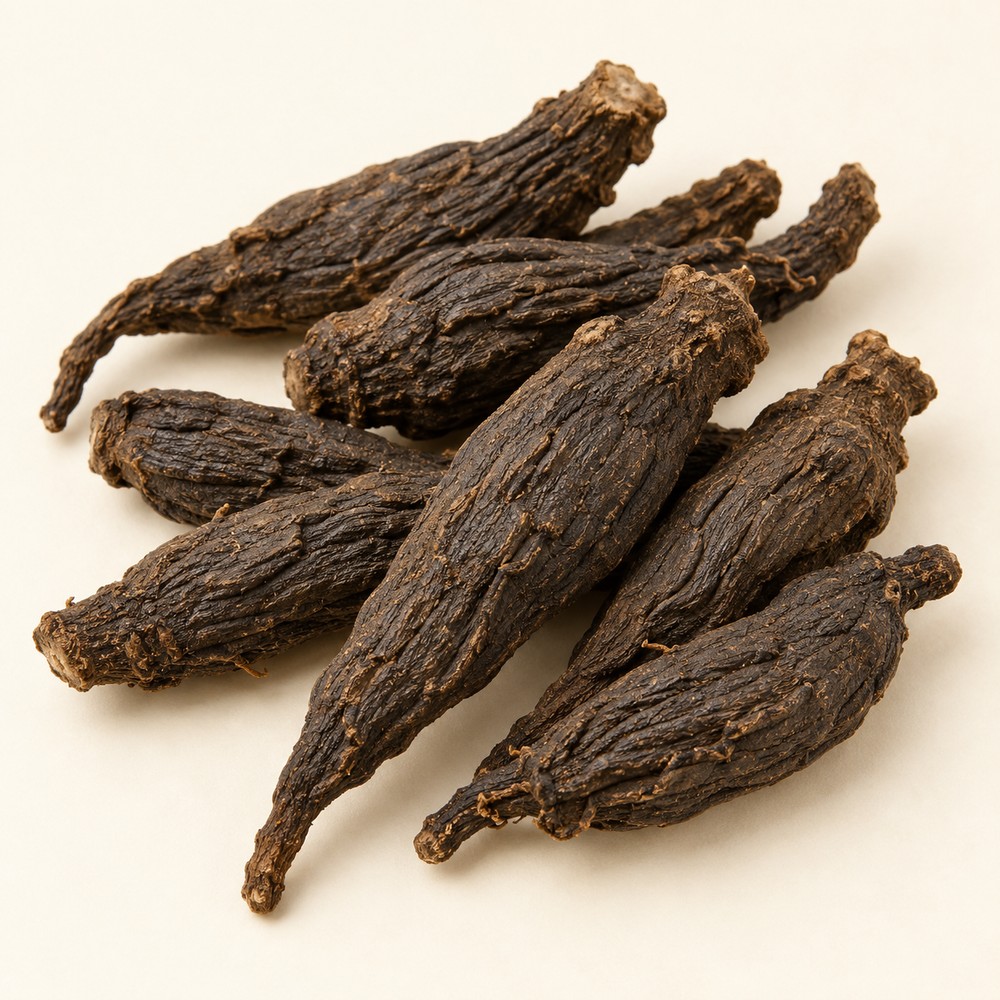
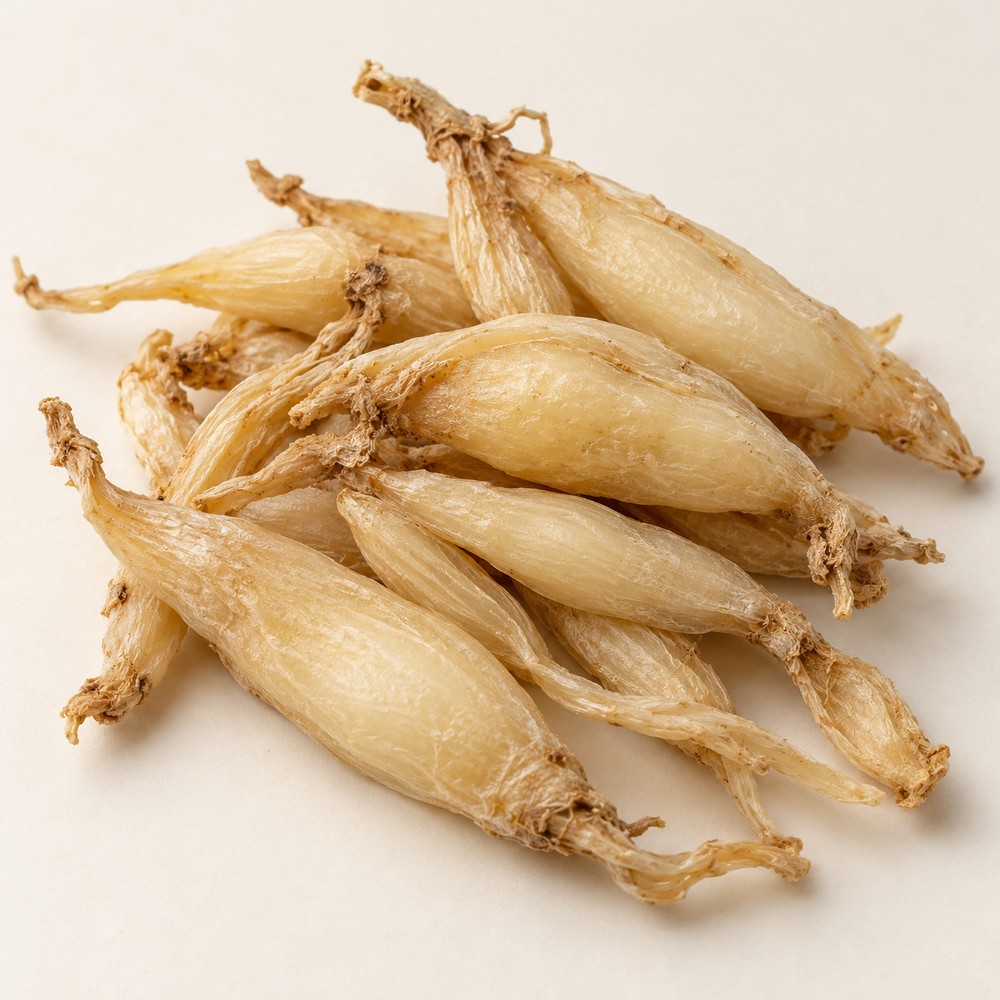
Ingredient images and source amounts are shown for comparison only; this is not a treatment recipe.
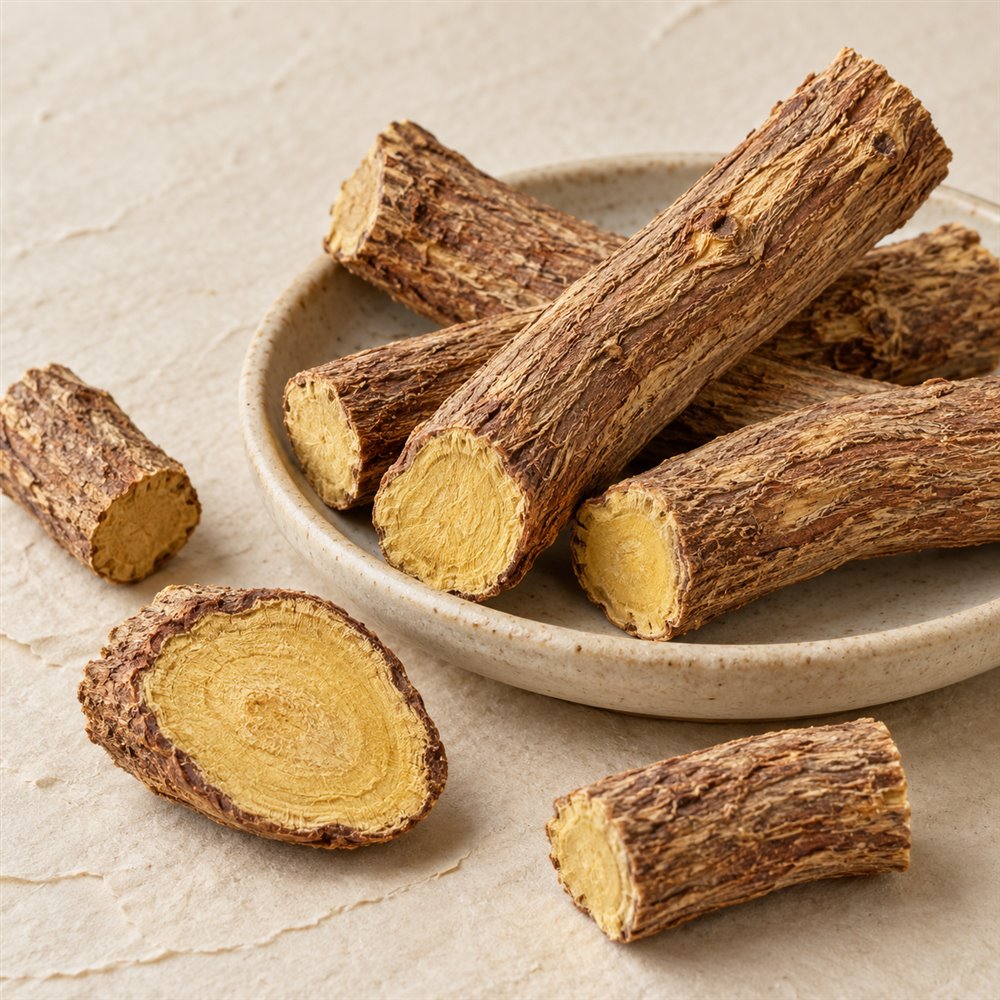
HKBU source-recorded composition
Achyranthis Bidentatae Radix (Huai Niu Xi) 1 liang (30g), Haematitum (Sheng Zhe Shi) 1 liang (30g), Draconis Os (Sheng Long Gu) 0.5 liang (15g), Ostreae Concha (Sheng Mu Li) 0.5 liang (15g), Testudinis Plastrum (Sheng Gui Ban) 0.5 liang (15g), Paeoniae Radix Alba (Sheng Hao Shao) 0.5 liang (15g), Scrophulariae Radix (Xuan Shen) 0.5 liang (15g), Asparagi Radix (Tian Dong) 0.5 liang (15g), Toosendan Fructus (Chuan Lian Zi) 0.2 liang (6g), Hordei Fructus Germinatus (Sheng Mai Ya) 0.2 liang (6g), Artemisiae Scopariae Herba (Yin Chen) 0.2 liang (6g), Glycyrrhizae Radix et Rhizoma (Gan Cao) 1.5 qian (4.5g)
The ingredients and amounts below are one HKBU-recorded version; texts, historical units, processing, and modern products can differ. This is comparative reference data, not a home-preparation recipe or personal dose.
Open complete HKBU formula record ↗