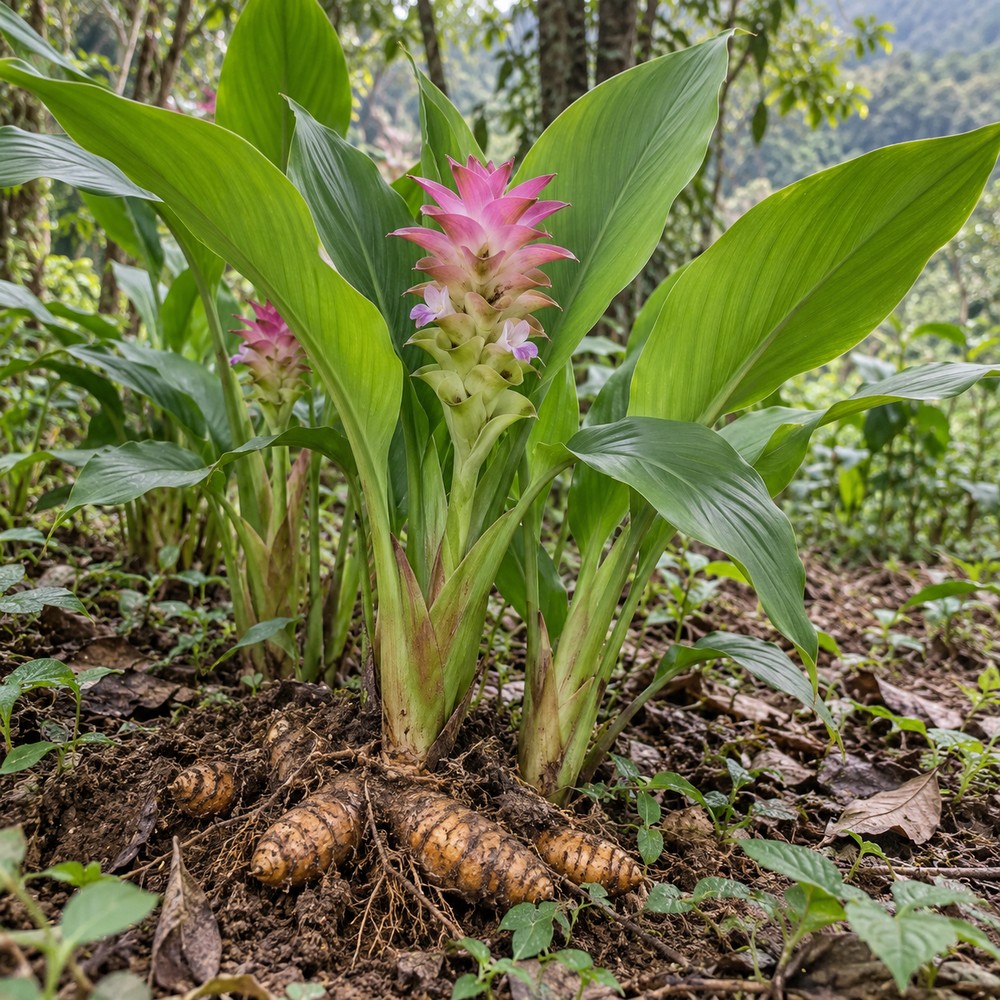
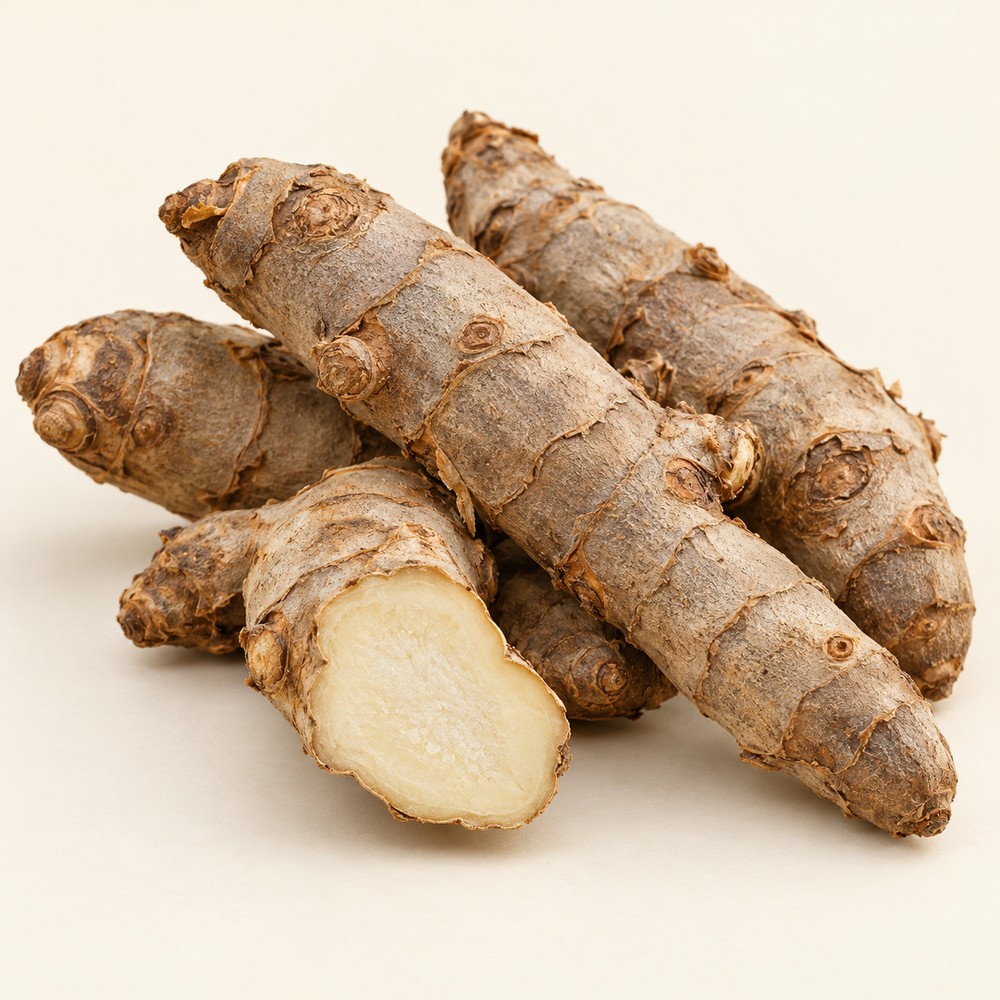
Yujin root tuber · Yu Jin
Curcuma wenyujin Y.H.Chen & C.Ling; accepted Curcuma spp. · Tuberous root
Name and part used
A ginger-family turmeric has aromatic rhizomes and long leaves; Yujin is a tuberous root, not the familiar yellow turmeric rhizome slice.
Traditional context
Qi-regulating, constraint-relieving, and bile-related actions are traditional claims; jaundice or chest pain need medical care. HKBU lists several accepted sources and distinguishes elongated gray-brown or orange-yellow tubers by species; precise identification matters.
Modern evidence
Curcuminoid findings for Curcuma longa cannot automatically be assigned to every Yujin source species or product.
Safety
May affect bleeding or biliary/liver conditions and interact with medicines; avoid self-use in pregnancy, gallstones/obstruction, or before surgery.
Pairing in reference texts
Yujin appears in historical qi-regulating formulas, but should not be casually combined with anticoagulants or biliary medicines.
Growing, care, and harvest timing
HKBU habitat record: Growing in grasslands or thickets. Can be also cultivated. Distributed in Guangdong, Guangxi and Yunnan. Curcuma zedoary: the medicinal materials are produced in Lian of Zhejiang. Curcuma aromatica: the medicinal materials are produced in Wenjiang and Leshan of Sichuan; also produced in Guangdong Harvest and processing as recorded: Eshu: excavated in winter when cauline leaves withered, well washed, steamed or stewed completely, sun-dried or dried in low temperature, then removed fibrous root and foreign matters. Yujin: in the middle and last ten days of December after being cultivated, choose fine and dried days, cut the above ground parts and excavated the underground parts when cauline leaves gradually withered, removed sand and soil, picked off earthnut, steamed or stewed for 15 minutes, sun-dried or baked-dried, removed fibrous root
Source-recorded harvest/processing: Eshu: excavated in winter when cauline leaves withered, well washed, steamed or stewed completely, sun-dried or dried in low temperature, then removed fibrous root and foreign matters. Yujin: in the middle and last ten days of December after being cultivated, choose fine and dried days, cut the above ground parts and excavated the underground parts when cauline leaves gradually withered, removed sand and soil, picked off earthnut, steamed or stewed for 15 minutes, sun-dried or baked-dried, removed fibrous root
The reviewed source does not provide a complete species-specific sowing/growing routine, irrigation/fertilization schedule, or universal plant age. The page therefore does not infer care instructions or years to harvest; consult local cultivation guidance.
Open habitat and season source ↗FROM PLANT / SOURCE HABITAT TO DRIED MATERIAL · REFERENCE WORKFLOW
- Distinguish Yujin tuberous roots from Jiang Huang rhizomes and E Zhu; they are different parts, sometimes of related Curcuma species.
- At year end as foliage withers, harvest underground parts of authenticated sources and remove soil and fibrous roots.
- Steam or stew under a standardized facility protocol, then sun- or oven-dry and trim fibrous roots.
- Keep species/grade groups separate, inspect cut surfaces, moisture-proof, and retain traceability.
These are post-harvest study notes, not directions to prepare a remedy for self-treatment. Processing reference ↗
How to read formula amounts
Displayed amounts belong to the cited formula and source; they are not a general safe ratio, treatment dose, or home-decoction instruction. Do not transfer amounts to another formula or adjust them by body weight.
Habitat, season, and harvest in the HKBU botanical record
HKBU botanical record (translated summary): Flowering and fruiting dates: Flowering: May to July Habitat and distribution: Growing in grasslands or thickets. Can be also cultivated. Distributed in Guangdong, Guangxi and Yunnan. Curcuma zedoary: the medicinal materials are produced in Lian of Zhejiang. Curcuma aromatica: the medicinal materials are produced in Wenjiang and Leshan of Sichuan; also produced in Guangdong Harvest and processing as recorded: Eshu: excavated in winter when cauline leaves withered, well washed, steamed or stewed completely, sun-dried or dried in low temperature, then removed fibrous root and foreign matters. Yujin: in the middle and last ten days of December after being cultivated, choose fine and dried days, cut the above ground parts and excavated the underground parts when cauline leaves gradually withered, removed sand and soil, picked off earthnut, steamed or stewed for 15 minutes, sun-dried or baked-dried, removed fibrous root
Open botanical source ↗HKBU formula record containing this herb: An Gong Niu Huang Wan / Peaceful Palace Bovine Bezoar Pill
Traditional action in the source: Clears heat and resolves toxins, opens the orifices and induces resuscitation
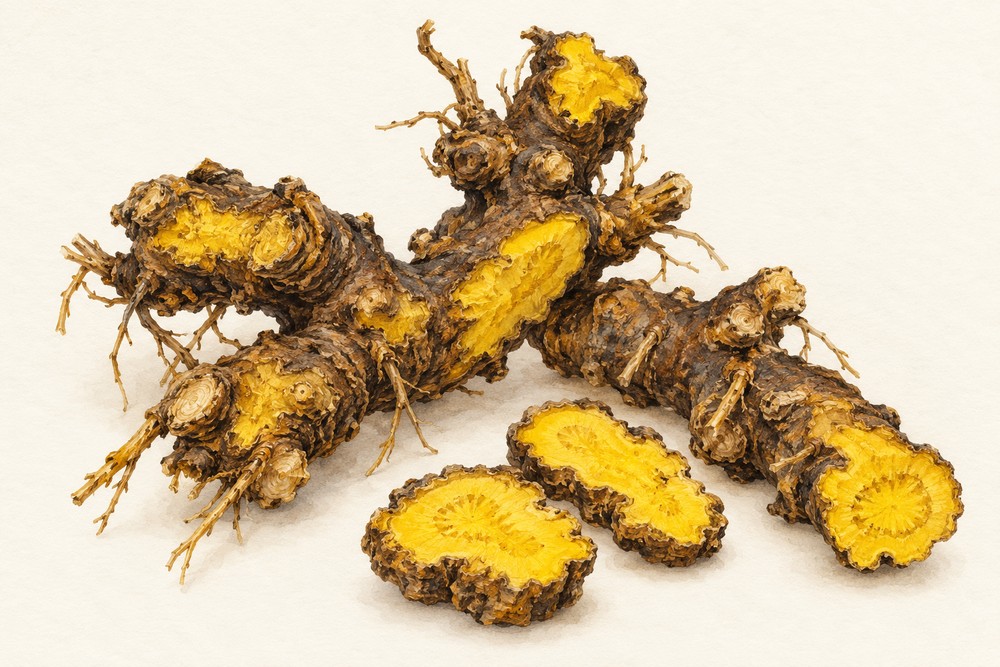
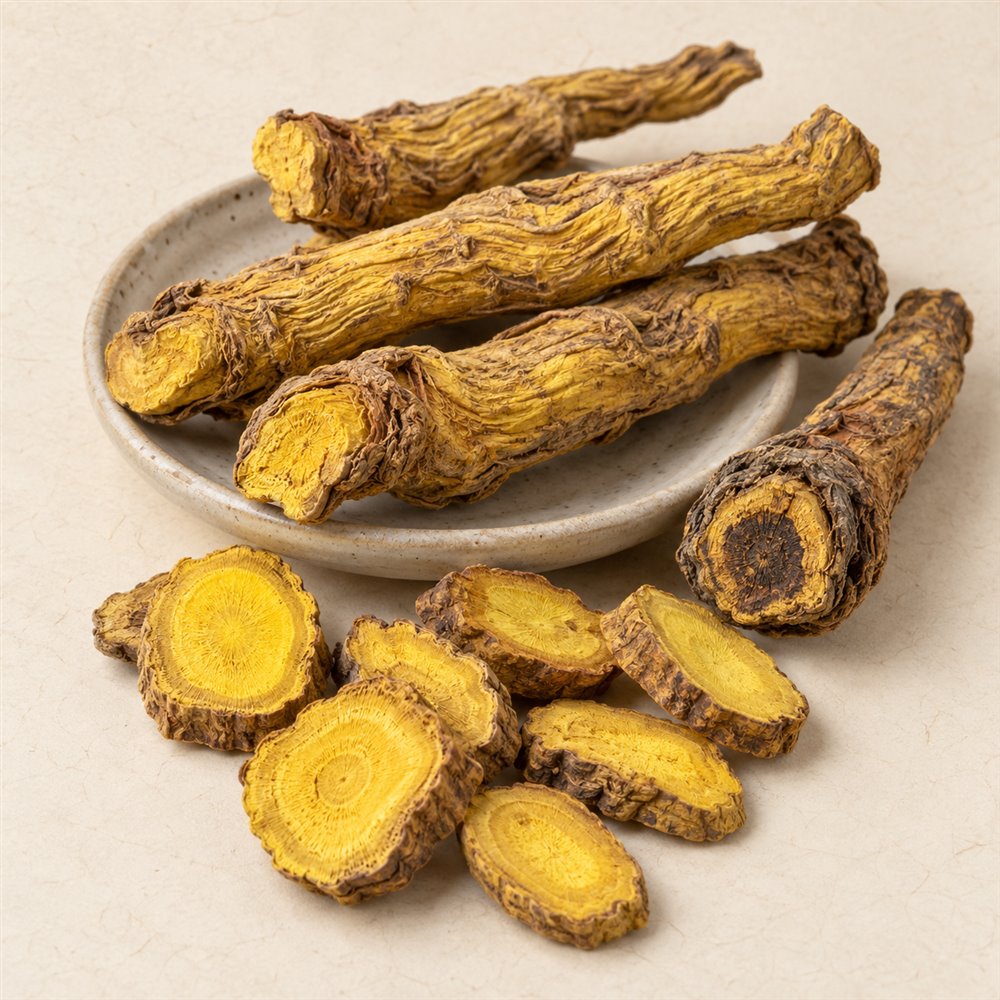
Ingredient images and source amounts are shown for comparison only; this is not a treatment recipe.
HKBU source-recorded composition
Bovis Calculus (Niu Huang) 1 liang (30g), Curcumae Radix (Yu Jin) 1 liang (30g), Coptidis Rhizoma (Huang Lian) 1 liang (30g), Cinnabaris (Zhu Sha) 1 liang (30g), Gardeniae Fructus (Shan Zhi) 1 liang (30g), Realgar (Xiong Huang) 1 liang (30g), Scutellariae Radix (Huang Qin) 1 liang (30g), Bubali Cornu (Xi Jiao) 1 liang (30g) (Note: in place of xi jiao; use (60g) concentrated shui niu jiao powder), Borneolum Syntheticum (Bing Pian) 2.5 qian (7.5g), Moschus (She Xiang) 2.5 qian (7.5g), Margarita (Zhen Zhu) 5 qian (15g)
The ingredients and amounts below are one HKBU-recorded version; texts, historical units, processing, and modern products can differ. This is comparative reference data, not a home-preparation recipe or personal dose.
Open complete HKBU formula record ↗