Ze Lan · hirsute bugleweed herb · Ze Lan
Lycopus lucidus Turcz. var. hirtus Regel · Dried aerial herb
Name and part used
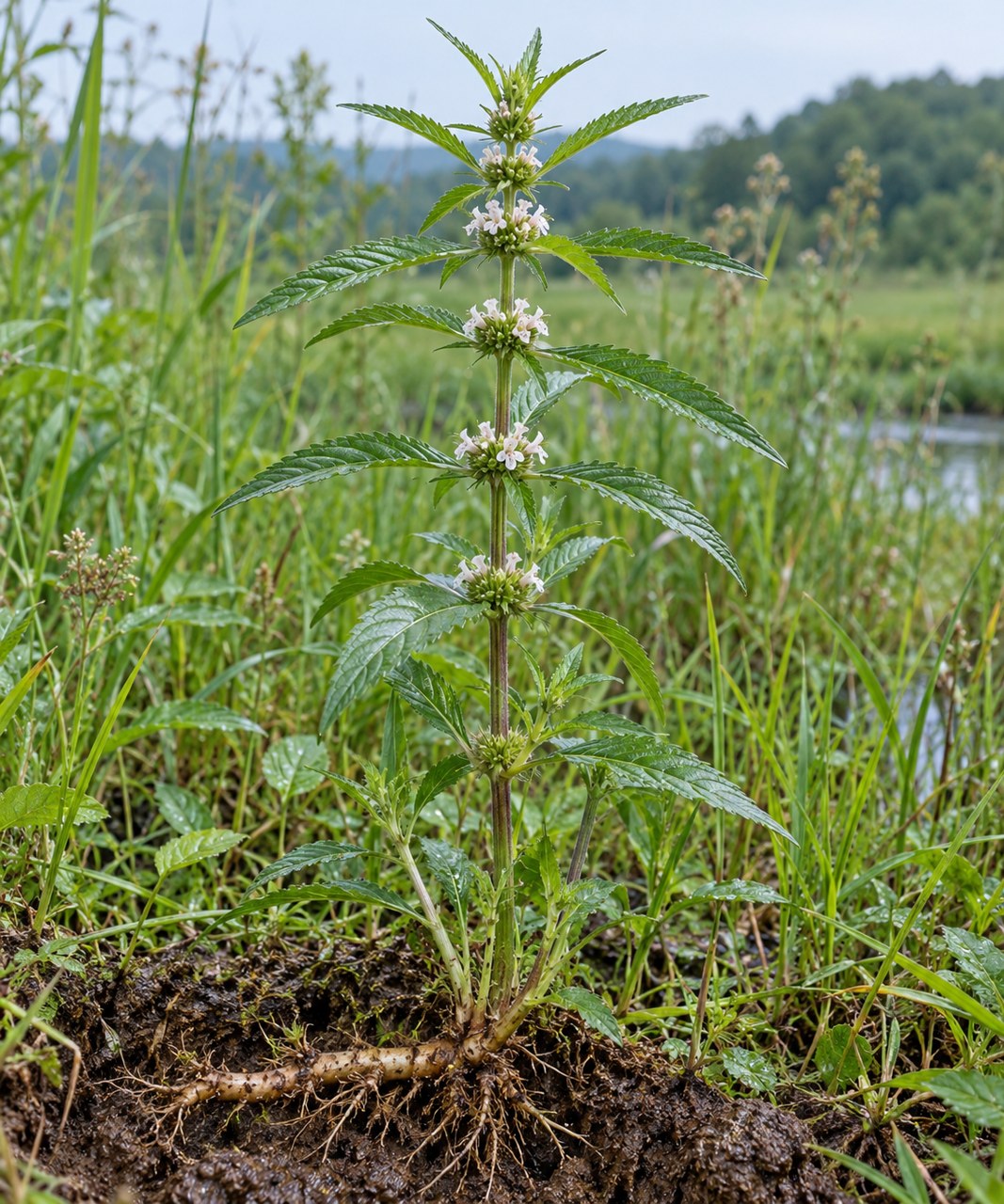
This record follows the HKBU specimen for Ze Lan: dried aerial parts of Lycopus lucidus Turcz. var. hirtus Regel, in the mint family. Distinguish it from “Disun,” a separate HKBU record using the rhizome of L. lucidus; rhizome-processing notes must not be assigned to Ze Lan. The perennial has square stems, opposite lance-shaped leaves with toothed edges and possible gland dots, and small flower whorls in leaf axils. Dried material usually contains stems and leaves, green to purplish brown with fine hairs; some corollas may fall away. The plant favors moist habitats such as river edges, swales, and tussock vegetation, and wild appearance varies with environment.
Traditional context
HKBU records traditional actions of invigorating blood, regulating menstruation, removing stasis, reducing swelling, and promoting urination. Its specimen record lists menstrual disorders, postpartum hematoma, edema, and trauma as historical contexts; this is not advice for pregnancy or postpartum care. Do not self-treat heavy bleeding, edema, blood clots, or injury.
Modern evidence
HKBU specimen and materia-medica records support the drug name, species, part, and dried-material features, not clinical trials. Most actions listed are traditional concepts. General L. lucidus chemistry or physiology does not establish human efficacy for Ze Lan var. hirtus. Abdominal pain, bleeding, edema, or jaundice requires diagnosis.
Safety
Do not self-use during pregnancy, possible pregnancy, active bleeding, or postpartum recovery; a clinician should assess any herb affecting menstruation. People taking anticoagulants/antiplatelets, diuretics, or blood-pressure medicines should consult a clinician/pharmacist; specific interactions are not established. Avoid polluted waterways and do not substitute rhizomes of other species.
Safety reference ↗Pairing in reference texts
No sufficiently detailed HKBU formula was found to verify a Ze Lan pairing, ratio, and safety. Do not infer a formula from specimen indications. No specific toxic pair was confirmed; this does not justify combining it with anticoagulants, diuretics, or menstrual medicines.
Identification and study notes
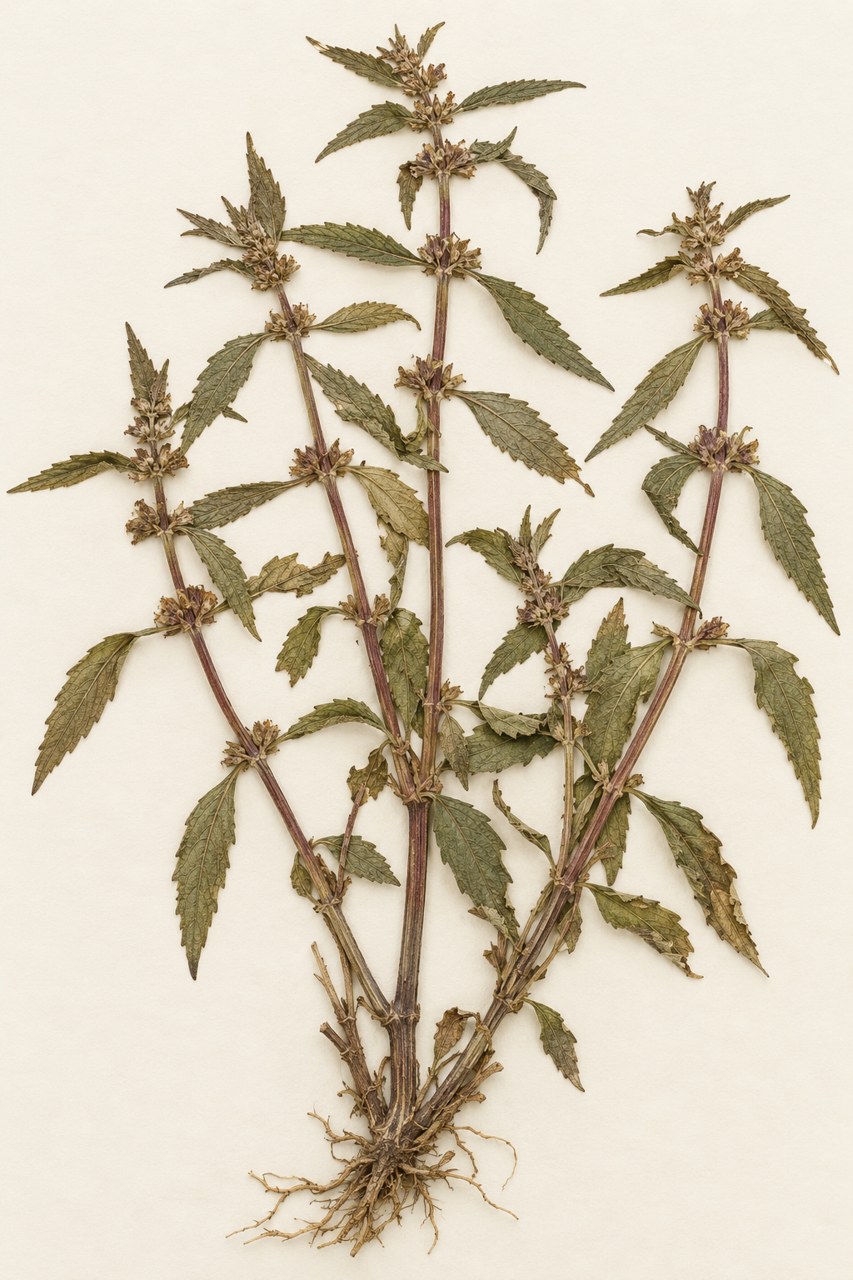
Square stems are a mint-family clue; leaves are opposite, lance-shaped, and toothed; small flowers occur in axillary whorls. Dried Ze Lan may show hairs on stems/nodes, wrinkled leaves, and persistent calyces after corollas fall. Distinguish the Chinese drug name from Vietnamese common-name lookalikes; Latin identity and part used are decisive. Separate AI images show fresh and dried forms but may underrepresent the hairs of var. hirtus. This profile has a naming-confusion risk because Lycopus includes drug materials from different plant parts. In HKBU records, Ze Lan refers to aerial parts of the hirsute variety, while “Disun” refers to the rhizome and has an autumn excavation note. They must remain separate because the Latin name and part used differ. On fresh specimens, compare square stems, opposite leaves, and axillary flower whorls; on dried material, corollas may fall while calyces and small bracts remain. Gland dots and fine hairs on leaves are secondary clues best seen with magnification. Loose dried pieces may mix with other mints, so a traceable label and reference source are important. Not every Lycopus plant is Ze Lan.The local-language label “Trạch lan” should be accompanied by the Chinese drug name and full botanical name in notes, because similar Vietnamese common names can point to unrelated plants. A good study sequence is: check opposite leaves, inspect the four-sided stem, look for the whorled axillary flowers, then compare a dried sample for persistent calyxes and leaf glands. The HKBU source pages are useful together but have different scopes: one identifies the Ze Lan materia medica; the plant-image record concerns the broader species and a separately named rhizome drug. Their harvest notes should not be silently merged.
Growth and habitat
The HKBU material record lists Jiangsu, Zhejiang, and Anhui as production regions; its broader L. lucidus plant record describes mountain swales, riverside tussocks, and many parts of China. Use this ecology for an observation garden: moist humus-rich soil, light sun to partial shade, and clean water without stagnation. Ze Lan here means the hirsute variety and its dried aerial parts.
Identification and study notes
Square stems are a mint-family clue; leaves are opposite, lance-shaped, and toothed; small flowers occur in axillary whorls. Dried Ze Lan may show hairs on stems/nodes, wrinkled leaves, and persistent calyces after corollas fall. Distinguish the Chinese drug name from Vietnamese common-name lookalikes; Latin identity and part used are decisive. Separate AI images show fresh and dried forms but may underrepresent the hairs of var. hirtus. This profile has a naming-confusion risk because Lycopus includes drug materials from different plant parts. In HKBU records, Ze Lan refers to aerial parts of the hirsute variety, while “Disun” refers to the rhizome and has an autumn excavation note. They must remain separate because the Latin name and part used differ. On fresh specimens, compare square stems, opposite leaves, and axillary flower whorls; on dried material, corollas may fall while calyces and small bracts remain. Gland dots and fine hairs on leaves are secondary clues best seen with magnification. Loose dried pieces may mix with other mints, so a traceable label and reference source are important. Not every Lycopus plant is Ze Lan.The local-language label “Trạch lan” should be accompanied by the Chinese drug name and full botanical name in notes, because similar Vietnamese common names can point to unrelated plants. A good study sequence is: check opposite leaves, inspect the four-sided stem, look for the whorled axillary flowers, then compare a dried sample for persistent calyxes and leaf glands. The HKBU source pages are useful together but have different scopes: one identifies the Ze Lan materia medica; the plant-image record concerns the broader species and a separately named rhizome drug. Their harvest notes should not be silently merged.
Growing and care
- Choose a plant/rhizome labeled Lycopus lucidus var. hirtus; do not collect wild plants or confuse it with the rhizome drug “Disun.”
- Grow in a moist bed or large drained pot with humus-rich soil and gentle sun/partial shade. Contain the pot if rhizomes spread.
- Water evenly to prevent complete drying without flooding; hand-weed and watch for fungi in overly damp conditions. Avoid sprays if observing medicinal morphology.
- The broader L. lucidus record gives flowering around June–September and fruiting August–September; it does not confirm var. hirtus timing or aerial-part harvest age. Record local garden phenology; do not self-use the plant.
How long until harvest? It is perennial and Ze Lan is the dried aerial herb; HKBU does not give months/years from planting to harvest. Record annual growth and use phenology for study only. Commercial harvest timing requires authenticated identity and professional standards.
Habitat, season, and harvest in the HKBU botanical record
HKBU identifies Ze Lan as dried aerial parts of Lycopus lucidus Turcz. var. hirtus Regel, with square white-hairy stems, narrow opposite toothed leaves, and persistent calyces after flowers fall. Material is mainly from Jiangsu, Zhejiang, and Anhui. The broader L. lucidus plant record gives June–September flowering, August–September fruiting, and swale/riverside habitats; it is not a separate phenology record for var. hirtus.
Open botanical source ↗FROM PLANT / SOURCE HABITAT TO DRIED MATERIAL · REFERENCE WORKFLOW
- For Ze Lan, authenticate the dried aerial part of Lycopus lucidus var. hirtus; do not apply rhizome-harvest instructions for Disun.
- Collect from authenticated cultivated lots; remove mixed plants, soil, and diseased leaves. Cut aerial parts, briefly rinse if muddy, and drain.
- Air- or shade-dry in a clean ventilated space to a stable dry state; retain intact leaves, square stems, and remaining buds/calyces for morphology review.
- Seal, store dry, and label the full Latin name, part, growing region, date, and drying method. Do not decoct or use at home.
These are post-harvest study notes, not directions to prepare a remedy for self-treatment. Processing reference ↗