Immature bitter orange · Zhi Ke
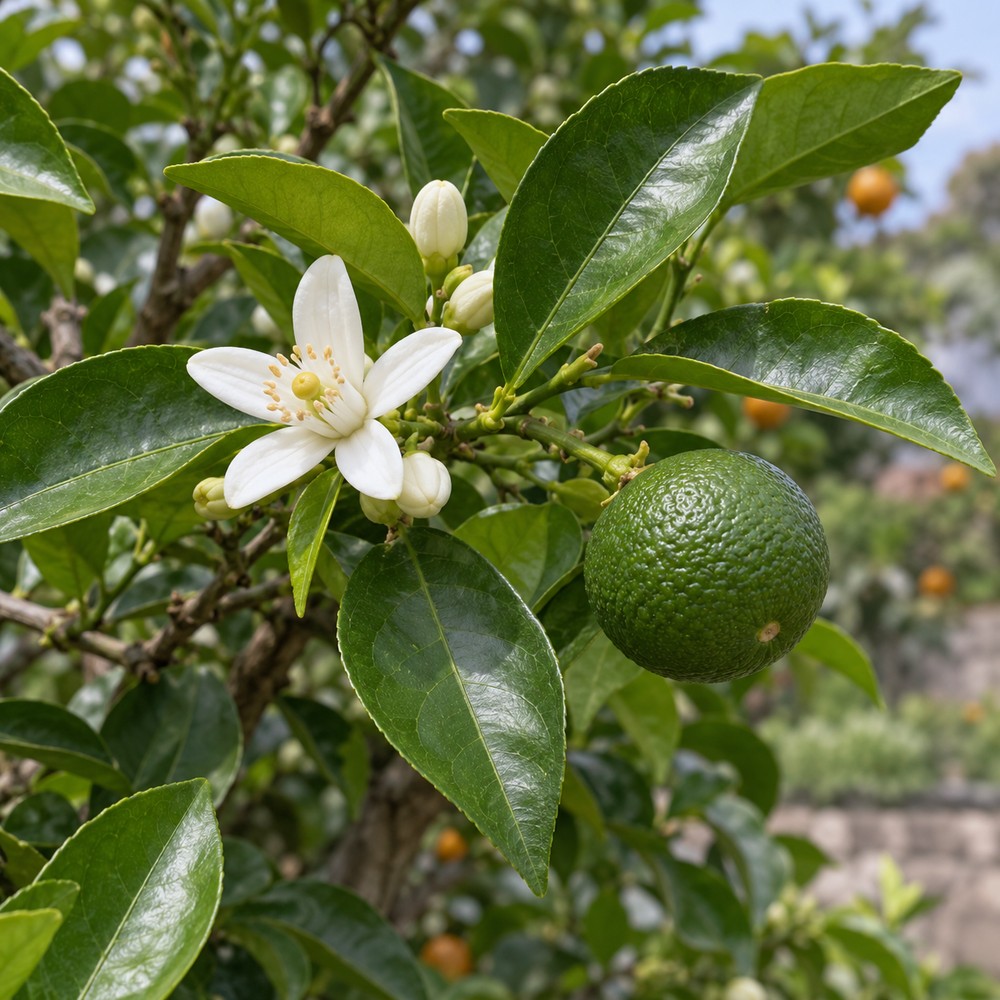
Citrus aurantium L. · Immature green fruit
Name and part used
An evergreen spiny bitter-orange tree with narrowly winged petioles and fragrant white flowers; immature green fruit is sliced and dried.
Traditional context
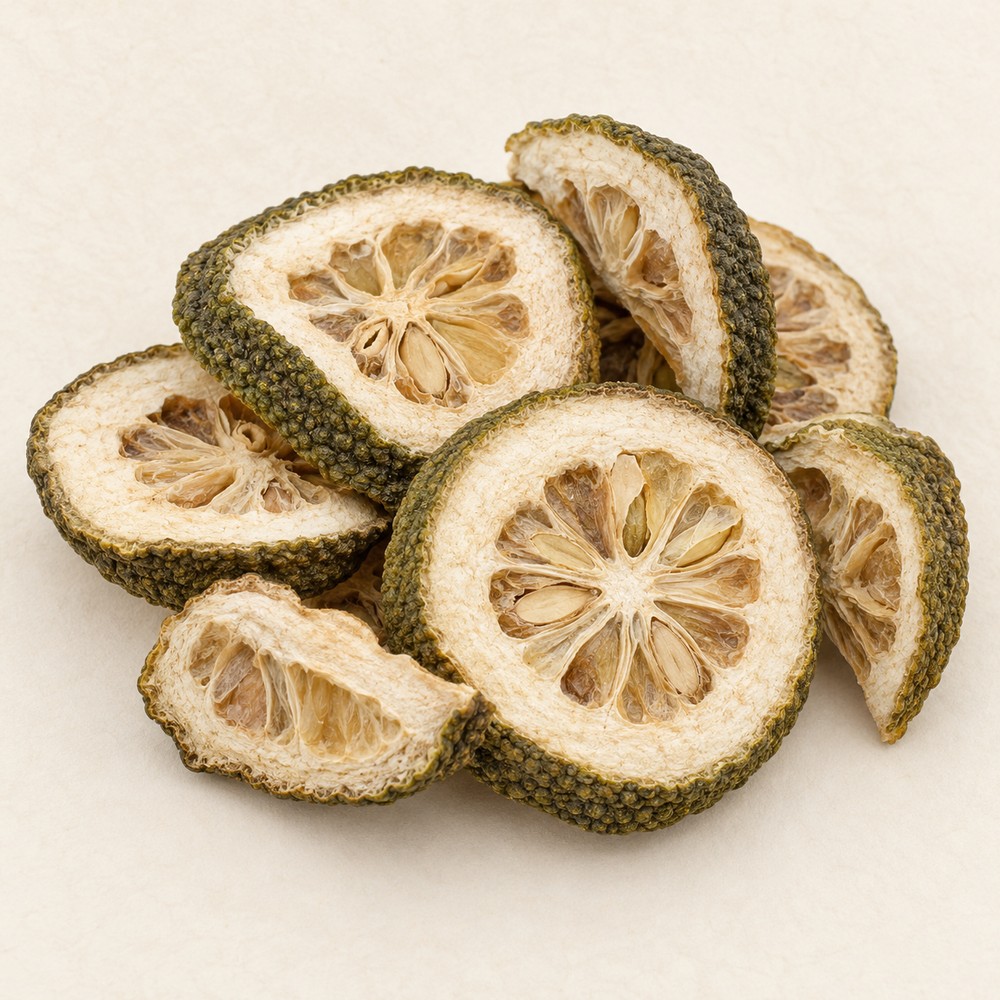
Zhi Ke is immature Citrus aurantium fruit, generally harvested later than Zhi Shi; stage and size distinguish the two. HKBU records halved green fruit in July. It is not mature orange peel or Chen Pi.
Modern evidence
Qi-regulating and chest-relieving are traditional claims. Citrus aurantium contains cardiovascular-active constituents; do not use extracts for weight loss or combine with stimulants.
Safety
Heart-rate or blood-pressure effects are possible; avoid self-use with cardiovascular disease, hypertension, pregnancy, stimulants, or heart medicines.
Pairing in reference texts
Zhi Ke and Zhi Shi are differently harvested Citrus aurantium forms and are not freely interchangeable. Historical pairing with Magnolia does not establish individual safety.
Growing, care, and harvest timing
HKBU habitat record: Growing on hilly areas or along rivers, lakes or plains. Can be cultivated. Distributed in the provinces of the south of the Yangtze River. The medicinal materials are mainly produced in Sichuan, Hunan, Jiangxi and etc Harvest and processing as recorded: Zhishi: collected naturally fallen fruits from May to June, removed impurities, transected into halves in the middle, sun-dried or dried in low temperature; for small ones, directly sun-dried or dried in low temperature. Zhihe: harvested in July when pericarp is still green, transected into halves in the middle, directly sun-dried or dried in low temperature
Source-recorded harvest/processing: Zhishi: collected naturally fallen fruits from May to June, removed impurities, transected into halves in the middle, sun-dried or dried in low temperature; for small ones, directly sun-dried or dried in low temperature. Zhihe: harvested in July when pericarp is still green, transected into halves in the middle, directly sun-dried or dried in low temperature
The reviewed source does not provide a complete species-specific sowing/growing routine, irrigation/fertilization schedule, or universal plant age. The page therefore does not infer care instructions or years to harvest; consult local cultivation guidance.
Open habitat and season source ↗FROM PLANT / SOURCE HABITAT TO DRIED MATERIAL · REFERENCE WORKFLOW
- Harvest green Citrus aurantium fruit in July according to regional standards; document whether the lot is Zhi Ke or earlier-stage Zhi Shi.
- Wash, remove stems and debris, and cut transversely under facility procedures; prevent cross-contamination with edible fruit.
- Sun-dry or use low-temperature drying to an even endpoint; avoid undocumented chemicals or colorants.
- Record species, fruit stage, origin, and date; check moisture, contaminants, and cardiovascular interaction warnings.
These are post-harvest study notes, not directions to prepare a remedy for self-treatment. Processing reference ↗
How to read formula amounts
The cited sources do not provide a formula with specific amounts for this profile; no ratio is invented. Absence from the incompatibility list does not establish safety.
Habitat, season, and harvest in the HKBU botanical record
HKBU botanical record (translated summary): Flowering and fruiting dates: Flowering: April to May, fruiting: June to November Habitat and distribution: Growing on hilly areas or along rivers, lakes or plains. Can be cultivated. Distributed in the provinces of the south of the Yangtze River. The medicinal materials are mainly produced in Sichuan, Hunan, Jiangxi and etc Harvest and processing as recorded: Zhishi: collected naturally fallen fruits from May to June, removed impurities, transected into halves in the middle, sun-dried or dried in low temperature; for small ones, directly sun-dried or dried in low temperature. Zhihe: harvested in July when pericarp is still green, transected into halves in the middle, directly sun-dried or dried in low temperature
Open botanical source ↗