Anemarrhena rhizome · Zhi Mu
Anemarrhena asphodeloides Bunge · Rhizome
Name and part used
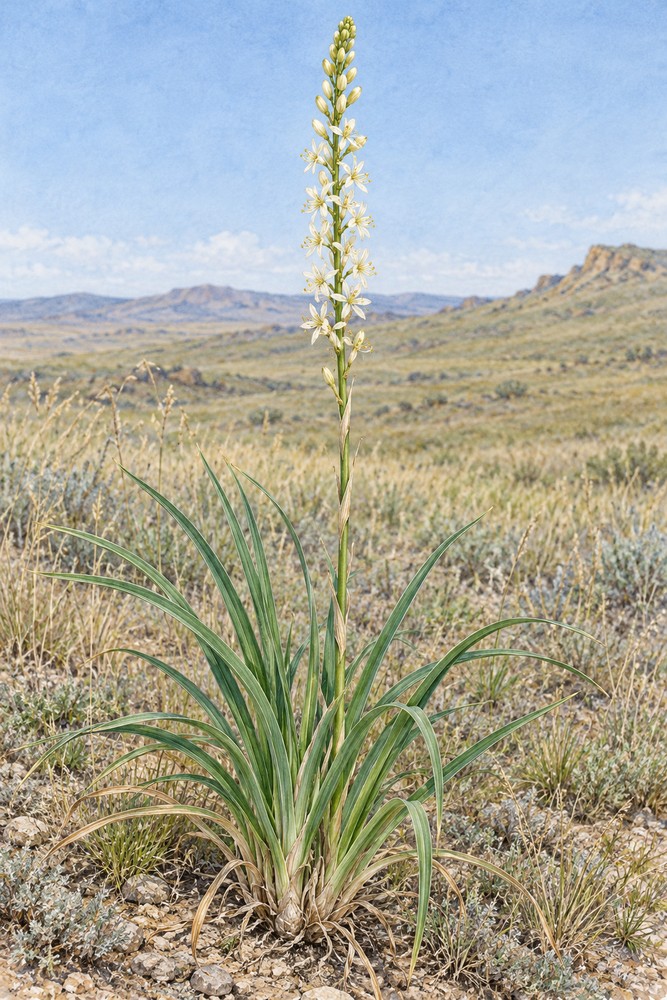
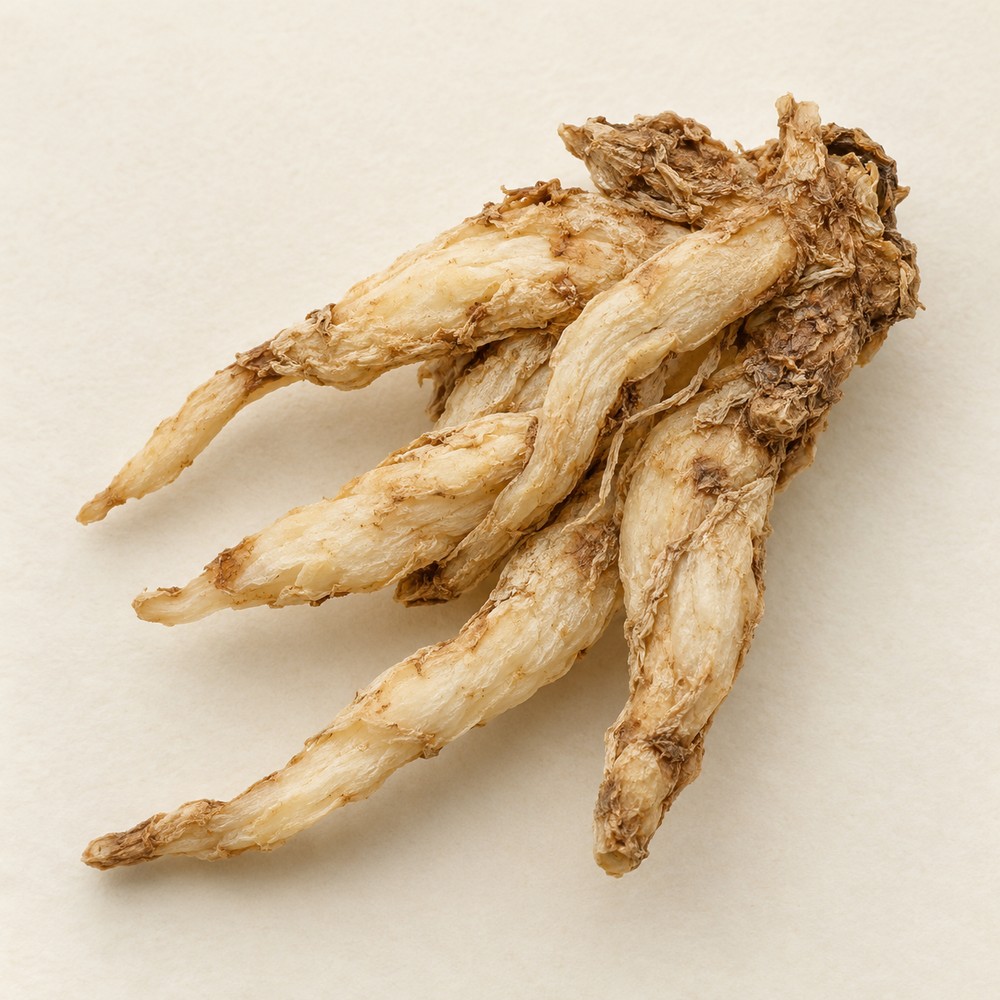
A tuft of long narrow basal leaves with pale yellow-white flowers on a tall scape; the horizontal rhizome has ringed leaf scars.
Traditional context
Zhi Mu is Anemarrhena asphodeloides rhizome from moist mountain habitats. HKBU records cultivated harvest after about three years and distinguishes hairy and peeled forms.
Modern evidence
Heat-clearing, fluid-generating, and dryness-moistening are traditional concepts; saponin research does not prove treatment for fever, cough, constipation, or diabetes.
Safety
Traditional sources classify it as cold in nature; people with digestive disorders, diarrhea, or medicines should seek advice. Do not self-treat fever in children.
Pairing in reference texts
Zhi Mu pairs with gypsum in Bai Hu Tang or with Phellodendron in traditional texts. This does not establish safety or suitability for a modern fever.
Growing, care, and harvest timing
HKBU habitat record: Growing in dank places of mountains. Distributed in Heilongjiang, Jilin, Liaoning, Inner Mongolia, Hebei, Henan, Shandong, Shaanxi, Gansu and etc. The medicinal materials are mainly produced in Hebei and Shanxi. Besides, also produced in Henan, Inner Mongolia, Gansu, Shaanxi and Northeast China Harvest and processing as recorded: Excavated in spring and autumn, better in autumn. Harvested three years after cultivating. Excavated rhizome, removed fine roots and fibrous roots, keep yellow tomentum and light yellow leaf scars and stem scars, sun-dried to produce "Mao Zhimu"(Hairy Common Anemarrhena Rhizome). When fresh, scraped corkbark and sun-dried to produce "Guang Zhimu"(Glabrous Common Anemarrhena Rhizome)
Source-recorded harvest/processing: Excavated in spring and autumn, better in autumn. Harvested three years after cultivating. Excavated rhizome, removed fine roots and fibrous roots, keep yellow tomentum and light yellow leaf scars and stem scars, sun-dried to produce "Mao Zhimu"(Hairy Common Anemarrhena Rhizome). When fresh, scraped corkbark and sun-dried to produce "Guang Zhimu"(Glabrous Common Anemarrhena Rhizome)
The reviewed source does not provide a complete species-specific sowing/growing routine, irrigation/fertilization schedule, or universal plant age. The page therefore does not infer care instructions or years to harvest; consult local cultivation guidance.
Open habitat and season source ↗FROM PLANT / SOURCE HABITAT TO DRIED MATERIAL · REFERENCE WORKFLOW
- Harvest mature cultivated rhizomes in spring or autumn, favor sustainable production, and authenticate Anemarrhena asphodeloides.
- Remove fine roots while retaining identifying basal scars; peeling is performed only to a specified product form.
- Clean and dry with airflow; preserve the basal features used to distinguish the unpeeled form.
- Grade hairy versus peeled forms, control moisture, and document origin and processing date.
These are post-harvest study notes, not directions to prepare a remedy for self-treatment. Processing reference ↗
How to read formula amounts
The cited sources do not provide a formula with specific amounts for this profile; no ratio is invented. Absence from the incompatibility list does not establish safety.
Habitat, season, and harvest in the HKBU botanical record
HKBU botanical record (translated summary): Flowering and fruiting dates: Flowering: May to August, fruiting: July to September Habitat and distribution: Growing in dank places of mountains. Distributed in Heilongjiang, Jilin, Liaoning, Inner Mongolia, Hebei, Henan, Shandong, Shaanxi, Gansu and etc. The medicinal materials are mainly produced in Hebei and Shanxi. Besides, also produced in Henan, Inner Mongolia, Gansu, Shaanxi and Northeast China Harvest and processing as recorded: Excavated in spring and autumn, better in autumn. Harvested three years after cultivating. Excavated rhizome, removed fine roots and fibrous roots, keep yellow tomentum and light yellow leaf scars and stem scars, sun-dried to produce "Mao Zhimu"(Hairy Common Anemarrhena Rhizome). When fresh, scraped corkbark and sun-dried to produce "Guang Zhimu"(Glabrous Common Anemarrhena Rhizome)
Open botanical source ↗